Elizabeth Garner Masarik - Böcker
Visar alla böcker från författaren Elizabeth Garner Masarik. Handla med fri frakt och snabb leverans.
3 produkter
3 produkter
435 kr
Skickas inom 3-6 vardagar
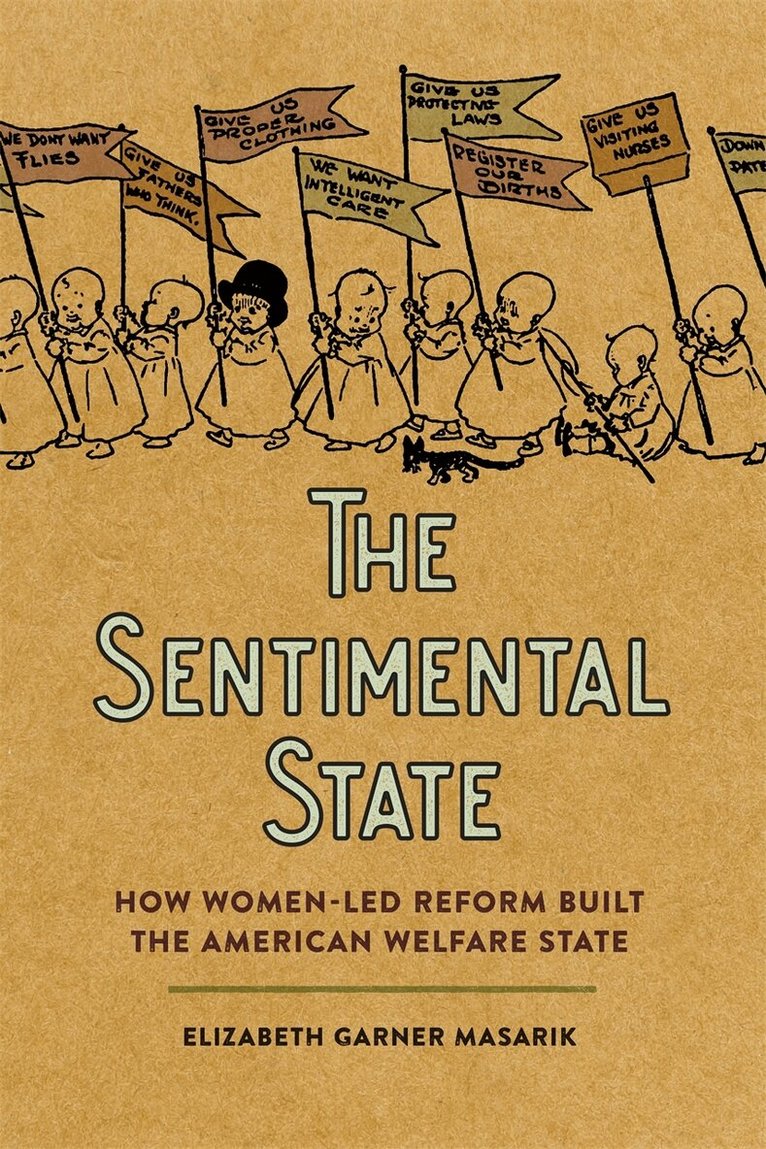
With The Sentimental State, Elizabeth Garner Masarik shows how middle-class women, both white and Black, harnessed the nineteenth-century “culture of sentiment” to generate political action in the Progressive Era. While eighteenth-century rationalism had relied upon the development of the analytic mind as the basis for acquiring truth, nineteenth-century sentimentalism hinged upon human emotional responses and the public’s capacity to feel sympathy to establish morally based truth and build support for improving the welfare of women and children. Sentimentalism marched right alongside women’s steps into the public sphere of political action. The concerns over infant mortality and the “fall” of young women intertwined with sentimentalism to elicit public action in the formation of the American welfare state. The work of voluntary and paid female reformers during the late-nineteenth and early-twentieth centuries shaped what would become lasting collaborations between grassroots voluntary organizations and the national government. Women saw a social need, filled it, and cobbled together a network of voluntary organizations that tapped state funding and support when available. Their work provided safeguards for women and children and created a network of female-oriented programs that both aided and policed women of child-bearing age at the turn of the twentieth century. Through an examination of these reform programs, Masarik demonstrates the strong connection between nineteenth-century sentimental culture and female political action, advocating government support for infant and maternal welfare, in the twentieth century.
2 040 kr
Skickas inom 3-6 vardagar
With The Sentimental State, Elizabeth Garner Masarik shows how middle-class women, both white and Black, harnessed the nineteenth-century “culture of sentiment” to generate political action in the Progressive Era. While eighteenth-century rationalism had relied upon the development of the analytic mind as the basis for acquiring truth, nineteenth-century sentimentalism hinged upon human emotional responses and the public’s capacity to feel sympathy to establish morally based truth and build support for improving the welfare of women and children. Sentimentalism marched right alongside women’s steps into the public sphere of political action. The concerns over infant mortality and the “fall” of young women intertwined with sentimentalism to elicit public action in the formation of the American welfare state. The work of voluntary and paid female reformers during the late-nineteenth and early-twentieth centuries shaped what would become lasting collaborations between grassroots voluntary organizations and the national government. Women saw a social need, filled it, and cobbled together a network of voluntary organizations that tapped state funding and support when available. Their work provided safeguards for women and children and created a network of female-oriented programs that both aided and policed women of child-bearing age at the turn of the twentieth century. Through an examination of these reform programs, Masarik demonstrates the strong connection between nineteenth-century sentimental culture and female political action, advocating government support for infant and maternal welfare, in the twentieth century.
310 kr
Skickas inom 7-10 vardagar
In Spiritualism's Place, four friends and scholars who produce the acclaimed Dig: A History Podcast, share their curiosity and enthusiasm for uncovering stories from the past as they explore the history of Lily Dale. Located in western New York State, the world's largest center for Spiritualism was founded in 1879. Lily Dale has been a home for Spiritualists attempting to make contact with the dead, as well as a gathering place for reformers, a refuge for seekers looking for alternatives to established paths of knowledge, and a target for skeptics. This intimate history of Lily Dale reveals the role that this fascinating place has played within the history of Spiritualism, as well as within the development of the women's suffrage and temperance movements, and the world of New Age religion. As an intentional community devoted to Spiritualist beliefs and practices, Lily Dale brings together multiple strands in the social and religious history of New York and the United States over the past 150 years: feminism, social reform, utopianism, new religious movements, and cultural appropriation. Podcasters and historians alike, Averill Earls, Sarah Handley-Cousins, Elizabeth Garner Masarik, and Marissa C. Rhodes each identify one site in Lily Dale and one theme that its history illuminates. They use those sites and themes to approach Lily Dale not as debunkers but as inquisitive researchers and storytellers. At the same time, they also reflect on their own relationships contending that it's never quite possible to separate grief, hope, faith, and friendship from understandings of the past. Spiritualism's Place breaks myths, unveils unexpected stories, and finds new ways to contemplate Spiritualism's role in American history.