Elizabeth Hinton - Böcker
Visar alla böcker från författaren Elizabeth Hinton. Handla med fri frakt och snabb leverans.
8 produkter
8 produkter
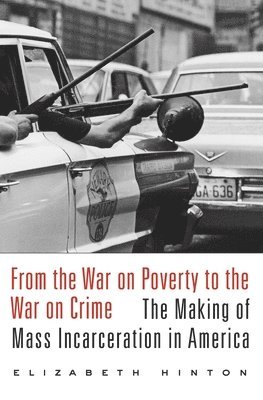
From the War on Poverty to the War on Crime
The Making of Mass Incarceration in America
Häftad, Engelska, 2017
187 kr
Skickas inom 7-10 vardagar
Co-Winner of the Thomas J. Wilson Memorial PrizeA New York Times Notable Book of the YearA New York Times Book Review Editors’ ChoiceA Wall Street Journal Favorite Book of the YearA Choice Outstanding Academic Title of the YearA Publishers Weekly Favorite Book of the YearIn the United States today, one in every thirty-one adults is under some form of penal control, including one in eleven African American men. How did the “land of the free” become the home of the world’s largest prison system? Challenging the belief that America’s prison problem originated with the Reagan administration’s War on Drugs, Elizabeth Hinton traces the rise of mass incarceration to an ironic source: the social welfare programs of Lyndon Johnson’s Great Society at the height of the civil rights era.“An extraordinary and important new book.”—Jill Lepore, New Yorker“Hinton’s book is more than an argument; it is a revelation…There are moments that will make your skin crawl…This is history, but the implications for today are striking. Readers will learn how the militarization of the police that we’ve witnessed in Ferguson and elsewhere had roots in the 1960s.”—Imani Perry, New York Times Book Review
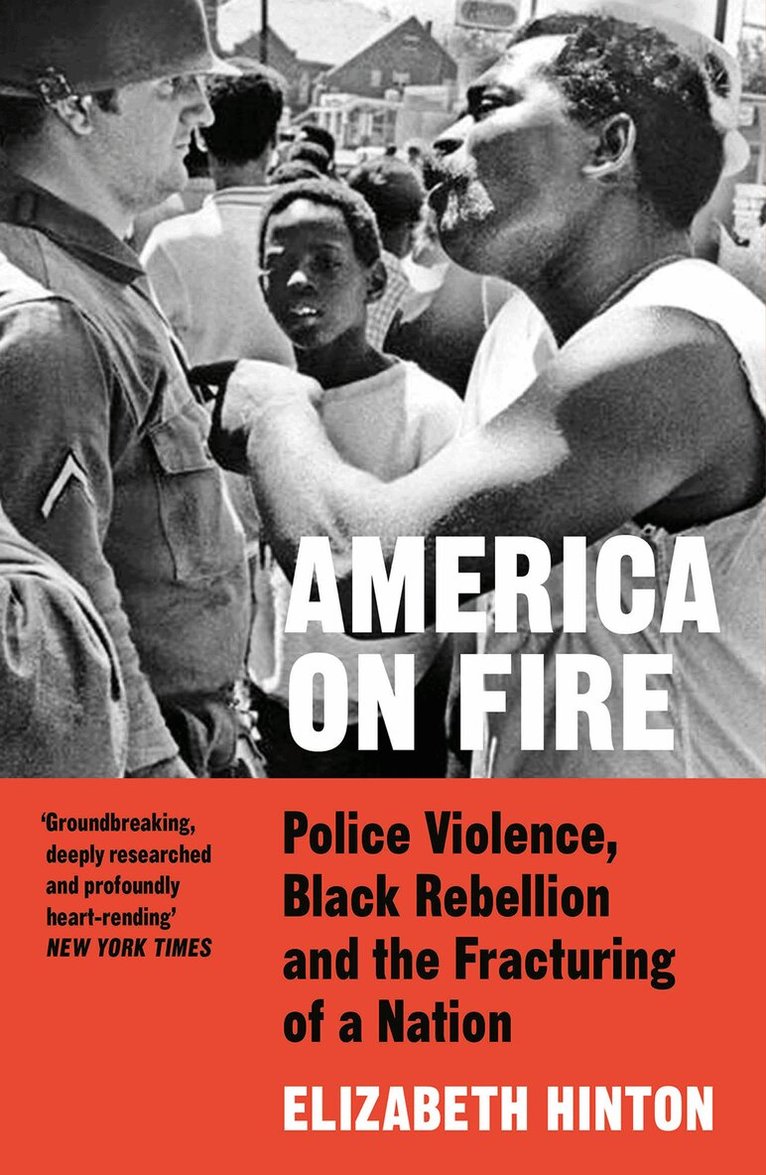
America on Fire
Police Violence, Black Rebellion and the Fracturing of a Nation
Häftad, Engelska, 2022
130 kr
Skickas
A New York Times Notable Book Best Books of 2021: TIME, Smithsonian New York Times Book Review • Editors' Choice A radical reckoning with the racial inequality of America’s past and present, by one of the country’s leading scholars of policing and mass incarceration Between 1964 and 1972, the United States endured domestic violence on a scale not seen since the Civil War. During these eight years, Black residents responded to police brutality and systemic racism by throwing punches and Molotov cocktails at police officers, plundering local businesses and vandalizing exploitative institutions. Ever since, Americans have been living in a nation and national culture created, in part, by the extreme violence of this period.In America on Fire, acclaimed professor Elizabeth Hinton draws on previously untapped sources to unravel this extraordinary history for the first time, arguing that we cannot understand the civil rights struggle without coming to terms with the astonishing violence, and hugely expanded policing regime, that followed it. A leading scholar of policing, Hinton underlines a crucial lesson in the book – that police violence precipitates community violence – and shows how it continues to escape policy makers, who respond by further criminalizing entire groups instead of addressing underlying socioeconomic causes.Taking us from the uprising in Watts, Los Angeles in 1965 to the murder of George Floyd in 2020, Hinton’s urgent, eye-opening and much-anticipated America on Fire offers an unprecedented framework for understanding the crisis at the country’s heart.
292 kr
Skickas inom 3-6 vardagar
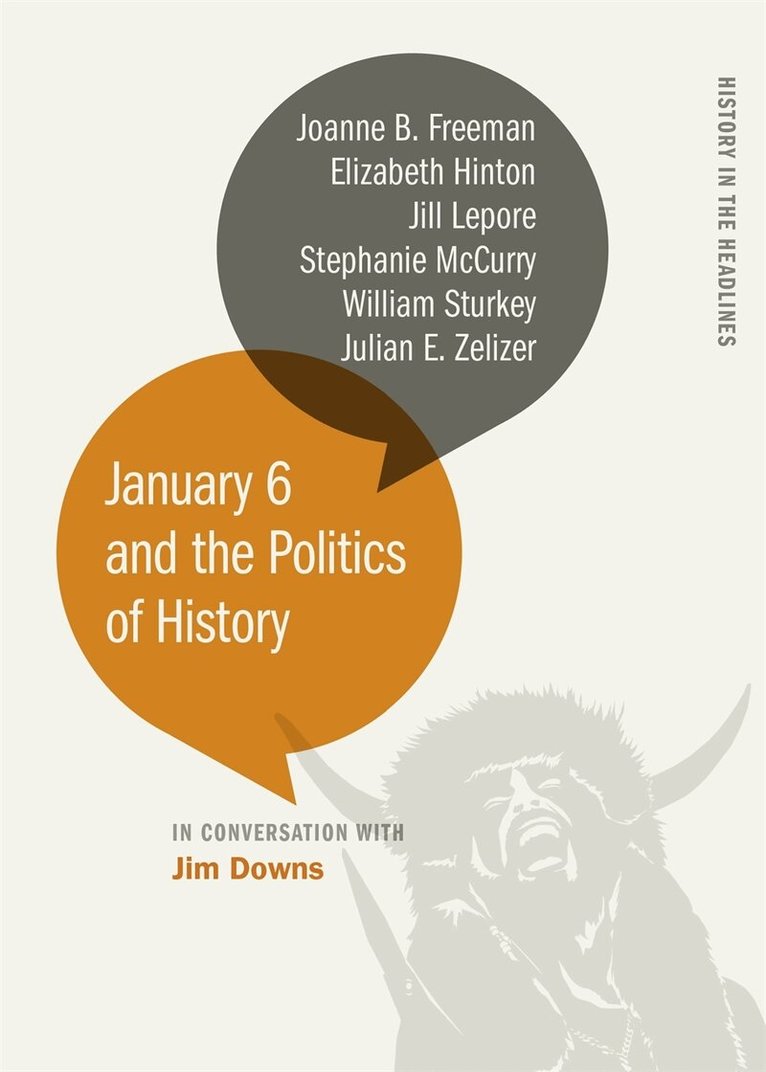
On January 6, 2021, more than two thousand rioters stormed the doors of the U.S. Capitol building in Washington, D.C., hoping to interrupt the peaceful transfer of power from former president Donald Trump to his successor, Joseph Biden. The deaths, property damage, and vicious rampage that ensued were witnessed on live television as an unprecedented attack on the democratic process and those who strive to protect it. As an installment of UGA Press’s History in the Headlines series, this book offers a rich discussion between highly respected scholars on the historical backdrop and context for contemporary issues from the headlines. In addition to the historical context, this conversation demonstrates how historians speak to one another about contentious topics and how they contribute in meaningful ways to the public’s understanding of momentous events. This volume focuses on the historical context of the January 6 attack and employs a free-flowing conversation style that allows the historians a more unconventional format. The participants discuss if—and if so, how—historians should engage in public debates and what that engagement means to their roles as academic authorities in the public.
2 040 kr
Skickas inom 3-6 vardagar
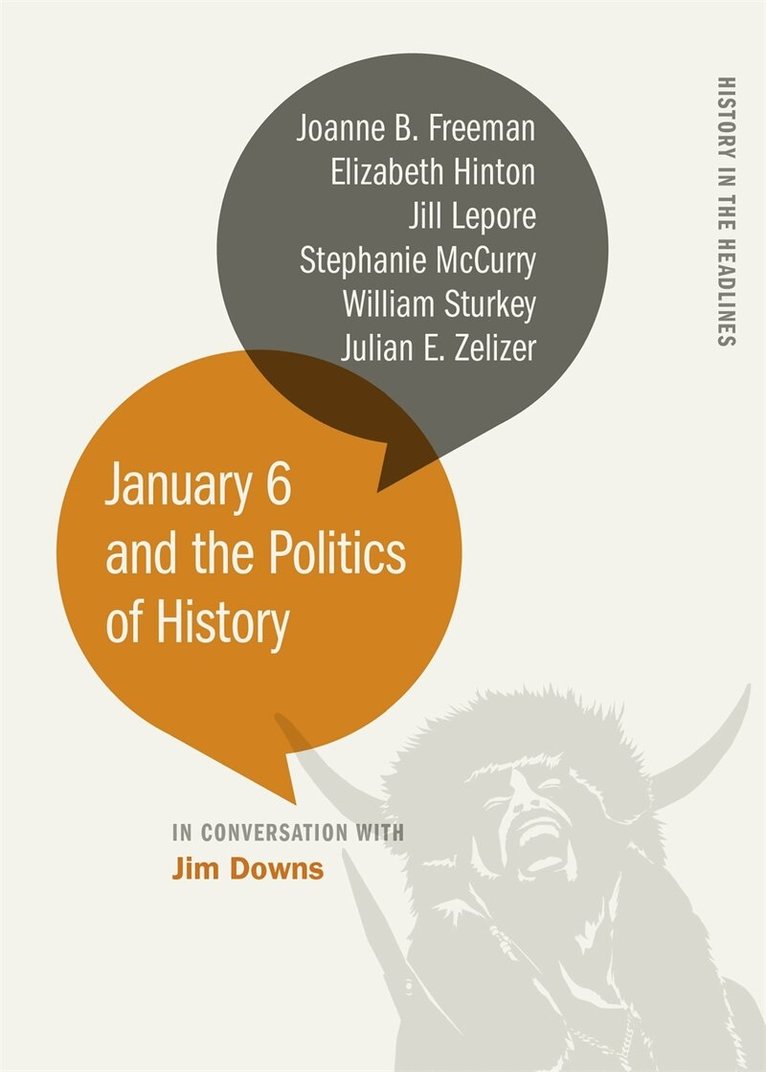
On January 6, 2021, more than two thousand rioters stormed the doors of the U.S. Capitol building in Washington, D.C., hoping to interrupt the peaceful transfer of power from former president Donald Trump to his successor, Joseph Biden. The deaths, property damage, and vicious rampage that ensued were witnessed on live television as an unprecedented attack on the democratic process and those who strive to protect it. As an installment of UGA Press’s History in the Headlines series, this book offers a rich discussion between highly respected scholars on the historical backdrop and context for contemporary issues from the headlines. In addition to the historical context, this conversation demonstrates how historians speak to one another about contentious topics and how they contribute in meaningful ways to the public’s understanding of momentous events. This volume focuses on the historical context of the January 6 attack and employs a free-flowing conversation style that allows the historians a more unconventional format. The participants discuss if—and if so, how—historians should engage in public debates and what that engagement means to their roles as academic authorities in the public.
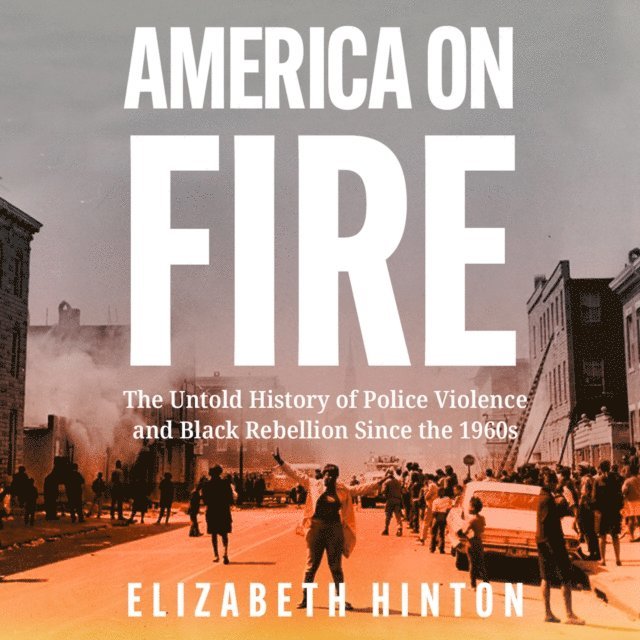
America on Fire
The Untold History of Police Violence and Black Rebellion Since the 1960s
Häftad, Engelska, 2022
163 kr
Skickas
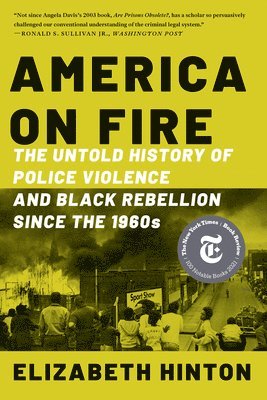
What began in spring 2020 as local protests in response to the killing of George Floyd by Minneapolis police quickly exploded into a massive nationwide movement. Millions of mostly young people defiantly flooded into the nation’s streets, demanding an end to police brutality and to the broader, systemic repression of Black people and other people of color. To many observers, the protests appeared to be without precedent in their scale and persistence. Yet, as the acclaimed historian Elizabeth Hinton demonstrates in America on Fire, the events of 2020 had clear precursors—and any attempt to understand our current crisis requires a reckoning with the recent past.Even in the aftermath of Donald Trump, many Americans consider the decades since the civil rights movement in the mid-1960s as a story of progress toward greater inclusiveness and equality. Hinton’s sweeping narrative uncovers an altogether different history, taking us on a troubling journey from Detroit in 1967 and Miami in 1980 to Los Angeles in 1992 and beyond to chart the persistence of structural racism and one of its primary consequences, the so-called urban riot. Hinton offers a critical corrective: the word riot was nothing less than a racist trope applied to events that can only be properly understood as rebellions—explosions of collective resistance to an unequal and violent order. As she suggests, if rebellion and the conditions that precipitated it never disappeared, the optimistic story of a post–Jim Crow United States no longer holds.Black rebellion, America on Fire powerfully illustrates, was born in response to poverty and exclusion, but most immediately in reaction to police violence. In 1968, President Lyndon Johnson launched the “War on Crime,” sending militarized police forces into impoverished Black neighborhoods. Facing increasing surveillance and brutality, residents threw rocks and Molotov cocktails at officers, plundered local businesses, and vandalized exploitative institutions. Hinton draws on exclusive sources to uncover a previously hidden geography of violence in smaller American cities, from York, Pennsylvania, to Cairo, Illinois, to Stockton, California.The central lesson from these eruptions—that police violence invariably leads to community violence—continues to escape policymakers, who respond by further criminalizing entire groups instead of addressing underlying socioeconomic causes. The results are the hugely expanded policing and prison regimes that shape the lives of so many Americans today. Presenting a new framework for understanding our nation’s enduring strife, America on Fire is also a warning: rebellions will surely continue unless police are no longer called on to manage the consequences of dismal conditions beyond their control, and until an oppressive system is finally remade on the principles of justice and equality.
America on Fire
The Untold History of Police Violence and Black Rebellion Since the 1960s
Inbunden, Engelska, 2021
256 kr
Skickas
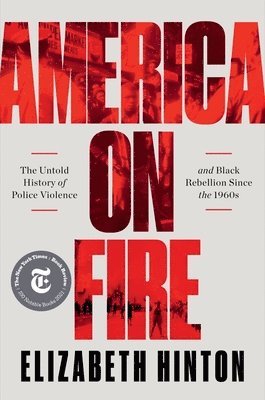
What began in spring 2020 as local protests in response to the killing of George Floyd by Minneapolis police quickly exploded into a massive nationwide movement. Millions of mostly young people defiantly flooded into the nation’s streets, demanding an end to police brutality and to the broader, systemic repression of Black people and other people of color. To many observers, the protests appeared to be without precedent in their scale and persistence. Yet, as the acclaimed historian Elizabeth Hinton demonstrates in America on Fire, the events of 2020 had clear precursors—and any attempt to understand our current crisis requires a reckoning with the recent past.Even in the aftermath of Donald Trump, many Americans consider the decades since the civil rights movement in the mid-1960s as a story of progress toward greater inclusiveness and equality. Hinton’s sweeping narrative uncovers an altogether different history, taking us on a troubling journey from Detroit in 1967 and Miami in 1980 to Los Angeles in 1992 and beyond to chart the persistence of structural racism and one of its primary consequences, the so-called urban riot. Hinton offers a critical corrective: the word riot was nothing less than a racist trope applied to events that can only be properly understood as rebellions—explosions of collective resistance to an unequal and violent order. As she suggests, if rebellion and the conditions that precipitated it never disappeared, the optimistic story of a post–Jim Crow United States no longer holds.Black rebellion, America on Fire powerfully illustrates, was born in response to poverty and exclusion, but most immediately in reaction to police violence. In 1968, President Lyndon Johnson launched the “War on Crime,” sending militarized police forces into impoverished Black neighborhoods. Facing increasing surveillance and brutality, residents threw rocks and Molotov cocktails at officers, plundered local businesses, and vandalized exploitative institutions. Hinton draws on exclusive sources to uncover a previously hidden geography of violence in smaller American cities, from York, Pennsylvania, to Cairo, Illinois, to Stockton, California.The central lesson from these eruptions—that police violence invariably leads to community violence—continues to escape policymakers, who respond by further criminalizing entire groups instead of addressing underlying socioeconomic causes. The results are the hugely expanded policing and prison regimes that shape the lives of so many Americans today. Presenting a new framework for understanding our nation’s enduring strife, America on Fire is also a warning: rebellions will surely continue unless police are no longer called on to manage the consequences of dismal conditions beyond their control, and until an oppressive system is finally remade on the principles of justice and equality.
205 kr
Kommande
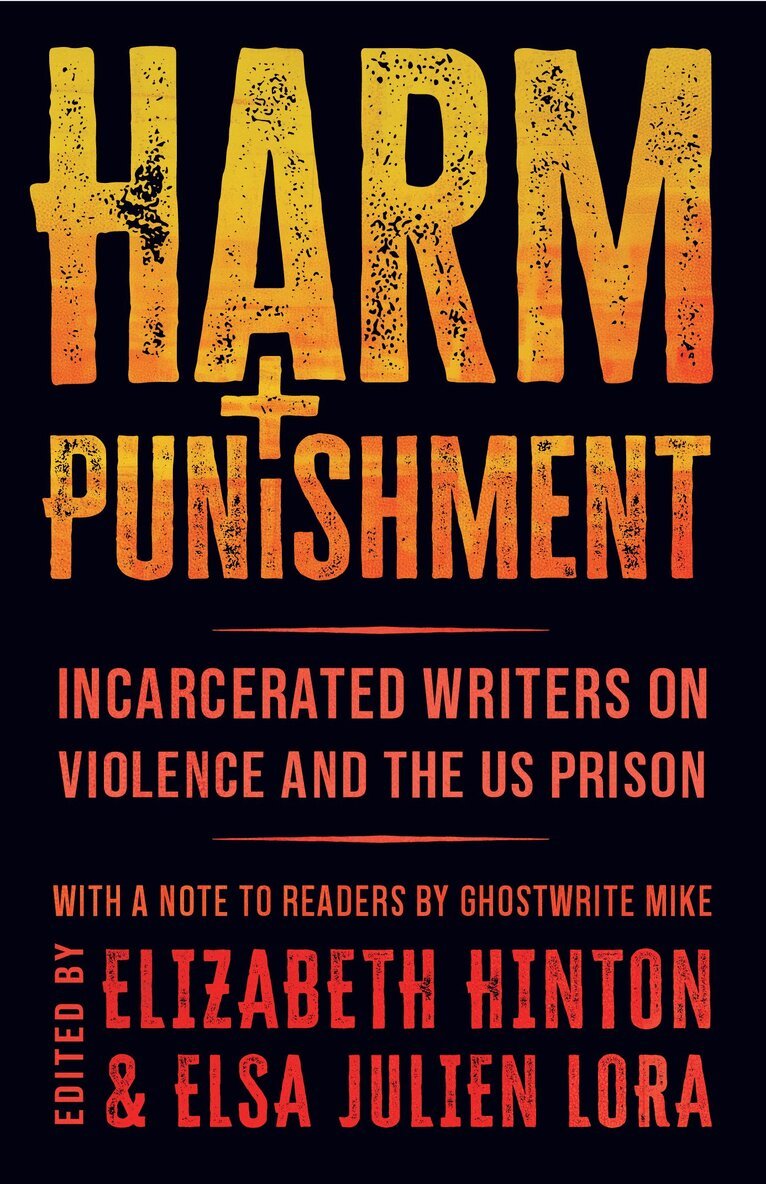
Drawn from the American Prison Writing Archive, a pivotal anthology of essays by incarcerated writers about the prison’s role in perpetuating harmPrison is neither the beginning of the inquiry nor the end. Thus, writers from across carceral institutions in the US unfold the multiple and intersecting ways that violence shapes and informs their lives, prior to, during, and after incarceration. They illuminate violence as a contextual phenomena shaped by historical trauma, cycles of deprivation, and systemic inequities. Harm and Punishment reveals the interconnectedness of personal and structural violence, tracing the way violence often emerges within the fabric of communities profoundly shaped by poverty, racism, sexism, homophobia, and transphobia.The stories, testimonies, and reflections collected here serve as bridges toward a new imagination. They expose the limitations of punishment and move us closer to a vision of collective care and mutual responsibility. In bearing witness to the experiences of incarcerated writers, readers become part of a profound shared endeavor to dismantle the barriers of misunderstanding and fear, opening pathways to action and change.
646 kr
Kommande
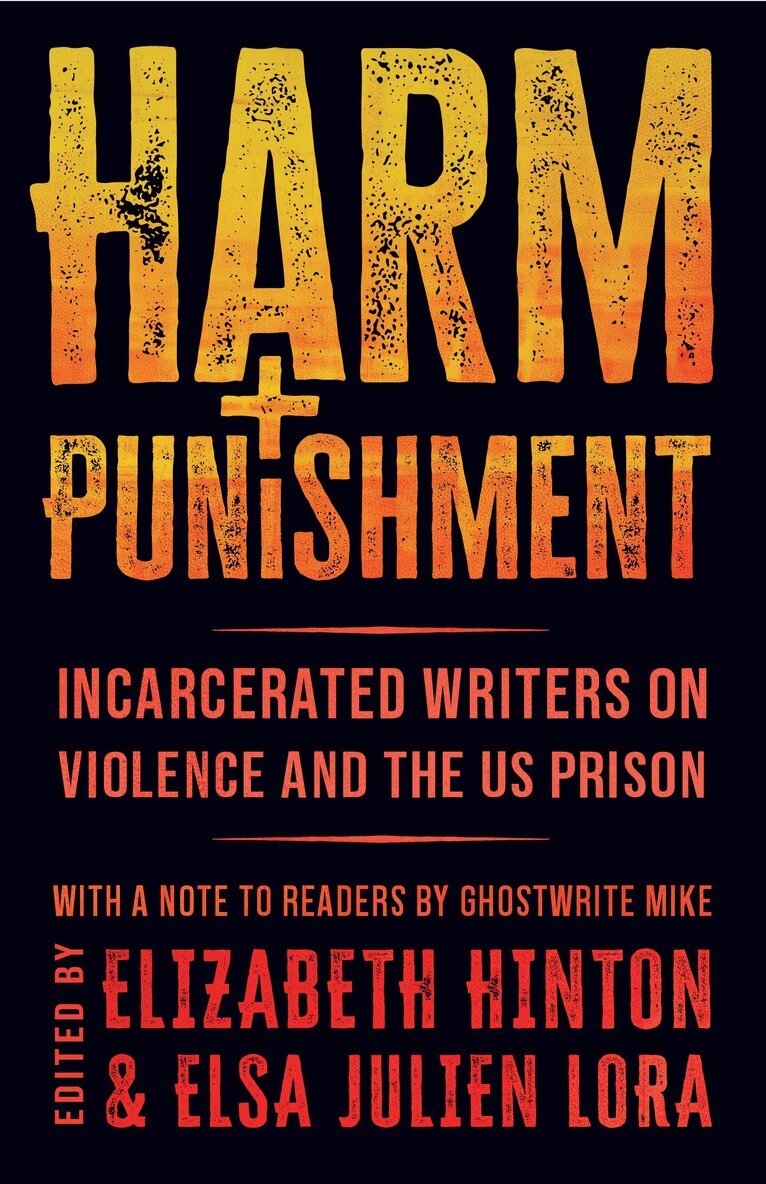
Drawn from the American Prison Writing Archive, a pivotal anthology of essays by incarcerated writers about the prison’s role in perpetuating harmPrison is neither the beginning of the inquiry nor the end. Thus, writers from across carceral institutions in the US unfold the multiple and intersecting ways that violence shapes and informs their lives, prior to, during, and after incarceration. They illuminate violence as a contextual phenomena shaped by historical trauma, cycles of deprivation, and systemic inequities. Harm and Punishment reveals the interconnectedness of personal and structural violence, tracing the way violence often emerges within the fabric of communities profoundly shaped by poverty, racism, sexism, homophobia, and transphobia.The stories, testimonies, and reflections collected here serve as bridges toward a new imagination. They expose the limitations of punishment and move us closer to a vision of collective care and mutual responsibility. In bearing witness to the experiences of incarcerated writers, readers become part of a profound shared endeavor to dismantle the barriers of misunderstanding and fear, opening pathways to action and change.