Elizabeth J. Harris - Böcker
Visar alla böcker från författaren Elizabeth J. Harris. Handla med fri frakt och snabb leverans.
13 produkter
13 produkter
420 kr
Skickas inom 3-6 vardagar
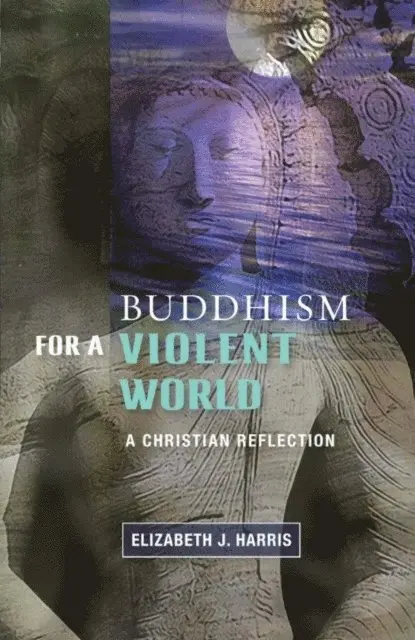
Buddhism for a Violent World takes the religiously plural world we live in seriously and demonstrates that in-depth encounter with a religion not your own can lead to challenge and enrichment.Written by a Christian who has drawn deeply from Buddhist spirituality for over 25 years, it offers a Christian reflection on what Buddhism could offer a disturbed and fractured world. The author draws on conversations with Buddhists, experiences in Buddhist countries, most particularly Sri Lanka, where he lived for nearly 8 years, and her academic study. The book's message is that Buddhism has much to offer the world and that we can all benefit from gaining wisdom from more than one spiritual source.
617 kr
Skickas inom 10-15 vardagar
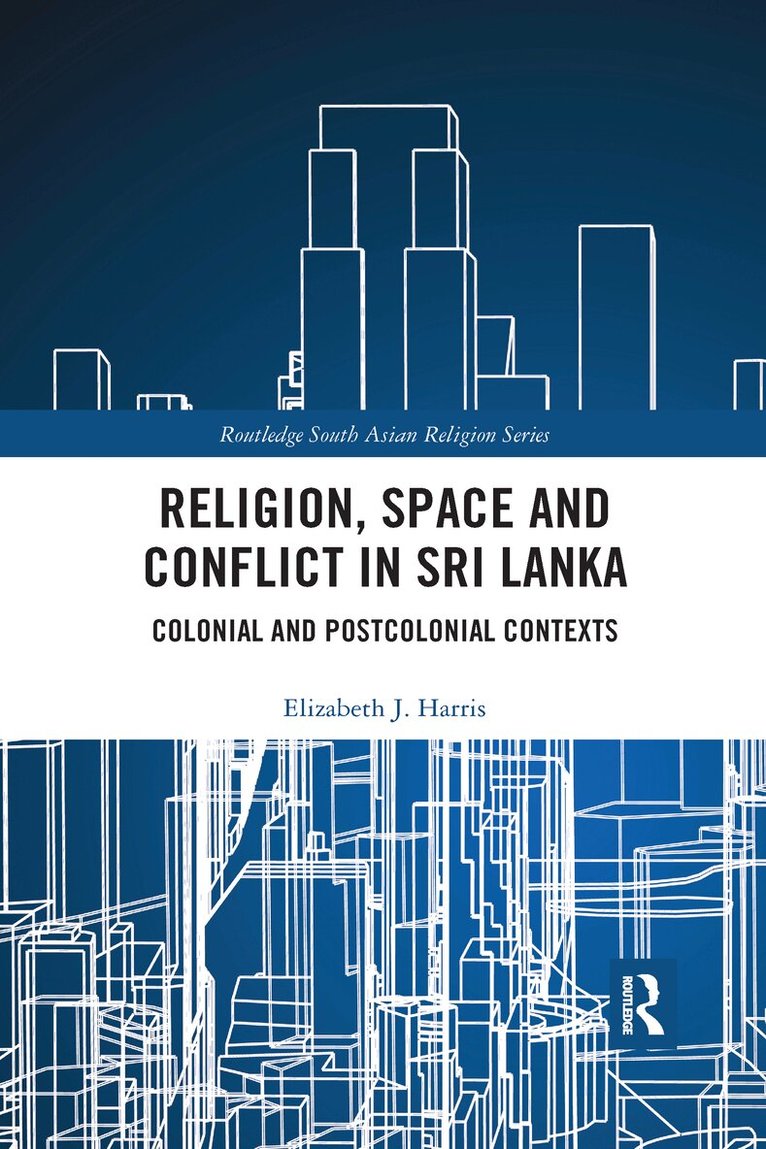
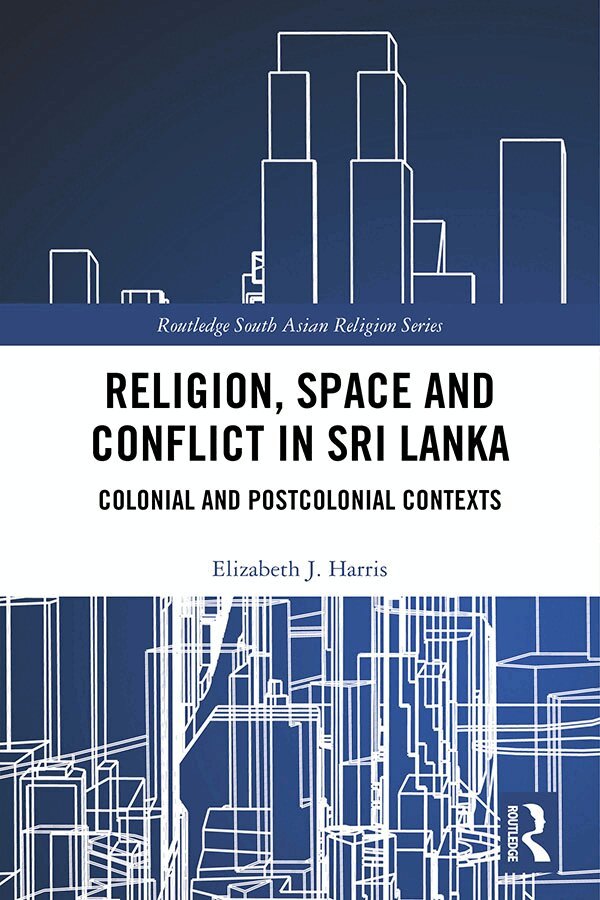
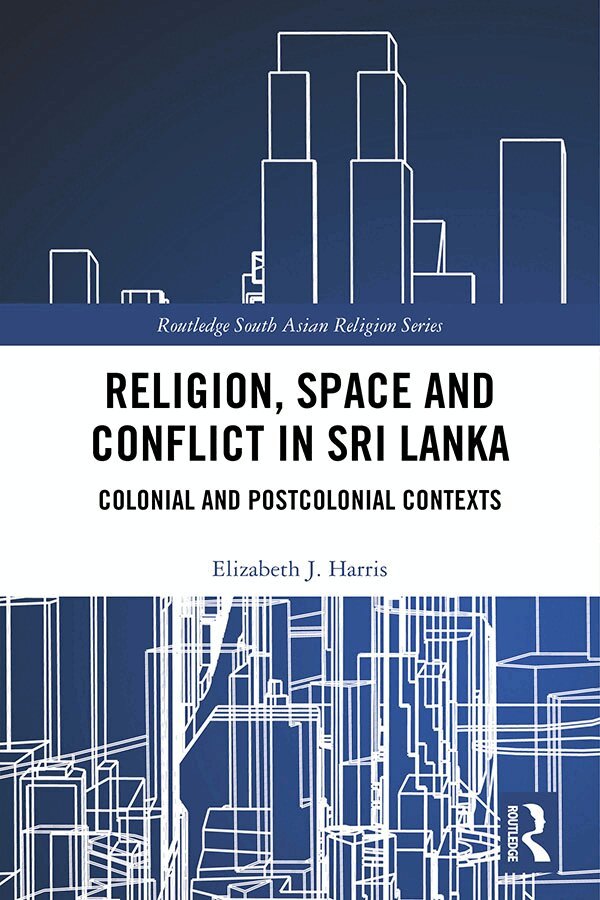
Space is dynamic, political and a cause of conflict. It bears the weight of human dreams and fears. Conflict is caused not only by spatial exclusivism but also by an inclusivism that seeks harmony through subordinating the particularity of the Other to the world view of the majority.This book uses the lens of space to examine inter-religious and inter-communal conflict in colonial and post-colonial Sri Lanka, demonstrating that the colonial can shed light on the post-colonial, particularly on post-war developments, post-May 2009, when Buddhist symbolism was controversially developed in the former, largely non-Buddhist, war zones. Using the concepts of exclusivism and inclusivist subordination, the book analyses the different imaginaries or world views that were present in colonial and post-1948 Sri Lanka, with particular reference to the ethnic or religious Other, and how these were expressed in space, influenced one another and engendered conflict. The book’s use of insights from human geography, peace studies and secular iterations of the theology of religions breaks new ground, as does its narrative technique, which prioritizes voices from the nineteenth and twentieth centuries, and the author’s fieldwork and personal observation in the twenty first. Through utilizing past and contemporary reflections on lived experience, informed by diverse religious world views, the book offers new insights into Sri Lanka’s past and present. It will be of interest to an interdisciplinary audience in the fields of colonial and postcolonial studies; war and peace studies; security studies; religious studies; the study of religion; Buddhist Studies, mission studies, South Asian and Sri Lankan studies.
2 155 kr
Skickas inom 10-15 vardagar
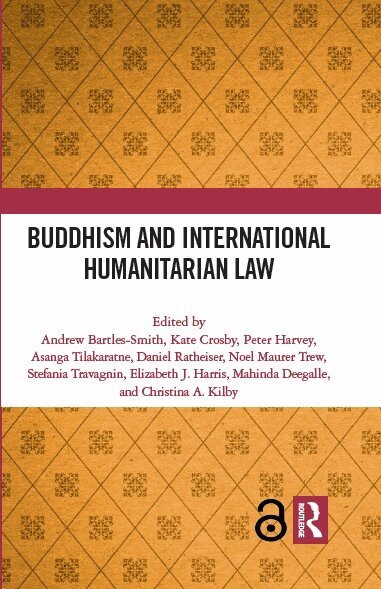
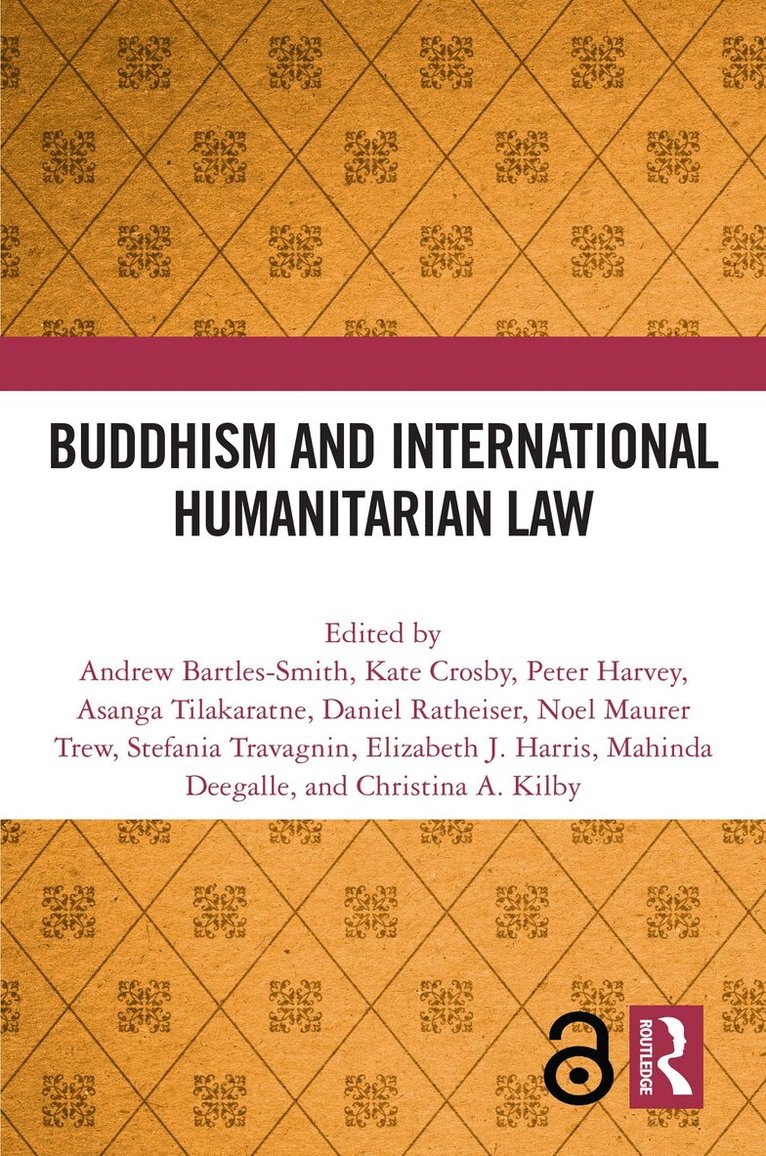
What guidance can Buddhism provide to those involved in armed conflict and to belligerents who must perhaps kill or be killed or defend their families, communities or countries from attack? How, moreover, does Buddhism compare with international humanitarian law (IHL) – otherwise known as the law of armed conflict – which protects non-combatants and restricts the means and methods of warfare to limit the suffering it causes?Despite the prevalence of armed conflict in parts of the Buddhist world, few contemporary studies have addressed these questions. While there is a wealth of material on Buddhist conflict prevention and resolution, remarkably little attention has been paid to what Buddhism says about the actual conduct of war. IHL is also still relatively little known in the Buddhist world and might not therefore influence the behaviour of belligerents who self-identify as Buddhists and are perhaps more likely to be guided by Buddhist principles. This ground-breaking volume is part of an International Committee of the Red Cross project which seeks to fill this gap by exploring correspondences between Buddhist and IHL principles, and by identifying Buddhist resources to improve compliance with IHL and equivalent Buddhist or humanitarian norms.This book will be of much interest to students and researchers of International Law, Buddhism, Ethics as well as War and Conflict studies. The chapters in this book were originally published as a special issue of Contemporary Buddhism.The Open Access version of this book, available at https://www.taylorfrancis.com/books/oa-edit/10.4324/9781003439820/buddhism-international-humanitarian-law-andrew-bartles-smith-kate-crosby-peter-harvey-asanga-tilakaratne-daniel-ratheiser-noel-maurer-trew-stefania-travagnin-elizabeth-harris-mahinda-deegalle-christina-kilby, has been made available under a Creative Commons Attribution-Non Commercial-No Derivatives (CC-BY-NC-ND) 4.0 license. A version of the open access title is also available on the OAPEN platform, https://library.oapen.org/handle/20.500.12657/75921
576 kr
Skickas inom 10-15 vardagar
What guidance can Buddhism provide to those involved in armed conflict and to belligerents who must perhaps kill or be killed or defend their families, communities or countries from attack? How, moreover, does Buddhism compare with international humanitarian law (IHL) – otherwise known as the law of armed conflict – which protects non-combatants and restricts the means and methods of warfare to limit the suffering it causes?Despite the prevalence of armed conflict in parts of the Buddhist world, few contemporary studies have addressed these questions. While there is a wealth of material on Buddhist conflict prevention and resolution, remarkably little attention has been paid to what Buddhism says about the actual conduct of war. IHL is also still relatively little known in the Buddhist world and might not therefore influence the behaviour of belligerents who self-identify as Buddhists and are perhaps more likely to be guided by Buddhist principles. This ground-breaking volume is part of an International Committee of the Red Cross project which seeks to fill this gap by exploring correspondences between Buddhist and IHL principles, and by identifying Buddhist resources to improve compliance with IHL and equivalent Buddhist or humanitarian norms.This book will be of much interest to students and researchers of International Law, Buddhism, Ethics as well as War and Conflict studies. The chapters in this book were originally published as a special issue of Contemporary Buddhism.The Open Access version of this book, available at https://www.taylorfrancis.com/books/oa-edit/10.4324/9781003439820/buddhism-international-humanitarian-law-andrew-bartles-smith-kate-crosby-peter-harvey-asanga-tilakaratne-daniel-ratheiser-noel-maurer-trew-stefania-travagnin-elizabeth-harris-mahinda-deegalle-christina-kilby, has been made available under a Creative Commons Attribution-Non Commercial-No Derivatives (CC-BY-NC-ND) 4.0 license. A version of the open access title is also available on the OAPEN platform, https://library.oapen.org/handle/20.500.12657/75921
2 088 kr
Skickas inom 10-15 vardagar
Space is dynamic, political and a cause of conflict. It bears the weight of human dreams and fears. Conflict is caused not only by spatial exclusivism but also by an inclusivism that seeks harmony through subordinating the particularity of the Other to the world view of the majority.This book uses the lens of space to examine inter-religious and inter-communal conflict in colonial and post-colonial Sri Lanka, demonstrating that the colonial can shed light on the post-colonial, particularly on post-war developments, post-May 2009, when Buddhist symbolism was controversially developed in the former, largely non-Buddhist, war zones. Using the concepts of exclusivism and inclusivist subordination, the book analyses the different imaginaries or world views that were present in colonial and post-1948 Sri Lanka, with particular reference to the ethnic or religious Other, and how these were expressed in space, influenced one another and engendered conflict. The book’s use of insights from human geography, peace studies and secular iterations of the theology of religions breaks new ground, as does its narrative technique, which prioritizes voices from the nineteenth and twentieth centuries, and the author’s fieldwork and personal observation in the twenty first. Through utilizing past and contemporary reflections on lived experience, informed by diverse religious world views, the book offers new insights into Sri Lanka’s past and present. It will be of interest to an interdisciplinary audience in the fields of colonial and postcolonial studies; war and peace studies; security studies; religious studies; the study of religion; Buddhist Studies, mission studies, South Asian and Sri Lankan studies.
1 249 kr
Skickas inom 5-8 vardagar
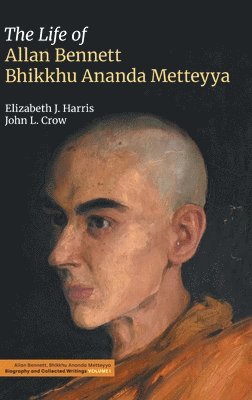
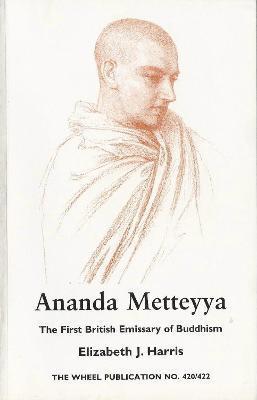
This is the first biography of Allan Bennett, one of the first British men to gain higher ordination as a Buddhist monk and one of the seminal figures in the development of Buddhism in the UK. Bennett rejected Christianity early in his life and turned to late nineteenth century occultism and esoteric new religious movements, namely Theosophy and the Order of the Golden Dawn. His involvement in the latter led to friendship with Aleister Crowley. After he travelled to Ceylon (Sri Lanka) in 1899 for health reasons - he had chronic asthma - he was attracted to Buddhism. Believing Buddhism in Burma (Myanmar) was purer than in Ceylon, he opted for ordination there in 1902. From Burma, he created an international Buddhist network, founding the International Buddhist Society, the Buddhasasana Samagama and starting a journal, Buddhism - An Illustrated Quarterly Review. In 1908, he led a Buddhist mission to England. Convinced that the West needed Buddhism as an antidote to growing materialism, he became a prolific writer. Two volumes of his writings were published. The first recorded a series of talks he gave in London in 1917-1918, published just two months before he died (The Wisdom of the Aryas). The second was published posthumously (The Religion of Burma and Other Papers). Controversy has surrounded his life, particularly in western Buddhist circles, because of his early involvement with the occult.
1 024 kr
Kommande
This is the first edited, annotated collection of the writings of Allan Bennett, one of the first British men to gain higher ordination as a Buddhist monk and one of the seminal figures in the development of Buddhism in the UK. Bennett's view of Buddhism reflects the intellectual history of his day and the debates that were happening between different religious groups in late Victorian and early Edwardian imperial Britain. His work represents some of the first writings by English converts to Buddhism and mobilized both British Buddhists and sympathizers. Controversy has surrounded his life, particularly in western Buddhist circles, because of his early involvement with the occult. His writings included two published Volumes. The first recorded a series of talks he gave in London in 1917-1918, published just two months before he died, The Wisdom of the Aryas. The second was published posthumously, The Religion of Burma and Other Papers. Both of these are included in this volume as well as excerpts from his esoteric notebooks, essays published in the journal he established Buddhism - An Illustrated Quarterly Review, the prospectus of the International Buddhist Society (Buddhasasana Samagama) he founded, and excerpts from his letters and lectures as well as other publications.
1 177 kr
Skickas inom 5-8 vardagar
This volume discusses contemporary Buddhist responses to religious diversity from Theravadin and Tibetan Buddhist perspectives. Buddhist attitudes toward other religious traditions (and its own) are unquestionably diverse, and have undergone changes throughout historical eras and geographic spaces, as Buddhists, and traditions Buddhists have encountered, continue to change (after all, all conditioned things are impermanent). The present time is a particularly dynamic moment to take stock of Buddhist attitudes toward religious others, as Buddhist identities are being renegotiated in unprecedented ways in our increasingly globalized age. Is it true that Buddhists are tolerant of other religions? To what extent are Buddhists tolerant? Is nirvana held to be attainable through Buddhism alone? If so, through which Buddhist tradition? This volume approaches these questions and others from perspectives representing Theravadin and Tibetan traditions of Buddhism. The chapters herein bring together a spectrum of views that are not often found side-by-side in a single volume or in a meaningful dialogue with each other, needless to mention with other religions. This volume seeks to remedy this situation, and break new ground to enable further dialogue, understanding, and constructive encounters across Buddhist traditions and between other religious traditions and Buddhists.
401 kr
Skickas inom 5-8 vardagar
This volume discusses contemporary Buddhist responses to religious diversity from Theravadin and Tibetan Buddhist perspectives. Buddhist attitudes toward other religious traditions (and its own) are unquestionably diverse, and have undergone changes throughout historical eras and geographic spaces, as Buddhists, and traditions Buddhists have encountered, continue to change (after all, all conditioned things are impermanent). The present time is a particularly dynamic moment to take stock of Buddhist attitudes toward religious others, as Buddhist identities are being renegotiated in unprecedented ways in our increasingly globalized age. Is it true that Buddhists are tolerant of other religions? To what extent are Buddhists tolerant? Is nirvana held to be attainable through Buddhism alone? If so, through which Buddhist tradition? This volume approaches these questions and others from perspectives representing Theravadin and Tibetan traditions of Buddhism. The chapters herein bring together a spectrum of views that are not often found side-by-side in a single volume or in a meaningful dialogue with each other, needless to mention with other religions. This volume seeks to remedy this situation, and break new ground to enable further dialogue, understanding, and constructive encounters across Buddhist traditions and between other religious traditions and Buddhists.
1 099 kr
Skickas inom 5-8 vardagar
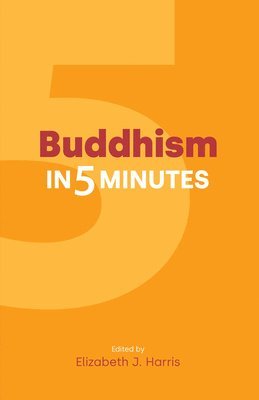
In Buddhism in Five Minutes, academic specialists offer answers to 75 questions about Buddhism that people curious about Buddhism might ask. The questions cover the Buddha, what the Buddha taught, Buddhist monasticism and the role of lay people, the historical development of Buddhism, Buddhist art, Buddhist ethics, Buddhist responses to other religions, and Buddhist thought on contemporary issues. They include: Who is the fat Buddha figure? Can we know what the historical Buddha taught? What is Nirvāṇa? Why do Buddhists meditate? Does Buddhism support gender equality? What is Zen Buddhism? Are Buddhists pacifist? What do Buddhists think about those who are LGBTQI? Are alcohol and drugs ever acceptable to Buddhists? How do Buddhists view Artificial Intelligence? Taken together the questions cover most aspects of Buddhist belief and practice in the contemporary world.The collection is sponsored by the UK Association for Buddhist Studies but contributors are drawn from Asia, North America and Latin America, as well as Europe. The questions are answered in accessible, non-specialist language without too many footnotes. Each should take not much more than five minutes to read.
309 kr
Skickas inom 5-8 vardagar
In Buddhism in Five Minutes, academic specialists offer answers to 75 questions about Buddhism that people curious about Buddhism might ask. The questions cover the Buddha, what the Buddha taught, Buddhist monasticism and the role of lay people, the historical development of Buddhism, Buddhist art, Buddhist ethics, Buddhist responses to other religions, and Buddhist thought on contemporary issues. They include: Who is the fat Buddha figure? Can we know what the historical Buddha taught? What is Nirvāṇa? Why do Buddhists meditate? Does Buddhism support gender equality? What is Zen Buddhism? Are Buddhists pacifist? What do Buddhists think about those who are LGBTQI? Are alcohol and drugs ever acceptable to Buddhists? How do Buddhists view Artificial Intelligence? Taken together the questions cover most aspects of Buddhist belief and practice in the contemporary world.The collection is sponsored by the UK Association for Buddhist Studies but contributors are drawn from Asia, North America and Latin America, as well as Europe. The questions are answered in accessible, non-specialist language without too many footnotes. Each should take not much more than five minutes to read.
395 kr
Skickas
This is the first biography of Allan Bennett, one of the first British men to gain higher ordination as a Buddhist monk and one of the seminal figures in the development of Buddhism in the UK. Bennett rejected Christianity early in his life and turned to late nineteenth century occultism and esoteric new religious movements, namely Theosophy and the Order of the Golden Dawn. His involvement in the latter led to friendship with Aleister Crowley. After he travelled to Ceylon (Sri Lanka) in 1899 for health reasons - he had chronic asthma - he was attracted to Buddhism. Believing Buddhism in Burma (Myanmar) was purer than in Ceylon, he opted for ordination there in 1902. From Burma, he created an international Buddhist network, founding the International Buddhist Society, the Buddhasasana Samagama and starting a journal, Buddhism - An Illustrated Quarterly Review. In 1908, he led a Buddhist mission to England. Convinced that the West needed Buddhism as an antidote to growing materialism, he became a prolific writer. Two volumes of his writings were published. The first recorded a series of talks he gave in London in 1917-1918, published just two months before he died (The Wisdom of the Aryas). The second was published posthumously (The Religion of Burma and Other Papers). Controversy has surrounded his life, particularly in western Buddhist circles, because of his early involvement with the occult.
372 kr
Kommande
This is the first edited, annotated collection of the writings of Allan Bennett, one of the first British men to gain higher ordination as a Buddhist monk and one of the seminal figures in the development of Buddhism in the UK. Bennett's view of Buddhism reflects the intellectual history of his day and the debates that were happening between different religious groups in late Victorian and early Edwardian imperial Britain. His work represents some of the first writings by English converts to Buddhism and mobilized both British Buddhists and sympathizers. Controversy has surrounded his life, particularly in western Buddhist circles, because of his early involvement with the occult. His writings included two published Volumes. The first recorded a series of talks he gave in London in 1917-1918, published just two months before he died, The Wisdom of the Aryas. The second was published posthumously, The Religion of Burma and Other Papers. Both of these are included in this volume as well as excerpts from his esoteric notebooks, essays published in the journal he established Buddhism - An Illustrated Quarterly Review, the prospectus of the International Buddhist Society (Buddhasasana Samagama) he founded, and excerpts from his letters and lectures as well as other publications.