Douglas Duckworth – författare
Visar alla böcker från författaren Douglas Duckworth. Handla med fri frakt och snabb leverans.
8 produkter
8 produkter
Häftad, Engelska, 2016
504 kr
Skickas inom 5-8 vardagar
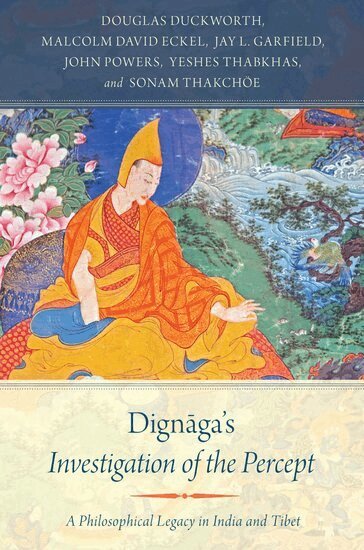
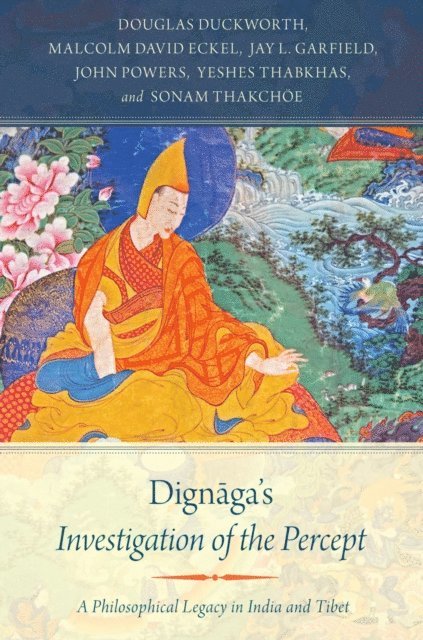
Investigation of the Percept is a short (eight verses and a three page autocommentary) work that focuses on issues of perception and epistemology. Its author, Dignaga, was one of the most influential figures in the Indian Buddhist epistemological tradition, and his ideas had a profound and wide-ranging impact in India, Tibet, and China. The work inspired more than twenty commentaries throughout East Asia and three in Tibet, the most recent in 2014.This book is the first of its kind in Buddhist studies: a comprehensive history of a text and its commentarial tradition. The volume editors translate the root text and commentary, along with Indian and Tibetan commentaries, providing detailed analyses of the commentarial innovations of each author, as well as critically edited versions of all texts and extant Sanskrit fragments of passages. The team-based approach made it possible to study and translate a corpus of treatises in Sanskrit, Tibetan, and Chinese and to employ the methods of critical philology and cross-cultural philosophy to provide readers with a rich collection of studies and translations, along with detailed philosophical analyses that open up the intriguing implications of Dignaga's thought and demonstrate the diversity of commentarial approaches to his text.This rich text has inspired some of the greatest minds in India and Tibet. It explores some of the key issues of Buddhist epistemology: the relationship between minds and their percepts, the problems of idealism and realism, and error and misperception.
E-bok
PDF, Engelska, 2016550 kr
Läs direkt efter köp
While a short work of only eight verses and a three-page autocommentary, the Investigation of the Percept has inspired epistemologists for centuries and has had a wide-ranging impact in India, Tibet, and China. Dignaga, one of the major figures in Buddhist epistemology, explores issues such as the relation between the mind and its percepts, the problems of idealism and realism, and the nature of intentionality in this brief but profound text. This volume provides a comprehensive history of the text in India and Tibet from 5th century India to the present day. This team of philologists, historians of religion and philosophers who specialize in Tibetan, Sanskrit and Chinese philosophical literature has produced the first study of the text and its entire commentarial tradition. Their approach makes it possible to employ the methods of critical philology and cross-cultural philosophy to provide readers with a rich collection of studies and translations, along with detailed philosophical analyses that open up the intriguing implications of Dignāga''s thought and demonstrate the diversity of commentarial approaches to his text. The comprehensive nature of the work reveals the richness of commentary in Indian and Tibetan Buddhism and shows surprising parallels between the modern West and traditional Buddhist philosophy.
550 kr
Läs direkt efter köp
While a short work of only eight verses and a three-page autocommentary, the Investigation of the Percept has inspired epistemologists for centuries and has had a wide-ranging impact in India, Tibet, and China. Dignaga, one of the major figures in Buddhist epistemology, explores issues such as the relation between the mind and its percepts, the problems of idealism and realism, and the nature of intentionality in this brief but profound text. This volume provides a comprehensive history of the text in India and Tibet from 5th century India to the present day. This team of philologists, historians of religion and philosophers who specialize in Tibetan, Sanskrit and Chinese philosophical literature has produced the first study of the text and its entire commentarial tradition. Their approach makes it possible to employ the methods of critical philology and cross-cultural philosophy to provide readers with a rich collection of studies and translations, along with detailed philosophical analyses that open up the intriguing implications of Dignāga''s thought and demonstrate the diversity of commentarial approaches to his text. The comprehensive nature of the work reveals the richness of commentary in Indian and Tibetan Buddhism and shows surprising parallels between the modern West and traditional Buddhist philosophy.
E-bok
Engelska, 2011249 kr
Läs direkt efter köp
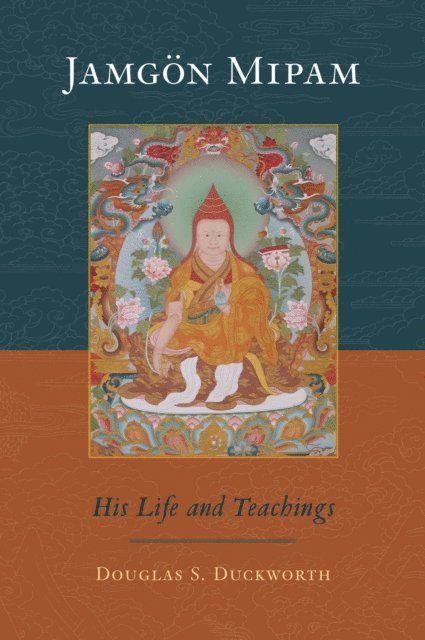
Jamgön Mipam (1846–1912) is one of the most extraordinary figures in the history of Tibet. Monk, mystic, and brilliant philosopher, he shaped the trajectory of Tibetan Buddhism’s Nyingma school. This introduction provides a most concise entrée to this great luminary’s life and work. The first section gives a general context for understanding this remarkable individual who, though he spent the greater part of his life in solitary retreat, became one of the greatest scholars of his age. Part Two gives an overview of Mipam’s interpretation of Buddhism, examining his major themes, and devoting particular attention to his articulation of the Buddhist conception of emptiness. Part Three presents a representative sampling of Mipam’s writings.
Häftad, Engelska, 2011
327 kr
Skickas inom 5-8 vardagar
Inbunden, Engelska, 2025
750 kr
Skickas
Inbunden, Engelska, 2020
1 160 kr
Skickas inom 5-8 vardagar
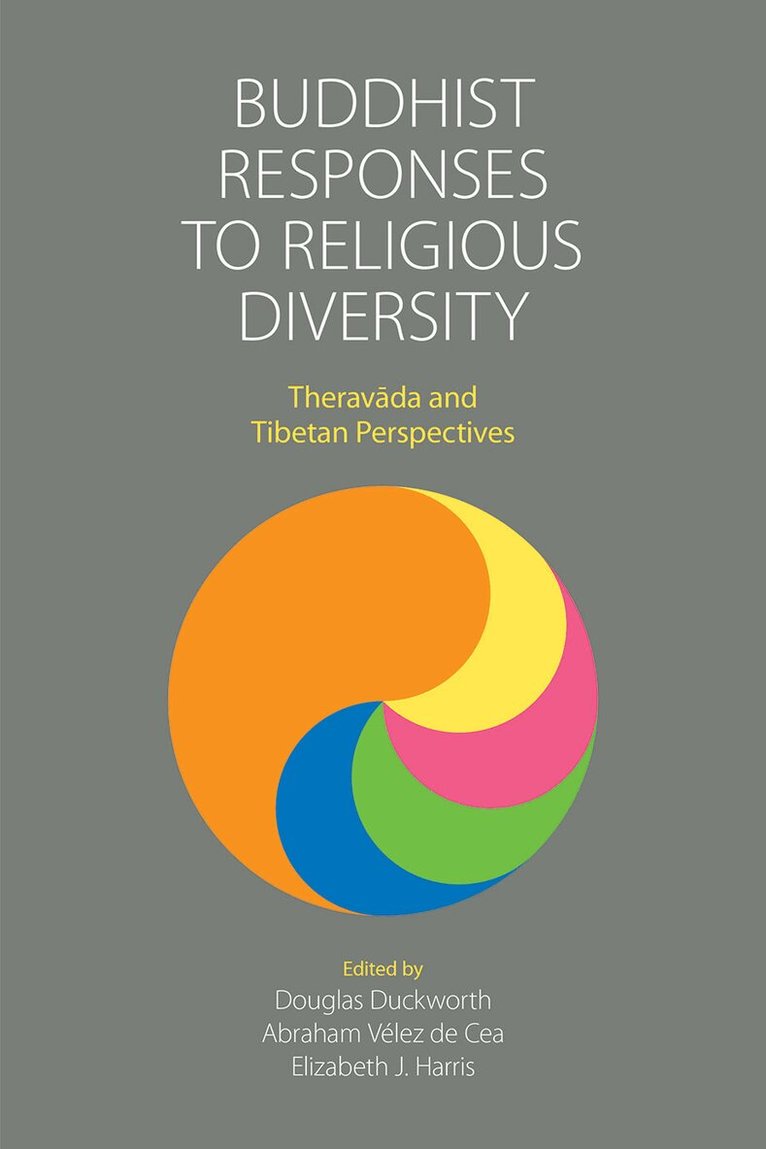
This volume discusses contemporary Buddhist responses to religious diversity from Theravadin and Tibetan Buddhist perspectives. Buddhist attitudes toward other religious traditions (and its own) are unquestionably diverse, and have undergone changes throughout historical eras and geographic spaces, as Buddhists, and traditions Buddhists have encountered, continue to change (after all, all conditioned things are impermanent). The present time is a particularly dynamic moment to take stock of Buddhist attitudes toward religious others, as Buddhist identities are being renegotiated in unprecedented ways in our increasingly globalized age. Is it true that Buddhists are tolerant of other religions? To what extent are Buddhists tolerant? Is nirvana held to be attainable through Buddhism alone? If so, through which Buddhist tradition? This volume approaches these questions and others from perspectives representing Theravadin and Tibetan traditions of Buddhism. The chapters herein bring together a spectrum of views that are not often found side-by-side in a single volume or in a meaningful dialogue with each other, needless to mention with other religions. This volume seeks to remedy this situation, and break new ground to enable further dialogue, understanding, and constructive encounters across Buddhist traditions and between other religious traditions and Buddhists.
Häftad, Engelska, 2020
396 kr
Skickas inom 5-8 vardagar
This volume discusses contemporary Buddhist responses to religious diversity from Theravadin and Tibetan Buddhist perspectives. Buddhist attitudes toward other religious traditions (and its own) are unquestionably diverse, and have undergone changes throughout historical eras and geographic spaces, as Buddhists, and traditions Buddhists have encountered, continue to change (after all, all conditioned things are impermanent). The present time is a particularly dynamic moment to take stock of Buddhist attitudes toward religious others, as Buddhist identities are being renegotiated in unprecedented ways in our increasingly globalized age. Is it true that Buddhists are tolerant of other religions? To what extent are Buddhists tolerant? Is nirvana held to be attainable through Buddhism alone? If so, through which Buddhist tradition? This volume approaches these questions and others from perspectives representing Theravadin and Tibetan traditions of Buddhism. The chapters herein bring together a spectrum of views that are not often found side-by-side in a single volume or in a meaningful dialogue with each other, needless to mention with other religions. This volume seeks to remedy this situation, and break new ground to enable further dialogue, understanding, and constructive encounters across Buddhist traditions and between other religious traditions and Buddhists.