Emery J. Hyslop-Margison - Böcker
Visar alla böcker från författaren Emery J. Hyslop-Margison. Handla med fri frakt och snabb leverans.
8 produkter
8 produkter
515 kr
Skickas inom 10-15 vardagar
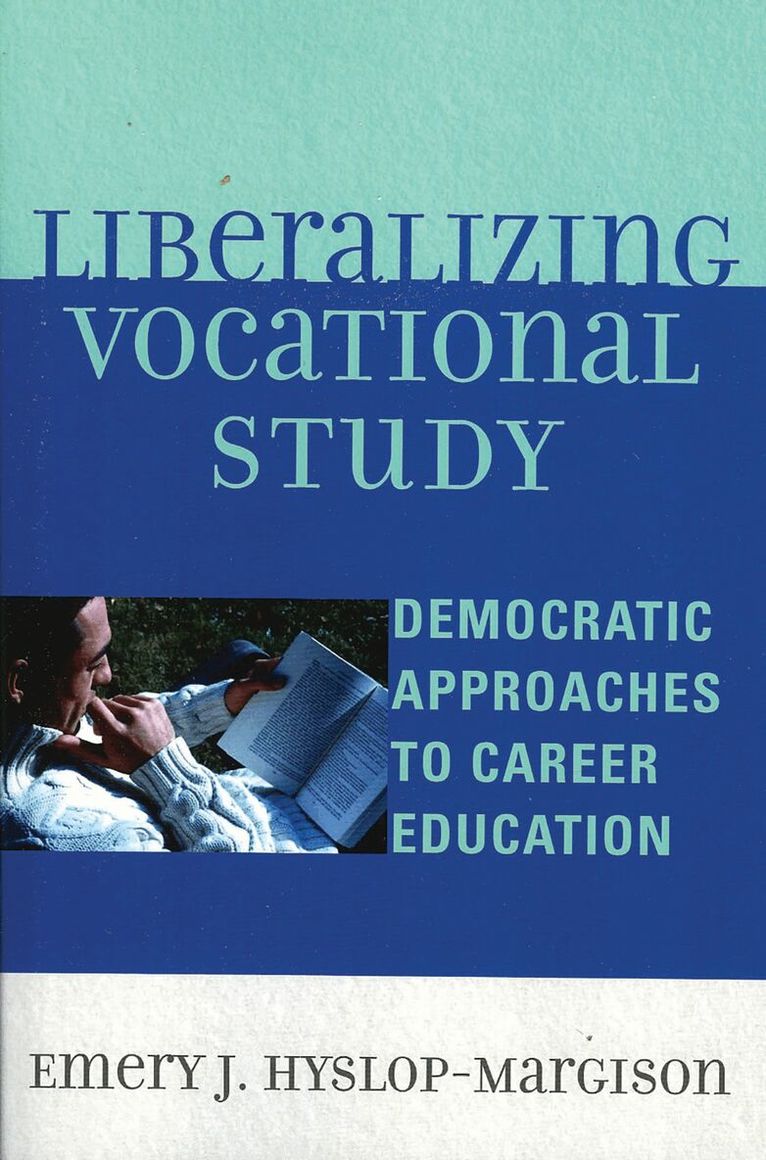
This book addresses a critically important question regarding human capital learning in our present neo-liberal schooling context: How can contemporary career education programs be integrated into public school curricula without impacting negatively on the liberal learning, intellectual autonomy, and democratic citizenship of students? To alleviate the enduring curriculum tension between liberal and vocational study, the book recommends adopting Aristotelian and Deweyan approaches to career education. While Aristotle offers a philosophy of education whose ultimate aim remains sensitive to the critical emphasis of liberal study, its content and practice must also address production objectives. Dewey was an ardent supporter of vocational education, but he rejected the social efficiency view that students should be prepared to meet the narrow human capital requirements of industry. He believed that vocational education must respect principles of democratic learning and broaden future occupational opportunities for students. Ultimately, this book suggests that the choice is not the traditional bifurcated one between liberal and vocational education, but between vocational education that is liberal and democratic, and that which is not.
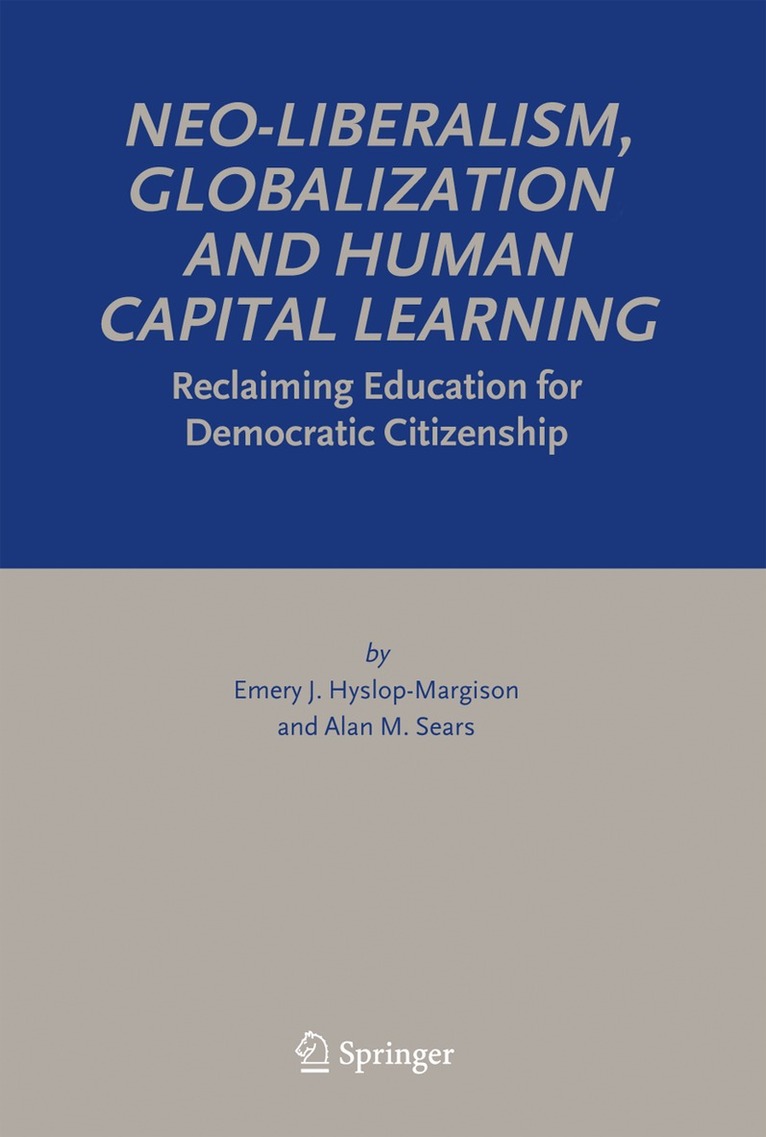
Neo-Liberalism, Globalization and Human Capital Learning
Reclaiming Education for Democratic Citizenship
Inbunden, Engelska, 2006
1 031 kr
Skickas inom 10-15 vardagar
Education for living or earning a living? What is the critical part that school has to play as a core democratic institution in educating citizens who are ready to engage and commit themselves to the idea of social change and progress toward increased levels of social equality?
1 031 kr
Skickas inom 10-15 vardagar
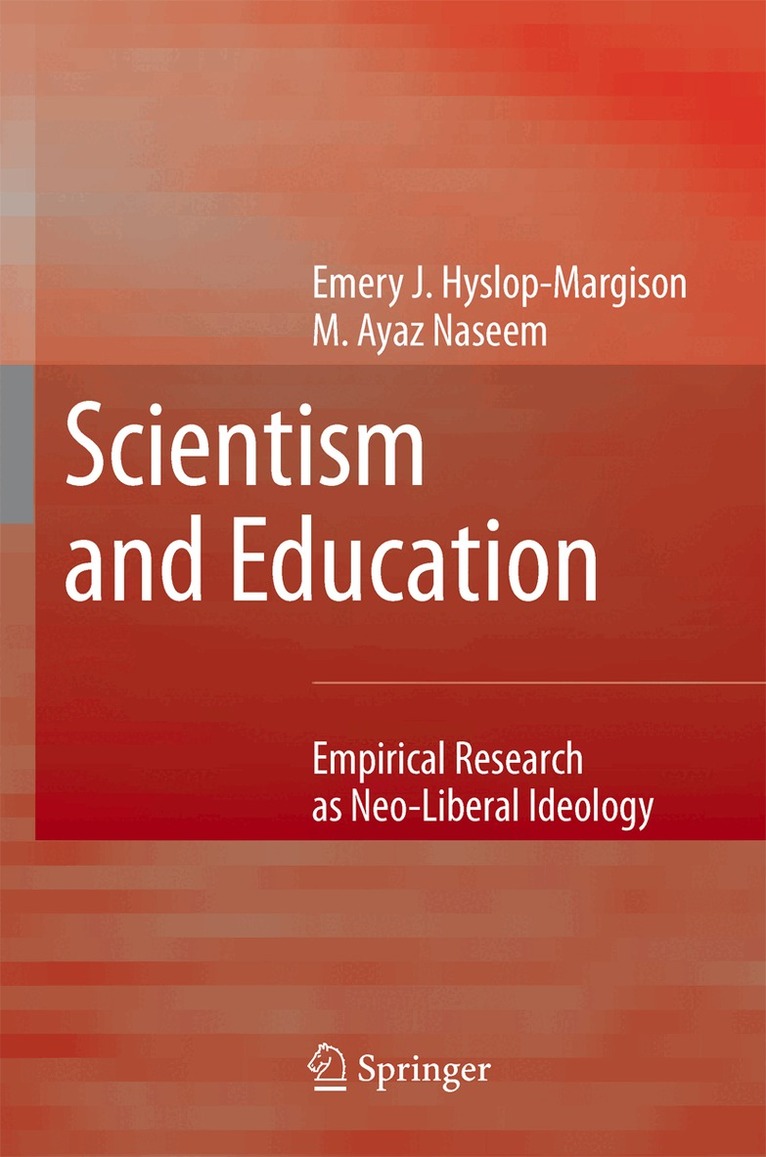
We presently live in an era dominated by scientism, an ideology that believes that science (and its rationalist foundation in modern epistemology) has an undeniable primacy over all other ways of seeing and understanding life and the world, including more humanistic, mythical, spiritual, and artistic interpretations. In being critical of scientism as I am, I am not against science per se: modern science and its ways of understanding and knowing the world are valuable, and we should be grateful for them. But it is the hegemony of the habits of mind that manifest pervasively in education that privilege science education, career, and research over other modes and branches of learning and knowing that I have problems with. I have too often witnessed parents overtly or subtly discouraging their children from following artistic or humanistic aspirations and pushing them for training and careers in Science, Math, Business, and Technology. In this society we say in a thousand and one ways that money, security, power, and ultimately fulfillment reside in these disciplines and not in the Arts, Humanities, and Philosophy. We valorize scientists, and even when they speak on subjects outside their domain of expertise, we take their opinions and pronouncements as definitively authoritative. When Science speaks, people listen. This hegemonic attitude towards Science and other subjects that require the exercise of our rational and intellectual faculty is reflected in educational research as well.
Neo-Liberalism, Globalization and Human Capital Learning
Reclaiming Education for Democratic Citizenship
Häftad, Engelska, 2010
1 236 kr
Skickas inom 10-15 vardagar
Education for living or earning a living? What is the critical part that school has to play as a core democratic institution in educating citizens who are ready to engage and commit themselves to the idea of social change and progress toward increased levels of social equality?
1 061 kr
Skickas inom 10-15 vardagar
We presently live in an era dominated by scientism, an ideology that believes that science (and its rationalist foundation in modern epistemology) has an undeniable primacy over all other ways of seeing and understanding life and the world, including more humanistic, mythical, spiritual, and artistic interpretations. In being critical of scientism as I am, I am not against science per se: modern science and its ways of understanding and knowing the world are valuable, and we should be grateful for them. But it is the hegemony of the habits of mind that manifest pervasively in education that privilege science education, career, and research over other modes and branches of learning and knowing that I have problems with. I have too often witnessed parents overtly or subtly discouraging their children from following artistic or humanistic aspirations and pushing them for training and careers in Science, Math, Business, and Technology. In this society we say in a thousand and one ways that money, security, power, and ultimately fulfillment reside in these disciplines and not in the Arts, Humanities, and Philosophy. We valorize scientists, and even when they speak on subjects outside their domain of expertise, we take their opinions and pronouncements as definitively authoritative. When Science speaks, people listen. This hegemonic attitude towards Science and other subjects that require the exercise of our rational and intellectual faculty is reflected in educational research as well.
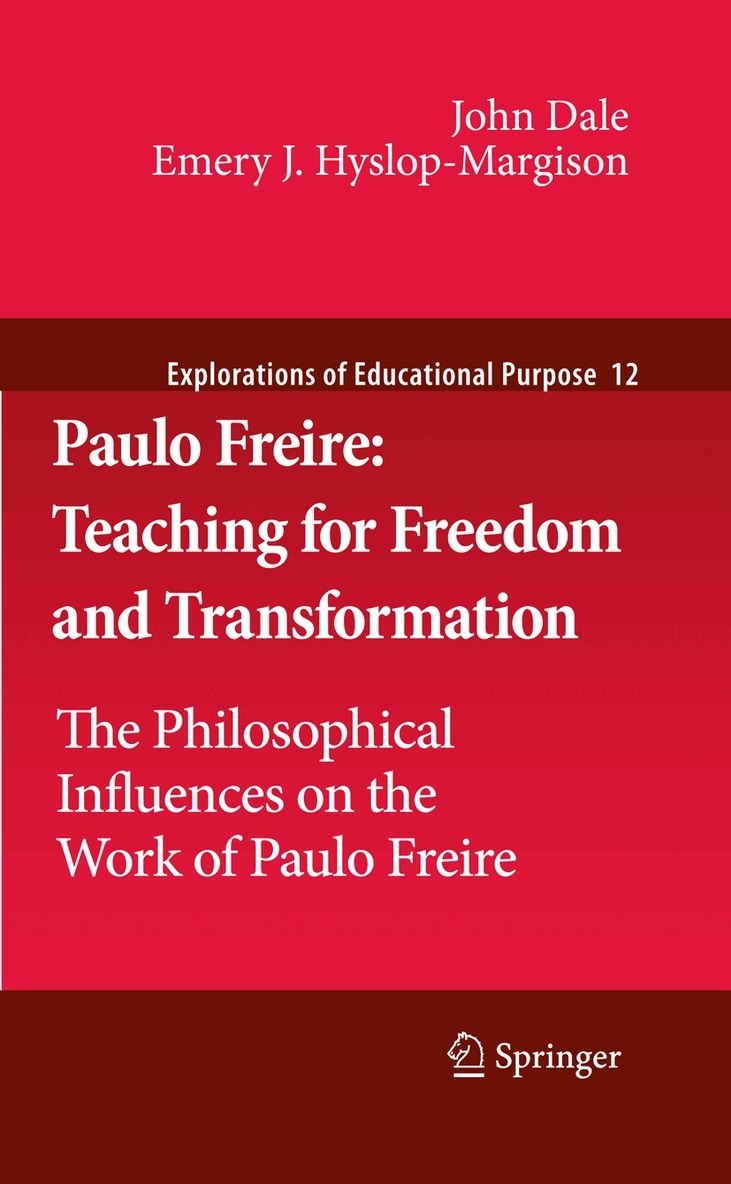
Paulo Freire: Teaching for Freedom and Transformation
The Philosophical Influences on the Work of Paulo Freire
Inbunden, Engelska, 2010
1 031 kr
Skickas inom 10-15 vardagar
The primary mission of this text is clarifying many of the misconceptions about Paulo Freire’s theories, concepts and his implications for education. It revisits his ideas and explains more fully the philosophical influences that shaped concepts such as problem posing, conscientization and praxis.The fundamental thesis, then, is that the present absence of in-depth philosophical analysis leaves an unacceptable void in the literature addressing Freire’s work, while also promoting frequent misconceptions and superficial understandings about his relationship to contemporary education. Indeed, the philosophical assumptions contributing to Freire’s critical pedagogy require identification, unravelling and ultimately evaluation on the basis of their epistemic and moral tenability. Most existing applications of Freire’s pedagogy are unfortunately superficial because they simply sloganize terms such as banking education, conscientization, praxis, and humanization. A slogan in education popularizes a concept or idea in a positive way, but offers very little in terms of critical reflection or analysis. In order to understand these terms and their origin and apply them as Freire intended, a far richer and more in depth examination of Freire is desperately needed. This text will provide precisely that type of examination.
Del 12 - Explorations of Educational Purpose
Paulo Freire: Teaching for Freedom and Transformation
The Philosophical Influences on the Work of Paulo Freire
Häftad, Engelska, 2011
993 kr
Skickas inom 5-8 vardagar
The primary mission of this text is clarifying many of the misconceptions about Paulo Freire’s theories, concepts and his implications for education. It revisits his ideas and explains more fully the philosophical influences that shaped concepts such as problem posing, conscientization and praxis.The fundamental thesis, then, is that the present absence of in-depth philosophical analysis leaves an unacceptable void in the literature addressing Freire’s work, while also promoting frequent misconceptions and superficial understandings about his relationship to contemporary education. Indeed, the philosophical assumptions contributing to Freire’s critical pedagogy require identification, unravelling and ultimately evaluation on the basis of their epistemic and moral tenability. Most existing applications of Freire’s pedagogy are unfortunately superficial because they simply sloganize terms such as banking education, conscientization, praxis, and humanization. A slogan in education popularizes a concept or idea in a positive way, but offers very little in terms of critical reflection or analysis. In order to understand these terms and their origin and apply them as Freire intended, a far richer and more in depth examination of Freire is desperately needed. This text will provide precisely that type of examination.
Del 12 - Explorations of Educational Purpose
Paulo Freire: Teaching for Freedom and Transformation
The Philosophical Influences on the Work of Paulo Freire
Häftad, Engelska, 2012
1 031 kr
Skickas inom 10-15 vardagar
The primary mission of this text is clarifying many of the misconceptions about Paulo Freire’s theories, concepts and his implications for education. It revisits his ideas and explains more fully the philosophical influences that shaped concepts such as problem posing, conscientization and praxis.The fundamental thesis, then, is that the present absence of in-depth philosophical analysis leaves an unacceptable void in the literature addressing Freire’s work, while also promoting frequent misconceptions and superficial understandings about his relationship to contemporary education. Indeed, the philosophical assumptions contributing to Freire’s critical pedagogy require identification, unravelling and ultimately evaluation on the basis of their epistemic and moral tenability. Most existing applications of Freire’s pedagogy are unfortunately superficial because they simply sloganize terms such as banking education, conscientization, praxis, and humanization. A slogan in education popularizes a concept or idea in a positive way, but offers very little in terms of critical reflection or analysis. In order to understand these terms and their origin and apply them as Freire intended, a far richer and more in depth examination of Freire is desperately needed. This text will provide precisely that type of examination.