John Dale - Böcker
Visar alla böcker från författaren John Dale. Handla med fri frakt och snabb leverans.
7 produkter
7 produkter
418 kr
Skickas inom 5-8 vardagar
303 kr
Skickas inom 5-8 vardagar
182 kr
Skickas inom 7-10 vardagar
251 kr
Skickas inom 5-8 vardagar
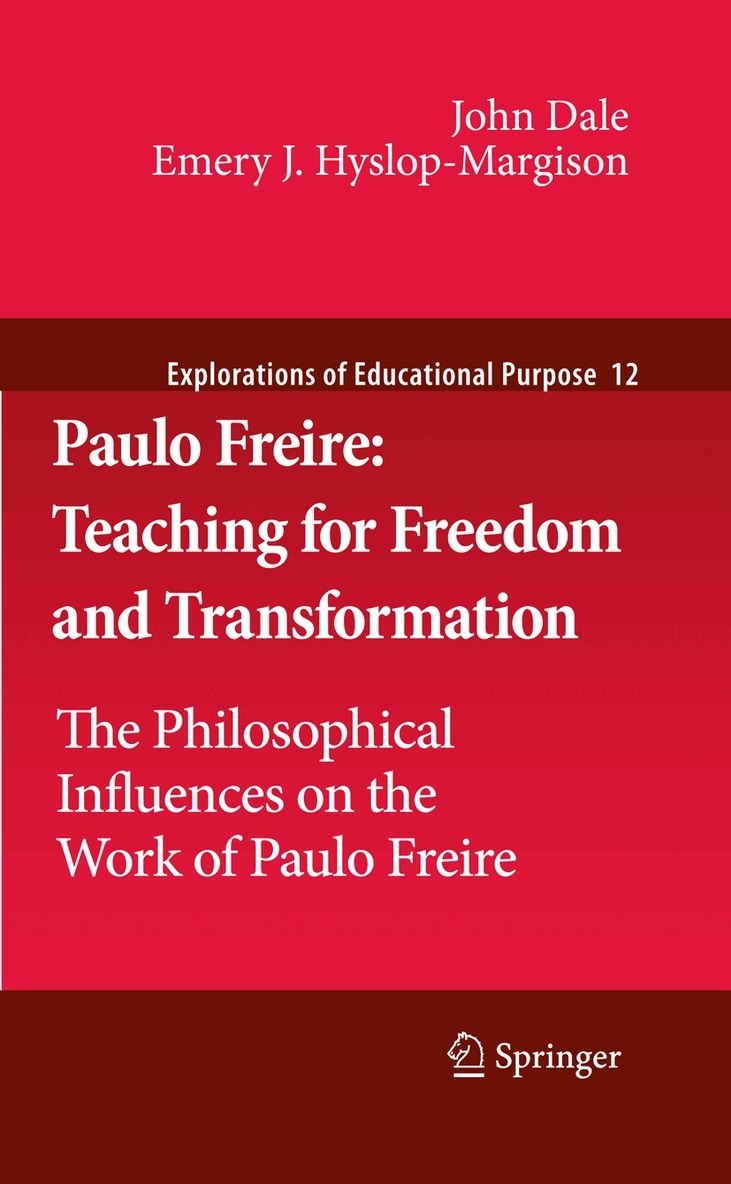
Paulo Freire: Teaching for Freedom and Transformation
The Philosophical Influences on the Work of Paulo Freire
Inbunden, Engelska, 2010
1 034 kr
Skickas inom 10-15 vardagar
The primary mission of this text is clarifying many of the misconceptions about Paulo Freire’s theories, concepts and his implications for education. It revisits his ideas and explains more fully the philosophical influences that shaped concepts such as problem posing, conscientization and praxis.The fundamental thesis, then, is that the present absence of in-depth philosophical analysis leaves an unacceptable void in the literature addressing Freire’s work, while also promoting frequent misconceptions and superficial understandings about his relationship to contemporary education. Indeed, the philosophical assumptions contributing to Freire’s critical pedagogy require identification, unravelling and ultimately evaluation on the basis of their epistemic and moral tenability. Most existing applications of Freire’s pedagogy are unfortunately superficial because they simply sloganize terms such as banking education, conscientization, praxis, and humanization. A slogan in education popularizes a concept or idea in a positive way, but offers very little in terms of critical reflection or analysis. In order to understand these terms and their origin and apply them as Freire intended, a far richer and more in depth examination of Freire is desperately needed. This text will provide precisely that type of examination.
Del 12 - Explorations of Educational Purpose
Paulo Freire: Teaching for Freedom and Transformation
The Philosophical Influences on the Work of Paulo Freire
Häftad, Engelska, 2011
993 kr
Skickas inom 5-8 vardagar
The primary mission of this text is clarifying many of the misconceptions about Paulo Freire’s theories, concepts and his implications for education. It revisits his ideas and explains more fully the philosophical influences that shaped concepts such as problem posing, conscientization and praxis.The fundamental thesis, then, is that the present absence of in-depth philosophical analysis leaves an unacceptable void in the literature addressing Freire’s work, while also promoting frequent misconceptions and superficial understandings about his relationship to contemporary education. Indeed, the philosophical assumptions contributing to Freire’s critical pedagogy require identification, unravelling and ultimately evaluation on the basis of their epistemic and moral tenability. Most existing applications of Freire’s pedagogy are unfortunately superficial because they simply sloganize terms such as banking education, conscientization, praxis, and humanization. A slogan in education popularizes a concept or idea in a positive way, but offers very little in terms of critical reflection or analysis. In order to understand these terms and their origin and apply them as Freire intended, a far richer and more in depth examination of Freire is desperately needed. This text will provide precisely that type of examination.
Del 12 - Explorations of Educational Purpose
Paulo Freire: Teaching for Freedom and Transformation
The Philosophical Influences on the Work of Paulo Freire
Häftad, Engelska, 2012
1 034 kr
Skickas inom 10-15 vardagar
The primary mission of this text is clarifying many of the misconceptions about Paulo Freire’s theories, concepts and his implications for education. It revisits his ideas and explains more fully the philosophical influences that shaped concepts such as problem posing, conscientization and praxis.The fundamental thesis, then, is that the present absence of in-depth philosophical analysis leaves an unacceptable void in the literature addressing Freire’s work, while also promoting frequent misconceptions and superficial understandings about his relationship to contemporary education. Indeed, the philosophical assumptions contributing to Freire’s critical pedagogy require identification, unravelling and ultimately evaluation on the basis of their epistemic and moral tenability. Most existing applications of Freire’s pedagogy are unfortunately superficial because they simply sloganize terms such as banking education, conscientization, praxis, and humanization. A slogan in education popularizes a concept or idea in a positive way, but offers very little in terms of critical reflection or analysis. In order to understand these terms and their origin and apply them as Freire intended, a far richer and more in depth examination of Freire is desperately needed. This text will provide precisely that type of examination.