Emmanuel Adinyira - Böcker
Visar alla böcker från författaren Emmanuel Adinyira. Handla med fri frakt och snabb leverans.
7 produkter
7 produkter
4 165 kr
Skickas inom 10-15 vardagar
This book presents papers from the 11th Sustainable Education and Development Research Conference on the theme: "Build Resilient Infrastructure, Promote Inclusive and Sustainable Industrialization, and Foster Innovation."
4 165 kr
Skickas inom 10-15 vardagar
This book presents papers from the 11th Sustainable Education and Development Research Conference on the theme: "Build Resilient Infrastructure, Promote Inclusive and Sustainable Industrialization, and Foster Innovation."
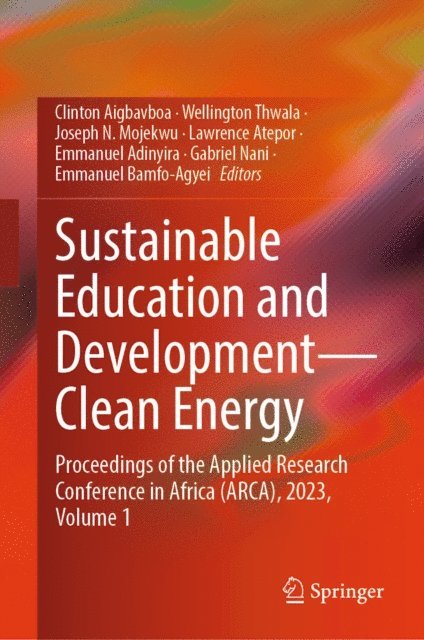
Sustainable Education and Development—Clean Energy
Proceedings of the Applied Research Conference in Africa (ARCA), 2023, Volume 1
Inbunden, Engelska, 2025
3 149 kr
Skickas inom 10-15 vardagar
This book is Volume 1 of the proceedings of 2023 Sustainable Education and Development Research Conference. This volume concentrates on papers in the area of clean energy.Despite considerable progress, more than 700 million people worldwide still lack access to electricity, and around 2.4 billion people continue to use harmful and polluting fuels for cooking. While efforts have been made to promote renewable energy and energy efficiency, they have not been fast enough to achieve Sustainable Development Goal 7. Adding to the challenge, the ongoing war in Ukraine has contributed to rising global energy prices and heightened energy insecurity in Europe. In response to the energy crisis, some European countries are planning to accelerate the transition to renewables and increase investments in clean energy and energy efficiency. However, others are considering a resurgence of coal, which poses a risk to the overall green transition.Between 2010 and 2020, the percentage of the global population with access to electricity increased from 83% to 91%, with 1.3 billion people gaining access. Nevertheless, this leaves approximately 733 million people still without electricity, and most of them reside in sub-Saharan Africa. Achieving universal access by 2030, the annual growth rate in access needs to accelerate from 0.5 percentage points to 0.9 percentage points, necessitating significant efforts in low-income, fragile, and conflict-affected countries. In 2020, 69% of the global population had access to clean cooking fuels and technologies. While more than half of those without access to clean cooking fuels live in Asia, the 20 countries with the lowest percentage of people having access to clean cooking were predominantly least developed countries in Africa.The share of renewable sources in total final energy consumption reached 17.7% globally in 2019, just slightly higher than the figure for 2015. The electricity sector leads in the adoption of renewables, accounting for 26.2% of total final energy consumption in 2019, while the heat and transport sectors have made limited progress.Global primary energy intensity, defined as global total energy supply per unit of GDP, improved from 5.6 megajoules per dollar (2017 purchasing power parity) in 2010 to 4.7 megajoules in 2019. However, the rate of improvement (1.6% per year on average since 2015) falls short of the 3.2% annual rate needed to reach Sustainable Development Goal 7.3.International financial flows to support clean and renewable energy in developing countries reached $10.9 billion in 2019, a 23.6% decrease from 2018. This decline occurred even before the onset of the COVID-19 pandemic. Over a longer five-year moving average, average annual commitments decreased for the first time since 2008, from $17.5 billion in 2014-18 to $16.6 billion in 2015-19.Although developing countries achieved a record of 245.7 watts per capita in installed renewable energy-generating capacity in 2020, small island developing States, least developed countries, and landlocked developing countries have lagged behind. It would take least developed countries and landlocked developing countries nearly 40 years and small island developing States almost 15 years to reach the same level of progress as the average developing country in 2020.The 2023 SEDRC conference, titled "Sustainable Development and Education," aims to redefine the understanding of research in the continent's development and the role of researchers. The conference focusses on applied research discussions and its dissemination. Researchers from research institutions, academicians, postgraduate students, politicians, and industry representatives will be the primary audience for the conference proceedings.
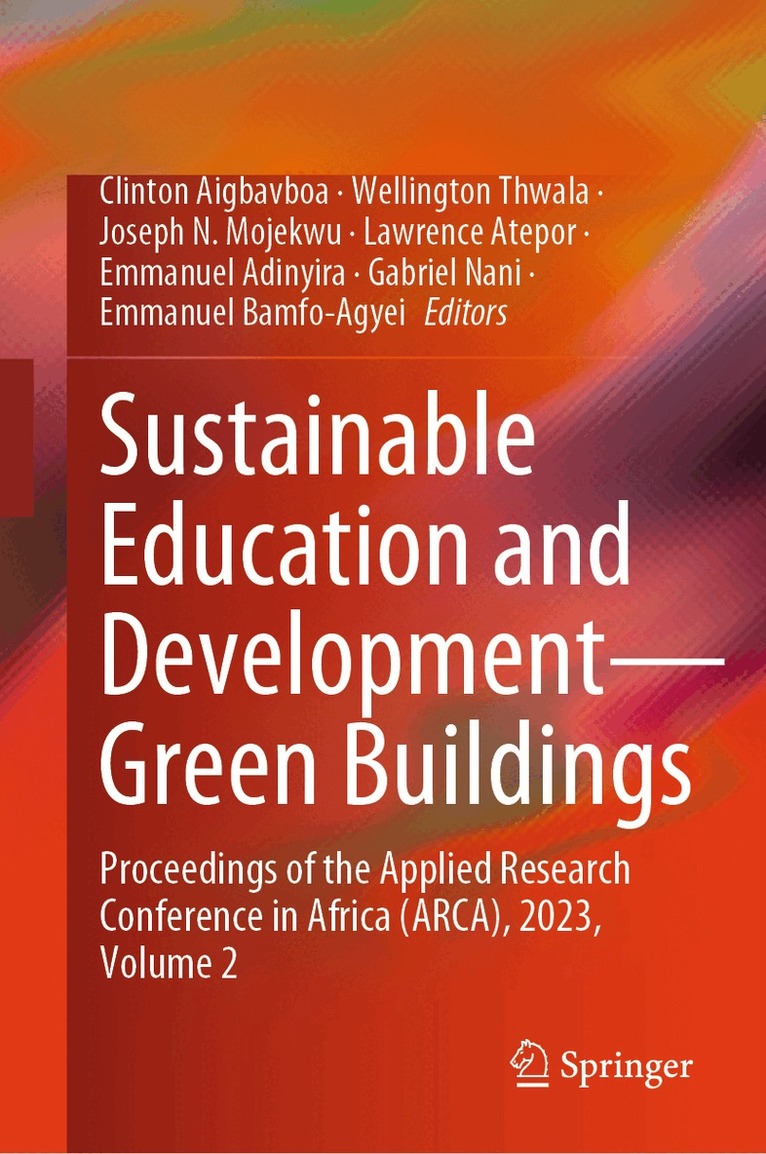
Sustainable Education and Development—Green Buildings
Proceedings of the Applied Research Conference in Africa (ARCA), 2023, Volume 2
Inbunden, Engelska, 2024
3 243 kr
Skickas inom 10-15 vardagar
This book is Volume 2 of the proceedings of 2023 Sustainable Education and Development Research Conference. This volume concentrates on papers in the area of green buildings. Despite considerable progress, more than 700 million people worldwide still lack access to electricity, and around 2.4 billion people continue to use harmful and polluting fuels for cooking. While efforts have been made to promote renewable energy and energy efficiency, they have not been fast enough to achieve Sustainable Development Goal 7. Adding to the challenge, the ongoing war in Ukraine has contributed to rising global energy prices and heightened energy insecurity in Europe. In response to the energy crisis, some European countries are planning to accelerate the transition to renewables and increase investments in clean energy and energy efficiency. However, others are considering a resurgence of coal, which poses a risk to the overall green transition.Between 2010 and 2020, the percentage of the global population with access to electricity increased from 83% to 91%, with 1.3 billion people gaining access. Nevertheless, this leaves approximately 733 million people still without electricity, and most of them reside in sub-Saharan Africa. Achieving universal access by 2030, the annual growth rate in access needs to accelerate from 0.5 percentage points to 0.9 percentage points, necessitating significant efforts in low-income, fragile, and conflict-affected countries. In 2020, 69% of the global population had access to clean cooking fuels and technologies. While more than half of those without access to clean cooking fuels live in Asia, the 20 countries with the lowest percentage of people having access to clean cooking were predominantly least developed countries in Africa. The share of renewable sources in total final energy consumption reached 17.7% globally in 2019, just slightly higher than the figure for 2015. The electricity sector leads in the adoption of renewables, accounting for 26.2% of total final energy consumption in 2019, while the heat and transport sectors have made limited progress. Global primary energy intensity, defined as global total energy supply per unit of GDP, improved from 5.6 megajoules per dollar (2017 purchasing power parity) in 2010 to 4.7 megajoules in 2019. However, the rate of improvement (1.6% per year on average since 2015) falls short of the 3.2% annual rate needed to reach Sustainable Development Goal 7.3. International financial flows to support clean and renewable energy in developing countries reached $10.9 billion in 2019, a 23.6% decrease from 2018. This decline occurred even before the onset of the COVID-19 pandemic. Over a longer five-year moving average, average annual commitments decreased for the first time since 2008, from $17.5 billion in 2014-18 to $16.6 billion in 2015-19. Although developing countries achieved a record of 245.7 watts per capita in installed renewable energy-generating capacity in 2020, small island developing States, least developed countries, and landlocked developing countries have lagged behind. It would take least developed countries and landlocked developing countries nearly 40 years and small island developing States almost 15 years to reach the same level of progress as the average developing country in 2020. The 2023 SEDRC conference, titled "Sustainable Development and Education," aims to redefine the understanding of research in the continent's development and the role of researchers. The conference focusses on applied research discussions and its dissemination. Researchers from research institutions, academicians, postgraduate students, politicians, and industry representatives will be the primary audience for the conference proceedings.
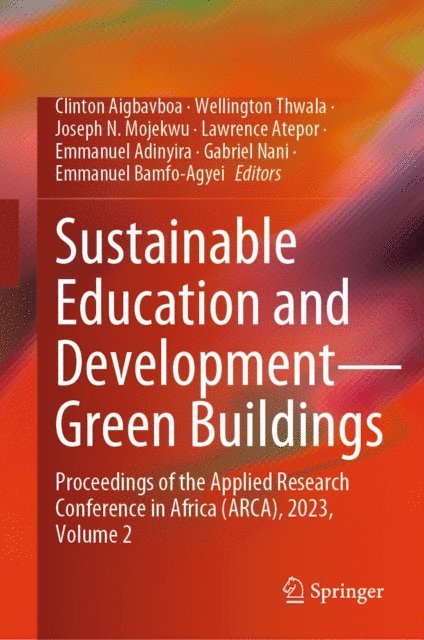
Sustainable Education and Development—Green Buildings
Proceedings of the Applied Research Conference in Africa (ARCA), 2023, Volume 2
Häftad, Engelska, 2025
3 243 kr
Skickas inom 10-15 vardagar
This book is Volume 2 of the proceedings of 2023 Sustainable Education and Development Research Conference. This volume concentrates on papers in the area of green buildings. Despite considerable progress, more than 700 million people worldwide still lack access to electricity, and around 2.4 billion people continue to use harmful and polluting fuels for cooking. While efforts have been made to promote renewable energy and energy efficiency, they have not been fast enough to achieve Sustainable Development Goal 7. Adding to the challenge, the ongoing war in Ukraine has contributed to rising global energy prices and heightened energy insecurity in Europe. In response to the energy crisis, some European countries are planning to accelerate the transition to renewables and increase investments in clean energy and energy efficiency. However, others are considering a resurgence of coal, which poses a risk to the overall green transition.Between 2010 and 2020, the percentage of the global population with access to electricity increased from 83% to 91%, with 1.3 billion people gaining access. Nevertheless, this leaves approximately 733 million people still without electricity, and most of them reside in sub-Saharan Africa. Achieving universal access by 2030, the annual growth rate in access needs to accelerate from 0.5 percentage points to 0.9 percentage points, necessitating significant efforts in low-income, fragile, and conflict-affected countries. In 2020, 69% of the global population had access to clean cooking fuels and technologies. While more than half of those without access to clean cooking fuels live in Asia, the 20 countries with the lowest percentage of people having access to clean cooking were predominantly least developed countries in Africa. The share of renewable sources in total final energy consumption reached 17.7% globally in 2019, just slightly higher than the figure for 2015. The electricity sector leads in the adoption of renewables, accounting for 26.2% of total final energy consumption in 2019, while the heat and transport sectors have made limited progress. Global primary energy intensity, defined as global total energy supply per unit of GDP, improved from 5.6 megajoules per dollar (2017 purchasing power parity) in 2010 to 4.7 megajoules in 2019. However, the rate of improvement (1.6% per year on average since 2015) falls short of the 3.2% annual rate needed to reach Sustainable Development Goal 7.3. International financial flows to support clean and renewable energy in developing countries reached $10.9 billion in 2019, a 23.6% decrease from 2018. This decline occurred even before the onset of the COVID-19 pandemic. Over a longer five-year moving average, average annual commitments decreased for the first time since 2008, from $17.5 billion in 2014-18 to $16.6 billion in 2015-19. Although developing countries achieved a record of 245.7 watts per capita in installed renewable energy-generating capacity in 2020, small island developing States, least developed countries, and landlocked developing countries have lagged behind. It would take least developed countries and landlocked developing countries nearly 40 years and small island developing States almost 15 years to reach the same level of progress as the average developing country in 2020. The 2023 SEDRC conference, titled "Sustainable Development and Education," aims to redefine the understanding of research in the continent's development and the role of researchers. The conference focusses on applied research discussions and its dissemination. Researchers from research institutions, academicians, postgraduate students, politicians, and industry representatives will be the primary audience for the conference proceedings.
Sustainable and Resilient Infrastructure Development in Africa's Changing Climate
Proceedings of 8th International Conference on Infrastructure Development in Africa, Kumasi, Ghana, 19-22 November, 2023
Inbunden, Engelska, 2024
3 637 kr
Skickas inom 10-15 vardagar
This book brings together the experiences, of participants, gathered through many years of research and practice across various fields of infrastructure development that can help shape the future of the African continent.
3 637 kr
Skickas inom 10-15 vardagar
This book contains the proceedings of ICIDA 2023. The conference is a platform for deliberating the delivery and management of infrastructure in Africa in the face of a changing climate. It helped to engage various stakeholders, in the continent and beyond, on how to develop and deliver sustainable and resilient infrastructure against climate variabilities. This book brings together the experiences, of participants, gathered through many years of research and practice across various fields of infrastructure development that can help shape the future of the African continent.