Emmanuel Kreike - Böcker
Visar alla böcker från författaren Emmanuel Kreike. Handla med fri frakt och snabb leverans.
7 produkter
7 produkter
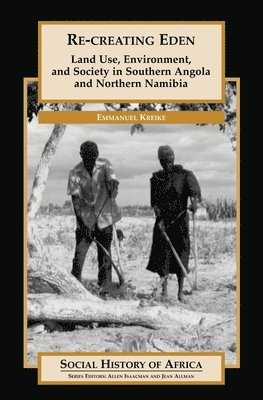
Re-creating Eden
Land Use, Environment, and Society in Southern Angola and Northern Namibia
Inbunden, Engelska, 2004
1 022 kr
Skickas inom 5-8 vardagar
444 kr
Skickas inom 7-10 vardagar
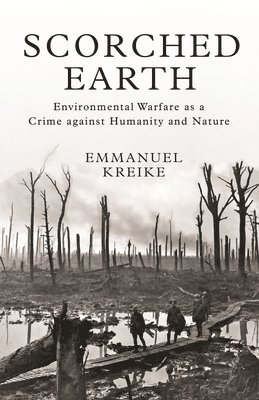
A global history of environmental warfare and the case for why it should be a crimeThe environmental infrastructure that sustains human societies has been a target and instrument of war for centuries, resulting in famine and disease, displaced populations, and the devastation of people’s livelihoods and ways of life. Scorched Earth traces the history of scorched earth, military inundations, and armies living off the land from the sixteenth to the twentieth century, arguing that the resulting deliberate destruction of the environment—"environcide"—constitutes total war and is a crime against humanity and nature.In this sweeping global history, Emmanuel Kreike shows how religious war in Europe transformed Holland into a desolate swamp where hunger and the black death ruled. He describes how Spanish conquistadores exploited the irrigation works and expansive agricultural terraces of the Aztecs and Incas, triggering a humanitarian crisis of catastrophic proportions. Kreike demonstrates how environmental warfare has continued unabated into the modern era. His panoramic narrative takes readers from the Thirty Years' War to the wars of France's Sun King, and from the Dutch colonial wars in North America and Indonesia to the early twentieth century colonial conquest of southwestern Africa.Shedding light on the premodern origins and the lasting consequences of total war, Scorched Earth explains why ecocide and genocide are not separate phenomena, and why international law must recognize environmental warfare as a violation of human rights.
266 kr
Skickas inom 7-10 vardagar
A global history of environmental warfare and the case for why it should be a crimeThe environmental infrastructure that sustains human societies has been a target and instrument of war for centuries, resulting in famine and disease, displaced populations, and the devastation of people’s livelihoods and ways of life. Scorched Earth traces the history of scorched earth, military inundations, and armies living off the land from the sixteenth to the twentieth century, arguing that the resulting deliberate destruction of the environment—"environcide"—constitutes total war and is a crime against humanity and nature.In this sweeping global history, Emmanuel Kreike shows how religious war in Europe transformed Holland into a desolate swamp where hunger and the black death ruled. He describes how Spanish conquistadores exploited the irrigation works and expansive agricultural terraces of the Aztecs and Incas, triggering a humanitarian crisis of catastrophic proportions. Kreike demonstrates how environmental warfare has continued unabated into the modern era. His panoramic narrative takes readers from the Thirty Years' War to the wars of France's Sun King, and from the Dutch colonial wars in North America and Indonesia to the early twentieth century colonial conquest of southwestern Africa.Shedding light on the premodern origins and the lasting consequences of total war, Scorched Earth explains why ecocide and genocide are not separate phenomena, and why international law must recognize environmental warfare as a violation of human rights.
Environmental Infrastructure in African History
Examining the Myth of Natural Resource Management in Namibia
Inbunden, Engelska, 2013
1 282 kr
Skickas inom 7-10 vardagar
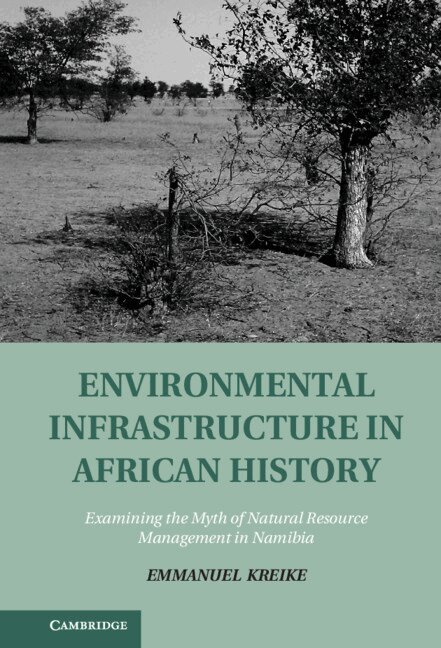
Environmental Infrastructure in African History offers a new approach for analyzing and narrating environmental change. Environmental change conventionally is understood as occurring in a linear fashion, moving from a state of more nature to a state of less nature and more culture. In this model, non-Western and pre-modern societies live off natural resources, whereas more modern societies rely on artifact, or nature that is transformed and domesticated through science and technology into culture. In contrast, Emmanuel Kreike argues that both non-Western and pre-modern societies inhabit a dynamic middle ground between nature and culture. He asserts that humans - in collaboration with plants, animals, and other animate and inanimate forces - create environmental infrastructure that constantly is remade and re-imagined in the face of ongoing processes of change.
Deforestation and Reforestation in Namibia
The Global Consequences of Local Contradictions
Häftad, Engelska, 2009
419 kr
Skickas inom 3-6 vardagar
545 kr
Skickas inom 7-10 vardagar
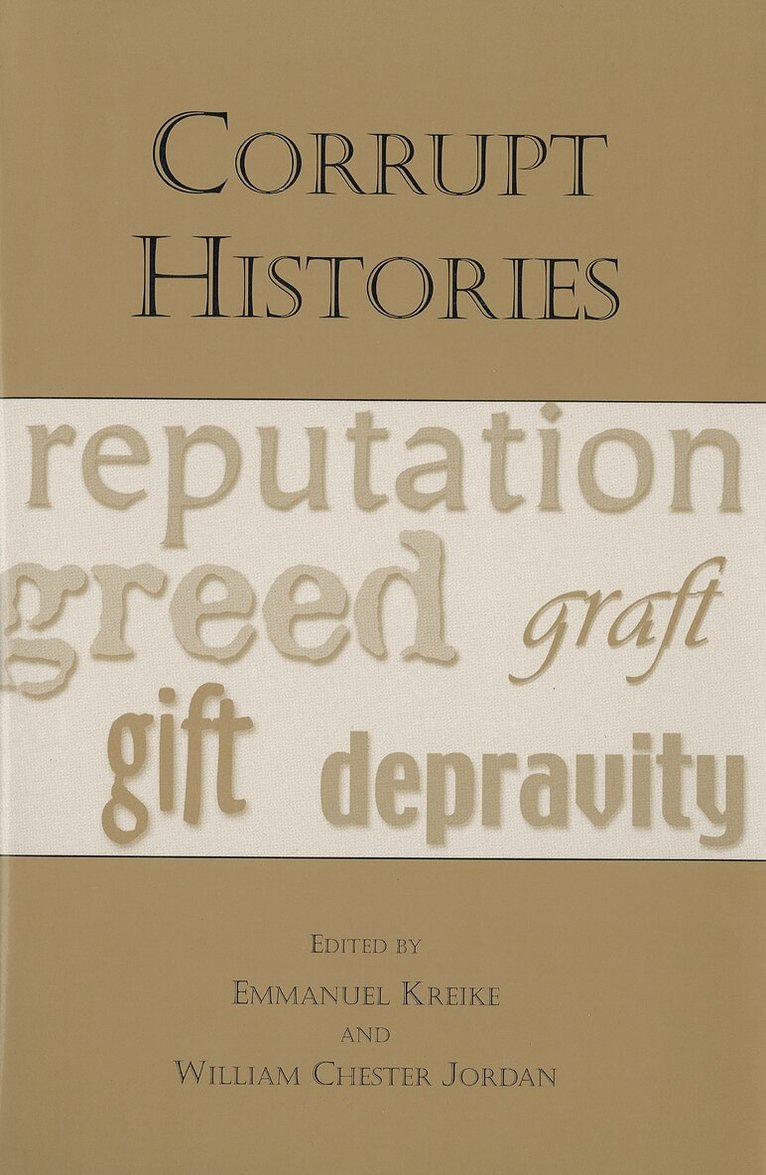
An examination of the meaning and effects of corruption in 18th to 20th Century history.Corruption is a preoccupation of governments and societies across place and time, from the 18th-19th Century British, Chinese, and Iberian empires to 20th Century Nazi Germany, Russia, the United States, and India. This study offers three different perspectives on corruption. The first chapters highlight corrupt practices, taking as a point of departure a technocratic definition of corruption. The second part of the book views corruption through the lens of discourses of corruption, revealing that accusations of corruption have been employed as tools, often in the context of contestations of power. The essays in the third part of the book treat corruption as a process, taking intoaccount its causes and effects and their impact on society, economics, and politics.Contributors: JEREMY ADELMAN, VIRGINIE COULLOUDON, WILLIAM DOYLE, DIEGO GAMBETTA, NORMAN J. W. GODA, ROBERT GREGG, MICHAEL JOHNSTON, WILLIAM CHESTER JORDAN, EMMANUEL KREIKE, VINOD PAVARALA, DILIP SIMEON, PIERRE-ETIENNE WILL, DAVID WITWER, PHILIP WOODFINEWilliam Chester Jordan is Professor of History at Princeton University; Emmanuel Kreike is Assistant Professor of African History and Director of the African Studies Program at Princeton University.
Del 17 - Afrika-Studiecentrum Series
Deforestation and Reforestation in Namibia
The Global Consequences of Local Contradictions
Häftad, Engelska, 2009
858 kr
Skickas inom 5-8 vardagar
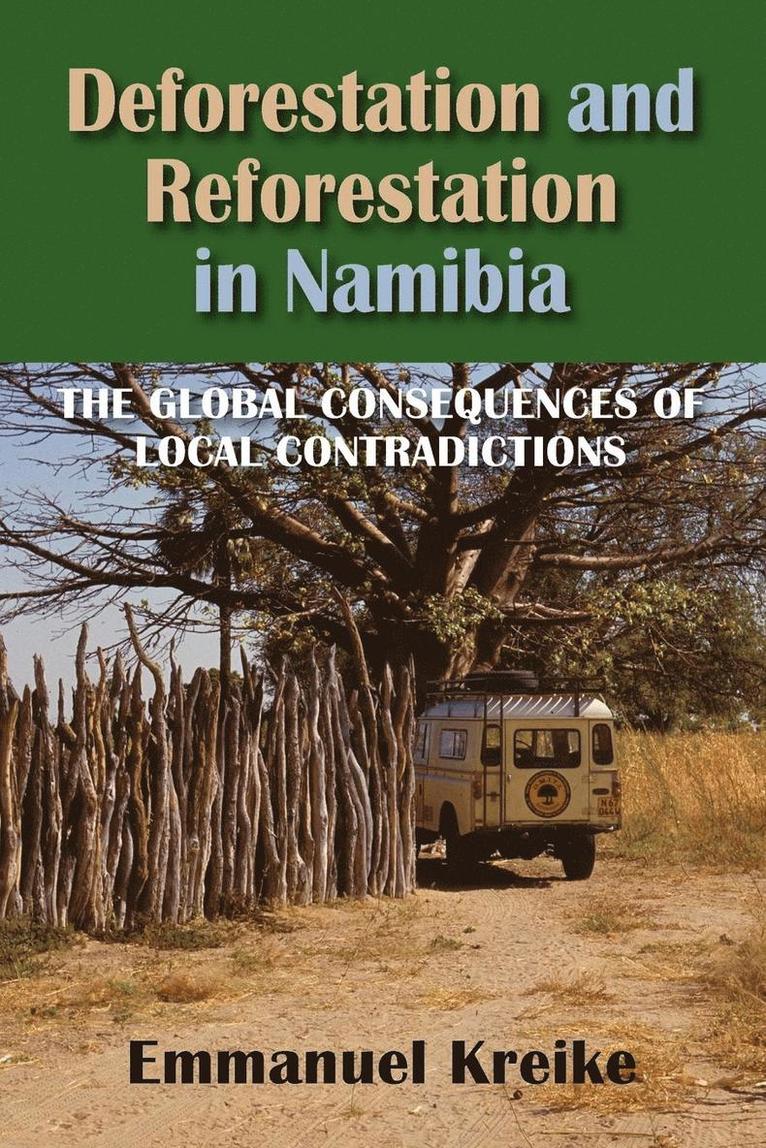
Descriptions of the late 1800s landscape in the Ovambo floodplain in north-central Namibia closely match the area’s late 1900s appearance, suggesting that little change occurred between the pre-colonial baseline and the postcolonial outcome. Yet, paradoxically, colonial conquest, population pressure, biological invasions, new technology, and economic globalization caused both dramatic deforestation and reforestation in less than a century. The paradox stems from the fact that the prevailing global environmental models obscure and homogenize the process of environmental change: different and contradictory interpretations are dismissed as alternative readings or misreadings of the same process. Deforestation and Reforestation, however, argues that the paradox highlights the need to reframe environmental change as plural processes occurring along multiple trajectories that may be dissynchronized and asymmetrical.