• Fri frakt över 249 kr
  • •
  • Snabba leveranser
  • •
  • Billiga böcker
Kundservice

Du är på sajten för privatpersoner.

Företag, bibliotek eller offentlig verksamhet?

Du handlar på classic.bokus.com, där alla dina funktioner finns intakta.
Till classic.bokus.com
Bokus logotyp. Gå till startsidan.
  • Erbjudanden
  • Nyheter
  • Student
  • Topplistor
  • Barn & ungdom
  • Bokus Play
  • E-böcker
  • Pocketböcker
  • Spel & pussel

10% rabatt på allt med kod: NYSTART10 →

Sidfot

Mina sidor

    Hjälp

    • Kundservice
    • Vanliga frågor och svar
    • Frakt och leverans
    • Retur vid ångerrätt
    • Reklamera vara
    • Betalning
    • Köpvillkor
    • Allmänna villkor
    • Information om webbplatsens tillgänglighet

    Om Bokus

    • Om oss
    • Pressrum
    • För studenter
    • För företag
    • För bibliotek och offentlig verksamhet
    • För leverantörer
    • Hållbarhet

    Populärt

    • Aktuella erbjudanden
    • Presentkort
    • Studentlitteratur
    • Nya böcker
    • Topplistor
    • Signerade böcker
    • Engelska böcker

    Inspiration

    • Boktips
    • BookTok
    • Populära bokserier
    • Barnbokskaraktärer
    • Populära författare
    Logotyp för Bokus
    Följ oss på Facebook (extern länk)Följ oss på Instagram (extern länk)Följ oss på YouTube (extern länk)Följ oss på TikTok (extern länk)
    bokus @ CookiesAnpassa cookiesIntegritetspolicyKöpvillkor
    Till Citymail hemsida (extern länk)Till Budbee hemsida (extern länk)Till Postnord hemsida (extern länk)Till Schenker hemsida (extern länk)Till Early Bird hemsida (extern länk)Till Walleys hemsida (extern länk)
    1. Historia och arkeologi
    2. Historia
    3. Afrikas historia

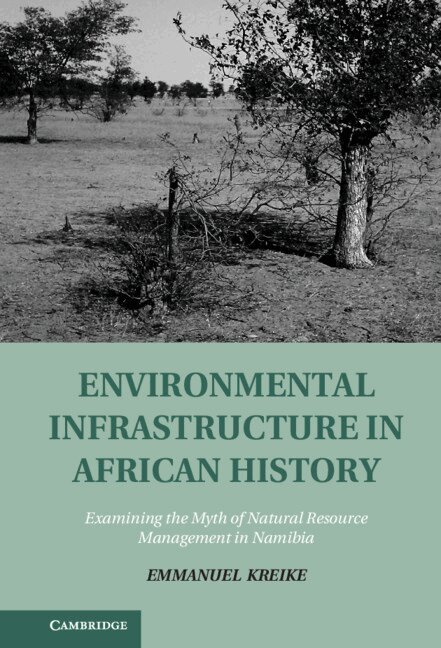
    Environmental Infrastructure in African History

    Examining the Myth of Natural Resource Management in Namibia

    AvEmmanuel Kreike

    Inbunden, Engelska, 2013

    Del i serien Studies in Environment and History

    1 378 kr

    Beställningsvara. Skickas inom 10-15 vardagar. Fri frakt över 249 kr.

    Beskrivning

    Environmental Infrastructure in African History offers a new approach for analyzing and narrating environmental change. Environmental change conventionally is understood as occurring in a linear fashion, moving from a state of more nature to a state of less nature and more culture. In this model, non-Western and pre-modern societies live off natural resources, whereas more modern societies rely on artifact, or nature that is transformed and domesticated through science and technology into culture. In contrast, Emmanuel Kreike argues that both non-Western and pre-modern societies inhabit a dynamic middle ground between nature and culture. He asserts that humans - in collaboration with plants, animals, and other animate and inanimate forces - create environmental infrastructure that constantly is remade and re-imagined in the face of ongoing processes of change.

    Produktinformation

    • Utgivningsdatum:2013-05-13
    • Mått:158 x 235 x 19 mm
    • Vikt:500 g
    • Format:Inbunden
    • Språk:Engelska
    • Serie:Studies in Environment and History
    • Antal sidor:254
    • Förlag:Cambridge University Press
    • ISBN:9781107001510

    Utforska kategorier

    • Afrikas historia inom Historia och arkeologi

    Mer om författaren

    Emmanuel Kreike is Professor of History at Princeton University. He is the author of Deforestation and Reforestation in Namibia: The Global Consequences of Local Contradictions (2010) and Re-Creating Eden: Land Use, Environment, and Society in Southern Angola and Northern Namibia (2004). Professor Kreike has contributed chapters to several volumes, including The Nature of Cities (edited by Andrew C. Isenberg, 2006) and Social History and African Environments (edited by William Beinart and Joann McGregor, 2003). He serves on the Executive Committee of the Princeton Environmental Institute (PEI) and the Board of Princeton-in-Africa (PiAF).

    Innehållsförteckning

    • 1. The ends of nature and culture; 2. Architects of nature; 3. Dark earths: field and farm environmental infrastructure; 4. Water and woodland harvesting: village environmental infrastructure; 5. Browse and burn: bush savanna as environmental infrastructure; 6. Valuing environmental infrastructure and the myth of natural resources management; 7. Science and the failure to conquer nature: environing and the modern west; Conclusion.