Enoch O. Aboh - Böcker
Visar alla böcker från författaren Enoch O. Aboh. Handla med fri frakt och snabb leverans.
3 produkter
3 produkter
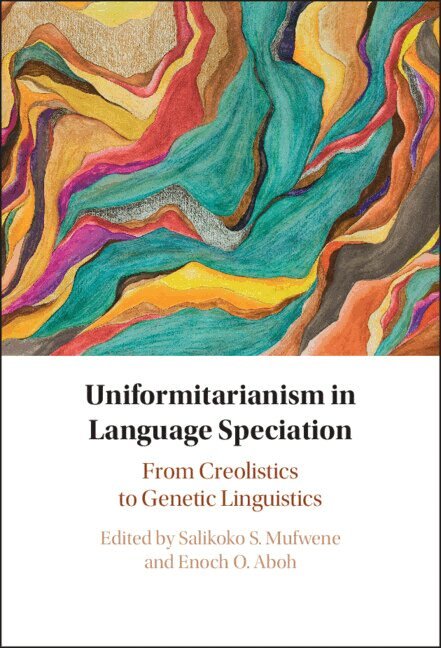
Uniformitarianism in Language Speciation
From Creolistics to Genetic Linguistics
Inbunden, Engelska, 2025
1 770 kr
Skickas inom 7-10 vardagar
Uniformitarianism is the widely held assumption that, in the case of languages, structural and other changes in the past must have been triggered and constrained by the same ecological factors as changes in the present. This volume, led by two of the most eminent scholars in language contact, brings together an international team of authors to shed new light on Uniformitarianism in historical linguistics. Applying the Uniformitarian Principle to creoles and pidgins, as well as other languages, the chapters show that, contrary to the received doctrine, the former group of languages did not emerge in an exceptional way. Covering a typologically and geographically broad range of languages, and focusing on different contact ecologies in Africa, Latin America, and the Caribbean, the book also dispels common misconceptions about what Uniformitarianism is. It shows how similar processes in different ecosystems result in different linguistic patterns, which don't require exceptional linguistic explanations in terms of creolization, pidginization, simplification, or incomplete acquisition.
1 096 kr
Skickas inom 10-15 vardagar
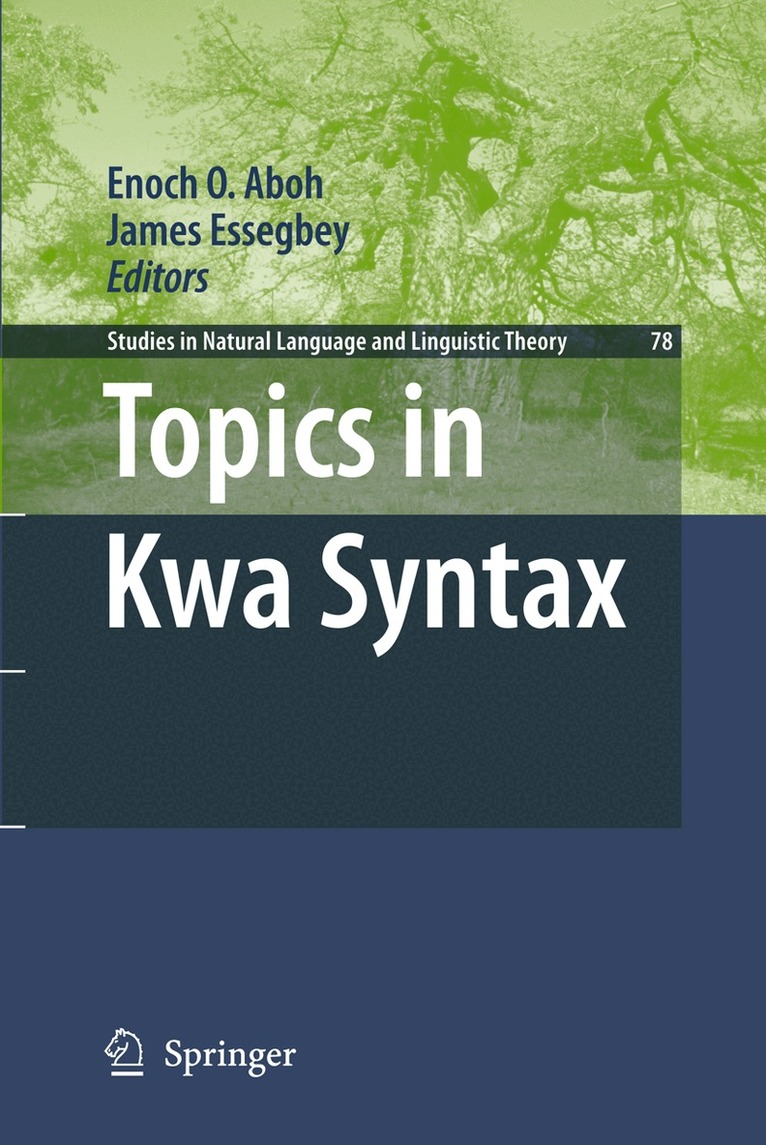
This book grew out of a concern we have had that very many theoretical and descriptive work on the Kwa languages were not accessible to the general linguistic community. As a result, these languages were only referred to in the context of very specific discussions such as serial verb constructions. But as the reader of this book will notice, syntactic topics discussed in the context of Kwa range from bare nouns, relative clauses, negation, discourse markers and the interaction with the clausal periphery, to argument structure. Many issues remain that need to be brought to the fore of the community and we hope that this book will trigger the curiosity of the reader to get to know more about these languages. Much of the work presented here could not have been possible without the help of many colleagues and the contri- tors whom we thank warmly for joining this enterprise. We are also grateful to the editors of the series, Marcel den Dikken, Joan Maling, Liliane Haegeman to have offeredus this platform to initiate the debate about Kwa. We will also like to thank Helen van der Stelt and Jolanda Voogd from Springer for their kind collaboration and patience. We are also very grateful to Joscelyn Essegbey and Leston Buell for helping with editing the manuscript. Enoch, O. Aboh James Essegbey v Contents 1 The Phonology Syntax Interface . . . . . . . . . . . . . . . . . . . . . . . . . . . . . . . . . . . . . . . . . . . . . . . . . . . . . . . . . . . . . . 1 Enoch, O. Aboh and James Essegbey 2 The Morphosyntax of the Noun Phrase . . . . . . . . . . . . . . . . . . . . . . . . . . . . . . . . . . . . . . . . . . . . . . . . . . 11 Enoch, O.
1 096 kr
Skickas inom 10-15 vardagar
This book grew out of a concern we have had that very many theoretical and descriptive work on the Kwa languages were not accessible to the general linguistic community. As a result, these languages were only referred to in the context of very specific discussions such as serial verb constructions. But as the reader of this book will notice, syntactic topics discussed in the context of Kwa range from bare nouns, relative clauses, negation, discourse markers and the interaction with the clausal periphery, to argument structure. Many issues remain that need to be brought to the fore of the community and we hope that this book will trigger the curiosity of the reader to get to know more about these languages. Much of the work presented here could not have been possible without the help of many colleagues and the contri- tors whom we thank warmly for joining this enterprise. We are also grateful to the editors of the series, Marcel den Dikken, Joan Maling, Liliane Haegeman to have offeredus this platform to initiate the debate about Kwa. We will also like to thank Helen van der Stelt and Jolanda Voogd from Springer for their kind collaboration and patience. We are also very grateful to Joscelyn Essegbey and Leston Buell for helping with editing the manuscript. Enoch, O. Aboh James Essegbey v Contents 1 The Phonology Syntax Interface . . . . . . . . . . . . . . . . . . . . . . . . . . . . . . . . . . . . . . . . . . . . . . . . . . . . . . . . . . . . . . 1 Enoch, O. Aboh and James Essegbey 2 The Morphosyntax of the Noun Phrase . . . . . . . . . . . . . . . . . . . . . . . . . . . . . . . . . . . . . . . . . . . . . . . . . . 11 Enoch, O.