Eram Alam - Böcker
Visar alla böcker från författaren Eram Alam. Handla med fri frakt och snabb leverans.
3 produkter
3 produkter
Del 15 - Race, Inequality, and Health
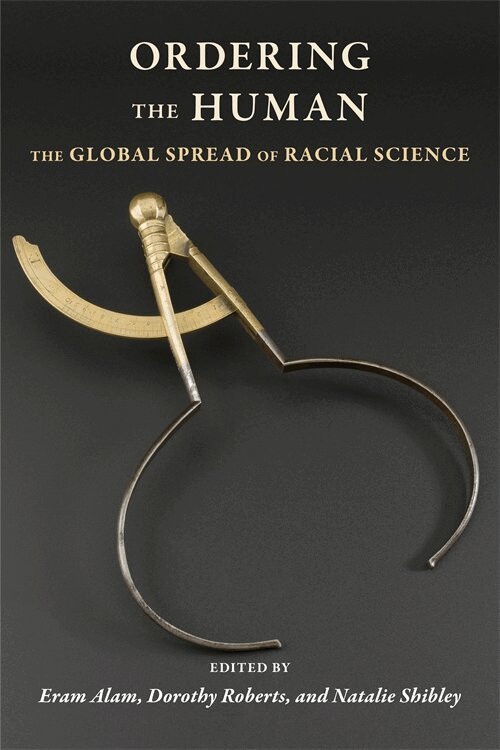
Ordering the Human
The Global Spread of Racial Science
Inbunden, Engelska, 2024
1 264 kr
Skickas inom 7-10 vardagar
Modern science and ideas of race have long been entangled, sharing notions of order, classification, and hierarchy. Ordering the Human presents cutting-edge interdisciplinary scholarship that examines the racialization of science in various global contexts, illuminating how racial logics have been deployed to classify, marginalize, and oppress.These wide-ranging essays—written by experts in genetics, forensics, public health, history, sociology, and anthropology—investigate the influence of racial concepts in scientific knowledge production across regions and eras. Chapters excavate the mechanisms by which racialized science serves projects of power and domination, and they explore different forms of resistance. Topics range from skull collecting by eighteenth-century German and Dutch scientists to the use of biology to reinforce notions of purity in present-day South Korea and Brazil. The authors investigate the colonial legacies of the pathologization of weight for the Maori people, the scientific presumption of coronary artery disease risk among South Asians, and the role of racial categories in COVID-19 statistics and responses, among many other cases. Tracing the pernicious consequences of the racialization of science, Ordering the Human shines a light on how the naturalization of racial categories continues to shape health and inequality today.
Del 15 - Race, Inequality, and Health
Ordering the Human
The Global Spread of Racial Science
Häftad, Engelska, 2024
321 kr
Skickas inom 7-10 vardagar
Modern science and ideas of race have long been entangled, sharing notions of order, classification, and hierarchy. Ordering the Human presents cutting-edge interdisciplinary scholarship that examines the racialization of science in various global contexts, illuminating how racial logics have been deployed to classify, marginalize, and oppress.These wide-ranging essays—written by experts in genetics, forensics, public health, history, sociology, and anthropology—investigate the influence of racial concepts in scientific knowledge production across regions and eras. Chapters excavate the mechanisms by which racialized science serves projects of power and domination, and they explore different forms of resistance. Topics range from skull collecting by eighteenth-century German and Dutch scientists to the use of biology to reinforce notions of purity in present-day South Korea and Brazil. The authors investigate the colonial legacies of the pathologization of weight for the Maori people, the scientific presumption of coronary artery disease risk among South Asians, and the role of racial categories in COVID-19 statistics and responses, among many other cases. Tracing the pernicious consequences of the racialization of science, Ordering the Human shines a light on how the naturalization of racial categories continues to shape health and inequality today.
712 kr
Skickas inom 7-10 vardagar
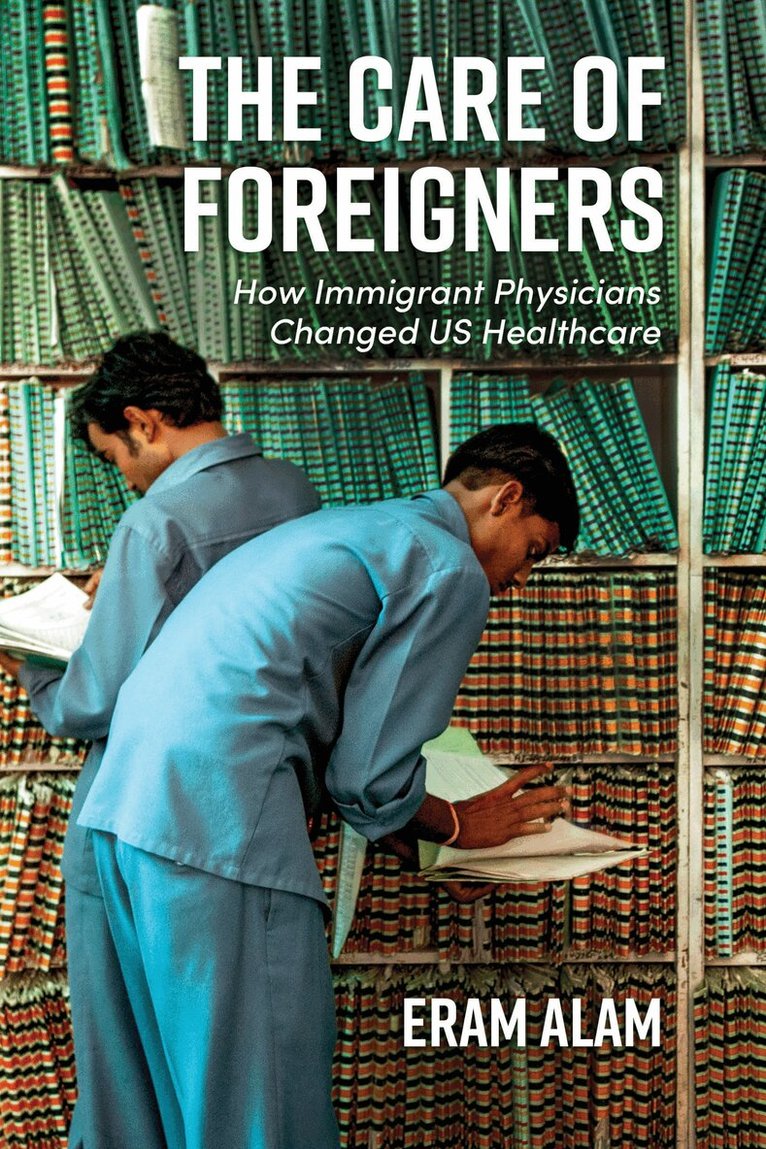
Why did South Asian physicians become essential to US health care starting in 1965?For more than 60 years, the United States has trained fewer physicians than it needs, relying instead on the economically expedient option of soliciting immigrant physicians trained at the expense of other countries. In The Care of Foreigners, Eram Alam examines this migratory dynamic that began during the Cold War.The passage of the Hart–Celler Immigration and Nationality Act of 1965 expedited the entry of foreign medical graduates (FMGs) from postcolonial South Asia and sent them to provide care in shortage areas throughout the United States. Although this arrangement was conceived as temporary, over the decades it has become a permanent fixture of the medical system, with FMGs comprising at least a quarter of the physician labor force since the act became law. This cohort of practitioners has not been extensively studied, rendering the impacts of immigration and foreign policy on the everyday mechanics of US health care obscure. Alam foregrounds global dynamics embedded in the medical system to ask how and why Asian physicians—and especially practitioners from South Asia—have become integral to US medical practice and ubiquitous in the US public imaginary.Drawing on transcripts of congressional hearings; medical, scientific, and social scientific literature; ethnographies; oral histories; and popular media, Alam explores the enduring consequences of postcolonial physician migration. Combining theoretical and methodological insights from a range of disciplines, this book analyzes both the care provided by immigrant physicians as well as the care extended to them as foreigners.