Eric Eve - Böcker
Visar alla böcker från författaren Eric Eve. Handla med fri frakt och snabb leverans.
11 produkter
11 produkter
198 kr
Skickas inom 11-20 vardagar
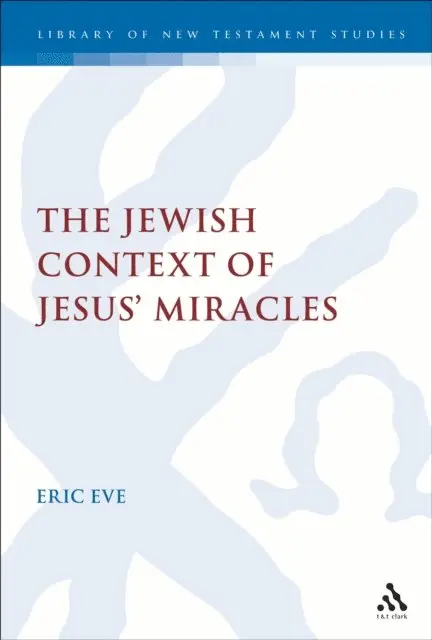
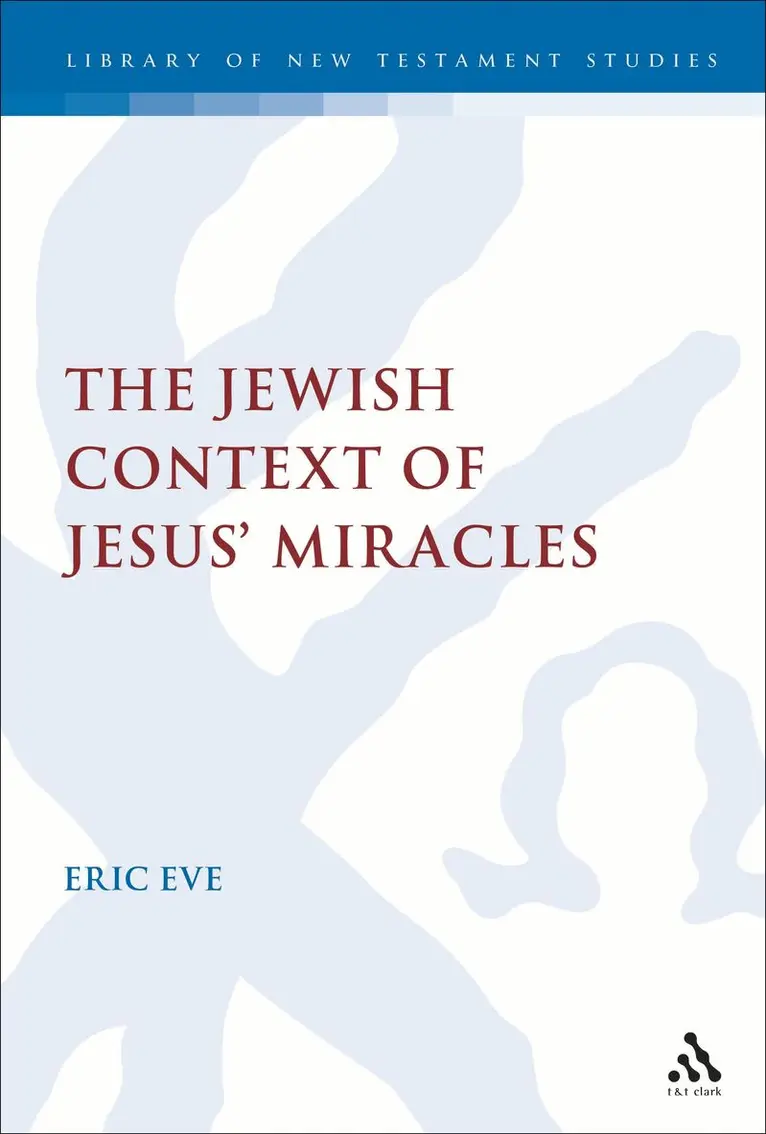
Considers the evidence for Jesus' miracles and then shows how they might most plausibly be understood in the light of this evidence. This title examines the various kinds of evidence for the miracles - historical, cultural, literary, and social-scientific.
279 kr
Skickas inom 7-10 vardagar
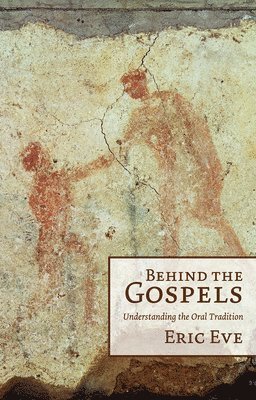
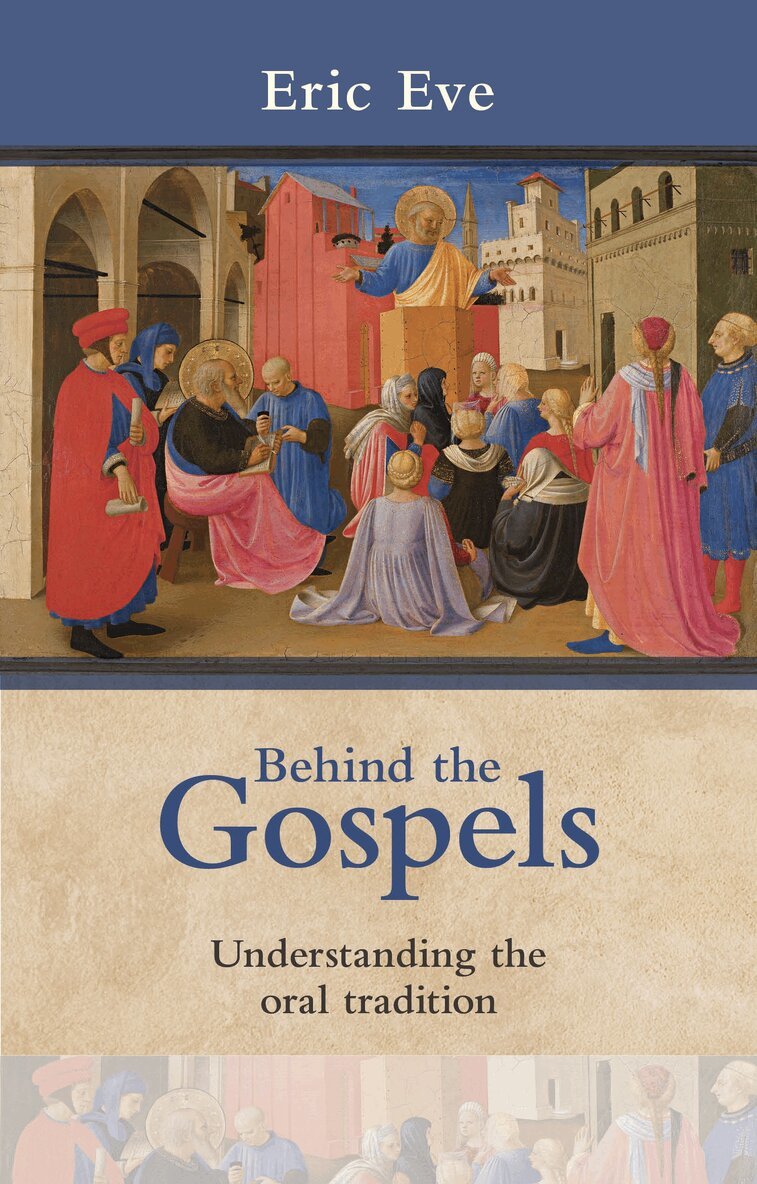
For a hundred years, the million dollar question has been, What was the nature and state of the tradition between Jesus and the gospels? Eve surveys the major proposals, offers critical and constructive commentary, and makes appropriately nuanced suggestions of his own. On this topic, his work is now the place to start' Dale C. Allison, Jr. Professor of New Testament, Pittsburgh Theological Seminary 'Eric Eve has written a magnificent guide to one of the most exciting areas in Gospels studies today - oral tradition and memory theory. With clear writing and judicious assessment, he covers the important personalities and ideas in the search to get behind the Gospels, from form criticism to the present. I highly recommend this book to scholars and students alike' Chris Keith, Professor of New Testament and Early Christianity, St Mary's University College, London 'Eric Eve gives a balanced and lucid account of all attempts to reconstruct the oral tradition behind the written Gospels . . . Eve's judgments on these questions are fair, his arguments convincing. This is a foundational book both for Jesus research and for our understanding of the literary history of the New Testament' Gerd Theissen, Professor Emeritus of New Testament, University of Heidelberg.
258 kr
Skickas
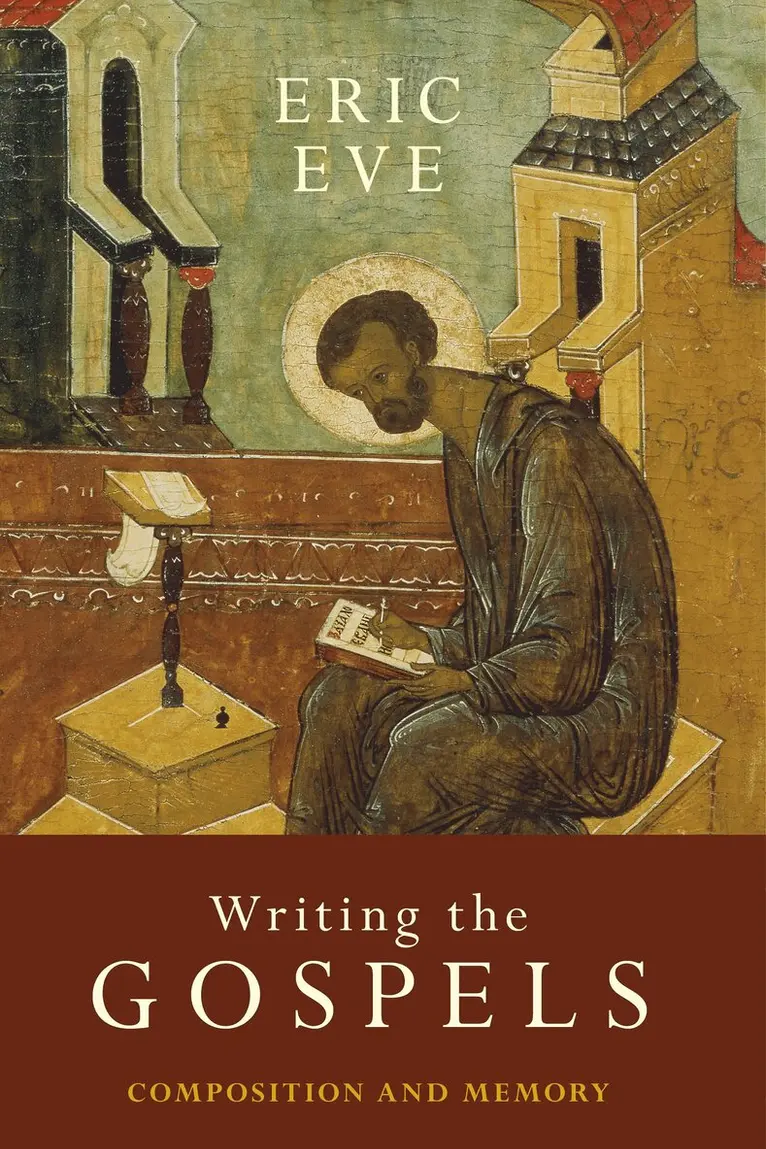
Ancient authors and readers did not work with manuscripts the way we work with printed texts. It is thus all too easy to fall into anachronistic assumptions about how the Gospels were written. Writing the Gospels challenges such assumptions in the light of recent work on ancient media studies and suggests more appropriate models for the composition of the New Testament Gospels.The main argument is that memory would have been central to the process of composition. The Evangelists almost certainly relied on their memory of the Hebrew Scriptures (and Israelite tradition in general) for their use of them. They will also have been both informed and constrained by the social memory of the primitive Church. It is argued here that they will most likely have relied on their memory of their written sources, or at least, that it is a better working assumption that they did so than that they necessarily worked with their written sources open in front of them. So, for example, Matthew may well have been used to performing Mark from memory and would have had no need to consult a copy if he used Mark as the basis of his own work.While other aspects of ancient composition are addressed, the main concerns of this study are first to establish the centrality of memory in ancient composition and secondly to explore the implications of assuming that the Evangelists worked mainly from memory, as many of their contemporaries did.
1 564 kr
Skickas inom 5-8 vardagar
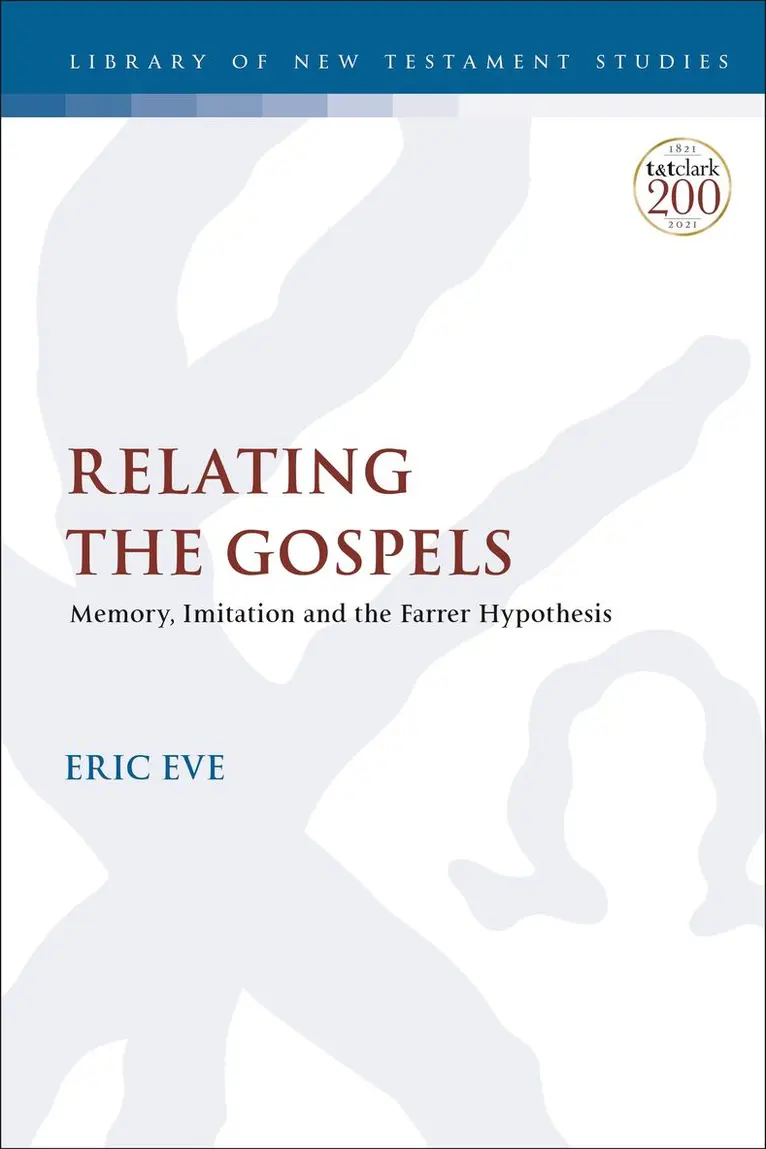
This volume examines the synoptic problem and argues that the similarities between the gospels of Matthew and Luke outweigh the objections commonly raised against the theory that Luke used the text of Matthew in composing his gospel. While agreeing with scholars who suggests that memory played a leading role in ancient source-utilization, Eric Eve argues for a more flexible understanding of memory, which would both explain Luke’s access of Matthew’s double tradition material out of the sequence in which it appears in Matthew, and suggest that Luke may have been more influenced by Matthew’s order than appears on the surface. Eve also considers the widespread ancient practice of literary imitation as another mode of source utilization the Evangelists, particularly Luke, could have employed, and argues that Luke’s Gospel should be seen in part as an emulation of Matthew’s. Within this enlarged understanding of how ancient authors could utilize their sources, Luke’s proposed use of Matthew alongside Mark becomes entirely plausible, and Eve concludes that the Farrer Hypothesis of Matthew using Mark, and Luke consequently using both gospels, to be the most likely solution to the Synoptic Problem.
510 kr
Skickas inom 5-8 vardagar
This volume examines the synoptic problem and argues that the similarities between the gospels of Matthew and Luke outweigh the objections commonly raised against the theory that Luke used the text of Matthew in composing his gospel. While agreeing with scholars who suggests that memory played a leading role in ancient source-utilization, Eric Eve argues for a more flexible understanding of memory, which would both explain Luke’s access of Matthew’s double tradition material out of the sequence in which it appears in Matthew, and suggest that Luke may have been more influenced by Matthew’s order than appears on the surface. Eve also considers the widespread ancient practice of literary imitation as another mode of source utilization the Evangelists, particularly Luke, could have employed, and argues that Luke’s Gospel should be seen in part as an emulation of Matthew’s. Within this enlarged understanding of how ancient authors could utilize their sources, Luke’s proposed use of Matthew alongside Mark becomes entirely plausible, and Eve concludes that the Farrer Hypothesis of Matthew using Mark, and Luke consequently using both gospels, to be the most likely solution to the Synoptic Problem.
234 kr
Skickas inom 7-10 vardagar
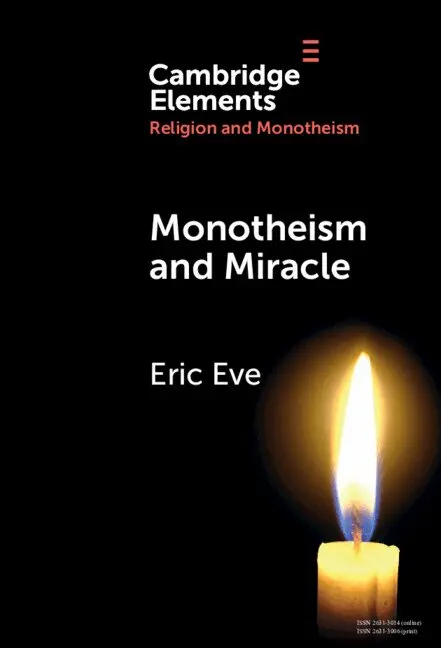
Monotheism implies a God who is active in creation. An author writing a novel provides a better analogy for God's creative activity than an artificer constructing a mechanism. A miracle is then not an interruption of the ordinary course of nature so much as a divine decision to do something out of the ordinary, and miracle is primarily a narrative category. We perceive as miracles events that are extraordinary while also fitting our understanding of divine purpose. Many miracle accounts may remain problematic, however, since recognizing that a given story purports to narrate a miracle does not determine whether the miracle occurred. This Elementweighs competing narratives. In doing so the understanding of the normal workings of nature will carry considerable weight. Nevertheless, there can be instances where believers may, from their own faith perspective, be justified in concluding that a miracle has occurred.
753 kr
Skickas inom 7-10 vardagar
Monotheism implies a God who is active in creation. An author writing a novel provides a better analogy for God's creative activity than an artificer constructing a mechanism. A miracle is then not an interruption of the ordinary course of nature so much as a divine decision to do something out of the ordinary, and miracle is primarily a narrative category. We perceive as miracles events that are extraordinary while also fitting our understanding of divine purpose. Many miracle accounts may remain problematic, however, since recognizing that a given story purports to narrate a miracle does not determine whether the miracle occurred. This Elementweighs competing narratives. In doing so the understanding of the normal workings of nature will carry considerable weight. Nevertheless, there can be instances where believers may, from their own faith perspective, be justified in concluding that a miracle has occurred.
553 kr
Skickas inom 3-6 vardagar
202 kr
Skickas inom 5-8 vardagar
335 kr
Skickas inom 5-8 vardagar
2 355 kr
Skickas inom 10-15 vardagar
Scholarly literature on Jesus has often attempted to relate his miracles to their Jewish context, but that context has not been surveyed in its own right. This volume fills that gap by examining both the ideas on miracle in Second Temple literature (including Josephus, Philo, the Dead Sea Scrolls, Apocrypha and Pseudepigrapha) and the evidence for contemporary Jewish miracle workers. The penultimate chapter explores insights from cultural anthropology to round out the picture obtained from the literary evidence, and the study concludes that Jesus is distinctive as a miracle-worker in his Jewish context while nevertheless fitting into it.