• Fri frakt över 249 kr
  • •
  • Snabba leveranser
  • •
  • Billiga böcker
Kundservice

Du är på sajten för privatpersoner.

Företag, bibliotek eller offentlig verksamhet?

Du handlar på classic.bokus.com, där alla dina funktioner finns intakta.
Till classic.bokus.com
Bokus logotyp. Gå till startsidan.
  • Erbjudanden
  • Nyheter
  • Student
  • Topplistor
  • Barn & ungdom
  • Bokus Play
  • E-böcker
  • Pocketböcker
  • Spel & pussel

10% rabatt på allt med kod NYSTART10 →

Sidfot

Mina sidor

    Hjälp

    • Kundservice
    • Vanliga frågor och svar
    • Frakt och leverans
    • Retur vid ångerrätt
    • Reklamera vara
    • Betalning
    • Köpvillkor
    • Allmänna villkor
    • Information om webbplatsens tillgänglighet

    Om Bokus

    • Om oss
    • Pressrum
    • För studenter
    • För företag
    • För bibliotek och offentlig verksamhet
    • För leverantörer
    • Hållbarhet

    Populärt

    • Aktuella erbjudanden
    • Presentkort
    • Studentlitteratur
    • Nya böcker
    • Topplistor
    • Signerade böcker
    • Engelska böcker

    Inspiration

    • Boktips
    • BookTok
    • Populära bokserier
    • Barnbokskaraktärer
    • Populära författare
    Logotyp för Bokus
    Följ oss på Facebook (extern länk)Följ oss på Instagram (extern länk)Följ oss på YouTube (extern länk)Följ oss på TikTok (extern länk)
    bokus @ CookiesAnpassa cookiesIntegritetspolicyKöpvillkor
    Till Citymail hemsida (extern länk)Till Budbee hemsida (extern länk)Till Postnord hemsida (extern länk)Till Schenker hemsida (extern länk)Till Early Bird hemsida (extern länk)Till Walleys hemsida (extern länk)
    1. Filosofi och religion
    2. Religion och tro
    3. Religion: allmänt

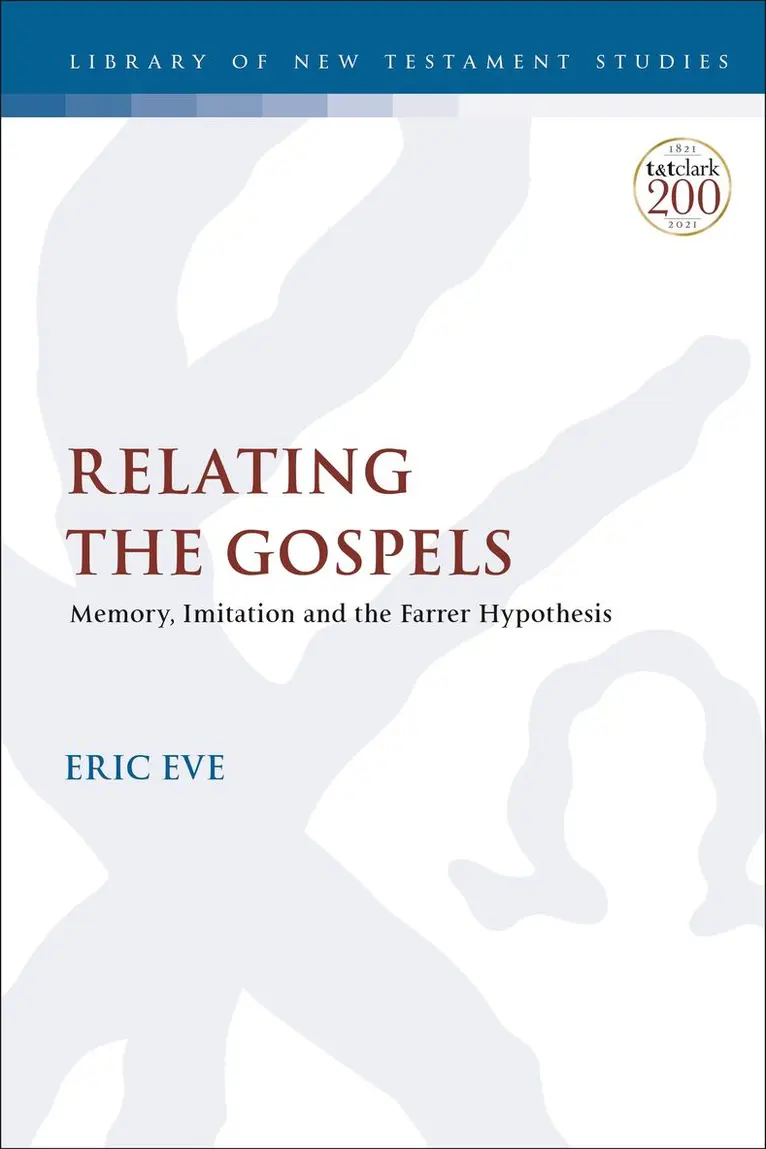
    Relating the Gospels

    Memory, Imitation and the Farrer Hypothesis

    AvEric Eve,Chris Keith

    Inbunden, Engelska, 2021

    Del i serien Library of New Testament Studies

    1 396 kr

    Beställningsvara. Skickas inom 10-15 vardagar. Fri frakt över 249 kr.

    Fler format och utgåvor

    E-bok

    483 kr

    E-bok

    484 kr

    Häftad

    451 kr

    Beskrivning

    This volume examines the synoptic problem and argues that the similarities between the gospels of Matthew and Luke outweigh the objections commonly raised against the theory that Luke used the text of Matthew in composing his gospel. While agreeing with scholars who suggests that memory played a leading role in ancient source-utilization, Eric Eve argues for a more flexible understanding of memory, which would both explain Luke’s access of Matthew’s double tradition material out of the sequence in which it appears in Matthew, and suggest that Luke may have been more influenced by Matthew’s order than appears on the surface. Eve also considers the widespread ancient practice of literary imitation as another mode of source utilization the Evangelists, particularly Luke, could have employed, and argues that Luke’s Gospel should be seen in part as an emulation of Matthew’s. Within this enlarged understanding of how ancient authors could utilize their sources, Luke’s proposed use of Matthew alongside Mark becomes entirely plausible, and Eve concludes that the Farrer Hypothesis of Matthew using Mark, and Luke consequently using both gospels, to be the most likely solution to the Synoptic Problem.

    Produktinformation

    • Utgivningsdatum:2021-02-11
    • Mått:156 x 234 x undefined mm
    • Vikt:540 g
    • Format:Inbunden
    • Språk:Engelska
    • Serie:Library of New Testament Studies
    • Antal sidor:240
    • Förlag:Bloomsbury Publishing PLC
    • ISBN:9780567681102

    Utforska kategorier

    • Religion: allmänt inom Filosofi och religion
    • Kristendom inom Filosofi och religion

    Mer om författaren

    Eric Eve is Fellow and Tutor in Theology at Harris Manchester College, Oxford, UK.

    Recensioner i media

    The most important thing about Eve’s monograph: its defense of the Farrer Hypothesis will be required reading for anyone involved with the Synoptic problem.

    Innehållsförteckning

    • PrefaceAcknowledgementsAbbreviations1. Introduction2. Models, Memory and Markan Priority 3. Transformational Techniques4. Significant Similarities5. Difficult Differences6. The Order Objection7. ConclusionBibliographyIndex