Eric H. Arnett – författare
Visar alla böcker från författaren Eric H. Arnett. Handla med fri frakt och snabb leverans.
6 produkter
6 produkter
722 kr
Tillfälligt slut
The authors report on new aspects of the definition, organization, and verification of a Comprehensive Test Ban. The traditional debate on seismic and non-seismic monitoring is examined alongside newer aspects of treaty verification - pre-test monitoring and inspections. Contributors: Eric Arnett, Patricia Lewis, Annette Schaper This book is intended for scholars and students concerned with strategic studies, peace studies, and international relations; professionals, consultants, journalists, and policy-makers specializing in these areas.
1 007 kr
Tillfälligt slut
This book examines an area of the world where nuclear arms control is almost non-existent - China, India and Pakistan - and takes the approach of considering the implications of conventional arms transfers, and in particular India's strategic defences, for nuclear stability. Building on an analysis of their internal politics and attitudes to nuclear policies, it concludes that certain apparently defensive systems and in particular counter-air systems have considerable implications for the retention of nuclear capabilities in the region.
817 kr
Skickas inom 10-15 vardagar
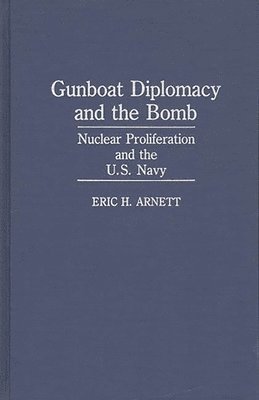
In this powerful new analysis of the importance of U.S. nuclear proliferation policy, Eric H. Arnett realistically assesses the impact of nuclear proliferation on the ability of the United States to protect what is currently perceived to be its interests. The book offers a thorough review of the effects of nuclear weapons on U.S. power projection forces, the current capabilities of proliferant countries, and the ability of these proliferant to successfully deliver their nuclear weapons. Arnett constructs scenarios that test the relevance of the proliferant arsenals to U.S. capabilities, and probable willingness, to protect its interests in future crisis. Using India, Iran, and Libya to present these scenarios, the book questions whether a proliferant would be immune to intervention from a nuclear superpower or, rather, immune to the purported benefits of nuclear deterrence.With a special focus on U.S. naval power, this book asks whether nuclear proliferation will limit options and opportunities the U.S. would otherwise have. Will the U.S. have to forego certain regional interests in the face of nuclear attacks on ships and bases? Would the Navy have struck Benghazi had Qaddafi deployed a small nuclear arsenal? Will the Freedom of Navigation Program have to be abandoned in some cases? Or will the U.S. Navy be able to cope through modifications to forces and tactics, as more countries cross the nuclear threshold?
1 019 kr
Skickas inom 10-15 vardagar
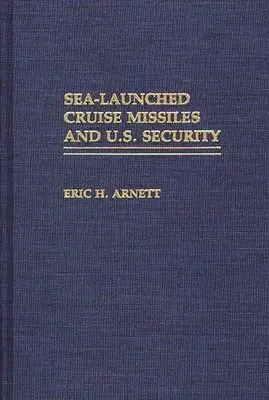
This is the most up-to-the minute survey of the vital subject of sea-launched cruise missiles (SLCMs) to appear in ten years. It systematically analyzes the technological promises and weaknesses of SLCMs, especially conventionally armed, land-attack versions, explaining sophisticated technologies in language accessible to the general reader. Eric H. Arnett presents a cogent assessment of the crux of the SLCM issue for U.S. security, examining the coastal nation concept of the U.S. defensive position and investigating whether technology can adequately compensate for geography as Tomahawks and their Soviet counterparts give way to more advanced progeny. Arnett weighs the trade-offs in a frank discussion of the technologies and missions envisioned for current and future SLCMs. This well-researched, authoritative study evaluates both U.S. and Soviet SLCM arsenals, examines the role of arms control and unilateral initiatives in managing the dangers of SLCMs, and critically assesses the claims made for the Tomahawk conventionally armed cruise missile. The relevance of a changing international scene and domestic fiscal chaos to SLCM issues is fully appraised.The book's eight chapters lead the reader through all aspects of this complex field with admirable lucidity. Early chapters describe missions envisioned for U.S. conventionally armed SLCMs, and assess actual SLCM technology. Chapter 4 addresses the reciprocal problem of Soviet SLCMs, describing possible and likely roles of Soviet nuclear and conventionally armed SLCMs and the importance of offering responses. The increasingly important question of how SLCMs might be used in the developing world, both by and against U.S. forces and security partners is considered in Chapter 5--an especially relevant discussion in light of the apparent success of the Tomahawk SLCM in the 1991 war with Iraq. The next two chapters describe SLCM arms control as it has been practiced and discuss, from two vantage points, the roles of future arms-control and unilateral disarmament initiatives in addressing the disadvantages of SLCMs. Finally, the immediate implications of the previous chapters for policy practitioners are developed in a chapter that focuses on specific policy recommendations. This timely contribution is a reliable source of information on SLCMs for the interested public, the non-government arms control community, naval personnel, and members of both Congress and the administration.
323 kr
Tillfälligt slut
This collection of essays by world renowned experts on weapons of mass destruction examines the proliferation of these weapons and implications for global security. The contributors discuss nuclear and biological weapons, ballistic and cruise missiles, space weapons technology and they offer solutions such as regional arms control, global restraints, and confidence-building strategies.
Diffusion of Advanced Weaponry
Technologies, Regional Implications, and Responses
Häftad, Engelska, 1994
323 kr
Tillfälligt slut
Originally delivered during three conferences organized by the American Association for the Advancement of Science, this collection of essays by prominent scholars from around the globe discusses how weapons of mass destruction are created and delivered, and assesses the impact of these weapons on diverse cultures, environmental well-being, and regional security.