Eric L. Santner - Böcker
Visar alla böcker från författaren Eric L. Santner. Handla med fri frakt och snabb leverans.
14 produkter
14 produkter
245 kr
Skickas inom 7-10 vardagar
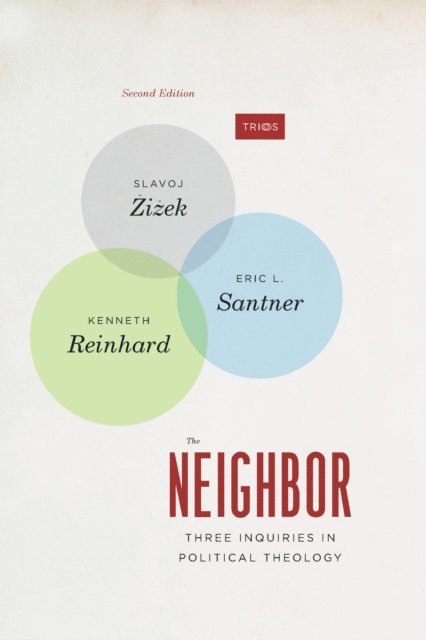
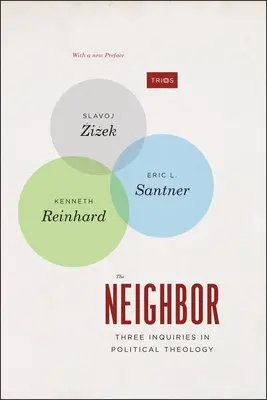
In "The Neighbor", three of the most significant intellectuals working in psychoanalysis and critical theory collaborate to show how the problem of neighbor love opens questions that are fundamental to ethical inquiry and suggest a new theological configuration of political theory. Their three extended essays explore today's central historical problem: the persistence of the theological in the political. In "Toward a Political Theology of the Neighbor," Kenneth Reinhard supplements Carl Schmitt's political theology of the enemy and friend with a political theology of the neighbor based in psychoanalysis. In "Miracles Happen," Eric L. Santner extends the book's exploration of neighbor love through a bracing reassessment of Benjamin and Rosenzweig. And in an impassioned plea for ethical violence, Slavoj Zizek's "Neighbors and Other Monsters" reconsiders the idea of excess to rehabilitate a positive sense of the inhuman and challenge the influence of Levinas on contemporary ethical thought.A rich and suggestive account of the interplay between love and hate, self and other, personal and political, "The Neighbor" has proven to be a touchstone across the humanities and a crucial text for understanding the persistence of political theology in secular modernity. This new edition contains a new preface by the authors.
656 kr
Skickas inom 7-10 vardagar
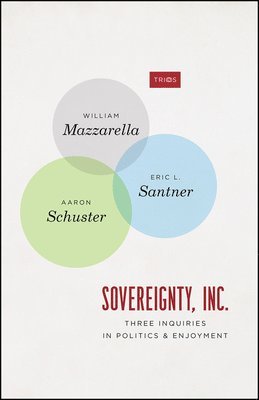
What does the name Trump stand for? If branding now rules over the production of value, as the coauthors of Sovereignty, Inc. argue, then Trump assumes the status of a master brand whose primary activity is the compulsive work of self-branding--such is the new sovereignty business in which, whether one belongs to his base or not, we are all "incorporated." Drawing on anthropology, political theory, philosophy, psychoanalysis, and theater, William Mazzarella, Eric L. Santner, and Aaron Schuster show how politics in the age of Trump functions by mobilizing a contradictory and convoluted enjoyment, an explosive mixture of drives and fantasies that eludes existing portraits of our era. The current political moment turns out to be not so much exceptional as exceptionally revealing of the constitutive tension between enjoyment and economy that has always been a key component of the social order. Santner analyzes the collective dream-work that sustains a new sort of authoritarian charisma or mana, a mana-facturing process that keeps us riveted to an excessively carnal incorporation of sovereignty. Mazzarella examines the contemporary merger of consumer brand and political brand and the cross-contamination of politics and economics, warning against all too easy laments about the corruption of politics by marketing. Schuster, focusing on the extreme theatricality and self-satirical comedy of the present, shows how authority reasserts itself at the very moment of distrust and disillusionment in the system, profiting off its supposed decline. A dazzling diagnostic of our present, Sovereignty, Inc., forces us to come to terms with our complicity in Trump's political presence and will immediately take its place in discussions of contemporary politics.
236 kr
Skickas inom 7-10 vardagar
What does the name Trump stand for? If branding now rules over the production of value, as the coauthors of Sovereignty, Inc. argue, then Trump assumes the status of a master brand whose primary activity is the compulsive work of self-branding--such is the new sovereignty business in which, whether one belongs to his base or not, we are all "incorporated." Drawing on anthropology, political theory, philosophy, psychoanalysis, and theater, William Mazzarella, Eric L. Santner, and Aaron Schuster show how politics in the age of Trump functions by mobilizing a contradictory and convoluted enjoyment, an explosive mixture of drives and fantasies that eludes existing portraits of our era. The current political moment turns out to be not so much exceptional as exceptionally revealing of the constitutive tension between enjoyment and economy that has always been a key component of the social order. Santner analyzes the collective dream-work that sustains a new sort of authoritarian charisma or mana, a mana-facturing process that keeps us riveted to an excessively carnal incorporation of sovereignty. Mazzarella examines the contemporary merger of consumer brand and political brand and the cross-contamination of politics and economics, warning against all too easy laments about the corruption of politics by marketing. Schuster, focusing on the extreme theatricality and self-satirical comedy of the present, shows how authority reasserts itself at the very moment of distrust and disillusionment in the system, profiting off its supposed decline. A dazzling diagnostic of our present, Sovereignty, Inc., forces us to come to terms with our complicity in Trump's political presence and will immediately take its place in discussions of contemporary politics.
786 kr
Tillfälligt slut
This collection features essays that consider the role of anti-semitism in the recounting of the Holocaust; the place of the catastrophe in the narrative of twentieth century history; the questions of agency and victimhood that the Holocaust inspires.
711 kr
Tillfälligt slut
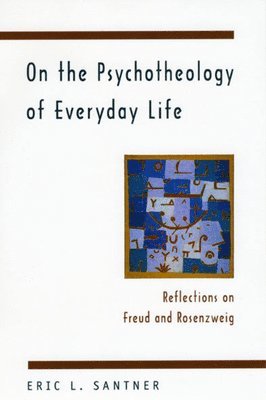
This text puts Sigmund Freud in dialogue with his contemporary Franz Rosenzwig in the service of re-imagining ethical and political life. It expl ores the theological aspects of Freud's writings and reveals the psychoanalytic implications in the religious philosophy of Rosenzwig's work, "The Star of Redemption". Santner makes an argument for understanding theological notions of revelation in theraputic terms and offers a look at how this understanding suggests ways of re-conceiving political community. Revelation itself becomes redefined as an openess towards what is singular, enigmatic, even uncanny about the "Other", thereby linking a theory of drives and desire to a critical account of sociality. By bringing Freud and Rosenzwig together, Santner clarifies the connections between psychoanalysis and the Judeo-Christian tradition, and illuminates what it means to be open to another person or culture and to share the responsibility for one's implication in the dilemmas of difference.
229 kr
Skickas inom 7-10 vardagar
This text puts Sigmund Freud in dialogue with his contemporary Franz Rosenzwig in the service of re-imagining ethical and political life. It expl ores the theological aspects of Freud's writings and reveals the psychoanalytic implications in the religious philosophy of Rosenzwig's work, "The Star of Redemption". Santner makes an argument for understanding theological notions of revelation in theraputic terms and offers a look at how this understanding suggests ways of re-conceiving political community. Revelation itself becomes redefined as an openess towards what is singular, enigmatic, even uncanny about the "Other", thereby linking a theory of drives and desire to a critical account of sociality. By bringing Freud and Rosenzwig together, Santner clarifies the connections between psychoanalysis and the Judeo-Christian tradition, and illuminates what it means to be open to another person or culture and to share the responsibility for one's implication in the dilemmas of difference.
309 kr
Skickas inom 7-10 vardagar
In his "Duino Elegies", Rainer Maria Rilke suggests that animals enjoy direct access to a realm of being - the open - concealed from humans by the workings of consciousness and self-consciousness. In his own reading of Rilke, Martin Heidegger reclaims the open as the proper domain of human existence, but suggests that human life remains haunted by vestiges of an animal-like relation to its surroundings. Walter Benjamin, in turn, was to show that such vestiges - what Eric Santner calls the creaturely - have a biopolitical aspect: they are linked to the processes that inscribe life in the realm of power and authority. Santner traces this theme of creaturely life from its poetic and philosophical beginnings in the first half of the twentieth century to the writings of the enigmatic German novelist W. G. Sebald. Sebald's entire oeuvre, Santner argues, can be seen as an archive of creaturely life. For Sebald, the work on such an archive was inseparable from his understanding of what it means to engage ethically with another person's history and pain, an engagement that transforms us from indifferent individuals into neighbors.
1 015 kr
Skickas inom 7-10 vardagar
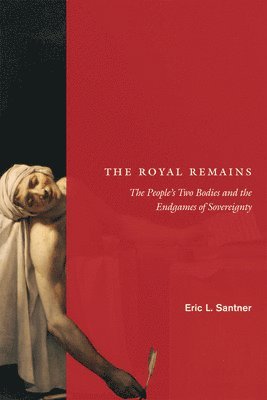
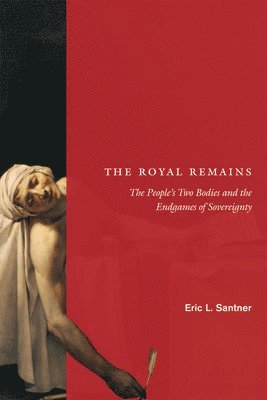
'The king is dead. Long live the king'! In early modern Europe, the king's body was literally sovereign - and the right to rule was immediately transferrable to the next monarch in line upon the king's death. In "The Royal Remains", Eric L. Santner argues that this carnal dimension of sovereignty hasn't disappeared from politics. Instead, it has migrated to a new location - the life of the people - where something royal continues to linger in the way we obsessively track and measure the vicissitudes of our flesh. Santner demonstrates the ways in which democratic societies have continued many of the rituals and practices associated with kingship in displaced, distorted, and, usually, unrecognizable forms. He proposes that those strange mental activities Freud first lumped under the category of the unconscious - which often manifest themselves in peculiar physical ways - are really the uncanny second life of these royal remains, now animated in the body politic of modern neurotic subjects.Pairing Freud with Kafka, Carl Schmitt with Hugo von Hofmannsthal, and Ernst Kantorowicz with Rainer Maria Rilke, Santner generates brilliant readings of multiple texts and traditions of thought en route to reconsidering the sovereign imaginary. Ultimately, "The Royal Remains" locates much of modernity-from biopolitical controversies to modernist literary experiments - in this transition from subjecthood to secular citizenship. This major new work will make a bold and original contribution to discussions of politics, psychoanalysis, and modern art and literature.
285 kr
Skickas inom 7-10 vardagar
'The king is dead. Long live the king'! In early modern Europe, the king's body was literally sovereign - and the right to rule was immediately transferrable to the next monarch in line upon the king's death. In "The Royal Remains", Eric L. Santner argues that this carnal dimension of sovereignty hasn't disappeared from politics. Instead, it has migrated to a new location - the life of the people - where something royal continues to linger in the way we obsessively track and measure the vicissitudes of our flesh. Santner demonstrates the ways in which democratic societies have continued many of the rituals and practices associated with kingship in displaced, distorted, and, usually, unrecognizable forms. He proposes that those strange mental activities Freud first lumped under the category of the unconscious - which often manifest themselves in peculiar physical ways - are really the uncanny second life of these royal remains, now animated in the body politic of modern neurotic subjects.Pairing Freud with Kafka, Carl Schmitt with Hugo von Hofmannsthal, and Ernst Kantorowicz with Rainer Maria Rilke, Santner generates brilliant readings of multiple texts and traditions of thought en route to reconsidering the sovereign imaginary. Ultimately, "The Royal Remains" locates much of modernity-from biopolitical controversies to modernist literary experiments - in this transition from subjecthood to secular citizenship. This major new work will make a bold and original contribution to discussions of politics, psychoanalysis, and modern art and literature.
602 kr
Skickas inom 7-10 vardagar
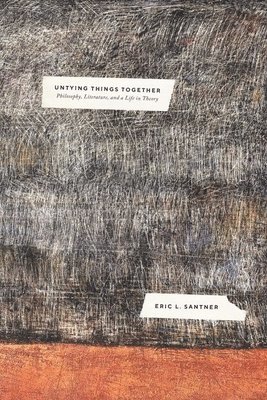
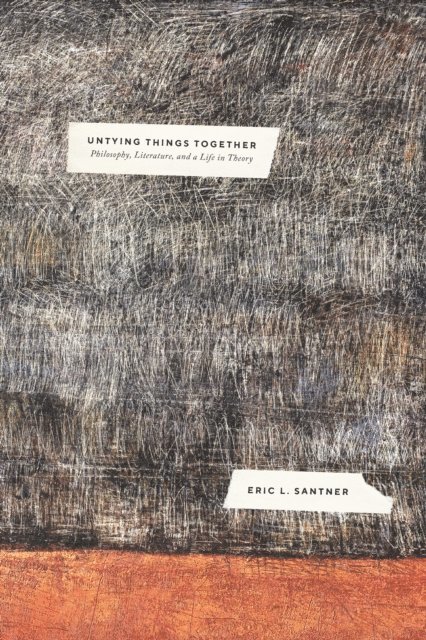
Untying Things Together helps to clarify the stakes of the last fifty years of literary and cultural theory by proposing the idea of a sexuality of theory.In 1905, Freud published his Three Essays on the Theory of Sexuality, the book that established the core psychoanalytic thesis that sexuality is central to formations of the unconscious. With this book, Eric L. Santner inverts Freud’s title to take up the sexuality of theory—or, more exactly, the modes of enjoyment to be found in the kinds of critical thinking that, since the 1960s, have laid claim to that ancient word, “theory.” Santner unfolds his argument by tracking his own relationship with this tradition and the ways his intellectual and spiritual development has been informed by it.Untying Things Together is both an intellectual history of major theoretical paradigms and a call for their reexamination and renewal. Revisiting many of the topics he has addressed in previous work, Santner proposes a new way of conceptualizing the eros of thinking, attuned to how our minds and bodies individually and collectively incorporate or “encyst” on a void at the heart of things. Rather than proposing a “return to theory,” Santner’s book simply employs theory as a way of further “(un)tying together” the resources of philosophy, art and literature, theology, psychoanalysis, political thought, and more.
206 kr
Skickas inom 7-10 vardagar
Untying Things Together helps to clarify the stakes of the last fifty years of literary and cultural theory by proposing the idea of a sexuality of theory.In 1905, Freud published his Three Essays on the Theory of Sexuality, the book that established the core psychoanalytic thesis that sexuality is central to formations of the unconscious. With this book, Eric L. Santner inverts Freud’s title to take up the sexuality of theory—or, more exactly, the modes of enjoyment to be found in the kinds of critical thinking that, since the 1960s, have laid claim to that ancient word, “theory.” Santner unfolds his argument by tracking his own relationship with this tradition and the ways his intellectual and spiritual development has been informed by it.Untying Things Together is both an intellectual history of major theoretical paradigms and a call for their reexamination and renewal. Revisiting many of the topics he has addressed in previous work, Santner proposes a new way of conceptualizing the eros of thinking, attuned to how our minds and bodies individually and collectively incorporate or “encyst” on a void at the heart of things. Rather than proposing a “return to theory,” Santner’s book simply employs theory as a way of further “(un)tying together” the resources of philosophy, art and literature, theology, psychoanalysis, political thought, and more.
369 kr
Skickas inom 7-10 vardagar
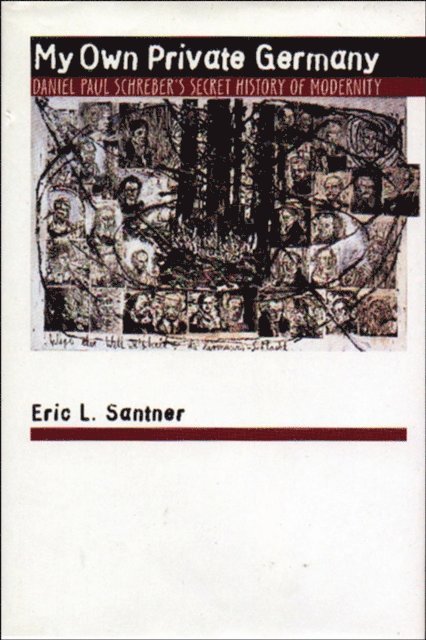
In November 1893, Daniel Paul Schreber, recently named presiding judge of the Saxon Supreme Court, was on the verge of a psychotic breakdown and entered a Leipzig psychiatric clinic. He would spend the rest of the nineteenth century in mental institutions. Once released, he published his Memoirs of My Nervous Illness (1903), a harrowing account of real and delusional persecution, political intrigue, and states of sexual ecstasy as God's private concubine. Freud's famous case study of Schreber elevated the Memoirs into the most important psychiatric textbook of paranoia. In light of Eric Santner's analysis, Schreber's text becomes legible as a sort of "nerve bible" of fin-de-siecle preoccupations and obsessions, an archive of the very phantasms that would, after the traumas of war, revolution, and the end of empire, coalesce into the core elements of National Socialist ideology. The crucial theoretical notion that allows Santner to pass from the "private" domain of psychotic disturbances to the "public" domain of the ideological and political genesis of Nazism is the "crisis of investiture."Schreber's breakdown was precipitated by a malfunction in the rites and procedures through which an individual is endowed with a new social status: his condition became acute just as he was named to a position of ultimate symbolic authority. The Memoirs suggest that we cross the threshold of modernity into a pervasive atmosphere of crisis and uncertainty when acts of symbolic investiture no longer usefully transform the subject's self understanding. At such a juncture, the performative force of these rites of institution may assume the shape of a demonic persecutor, some "other" who threatens our borders and our treasures. Challenging other political readings of Schreber, Santner denies that Schreber's delusional system--his own private Germany--actually prefigured the totalitarian solution to this defining structural crisis of modernity. Instead, Santner shows how this tragic figure succeeded in avoiding the totalitarian temptation by way of his own series of perverse identifications, above all with women and Jews.
716 kr
Skickas inom 10-15 vardagar
390 kr
Skickas inom 10-15 vardagar
'