Eric Weiskott - Böcker
Visar alla böcker från författaren Eric Weiskott. Handla med fri frakt och snabb leverans.
7 produkter
7 produkter
986 kr
Skickas inom 10-15 vardagar
What would English literary history look like if the unit of measure were not the political reign but the poetic tradition? The earliest poems in English were written in alliterative verse, the meter of Beowulf. Alliterative meter preceded tetrameter, which first appeared in the twelfth century, and tetrameter in turn preceded pentameter, the five-stress line that would become the dominant English verse form of modernity, though it was invented by Chaucer in the 1380s. While this chronology is accurate, Eric Weiskott argues, the traditional periodization of literature in modern scholarship distorts the meaning of meters as they appeared to early poets and readers.In Meter and Modernity in English Verse, 1350-1650, Weiskott examines the uses and misuses of these three meters as markers of literary time, "medieval" or "modern," though all three were in concurrent use both before and after 1500. In each section of the book, he considers two of the traditions through the prism of a third element: alliterative meter and tetrameter in poems of political prophecy; alliterative meter and pentameter in William Langland's Piers Plowman and early blank verse; and tetrameter and pentameter in Chaucer, his predecessors, and his followers. Reversing the historical perspective in which scholars conventionally view these authors, Weiskott reveals Langland to be metrically precocious and Chaucer metrically nostalgic.More than a history of prosody, Weiskott's book challenges the divide between medieval and modern literature. Rejecting the premise that modernity occurred as a specifiable event, he uses metrical history to renegotiate the trajectories of English literary history and advances a narrative of sociocultural change that runs parallel to metrical change, exploring the relationship between literary practice, social placement, and historical time.
Del 96 - Cambridge Studies in Medieval Literature
English Alliterative Verse
Poetic Tradition and Literary History
Häftad, Engelska, 2019
493 kr
Skickas inom 7-10 vardagar
English Alliterative Verse tells the story of the medieval poetic tradition that includes Beowulf, Piers Plowman, and Sir Gawain and the Green Knight, stretching from the eighth century, when English poetry first appeared in manuscripts, to the sixteenth century, when alliterative poetry ceased to be composed. Eric Weiskott draws on the study of meter to challenge the traditional division of medieval English literary history into Old English and Middle English periods. The two halves of the alliterative tradition, divided by the Norman Conquest of 1066, have been studied separately since the nineteenth century; this book uses the history of metrical form and its cultural meanings to bring the two halves back together. In combining literary history and metrical description into a new kind of history he calls 'verse history', Weiskott reimagines the historical study of poetics.
1 513 kr
Kommande
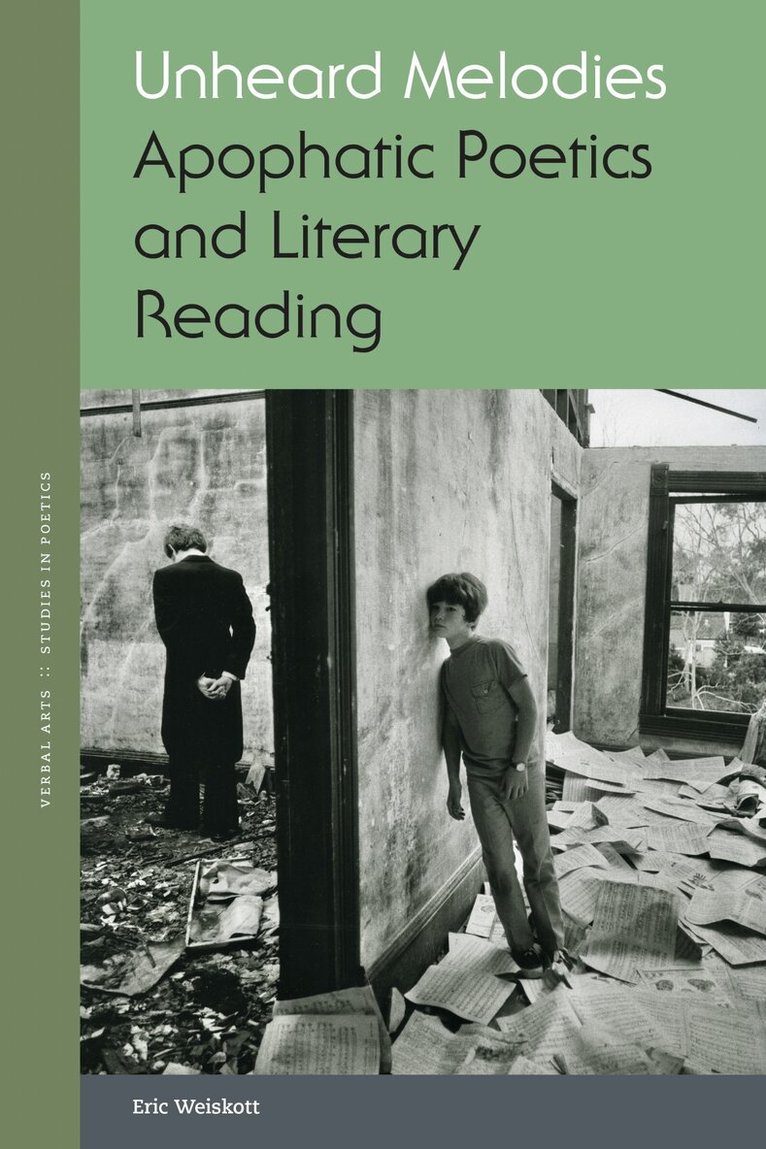
Unheard Melodies is an essay in comparative poetics. The book draws together readings of fourteenth- and twenty-first-century poetry, from Chaucer and Langland to Claudia Rankine and Ben Lerner, to reframe literary methodologies. Weiskott works through the tension between lineage and family resemblance, between mounting a literary-historical claim to connect old poetry to new and suspending claims of influence in order to draw out similarities in the practice of poetry writing across disparate times and places. The chapters show how premodern English verse, from Chaucer’s rhyming lyrics to the alliterative verse of the anonymous Sir Gawain and the Green Knight, supplies a forgotten prehistory for contemporary poetic styles.Pivoting historically around John Keats’s translation of Christian theology into lyric poetry, Unheard Melodies concerns the paradoxical power of literature to represent what literature cannot represent: novels no one can read, lyrics no one can hear, syllables no one can pronounce, experiences no one can have, and more. In reading for these and other "apophatic effects," Weiskott maps the spectrum of present absences possible in literature and song, including Nabokov’s novels and Bob Dylan’s music. Proposing theological negativity in the Christian tradition as both source and analogue of literary styles, the four parts of the book track apophatic poetics through four critical keywords: lyric, meter, close reading, and career.
399 kr
Kommande
Unheard Melodies is an essay in comparative poetics. The book draws together readings of fourteenth- and twenty-first-century poetry, from Chaucer and Langland to Claudia Rankine and Ben Lerner, to reframe literary methodologies. Weiskott works through the tension between lineage and family resemblance, between mounting a literary-historical claim to connect old poetry to new and suspending claims of influence in order to draw out similarities in the practice of poetry writing across disparate times and places. The chapters show how premodern English verse, from Chaucer’s rhyming lyrics to the alliterative verse of the anonymous Sir Gawain and the Green Knight, supplies a forgotten prehistory for contemporary poetic styles.Pivoting historically around John Keats’s translation of Christian theology into lyric poetry, Unheard Melodies concerns the paradoxical power of literature to represent what literature cannot represent: novels no one can read, lyrics no one can hear, syllables no one can pronounce, experiences no one can have, and more. In reading for these and other "apophatic effects," Weiskott maps the spectrum of present absences possible in literature and song, including Nabokov’s novels and Bob Dylan’s music. Proposing theological negativity in the Christian tradition as both source and analogue of literary styles, the four parts of the book track apophatic poetics through four critical keywords: lyric, meter, close reading, and career.
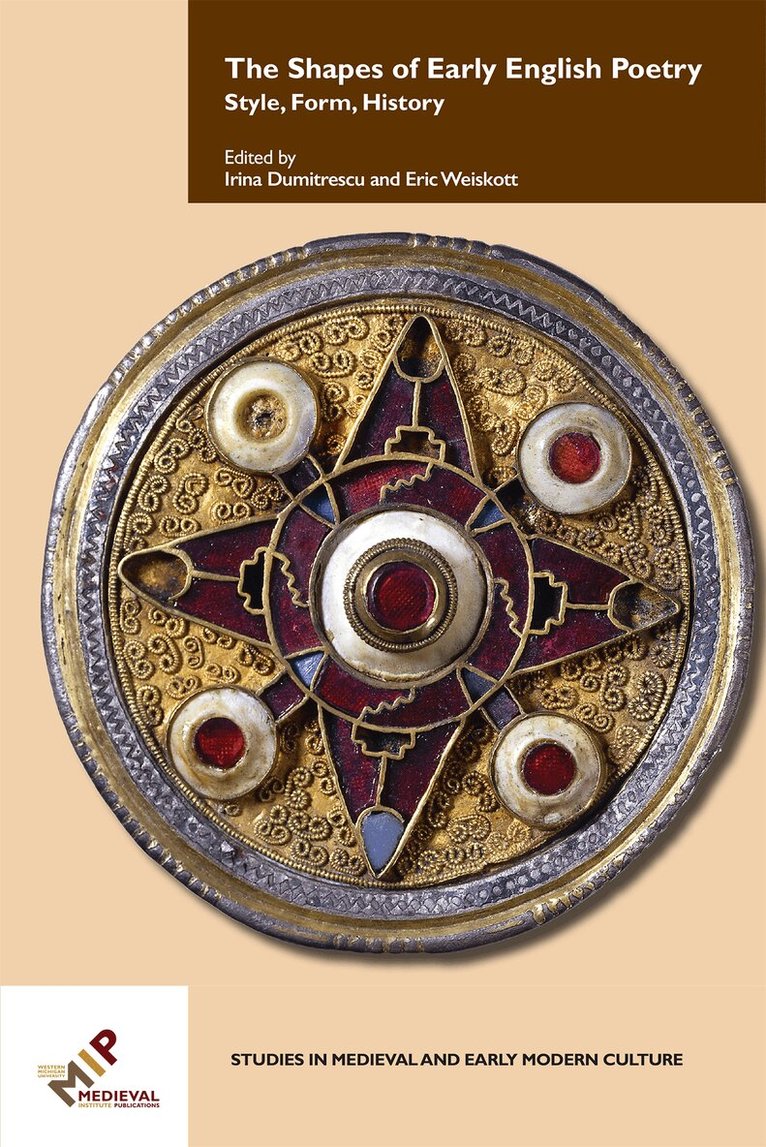
Del 64 - Studies in Medieval and Early Modern Culture
Shapes of Early English Poetry
Style, Form, History
Inbunden, Engelska, 2019
1 958 kr
Skickas inom 5-8 vardagar
278 kr
Skickas inom 5-8 vardagar
1 498 kr
Skickas inom 5-8 vardagar
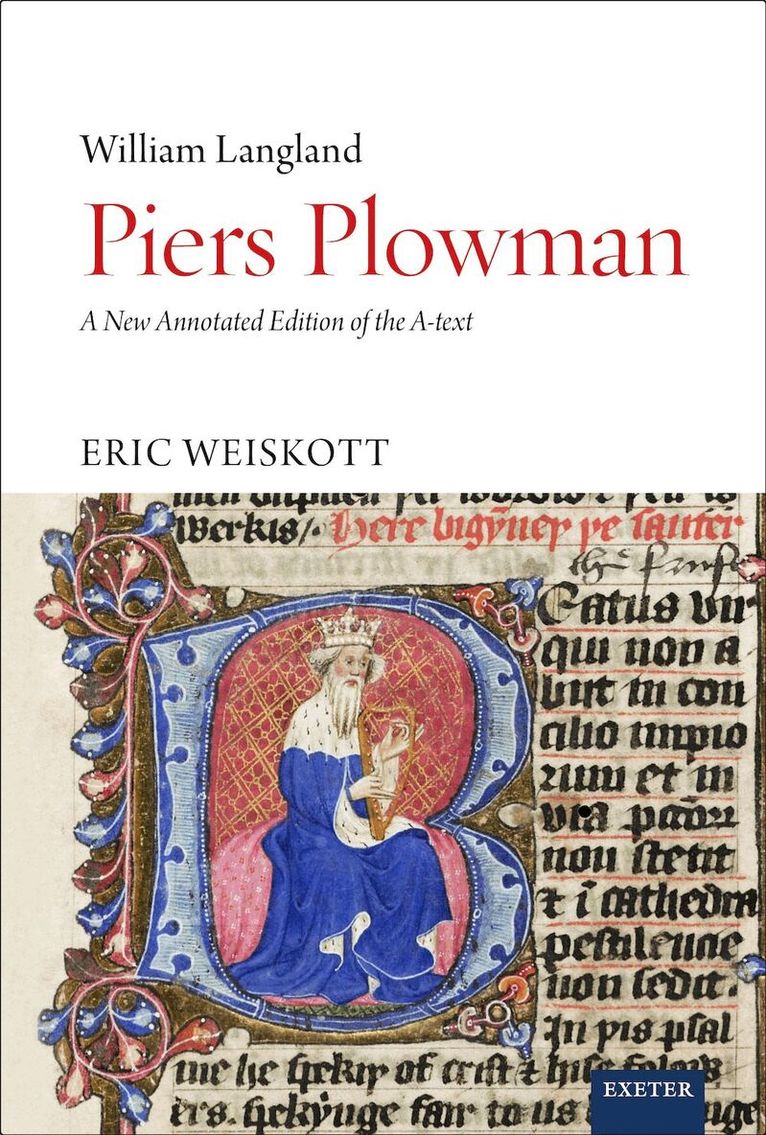
The earliest version of William Langland’s Piers Plowman shows this elusive and centrally important fourteenth-century poet inventing the forms that his life’s work will take. Piers Plowman is a sinuous cycle of dream visions in alliterative verse comprehending many aspects of medieval English culture from tavern life, plague, homelessness, and labour politics to religious devotion and theological controversy. At once socially capacious and spiritually electrifying, Langland’s poem was an instant bestseller in its own time and has provoked strong reactions from the fourteenth century to the present.At under 2,500 lines, the A-text is significantly more compact than the later B- and C-texts, yet it contains much of the poetic thinking that Langland would elaborate in the longer versions. The poem proceeds as a spiritual quest, undertaken by the dreamer Will, to discover how to save his soul, reform church and society, and attain an ethical mode of life in this world. The action oscillates between the cultivated fields of England’s West Midlands and the commotion of London and Westminster.Piers Plowman poses both textual and interpretative difficulties. This is the first critically considered edition of the A-text supported by an introduction, side glosses, and on-page explanatory notes with undergraduate, postgraduate, and scholarly readers in mind.