Erik A. Beever – författare
Visar alla böcker från författaren Erik A. Beever. Handla med fri frakt och snabb leverans.
4 produkter
4 produkter
801 kr
Skickas inom 10-15 vardagar
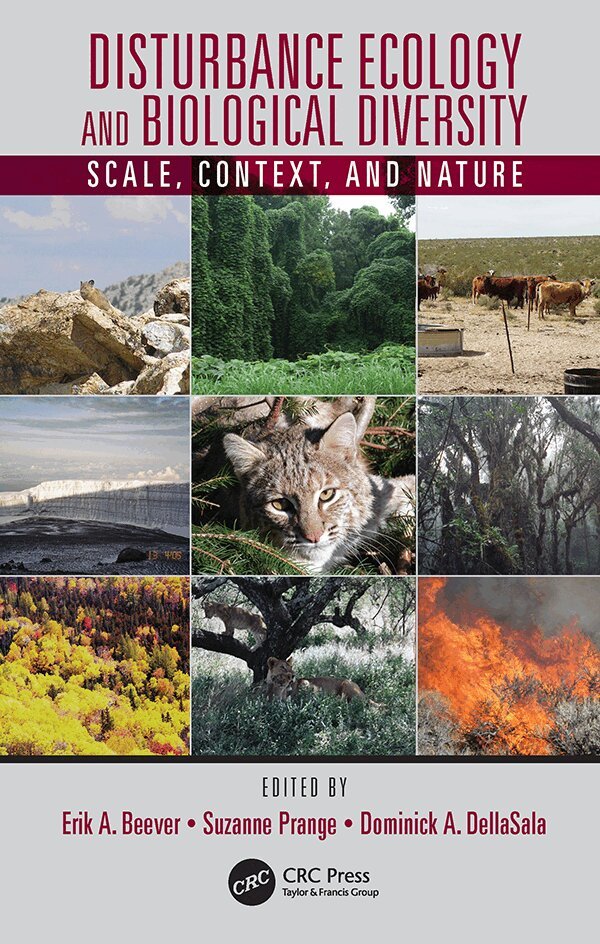
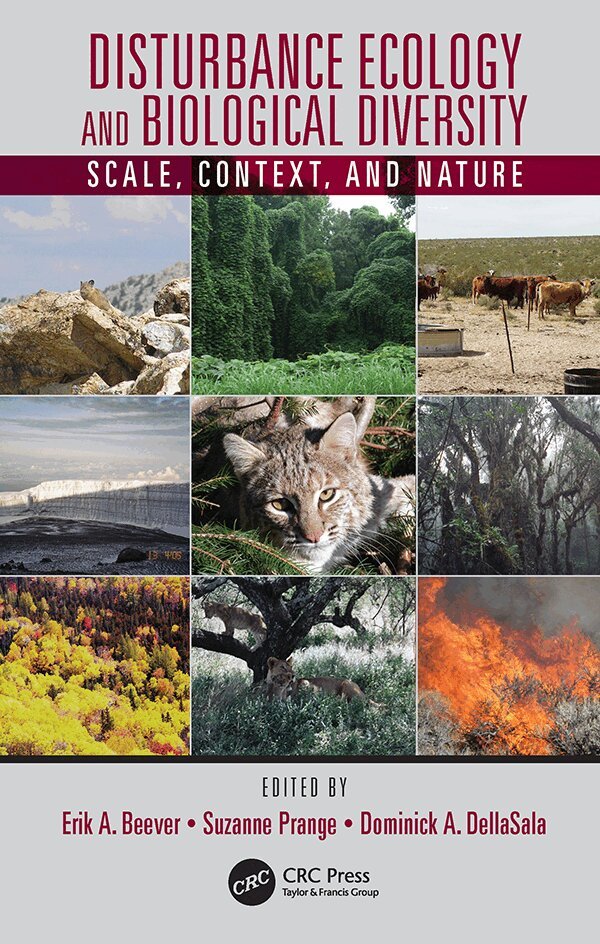
In contexts outside of ecology, the term "disturbance" carries a variety of negative connotations. Within ecology, however, disturbances are neither inherently negative nor positive for ecological systems; instead, their effects depend on the context, scale, and species involved. As ecologists better understand these context-dependencies, the field of disturbance ecology has matured, diversified, and become more complex and nuanced over the past several decades. Ecological Disturbance: Scale, Context, and Nature unites a collection of perspectives that weave together the topics of disturbance ecology and biological diversity. Chapters cover wildfire, disease, herbivory, surface mining, land-use conversions, and forest harvest, among numerous other natural and anthropogenic influences on ecosystems. The book begins with an introduction that reviews how thinking on perturbations and community organization has evolved over the last century, then explores how disturbances might be meaningfully categorized, and how biological diversity has been conceptualized. The introduction also explores the roles of scale and ecological context in disturbance outcomes, and reviews recent analytical and methodological advances relevant to disturbance ecology. The book then moves into forested ecosystems, where much of the early literature on disturbances arose, and focuses on scale-dependence, relationships of natural and anthropogenic disturbance, and recovery or successional trajectories. The next section focuses on emerging disturbances amidst global change, including non-native species, disease, and synergies with other disturbances. The book ends with a section on land-use disturbance, focusing on landscape pattern, resilience, and recovery dynamics. Throughout, the book’s material spans a wide diversity of spatial and temporal scales, disciplines, taxa, and levels of ecological organization.This book may be used in a seminar course, as a compendium for disturbance ecology curricula that are at the interface of conceptual and applied ecology, and in other circumstances to illustrate how different authors have handled the various pragmatic challenges that arise in studies that ask broader questions. In an era of unprecedented global change, this book constitutes a valuable source for researchers, students, natural resource managers, and other conservation practitioners interested in delving deeper into disturbance ecology.
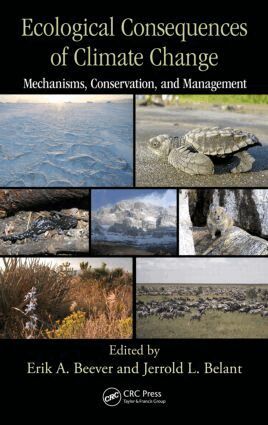
Ecological Consequences of Climate Change
Mechanisms, Conservation, and Management
Häftad, Engelska, 2017
1 088 kr
Skickas inom 10-15 vardagar
Contemporary climate change is a crucial management challenge for wildlife scientists, conservation biologists, and ecologists of the 21st century. Climate fingerprints are being detected and documented in the responses of hundreds of wildlife species and numerous ecosystems around the world. To mitigate and accommodate the influences of climate change on wildlife and ecosystems, broader-scale conservation strategies are needed. Ecological Consequences of Climate Change: Mechanisms, Conservation, and Management provides a mechanistic understanding of biotic responses to climate change, in order to better inform conservation and management strategies. Incorporating modeling and real-world examples from diverse taxa, ecosystems, and spatio-temporal scales, the book first presents research on recently observed rapid shifts in temperature and precipitation. It then explains how these shifts alter the biotic landscape within species and ecosystems, and how they may be expected to impose changes in the future. Also included are major sections on monitoring and conservation efforts in the face of contemporary climate change. Contributors highlight the general trends expected in wildlife and ecological responses as well as the exceptions and contingencies that may mediate those responses.Topics covered include: Description and quantification of how aspects of climate have recently changed, and may change in the futureSpecies-level and higher-order ecological responses to climate change and variabilityApproaches to monitor and interpret ecological effects of climatic variabilityConservation and management effortsThe book discusses the quantification of the magnitude and variability in short-term responses, and delineates patterns of relative vulnerability among species and community types. It offers suggestions for designing investigations and management actions, including the long-term monitoring of ecological consequences of rapid climate change. It also identifies many of the biggest gaps in current knowledge, proposing avenues for further research. Bringing together many of the world’s leading experts on ecological effects of climate change, this unique and timely volume constitutes a valuable resource for practitioners, researchers, and students.
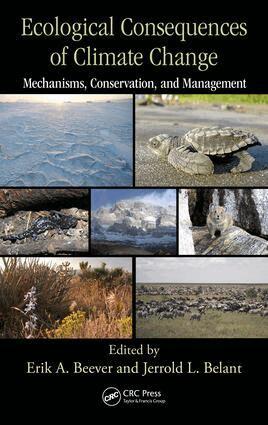
Ecological Consequences of Climate Change
Mechanisms, Conservation, and Management
Inbunden, Engelska, 2011
3 019 kr
Skickas inom 10-15 vardagar
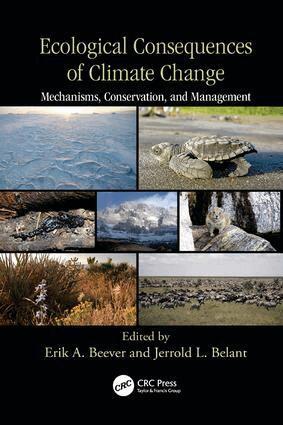
Contemporary climate change is a crucial management challenge for wildlife scientists, conservation biologists, and ecologists of the 21st century. Climate fingerprints are being detected and documented in the responses of hundreds of wildlife species and numerous ecosystems around the world. To mitigate and accommodate the influences of climate change on wildlife and ecosystems, broader-scale conservation strategies are needed. Ecological Consequences of Climate Change: Mechanisms, Conservation, and Management provides a mechanistic understanding of biotic responses to climate change, in order to better inform conservation and management strategies. Incorporating modeling and real-world examples from diverse taxa, ecosystems, and spatio-temporal scales, the book first presents research on recently observed rapid shifts in temperature and precipitation. It then explains how these shifts alter the biotic landscape within species and ecosystems, and how they may be expected to impose changes in the future. Also included are major sections on monitoring and conservation efforts in the face of contemporary climate change. Contributors highlight the general trends expected in wildlife and ecological responses as well as the exceptions and contingencies that may mediate those responses.Topics covered include: Description and quantification of how aspects of climate have recently changed, and may change in the futureSpecies-level and higher-order ecological responses to climate change and variabilityApproaches to monitor and interpret ecological effects of climatic variabilityConservation and management effortsThe book discusses the quantification of the magnitude and variability in short-term responses, and delineates patterns of relative vulnerability among species and community types. It offers suggestions for designing investigations and management actions, including the long-term monitoring of ecological consequences of rapid climate change. It also identifies many of the biggest gaps in current knowledge, proposing avenues for further research. Bringing together many of the world’s leading experts on ecological effects of climate change, this unique and timely volume constitutes a valuable resource for practitioners, researchers, and students.
2 608 kr
Skickas inom 10-15 vardagar
In contexts outside of ecology, the term "disturbance" carries a variety of negative connotations. Within ecology, however, disturbances are neither inherently negative nor positive for ecological systems; instead, their effects depend on the context, scale, and species involved. As ecologists better understand these context-dependencies, the field of disturbance ecology has matured, diversified, and become more complex and nuanced over the past several decades. Ecological Disturbance: Scale, Context, and Nature unites a collection of perspectives that weave together the topics of disturbance ecology and biological diversity. Chapters cover wildfire, disease, herbivory, surface mining, land-use conversions, and forest harvest, among numerous other natural and anthropogenic influences on ecosystems. The book begins with an introduction that reviews how thinking on perturbations and community organization has evolved over the last century, then explores how disturbances might be meaningfully categorized, and how biological diversity has been conceptualized. The introduction also explores the roles of scale and ecological context in disturbance outcomes, and reviews recent analytical and methodological advances relevant to disturbance ecology. The book then moves into forested ecosystems, where much of the early literature on disturbances arose, and focuses on scale-dependence, relationships of natural and anthropogenic disturbance, and recovery or successional trajectories. The next section focuses on emerging disturbances amidst global change, including non-native species, disease, and synergies with other disturbances. The book ends with a section on land-use disturbance, focusing on landscape pattern, resilience, and recovery dynamics. Throughout, the book’s material spans a wide diversity of spatial and temporal scales, disciplines, taxa, and levels of ecological organization.This book may be used in a seminar course, as a compendium for disturbance ecology curricula that are at the interface of conceptual and applied ecology, and in other circumstances to illustrate how different authors have handled the various pragmatic challenges that arise in studies that ask broader questions. In an era of unprecedented global change, this book constitutes a valuable source for researchers, students, natural resource managers, and other conservation practitioners interested in delving deeper into disturbance ecology.