Jerrold L. Belant – författare
Visar alla böcker från författaren Jerrold L. Belant. Handla med fri frakt och snabb leverans.
4 produkter
4 produkter
1 074 kr
Skickas inom 5-8 vardagar
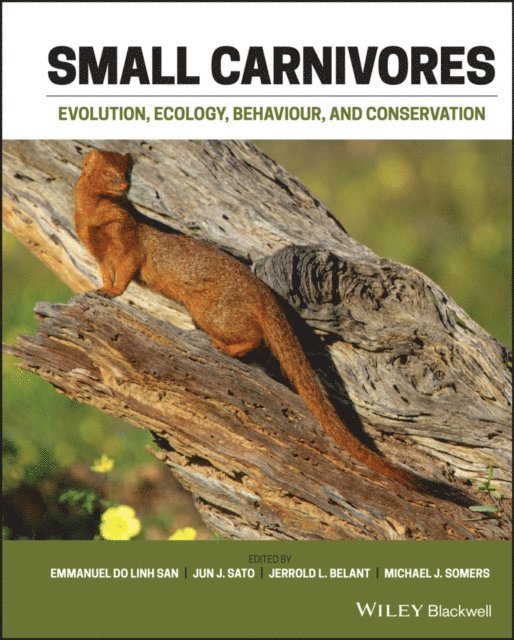
Small Carnivores: Evolution, Ecology, Behaviour, and Conservation This book focuses on the 232 species of the mammalian Order Carnivora with an average body mass < 21.5 kg. Small carnivores inhabit virtually all of the Earth's ecosystems, adopting terrestrial, semi-fossorial, (semi-)arboreal or (semi-)aquatic lifestyles. They occupy multiple trophic levels and therefore play important roles in the regulation of ecosystems, such as natural pest control, seed dispersal and nutrient cycling. In areas where humans have extirpated large carnivores, small carnivores may become the dominant predators, which may increase their abundance ("mesopredator release") to the point that they can sometimes destabilize communities, drive local extirpations and reduce overall biodiversity. On the other hand, one third of the world's small carnivores are threatened or near threatened with extinction. This results from regionally burgeoning human populations' industrial and agricultural activities, causing habitat reduction, destruction, fragmentation and pollution. Overexploitation, persecution and the impacts of introduced predators, competitors, and pathogens have also negatively affected many small carnivore species. Although small carnivores have been intensively studied over the past decades, bibliometric studies showed that they have not received the same attention given to large carnivores. Furthermore, there is huge disparity in how research efforts on small carnivores have been distributed, with some species intensively studied and others superficially or not at all. This book aims at filling a gap in the scientific literature by elucidating the important roles of, and documenting the latest knowledge on, the world's small carnivores. "This is a book that has been needed for decades. It is the first compendium of recent research on a group of mammals which has received almost no attention before the early 1970s. This book covers a wide range of subdisciplines and techniques and should be considered a solid baseline for further research on this little-known group of highly interesting mammals. As our knowledge regarding how ecosystems function increases, then the valuable role of small carnivores and the necessity for their conservation should be regarded as of paramount importance. The topics covered in this book should therefore be of great interest not only to academics and wildlife researchers, but also to the interested layman." Professor Anne Rasa, Ethologist
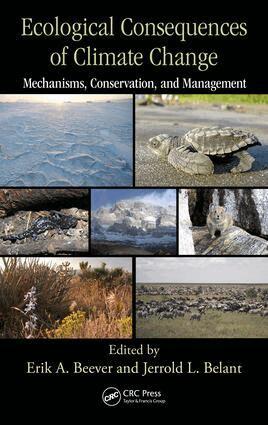
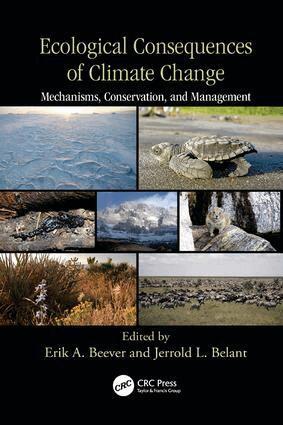
Ecological Consequences of Climate Change
Mechanisms, Conservation, and Management
Häftad, Engelska, 2017
1 088 kr
Skickas inom 10-15 vardagar
Contemporary climate change is a crucial management challenge for wildlife scientists, conservation biologists, and ecologists of the 21st century. Climate fingerprints are being detected and documented in the responses of hundreds of wildlife species and numerous ecosystems around the world. To mitigate and accommodate the influences of climate change on wildlife and ecosystems, broader-scale conservation strategies are needed. Ecological Consequences of Climate Change: Mechanisms, Conservation, and Management provides a mechanistic understanding of biotic responses to climate change, in order to better inform conservation and management strategies. Incorporating modeling and real-world examples from diverse taxa, ecosystems, and spatio-temporal scales, the book first presents research on recently observed rapid shifts in temperature and precipitation. It then explains how these shifts alter the biotic landscape within species and ecosystems, and how they may be expected to impose changes in the future. Also included are major sections on monitoring and conservation efforts in the face of contemporary climate change. Contributors highlight the general trends expected in wildlife and ecological responses as well as the exceptions and contingencies that may mediate those responses.Topics covered include: Description and quantification of how aspects of climate have recently changed, and may change in the futureSpecies-level and higher-order ecological responses to climate change and variabilityApproaches to monitor and interpret ecological effects of climatic variabilityConservation and management effortsThe book discusses the quantification of the magnitude and variability in short-term responses, and delineates patterns of relative vulnerability among species and community types. It offers suggestions for designing investigations and management actions, including the long-term monitoring of ecological consequences of rapid climate change. It also identifies many of the biggest gaps in current knowledge, proposing avenues for further research. Bringing together many of the world’s leading experts on ecological effects of climate change, this unique and timely volume constitutes a valuable resource for practitioners, researchers, and students.
Ecological Consequences of Climate Change
Mechanisms, Conservation, and Management
Inbunden, Engelska, 2011
3 019 kr
Skickas inom 10-15 vardagar
Contemporary climate change is a crucial management challenge for wildlife scientists, conservation biologists, and ecologists of the 21st century. Climate fingerprints are being detected and documented in the responses of hundreds of wildlife species and numerous ecosystems around the world. To mitigate and accommodate the influences of climate change on wildlife and ecosystems, broader-scale conservation strategies are needed. Ecological Consequences of Climate Change: Mechanisms, Conservation, and Management provides a mechanistic understanding of biotic responses to climate change, in order to better inform conservation and management strategies. Incorporating modeling and real-world examples from diverse taxa, ecosystems, and spatio-temporal scales, the book first presents research on recently observed rapid shifts in temperature and precipitation. It then explains how these shifts alter the biotic landscape within species and ecosystems, and how they may be expected to impose changes in the future. Also included are major sections on monitoring and conservation efforts in the face of contemporary climate change. Contributors highlight the general trends expected in wildlife and ecological responses as well as the exceptions and contingencies that may mediate those responses.Topics covered include: Description and quantification of how aspects of climate have recently changed, and may change in the futureSpecies-level and higher-order ecological responses to climate change and variabilityApproaches to monitor and interpret ecological effects of climatic variabilityConservation and management effortsThe book discusses the quantification of the magnitude and variability in short-term responses, and delineates patterns of relative vulnerability among species and community types. It offers suggestions for designing investigations and management actions, including the long-term monitoring of ecological consequences of rapid climate change. It also identifies many of the biggest gaps in current knowledge, proposing avenues for further research. Bringing together many of the world’s leading experts on ecological effects of climate change, this unique and timely volume constitutes a valuable resource for practitioners, researchers, and students.
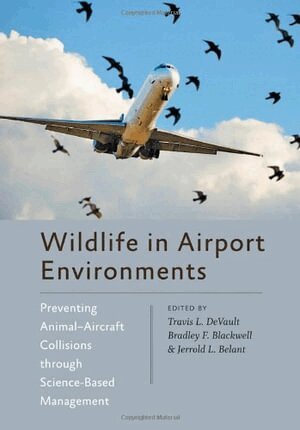
Wildlife in Airport Environments
Preventing Animal–Aircraft Collisions through Science-Based Management
Inbunden, Engelska, 2014
856 kr
Skickas inom 11-20 vardagar
The pilot watches the instrument panel and prepares for touchdown - a routine landing until a burst of birds, a coyote, or a herd of deer crosses the runway! Every year, pilots experience this tension and many aircraft come into direct contact with birds and other wildlife, resulting in more than one billion dollars in damage annually. The United States Federal Aviation Administration has recorded a rise in these incidents over the past decade due to the combined effects of more reporting, rebounding wildlife populations, and an increased number of flights. Wildlife in Airport Environments tackles the issue of what to do about encounters with wildlife in and around airports - from rural, small-craft airparks to major international hubs. Whether the problem is birds or bats in the flight path or a moose on the runway, the authors provide a thorough overview of the science behind wildlife management at airports. This well-written, carefully documented volume presents a clear synthesis for researchers, wildlife managers, and airport professionals. The book belongs in the hands of all those charged with minimizing the risks that wildlife pose to air travel.Wildlife in Airport Environments is the first book in the series Wildlife Management and Conservation and is published in association with The Wildlife Society. Contributors: Michael L. Avery, U.S. Department of Agriculture; Jerrold L. Belant, Mississippi State University; Kristin M. Biondi, Mississippi State University; Bradley F. Blackwell, U.S. Department of Agriculture; Jonathon D. Cepek, U.S. Department of Agriculture; Larry Clark, U.S. Department of Agriculture; Tara J. Conkling, Mississippi State University; Scott R. Craven, University of Wisconsin-Madison; Paul D. Curtis, Cornell University; Travis L. DeVault, U.S. Department of Agriculture; Richard A. Dolbeer, U.S. Department of Agriculture; David Felstul, U.S. Department of the Interior; Esteban Fernandez-Juricic, Purdue University. Contributors: Alan B. Franklin, U.S. Department of Agriculture; Sidney A. Gauthreaux Jr., Clemson University; Michael Lavelle, U.S. Department of Agriculture; James A. Martin, Mississippi State University; Rebecca Mihalco, U.S. Department of Agriculture; Paige M. Schmidt, U.S. Fish and Wildlife Service; Thomas W. Seamans, U.S. Department of Agriculture; Kurt C. VerCauteren, U.S.Department of Agriculture; and Brian E. Washburn, U.S. Department of Agriculture.