Eswar S. Prasad - Böcker
Visar alla böcker från författaren Eswar S. Prasad. Handla med fri frakt och snabb leverans.
8 produkter
8 produkter
697 kr
Skickas inom 5-8 vardagar
China's currency, the renminbi (RMB), has taken the world by storm. The RMB is well on its way to becoming a significant international currency, one that is used widely in international trade and finance. This book documents the RMB's impressive rise, with China successfully adopting a unique playbook for promoting its currency. China's growing economic might, expanding international influence, and the rise of its currency are all intricately connected. The book documents how China's government has tied these goals together, enabling faster progress towards each of them. But there are many pitfalls ahead, both for China's economy and its currency. The book shows how the government has so far navigated its way around domestic and international dangers, but enormous risks still lie ahead. The International Monetary Fund has elevated the RMB to the status of an official reserve currency, a currency that foreign central banks use to keep their rainy day funds. If China plays its cards right, with reforms that put its economy and financial markets on the right track, the RMB is going to become an important reserve currency that could rival some of the traditional reserve currencies such as the euro and the Japanese yen. But this book argues that there are limits to the RMB's ascendance-the hype about its inevitable rise to global dominance is overblown. The Chinese leadership's apparent commitment to financial sector and other market-oriented reforms-coupled with unambiguous repudiation of political, legal, and institutional reforms-sets the RMB on a clear course. It will attain the status of a reserve currency over time but has essentially given up its claim of being seen as a safe haven currency, one that investors turn to for safety. The RMB will erode but not seriously challenge the U.S. dollar's dominance in international finance.
Future of Money
How the Digital Revolution Is Transforming Currencies and Finance
Inbunden, Engelska, 2021
291 kr
Skickas inom 7-10 vardagar
An Economist Best Book of the YearA Financial Times Best Book of the YearA Foreign Affairs Best Book of the YearA ProMarket Best Political Economy Book of the YearOne of The Week’s Ten Best Business Books of the YearA cutting-edge look at how accelerating financial change, from the end of cash to the rise of cryptocurrencies, will transform economies for better and worse.We think we’ve seen financial innovation. We bank from laptops and buy coffee with the wave of a phone. But these are minor miracles compared with the dizzying experiments now underway around the globe, as businesses and governments alike embrace the possibilities of new financial technologies. As Eswar Prasad explains, the world of finance is at the threshold of major disruption that will affect corporations, bankers, states, and indeed all of us. The transformation of money will fundamentally rewrite how ordinary people live.Above all, Prasad foresees the end of physical cash. The driving force won’t be phones or credit cards but rather central banks, spurred by the emergence of cryptocurrencies to develop their own, more stable digital currencies. Meanwhile, cryptocurrencies themselves will evolve unpredictably as global corporations like Meta and Amazon join the game. The changes will be accompanied by snowballing innovations that are reshaping finance and have already begun to revolutionize how we invest, trade, insure, and manage risk.Prasad shows how these and other changes will redefine the very concept of money, unbundling its traditional functions as a unit of account, medium of exchange, and store of value. The promise lies in greater efficiency and flexibility, increased sensitivity to the needs of diverse consumers, and improved market access for the unbanked. The risk is instability, lack of accountability, and erosion of privacy. A lucid, visionary work, The Future of Money shows how to maximize the best and guard against the worst of what is to come.
Future of Money
How the Digital Revolution Is Transforming Currencies and Finance
Häftad, Engelska, 2023
185 kr
Skickas inom 7-10 vardagar
An Economist Book of the YearA Financial Times Book of the YearA Foreign Affairs Book of the YearA ProMarket Book of the YearOne of The Week’s Ten Best Business Books of the Year“A road map for money managers, market strategists, and others seeking to understand this new world.”—Barron’s“Money shapes economies, economies shape nations, nations shape history. It follows that the future of money is profoundly important. Here is a definitive report on where we are and where we are going.”—Lawrence H. Summers, former Secretary of the Treasury“Prasad manages to make the financial system intelligible and interesting without resorting to shortcuts and exaggeration…Previous overhauls mainly improved existing systems, he notes. The end of cash—likely within a decade or two—is revolutionary.”—The EconomistThe world of finance is on the cusp of a major disruption that will affect corporations, bankers, states—indeed, all of us. As Eswar Prasad makes clear, the end of physical cash will fundamentally rewrite how we live. Bitcoin, Ethereum, and other cryptocurrencies are just the beginning: spurred by their emergence, central banks will increasingly develop their own, more stable digital currencies. Meanwhile, cryptocurrencies themselves will evolve dramatically as global corporations like Meta, Apple, and Amazon join the game.Prasad shows how these innovations will redefine the very concept of money, unbundling its traditional functions. This transformation promises greater efficiency and flexibility, but also carries the risk of instability, lack of accountability, and erosion of privacy. A lucid, visionary work, The Future of Money shows how to maximize the best and guard against the worst of what is to come.
291 kr
Skickas inom 7-10 vardagar
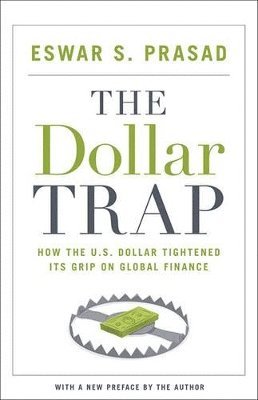
The U.S. dollar's dominance seems under threat. The near collapse of the U.S. financial system in 2008-2009, political paralysis that has blocked effective policymaking, and emerging competitors such as the Chinese renminbi have heightened speculation about the dollar's looming displacement as the main reserve currency. Yet, as The Dollar Trap powerfully argues, the financial crisis, a dysfunctional international monetary system, and U.S. policies have paradoxically strengthened the dollar's importance. Eswar Prasad examines how the dollar came to have a central role in the world economy and demonstrates that it will remain the cornerstone of global finance for the foreseeable future. Marshaling a range of arguments and data, and drawing on the latest research, Prasad shows why it will be difficult to dislodge the dollar-centric system. With vast amounts of foreign financial capital locked up in dollar assets, including U.S. government securities, other countries now have a strong incentive to prevent a dollar crash.Prasad takes the reader through key contemporary issues in international finance--including the growing economic influence of emerging markets, the currency wars, the complexities of the China-U.S. relationship, and the role of institutions like the International Monetary Fund--and offers new ideas for fixing the flawed monetary system. Readers are also given a rare look into some of the intrigue and backdoor scheming in the corridors of international finance. The Dollar Trap offers a panoramic analysis of the fragile state of global finance and makes a compelling case that, despite all its flaws, the dollar will remain the ultimate safe-haven currency.
250 kr
Skickas inom 7-10 vardagar
The U.S. dollar's dominance seems under threat. The near collapse of the U.S. financial system in 2008-2009, political paralysis that has blocked effective policymaking, and emerging competitors such as the Chinese renminbi have heightened speculation about the dollar's looming displacement as the main reserve currency. Yet, as The Dollar Trap powerfully argues, the financial crisis, a dysfunctional international monetary system, and U.S. policies have paradoxically strengthened the dollar's importance. Eswar Prasad examines how the dollar came to have a central role in the world economy and demonstrates that it will remain the cornerstone of global finance for the foreseeable future. Marshaling a range of arguments and data, and drawing on the latest research, Prasad shows why it will be difficult to dislodge the dollar-centric system. With vast amounts of foreign financial capital locked up in dollar assets, including U.S. government securities, other countries now have a strong incentive to prevent a dollar crash.Prasad takes the reader through key contemporary issues in international finance--including the growing economic influence of emerging markets, the currency wars, the complexities of the China-U.S. relationship, and the role of institutions like the International Monetary Fund--and offers new ideas for fixing the flawed monetary system. Readers are also given a rare look into some of the intrigue and backdoor scheming in the corridors of international finance. The Dollar Trap offers a panoramic analysis of the fragile state of global finance and makes a compelling case that, despite all its flaws, the dollar will remain the ultimate safe-haven currency.
365 kr
Skickas inom 10-15 vardagar
Emerging market economies (EMEs) have become the darlings of international investors and the focus of enormous attention in academic, media, and policy circles. M. Ayhan Kose and Eswar Prasad present the definitive account of the evolution of EMEs and use the lens of the global financial crisis to evaluate their strengths and weaknesses.Led by a set of large and dynamic countriesincluding Brazil, China, India, and RussiaEMEs have become a dominant presence in the world economy. They now account for a substantial share of world output and have been a major driver of global growth during the past decade. They are significant players in international trade and financial flows and are beginning to exert rising clout in global policy debates. However, the financial crisis of 200709 and the worldwide recession that followed cast a pall over the notion that EMEs had become self-reliant and ""decoupled"" from demand conditions in and financial flows from advanced countries.Kose and Prasad, prominent experts on emerging market economies and globalization, draw on their extensive research to assess the resilience of EMEs in the face of the global financial crisis. Their analysis shows that EMEs, as a group, weathered the crisis much better than the advanced countries, and most of these economies have bounced back rapidly from the global recession. The authors track down the reasons for this resilience and explain why some countries in this group have done better than others. Based on this analysis, they draw lessons for the durability and sustainability of these economies' long-term growth. This book is important reading for anyone trying to anticipate the future growth of emerging markets or contemplating business opportunities in these economies.
296 kr
Skickas inom 3-6 vardagar
291 kr
Skickas inom 7-10 vardagar
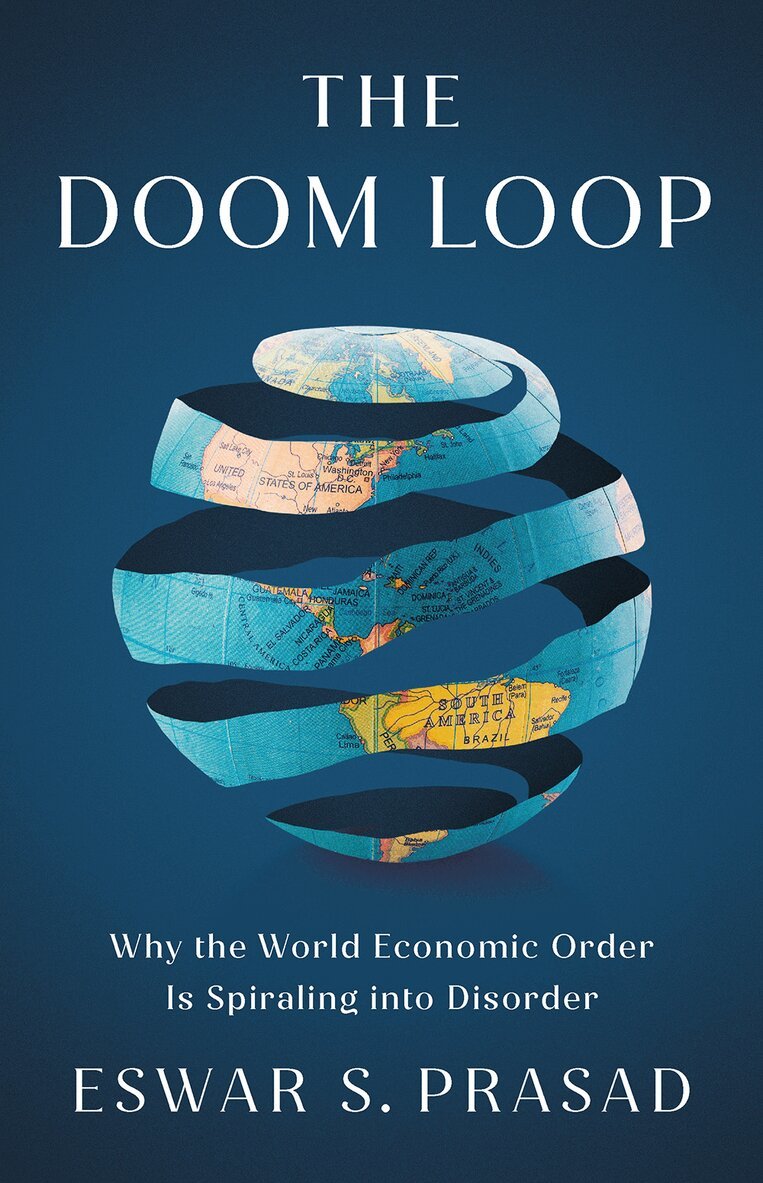
Global institutions have failed to adapt to today's political-economic realities. What went wrong, and how can we reverse our descent into chaos?The United States is no longer the world's undisputed superpower. China and India increasingly flex their economic muscle, as the West's share of global GDP steadily declines--and America's rules-based system risks becoming irrelevant. In business, competition brings efficiency, balance, and innovation. But not in the marketplace for global power.Acclaimed economist Eswar S. Prasad argues that the very forces expected to stabilize the world order are fueling disarray. Globalization has deepened inequality in many countries, stoked political backlash and triggered trade wars. Economic institutions like the IMF and WTO are no longer fit for purpose. The rise of "middle powers" like South Africa, Brazil, and Indonesia once suggested multipolar stability; but today, such economies are forced to pick sides in the intensifying US-China struggle for hegemony.Prasad's clear-eyed, bracing prose contends that we are caught in a destructive feedback loop between economics, domestic politics, and geopolitics. With instability the new status quo, we need radical solutions to reinvigorate the world economy, prioritize common aspirations--and halt the downward spiral.