Ethan Haimo - Böcker
Visar alla böcker från författaren Ethan Haimo. Handla med fri frakt och snabb leverans.
4 produkter
4 produkter
590 kr
Skickas inom 5-8 vardagar
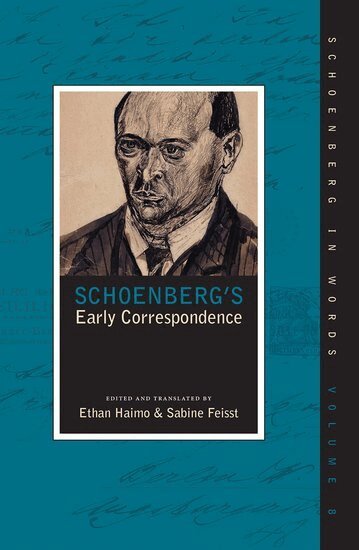
Early in his career, the composer Arnold Schoenberg maintained correspondence with many notable figures: Gustav Mahler, Heinrich Schenker, Guido Adler, Arnold Rosé, Richard Strauss, Alexander Zemlinsky, and Anton von Webern, to name a few. In this volume of Oxford's Schoenberg in Words series, Ethan Haimo and Sabine Feisst present English translations of the entirety of Arnold Schoenberg's early correspondence, from the earliest extant letters in 1891 to those written in the aftermath of the controversial premieres of his String Quartet No. 1, Op. 7, and the Kammersymphonie, Op. 9. The letters provide a wealth of information on many of the crucial stages in Schoenberg's early career, offering invaluable insights into his daily life and working habits. New details emerge about his activities at Wolzogen's Buntes Theater in Berlin, his frequently confrontational interactions with his first publisher (Dreililien Verlag), the reactions of friends and critics to the premieres of his works, his role in the founding of the Vereinigung schaffender Tonkünstler, his activities as a teacher, and his (all too often unsuccessful) attempts to convince musicians to perform his music. Presented alongside the editors' extensive running commentary, the more than 300 letters in this volume create a vivid picture of the young Schoenberg and his times.
2 258 kr
Skickas inom 5-8 vardagar
Haydn never discussed his compositional ideas in much detail, either in the interviews he gave to an early biographer or in his surviving correspondence. Moreover, relatively few sketches of his compositions have been preserved. Therefore, attempts to reconstruct Haydn's compositional thought, and in particular his formal logic, must rely on evidence drawn from close analyses of the works themselves. Using his symphonies as its subject, this book attempts to clarify what Haydn's fundamental principles of formal logic might have been. It shows how Haydn employed those basic compositional principles to structure his forms, providing explanations that account for specific details of individual movements as well as the relationships between the movements. Beyond what they show about Haydn's formal thought and the individual works discussed, the analyses in this book also have a larger purpose: to argue in support of the idea that compositions cannot be analysed in a meaningful manner if the analysis is divorced from the work's historical context.
Del 22 - Music in the Twentieth Century
Schoenberg's Transformation of Musical Language
Häftad, Engelska, 2009
577 kr
Skickas inom 7-10 vardagar
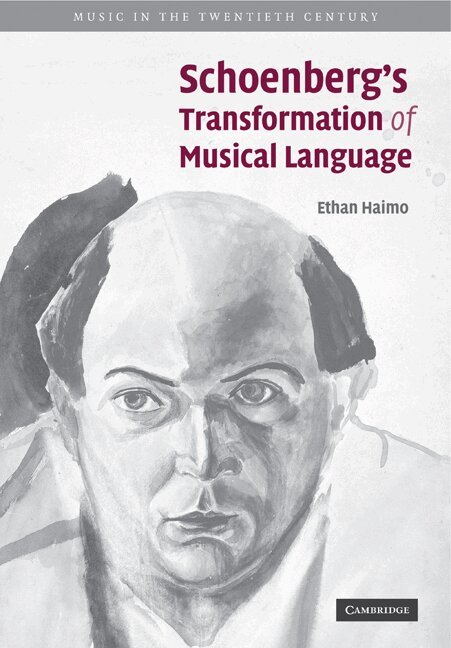
Arnold Schoenberg is widely regarded as one of the most significant and innovative composers of the twentieth century. It is commonly assumed that Schoenberg's music divides into three periods: tonal, atonal, and serial. It is also assumed that Schoenberg's atonal music made a revolutionary break with the past, particularly in terms of harmonic structure. This book challenges both these popular notions. Haimo argues that Schoenberg's 'atonal' music does not constitute a distinct unified period. He demonstrates that much of the music commonly described as 'atonal' did not make a complete break with prior practices, even in the harmonic realm, but instead transformed the past by a series of incremental changes. An important and influential contribution to the field, Haimo's findings help not only to re-evaluate Schoenberg, but also to re-date much of what has been defined as one of the most crucial turning points in music history.
Del 22 - Music in the Twentieth Century
Schoenberg's Transformation of Musical Language
Inbunden, Engelska, 2006
875 kr
Skickas inom 7-10 vardagar
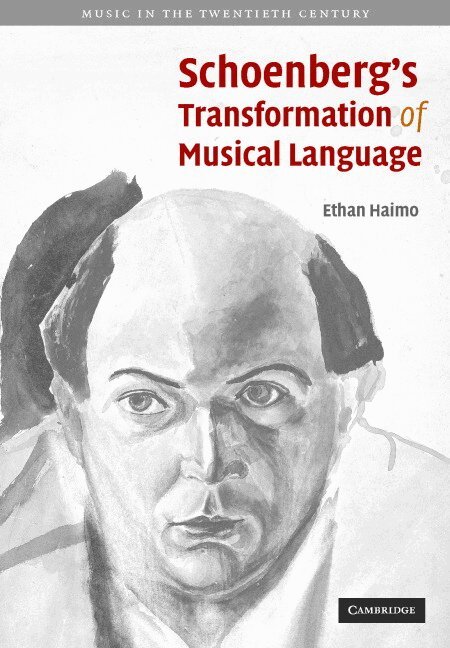
Arnold Schoenberg is widely regarded as one of the most significant and innovative composers of the twentieth century. It is commonly assumed that Schoenberg's music divides into three periods: tonal, atonal, and serial. It is also assumed that Schoenberg's atonal music made a revolutionary break with the past, particularly in terms of harmonic structure. This book challenges both these popular notions. Haimo argues that Schoenberg's 'atonal' music does not constitute a distinct unified period. He demonstrates that much of the music commonly described as 'atonal' did not make a complete break with prior practices, even in the harmonic realm, but instead transformed the past by a series of incremental changes. An important and influential contribution to the field, Haimo's findings help not only to re-evaluate Schoenberg, but also to re-date much of what has been defined as one of the most crucial turning points in music history.