Eugene Korn – författare
Visar alla böcker från författaren Eugene Korn. Handla med fri frakt och snabb leverans.
9 produkter
Person: Encounters, Paradigms, Commitment and Applications
Av Robert F. DeVall, Jr., Bogumił Gacka m. fl.
Inbunden, 2023
1351 kr
Lägg i varukorg
Person: Encounters, Paradigms, Commitment and Applications
Av Robert F. DeVall, Jr., Bogumił Gacka m. fl.
Häftad, 2024
716 kr
Lägg i varukorg
Jewish Connection to Israel, the Promised Land
A Brief Introduction for Christians
Av Eugene Korn
Inbunden, 2008
240 kr
Lägg i varukorg
Illuminates the importance of Israel for Jews and examines the return to Zion as a significant theological event that can also strengthen the Christian faith. A clear and accessible introduction to the meaning of Israel for the Jewish People and the world.
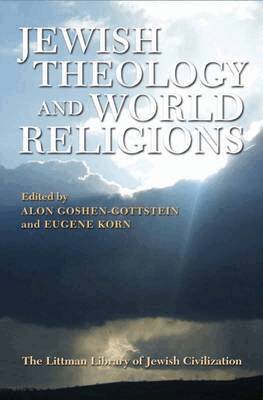
Jewish Theology and World Religions
Av Alon Goshen-Gottstein, Eugene Korn
Häftad, 2016
448 kr
Lägg i varukorg
National Jewish Book Awards Finalist for the Anthologies and Collections Award, 2012.Two of the most pervasive aspects of modern Jewish life are interaction with people of other faiths and exposure to their beliefs to a degree unknown in the past. Jewish thinking regarding other religions has not …
Israel and the Nations
The Bible, the Rabbis, and Jewish-Gentile Relations
Av Eugene Korn
Inbunden, 2023
915 kr
Lägg i varukorg
Israel and the Nations: The Bible, The Rabbis, and Jewish-Gentile Relations explores the Jewish theology and law (Halakhah) relating to non-Jews. It analyzes biblical, talmudic, medieval, and contemporary Jewish writings about gentiles and their religions. The Bible challenges the Jewish people to …
Israel and the Nations
The Bible, the Rabbis, and Jewish-Gentile Relations
Av Eugene Korn
E-bok, 2023
2597 kr
Lägg i varukorg
Israel and the Nations: The Bible, The Rabbis, and Jewish-Gentile Relations explores the Jewish theology and law (Halakhah) relating to non-Jews. It analyzes biblical, talmudic, medieval, and contemporary Jewish writings about gentiles and their religions. The Bible challenges the Jewish people to …
Israel and the Nations
The Bible, the Rabbis, and Jewish-Gentile Relations
Av Eugene Korn
E-bok, 2023
2355 kr
Lägg i varukorg
Israel and the Nations: The Bible, The Rabbis, and Jewish-Gentile Relations explores the Jewish theology and law (Halakhah) relating to non-Jews. It analyzes biblical, talmudic, medieval, and contemporary Jewish writings about gentiles and their religions. The Bible challenges the Jewish people to …
Israel and the Nations
The Bible, the Rabbis, and Jewish-Gentile Relations
Av Eugene Korn
Häftad, 2023
331 kr
Lägg i varukorg
Israel and the Nations: The Bible, The Rabbis, and Jewish-Gentile Relations explores the Jewish theology and law (Halakhah) relating to non-Jews. It analyzes biblical, talmudic, medieval, and contemporary Jewish writings about gentiles and their religions. The Bible challenges the Jewish people to …
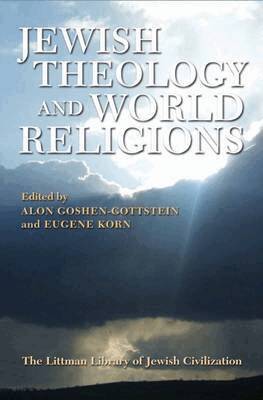
Jewish Theology and World Religions
Av Alon Goshen-Gottstein, Eugene Korn
Inbunden, 2012
1043 kr
Tillfälligt slut
National Jewish Book Awards Finalist for the Anthologies and Collections Award, 2012.Two of the most pervasive aspects of modern Jewish life are interaction with people of other faiths and exposure to their beliefs to a degree unknown in the past. Jewish thinking regarding other religions has not …