Eugene Rogan - Böcker
Visar alla böcker från författaren Eugene Rogan. Handla med fri frakt och snabb leverans.
9 produkter
9 produkter
198 kr
Skickas
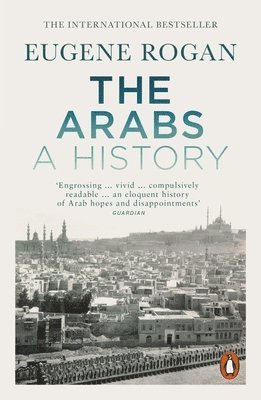
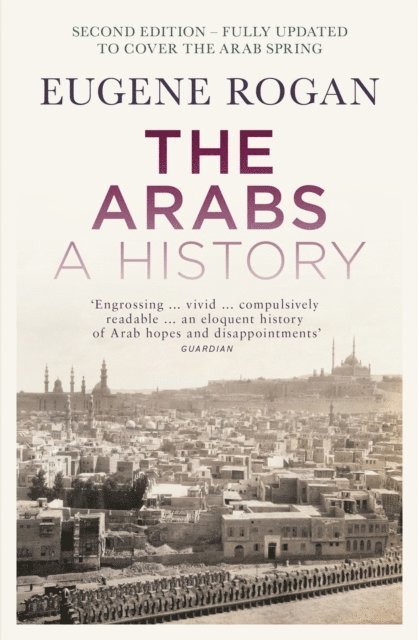
THE THIRD EDITION OF THE INTERNATIONAL BESTSELLER, REVISED AND UPDATED'A rich, galloping narrative that spans the Arab world...outstanding, gripping and exuberant...full of flamboyant character sketches, witty asides and magisterial scholarship, that explains much of what we need to know about the world today' Simon Sebag Montefiore'Anyone who seeks to understand why the Islamic world bears a grudge against the West should read The Arabs' Sir Alaistair HorneStarting with the Ottoman conquests in the sixteenth century, this landmark book follows the story of the Arabs through the era of European imperialism and the Superpower rivalries of the Cold War, to the present age of unipolar American power. Drawing on the writings and eyewitness accounts of those who lived through the tumultuous years of Arab history, The Arabs balances different voices - politicians, intellectuals, students, men and women, poets and novelists, famous, infamous and the completely unknown - to give a rich, complex sense of life over nearly five centuries.Rogan's book is remarkable for its geographical sweep, covering the Arab world from North Africa through the Arabian Peninsula, and for the depth in which it explores every facet of modern Arab history. Charting the evolution of Arab identity from Ottomanism to Arabism to Islamism, it covers themes including the conflict between national independence and foreign domination, the Arab-Israeli struggle and the peace process, Abdel Nasser and the rise of Arab Nationalism, the political and economic power of oil and the conflict between secular and Islamic values.This multilayered, fascinating and definitive work is the essential guide to understanding the history of the modern Arab world - and its future.
160 kr
Skickas
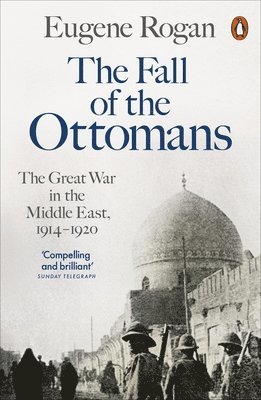
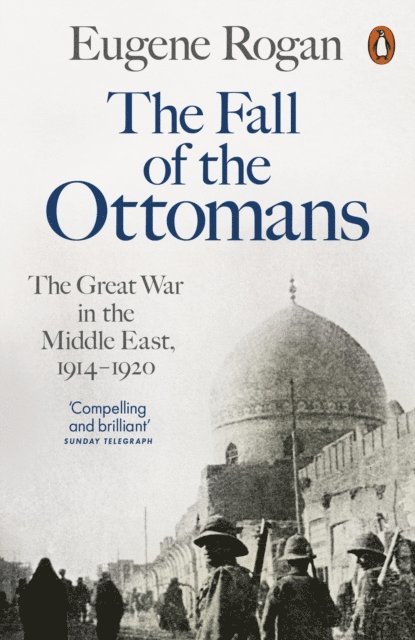
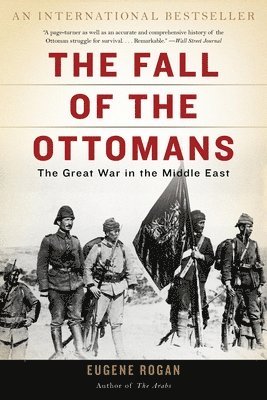
*FULLY UPDATED WITH A NEW FOREWORD*THE SUNDAY TIMES TOP TEN BESTSELLERWINNER OF THE BRITISH ARMY MILITARY BOOK OF THE YEAR 2016'Truly essential' Simon Sebag MontefioreThe final destruction of the Ottoman Empire - one of the great epics of the First World War, from bestselling historian Eugene RoganFor some four centuries the Ottoman Empire had been one of the most powerful states in Europe as well as ruler of the Middle East. By 1914 it had been drastically weakened and circled by numerous predators waiting to finish it off. Following the Ottoman decision to join the First World War on the side of the Central Powers the British, French and Russians hatched a plan to finish the Ottomans off: an ambitious and unprecedented invasion of Gallipoli...Eugene Rogan's remarkable book recreates one of the most important but poorly understood fronts of the First World War. Despite fighting back with great skill and ferocity against the Allied onslaught and humiliating the British both at Gallipoli and in Mesopotamia (Iraq), the Ottomans were ultimately defeated, clearing the way for the making, for better or worse, of a new Middle East which has endured to the present.
Del 96 - Proceedings of the British Academy
Agriculture in Egypt from Pharaonic to Modern Times
Inbunden, Engelska, 1999
1 583 kr
Skickas inom 7-10 vardagar
From the Pharaohs to the United Arab Republic of the present day, Egypt's agriculture has been subject to very different forms of political power and organization. The papers in this volume draw on the abundant documentary and archaeological evidence to analyse and compare the patterns of agricultural exploitation across historical periods (including Ptolemaic, Roman, and Ottoman times). Among important themes discussed are: the changing composition of agrarian elites, relationships between state, landholders and peasants, the impact of commercialization on the rural economy, technology, irrigation and water control, and changes in crop patterns and production. This volume's comparativist approach to the subject is crucial in crossing the linguistic and historical barriers between the different eras in Egypt's agrarian history.
Damascus Events
The 1860 Massacre and the Destruction of the Old Ottoman World
Inbunden, Engelska, 2024
355 kr
Skickas
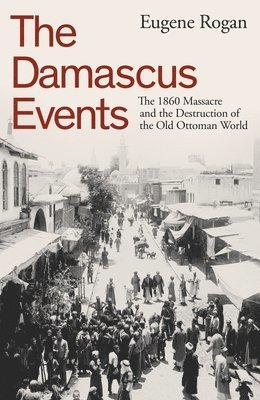
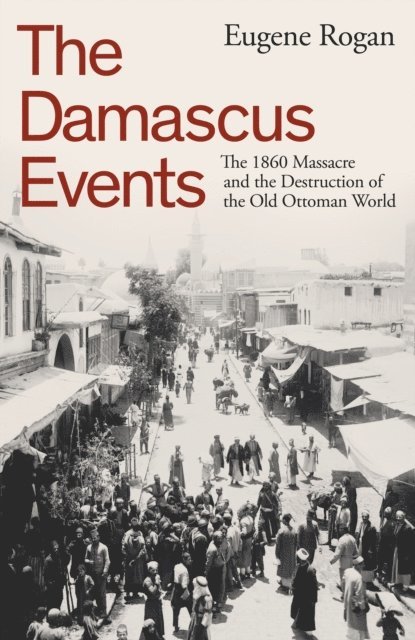
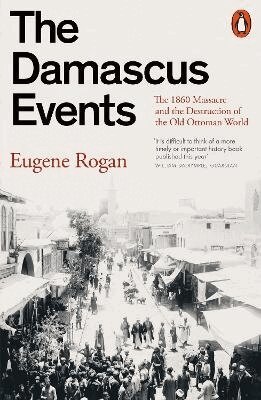
‘A superb account of the 1860 Damascus massacres—much neglected nowadays but central to the creation of the modern Middle East’ - Simon Sebag Montefiore‘A stunning portrait of the Ottoman Empire and of Damascus during a time of crisis. Absolutely riveting’ - Peter Frankopan‘An accessible, enlightening and ultimately surprising account of an episode of which most western readers will be unaware’ - Christopher de BellaigueThis remarkable book recreates one of the watershed moments in the history of the Middle East: the ferocious outbreaks of disorder across the Levant in 1860 which resulted in the massacre of thousands of Christians in Damascus.Eugene Rogan brilliantly recreates the lost world of the Middle East under Ottoman rule. The once mighty empire was under pressure from global economic change and European imperial expansion. Reforms in the mid-nineteenth century raised tensions across the empire, nowhere more so than in Damascus. A multifarious city linked by caravan trade to Baghdad, the Mediterranean and Mecca, the chaos of languages, customs and beliefs made Damascus a warily tolerant place. Until the reforms began to advantage the minority Christian community at the expense of the Muslim majority.But in 1860 people who had generally lived side by side for generations became bitter enemies as news of civil war in Mount Lebanon arrived in the city. Under the threat of a French expeditionary force, the Ottomans dealt with the disaster effectively and ruthlessly - but the old, generally quite tolerant Damascene world lay in ruins. It would take a quarter of a century to restore stability and prosperity to the Syrian capital.This is both an essential book for understanding the emergence of the modern Middle East from the destruction of the old Ottoman world, and a uniquely gripping story.
1 069 kr
Skickas inom 10-15 vardagar
Inventing International Society is a narrative history of the English School of International Relations. After E.H. Carr departed from academic international relations in the late 1940s, Martin Wight became the most theoretically innovative scholar in the discipline. Wight found an institutional setting for his ideas in The British Committee, a group which Herbert Butterfield inaugurated in 1959. The book argues that this date should be regarded as the origin of a distinctive English School of International Relations. In addition to tracing the history of the School, the book argues that later English School scholars, such as Hedley Bull and R.J.Vincent, made a significant contribution to the new normative thinking in International Relations.
1 069 kr
Skickas inom 10-15 vardagar
This volume presents a narrative history of the English School of International Relations. After E.H. Carr departed from academic international relations in the late 1940s, Martin Wight became the most theoretically innovative scholar in the discipline. Wight found an institutional setting for his ideas in The British Committee, a group which Herbert Butterfield inaugurated in 1959. The book argues that this date should be regarded as the origin of a distinctive English School of International Relations. In addition to tracing the history of the School, the book argues that later English School scholars, such as Hedley Bull and R.J. Vincent, have made a significant contribution to the new normative thinking in international relations.
284 kr
Skickas inom 3-6 vardagar
141 kr
Skickas
‘A superb account of the 1860 Damascus massacres—much neglected nowadays but central to the creation of the modern Middle East’ - Simon Sebag Montefiore‘A stunning portrait of the Ottoman Empire and of Damascus during a time of crisis. Absolutely riveting’ - Peter FrankopanThis remarkable book recreates one of the watershed moments in the history of the Middle East: the ferocious outbreaks of disorder across the Levant in 1860 which resulted in the massacre of thousands of Christians in Damascus.Eugene Rogan brilliantly recreates the lost world of the Middle East under Ottoman rule. The once mighty empire was under pressure from global economic change and European imperial expansion. Reforms in the mid-nineteenth century raised tensions across the empire, nowhere more so than in Damascus. A multifarious city linked by caravan trade to Baghdad, the Mediterranean and Mecca, the chaos of languages, customs and beliefs made Damascus a warily tolerant place. Until the reforms began to advantage the minority Christian community at the expense of the Muslim majority.But in 1860 people who had generally lived side by side for generations became bitter enemies as news of civil war in Mount Lebanon arrived in the city. Under the threat of a French expeditionary force, the Ottomans dealt with the disaster effectively and ruthlessly - but the old, generally quite tolerant Damascene world lay in ruins. It would take a quarter of a century to restore stability and prosperity to the Syrian capital.This is both an essential book for understanding the emergence of the modern Middle East from the destruction of the old Ottoman world, and a uniquely gripping story.
207 kr
Kommande
Eugene Rogan has written an authoritative new history of the Arabs in the modern world. Starting with the Ottoman conquests in the sixteenth century, this landmark book follows the story of the Arabs through the era of European imperialism and the Superpower rivalries of the Cold War, to the present age of unipolar American power. Drawing on the writings and eyewitness accounts of those who lived through the tumultuous years of Arab history, The Arabs balances different voices - politicians, intellectuals, students, men and women, poets and novelists, famous, infamous and the completely unknown - to give a rich, complex sense of life over nearly five centuries.Rogan's book is remarkable for its geographical sweep, covering the Arab world from North Africa through the Arabian Peninsula, and for the depth in which it explores every facet of modern Arab history. Charting the evolution of Arab identity from Ottomanism to Arabism to Islamism, it covers themes including the conflict between national independence and foreign domination, the Arab-Israeli struggle and the peace process, Abdel Nasser and the rise of Arab Nationalism, the political and economic power of oil and the conflict between secular and Islamic values.