Eva Jablonka – författare
Visar alla böcker från författaren Eva Jablonka. Handla med fri frakt och snabb leverans.
11 produkter
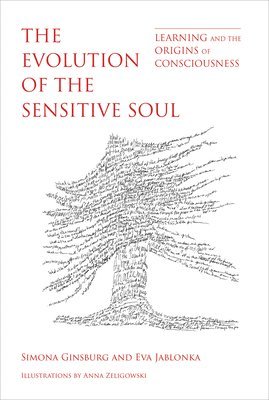
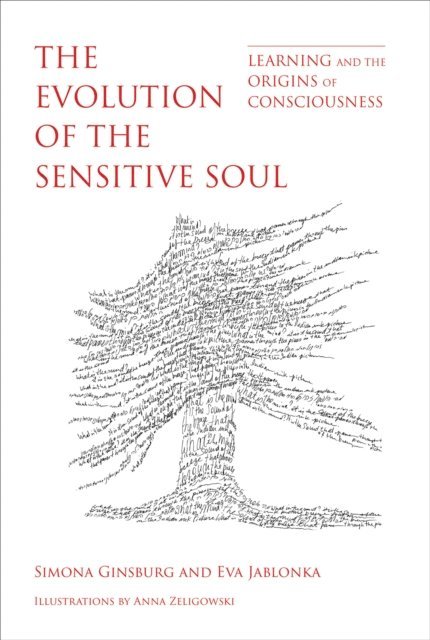
Evolution of the Sensitive Soul
Learning and the Origins of Consciousness
Av Simona Ginsburg, Eva Jablonka
Inbunden, 2019
739 kr
Lägg i varukorg
A new theory about the origins of consciousness that finds learning to be the driving force in the evolutionary transition to basic consciousness. What marked the evolutionary transition from organisms that lacked consciousness to those with consciousness—to minimal subjective experiencing, or, as …
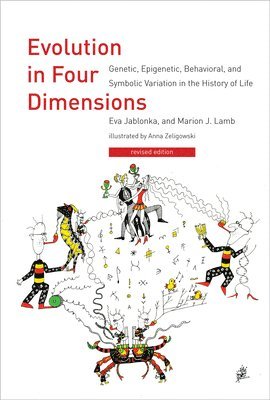
Evolution in Four Dimensions
Genetic, Epigenetic, Behavioral, and Symbolic Variation in the History of Life
Av Eva Jablonka, Marion J. Lamb
Häftad, 2014
3,0 utav 5 stjärnor. Totalt antal röster: (2)
495 kr
Lägg i varukorg
A pioneering proposal for a pluralistic extension of evolutionary theory, now updated to reflect the most recent research. This new edition of the widely read Evolution in Four Dimensions has been revised to reflect the spate of new discoveries in biology since the book was first published in 2005, …
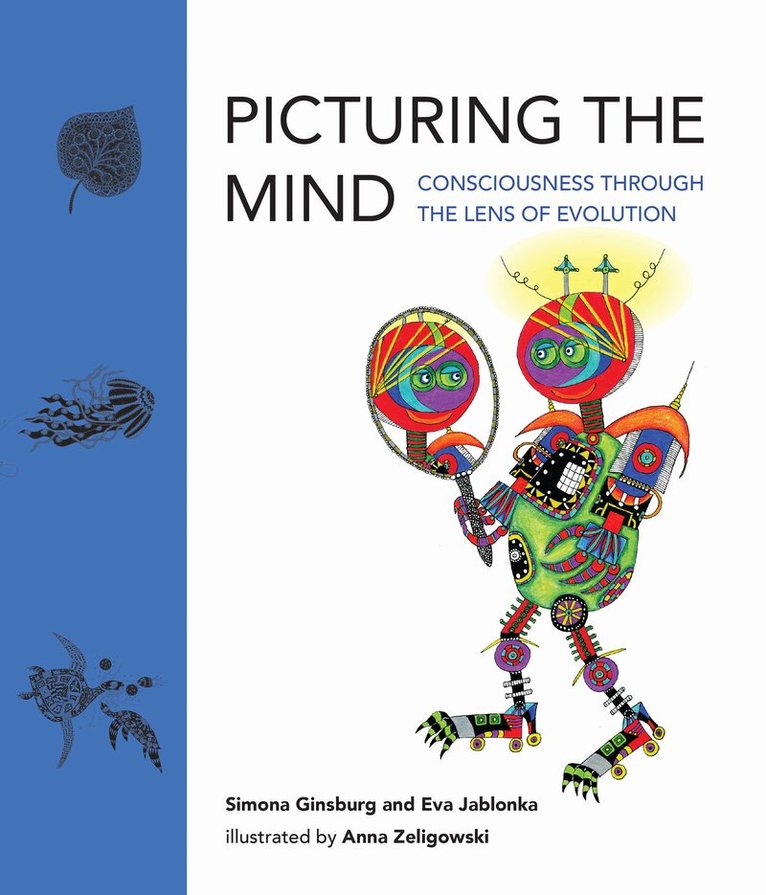
Picturing the Mind
Av Simona Ginsburg, Eva Jablonka
Inbunden, 2022
408 kr
Lägg i varukorg
Consciousness in all its possible human and nonhuman varieties, explored through words and images. What is consciousness, and who (or what) is conscious—humans, nonhumans, nonliving beings? How did consciousness evolve? Picturing the Mind pursues these questions through a series of “vistas”—short, …
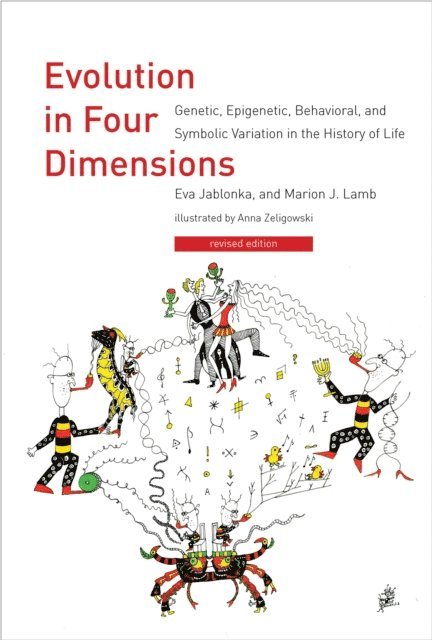
Evolution in Four Dimensions, revised edition
Av Marion J. Lamb, Eva Jablonka
E-bok, 2014
492 kr
Lägg i varukorg
A pioneering proposal for a pluralistic extension of evolutionary theory, now updated to reflect the most recent research. This new edition of the widely read Evolution in Four Dimensions has been revised to reflect the spate of new discoveries in biology since the book was first published in 2005, …
Evolution of the Sensitive Soul
Av Eva Jablonka, Simona Ginsburg
E-bok, 2019
721 kr
Lägg i varukorg
A new theory about the origins of consciousness that finds learning to be the driving force in the evolutionary transition to basic consciousness. What marked the evolutionary transition from organisms that lacked consciousness to those with consciousness—to minimal subjective experiencing, or, as …
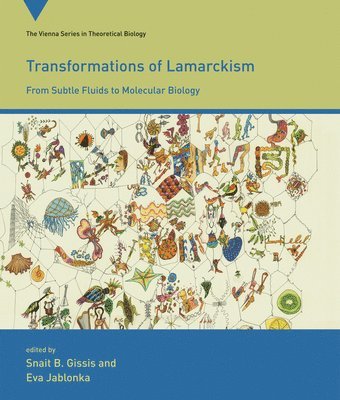
Transformations of Lamarckism
From Subtle Fluids to Molecular Biology
Av Snait B. Gissis, Eva Jablonka m. fl.
Häftad, 2015
1025 kr
Lägg i varukorg
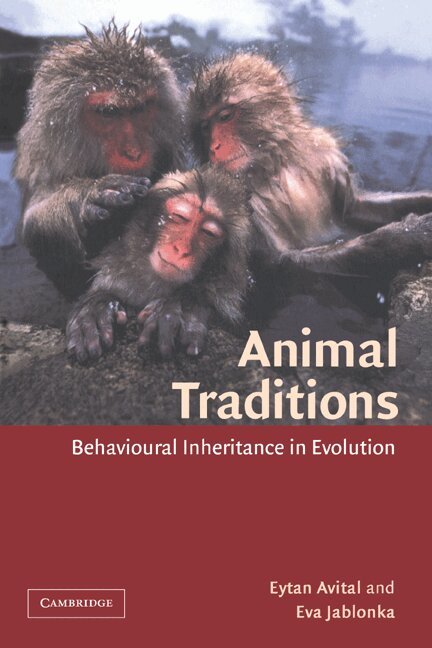
Animal Traditions
Behavioural Inheritance in Evolution
Häftad, 2005
927 kr
Lägg i varukorg
Animal Traditions maintains that the assumption that the selection of genes supplies both a sufficient explanation of the evolution and a true description of its course is, despite its almost universal acclaim, wrong. Eytan Avital and Eva Jablonka contend that evolutionary explanations must take …
Animal Traditions
Behavioural Inheritance in Evolution
Inbunden, 2000
2149 kr
Lägg i varukorg
Animal Traditions maintains that the assumption that the selection of genes supplies both a sufficient explanation of the evolution and a true description of its course is, despite its almost universal acclaim, wrong. Eytan Avital and Eva Jablonka contend that evolutionary explanations must take …
Inheritance Systems and the Extended Evolutionary Synthesis
Av Marion J. Lamb, Eva Jablonka
E-bok, 2020
287 kr
Lägg i varukorg
Current knowledge of the genetic, epigenetic, behavioural and symbolic systems of inheritance requires a revision and extension of the mid-twentieth-century, gene-based, ''Modern Synthesis'' version of Darwinian evolutionary theory. We present the case for this by first outlining the history that …
Inheritance Systems and the Extended Evolutionary Synthesis
Av Marion J. Lamb, Eva Jablonka
E-bok, 2020
287 kr
Lägg i varukorg
Current knowledge of the genetic, epigenetic, behavioural and symbolic systems of inheritance requires a revision and extension of the mid-twentieth-century, gene-based, ''Modern Synthesis'' version of Darwinian evolutionary theory. We present the case for this by first outlining the history that …
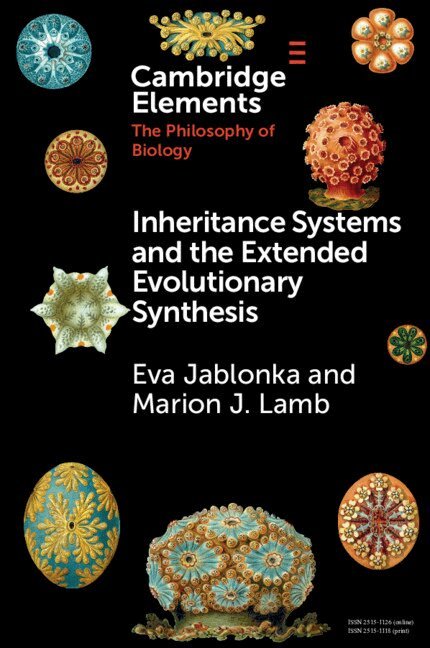
Inheritance Systems and the Extended Evolutionary Synthesis
Av Eva Jablonka, Marion J. Lamb
Häftad, 2020
308 kr
Lägg i varukorg
Current knowledge of the genetic, epigenetic, behavioural and symbolic systems of inheritance requires a revision and extension of the mid-twentieth-century, gene-based, 'Modern Synthesis' version of Darwinian evolutionary theory. We present the case for this by first outlining the history that led …