Eva Pfanzelter – författare
Visar alla böcker från författaren Eva Pfanzelter. Handla med fri frakt och snabb leverans.
4 produkter
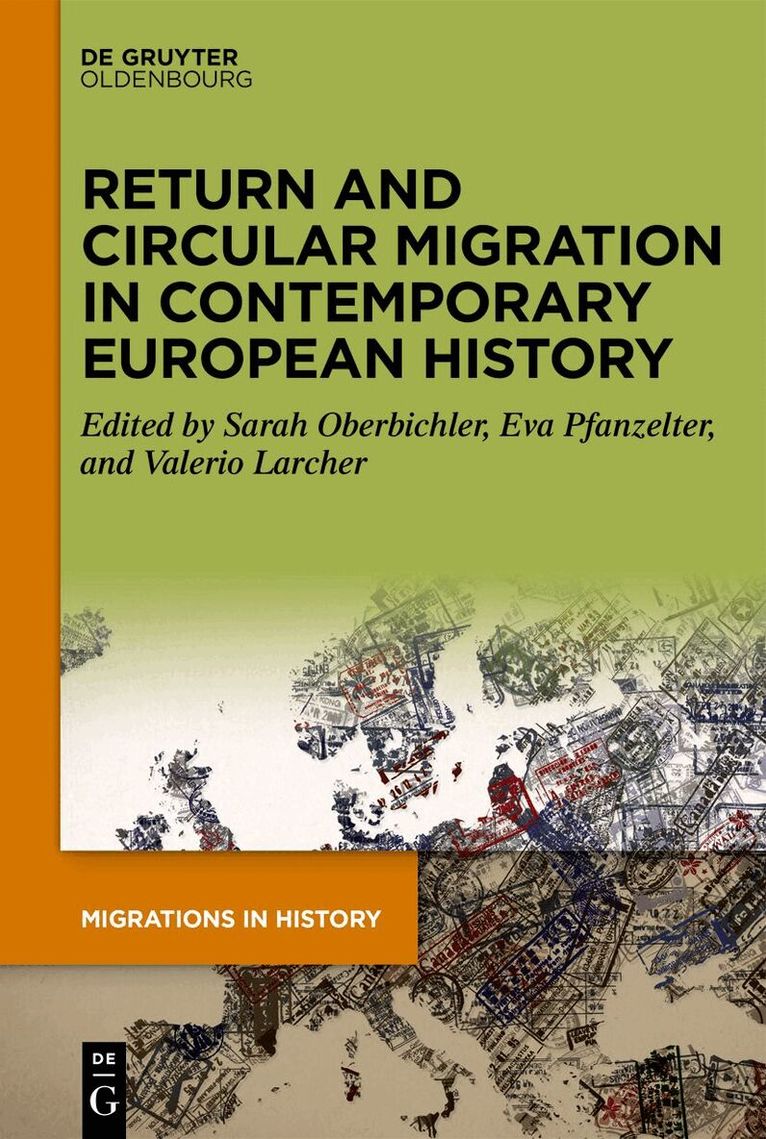
Return and Circular Migration in Contemporary European History
Av Sarah Oberbichler, Eva Pfanzelter m. fl.
Inbunden, 2024
1508 kr
Lägg i varukorg
Migration is often viewed as a one-way process, from the country of origin to the place of arrival, but recent academic research shows that this presumption is fundamentally flawed. Migration has always been characterized by return movements, as a glance into history reveals – from transatlantic …
Connected Histories
Memories and Narratives of the Holocaust in Digital Space
Av Eva Pfanzelter, Dirk Rupnow m. fl.
Inbunden, 2024
908 kr
Lägg i varukorg
The World Wide Web (WWW) and digitisation have become important sites and tools for the history of the Holocaust and its commemoration. Today, some memory institutions use the Internet at a high professional level as a venue for self-presentation and as a forum for the discussion of …
Historyblogosphere
Bloggen in Den Geschichtswissenschaften
Av Peter Haber, Eva Pfanzelter
Häftad, 2013
412 kr
Lägg i varukorg
das Buch- und Schreibprojekt „historyblogosphere. Bloggen in den Geschichtswissenschaften“ dokumentiert und reflektiert die historische Blogosphäre: Wozu betreibt man als Historiker/in ein Blog? Was sind überhaupt geschichtswissenschaftliche Blogs? Gibt es geschlechtsspezifische Nutzungsformen? Wie …
70 anni Accordo di Parigi
Av Eva Pfanzelter, Walter Obwexer
E-bok, 2020
563 kr
Lägg i varukorg
Der Band versammelt in italienischer Sprache die Beiträge zweier Konferenzen zum Gedenken an die Unterzeichnung des Gruber-Degasperi-Abkommens in Paris am 5. September 1946 (auch Pariser Vertrag genannt), das den Schutz der kulturellen Eigenart der deutschsprachigen Bevölkerung in der Region …