Ewa Plonowska Ziarek - Böcker
Visar alla böcker från författaren Ewa Plonowska Ziarek. Handla med fri frakt och snabb leverans.
13 produkter
13 produkter
1 343 kr
Skickas inom 10-15 vardagar
Bringing together an international and interdisciplinary group of scholars, Intermedialities: Philosophy, Arts, Politics is a comprehensive collection devoted to the new field of research called "intermedialities." The concept of intermedialities stresses the necessity of situating philosophical and political debates on social relations in the divergent contexts of media theories, avant-garde artistic practices, continental philosophy, feminism, and political theory. The "intermedial" approach to social relations does not focus on the shared identity but instead on the epistemological, ethical, and political status of inter (being-in-between). At stake here are the political analyses of new modes of being in common that transcend national boundaries, the critique of the new forms of domination that accompany them, and the search for new emancipatory possibilities. Opening a new approach to social relations, intermedialities investigates not only engagements between already constituted positions but even more the interval, antagonism, and differences that form and decenter these positions. Consequently, in opposition to the resurgence of cultural and ethnic particularisms and to the leveling of difference produced by globalization, the political and ethical analysis of the "in-between" enables a conception of community based on difference, exposure, and interaction with others rather than on an identification with a shared identity. Investigations of "in-betweenness," both as medium specific and between heterogeneous "sites" of inquiry, range here from philosophical conceptuality to artistic practices, from the political circulation of money and power to the operation of new technologies. They inevitably invoke the crucial role of embodiment in creative thought and collective acting. As a mediating instance between the psyche and society, matter and spirit, nature and culture, and biology and technology, the body is another interval forming and informed by socio-linguistic relations. As these com
675 kr
Skickas inom 10-15 vardagar
Bringing together an international and interdisciplinary group of scholars, Intermedialities: Philosophy, Arts, Politics is a comprehensive collection devoted to the new field of research called "intermedialities." The concept of intermedialities stresses the necessity of situating philosophical and political debates on social relations in the divergent contexts of media theories, avant-garde artistic practices, continental philosophy, feminism, and political theory. The "intermedial" approach to social relations does not focus on the shared identity but instead on the epistemological, ethical, and political status of inter (being-in-between). At stake here are the political analyses of new modes of being in common that transcend national boundaries, the critique of the new forms of domination that accompany them, and the search for new emancipatory possibilities. Opening a new approach to social relations, intermedialities investigates not only engagements between already constituted positions but even more the interval, antagonism, and differences that form and decenter these positions. Consequently, in opposition to the resurgence of cultural and ethnic particularisms and to the leveling of difference produced by globalization, the political and ethical analysis of the "in-between" enables a conception of community based on difference, exposure, and interaction with others rather than on an identification with a shared identity. Investigations of "in-betweenness," both as medium specific and between heterogeneous "sites" of inquiry, range here from philosophical conceptuality to artistic practices, from the political circulation of money and power to the operation of new technologies. They inevitably invoke the crucial role of embodiment in creative thought and collective acting. As a mediating instance between the psyche and society, matter and spirit, nature and culture, and biology and technology, the body is another interval forming and informed by socio-linguistic relations. As these com
440 kr
Tillfälligt slut
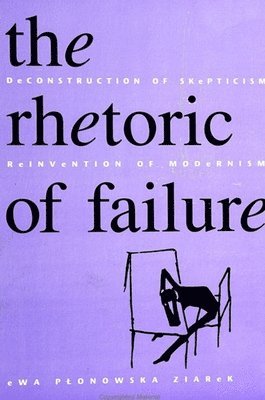
Reading both philosophical and literary texts, this book shows that it is possible to move past the endless discussions of the impasse of postmodernity or the collapse of reason, and see that deconstruction leads not to nihilism but to the "triumph of the other" that has been violently excluded from traditional subject-centered philosophy.In The Rhetoric of Failure, Ewa Ziarek offers a bold rethinking of deconstruction, modernism, and post-structural ethics. Bringing philosophical rigor and literary sensitivity into rare alignment, Ziarek stages an original confrontation between major thinkers—Cavell, Derrida, Levinas, and Benjamin—and modernist writers such as Kafka, Beckett, and Gombrowicz. The result is a powerful challenge to the familiar view of deconstruction as a philosophy of impossibility, nihilism, or communicative collapse. Against interpretations that read modernist skepticism as the negation of meaning or ethical responsibility, Ziarek argues that the "failure" of subject-centered rationality marks something far more affirmative: the refusal to exclude or annihilate the other. Failure, in this sense, becomes a site of ethical significance, aesthetic invention, and renewed community rather than despair.Through close, lucid readings that move fluidly between philosophy and literature, The Rhetoric of Failure demonstrates that deconstruction leads neither to linguistic solipsism nor to moral paralysis. Instead, it opens the possibility of writing—and thinking—otherwise. A significant and timely contribution to debates in literary theory, modernism, and post-structural ethics, this book will be essential reading for scholars of philosophy, literature, and critical theory.
463 kr
Tillfälligt slut
Examines Gombrowicz's modernist aesthetics in the context of his critique of nationalism, his exploration of queer eroticism, and his interest in hybrid and subaltern identities.This timely and much needed critical study is devoted to the writing of Witold Gombrowicz, one of the most important Slavic writers in the twentieth century. Written from a variety of theoretical perspectives, ranging from poststructuralism to queer theory and postcolonialism, this book examines the complexity of Gombrowicz's texts in the context of the current reappraisals of the mixed legacies of modernism. By situating Gombrowicz's work in relation to Eastern and Western European as well as Argentinean cultures, Gombrowicz's Grimaces rethinks the significance of literary modernism in light of philosophical modernity, queer sexuality, subaltern identities, and limits of national culture. Starting with the considerations of Gombrowicz's aesthetics and his philosophical interests, this book addresses the ways in which the experience of cultural displacement-Gombrowicz's exile in Argentina and France-informs his literary career, and ends with a discussion of the cultural implications of Gombrowicz's philosophy of form for his critique of nationalism and the explorations of queer eroticism.
1 057 kr
Tillfälligt slut
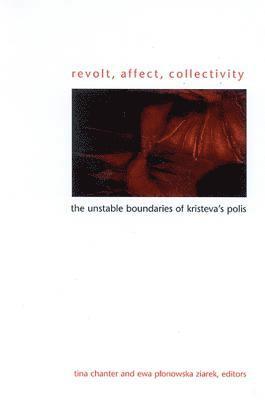
Explores how the concept of revolution permeates and unifies Kristeva's body of work.These original essays explore how the concept of revolution permeates and unifies Julia Kristeva's body of work by tracing its trajectory from her early engagement with the Tel Quel group, through her preoccupation in the 1980s with abjection, melancholia, and love, to her latest work. Some of the leading voices in Kristeva scholarship examine her reevaluation of the concept of revolt in the context of the changing cultural and political conditions in the West; the questions of the stranger, race, and nation; her reflections on narrative, public spaces, and collectivity in the context of her engagement with Hannah Arendt's work; her development and refinement of the notions of abjection, melancholia, and narcissism in her ongoing interrogation of aesthetics; as well as her contribution to film theory. Focused primarily on Kristeva's newest work-much of it only recently translated into English-this book breaks new ground in Kristeva scholarship.
353 kr
Skickas inom 11-20 vardagar
Explores how the concept of revolution permeates and unifies Kristeva's body of work.These original essays explore how the concept of revolution permeates and unifies Julia Kristeva's body of work by tracing its trajectory from her early engagement with the Tel Quel group, through her preoccupation in the 1980s with abjection, melancholia, and love, to her latest work. Some of the leading voices in Kristeva scholarship examine her reevaluation of the concept of revolt in the context of the changing cultural and political conditions in the West; the questions of the stranger, race, and nation; her reflections on narrative, public spaces, and collectivity in the context of her engagement with Hannah Arendt's work; her development and refinement of the notions of abjection, melancholia, and narcissism in her ongoing interrogation of aesthetics; as well as her contribution to film theory. Focused primarily on Kristeva's newest work-much of it only recently translated into English-this book breaks new ground in Kristeva scholarship.
Ethics of Dissensus
Postmodernity, Feminism, and the Politics of Radical Democracy
Inbunden, Engelska, 2002
1 287 kr
Skickas inom 10-15 vardagar
What kind of challenge does sexual and racial difference pose for postmodern ethics? What is the relation between ethical obligation and feminist interpretations of embodiment, passion, and eros? How can we negotiate between ethical responsibility for the Other and democratic struggles against domination, injustice, and inequality, on the one hand, and internal conflicts within the subject, on the other? What are the implications of postmodern ethics for the agonistic politics of radical democracy?We cannot address such questions, Ziarek argues, without putting into dialogue discourses that have hitherto been segregated: postmodern ethics, feminism, race theory, and the idea of radical democracy. Addressing a constellation of diverse thinkers—including Emmanuel Levinas, Patricia Williams, Jean-François Lyotard, Michel Foucault, Frantz Fanon, Julia Kristeva, and Luce Irigaray—the author proposes a new conception of ethics, an ethics of dissensus that rethinks the relation between freedom and obligation in a double context of embodiment and antagonism.As the unavoidable yet productive dissonance among antagonism, freedom, and obligation suggests, the ethics of dissensus seeks not to transcend politics but to articulate the difficult role of responsibility and freedom in democratic struggles against racist and sexist oppression. Opposing the conservative political work of privatized moral discourse that reduces social antagonism to the apolitical experience of good and evil, the ethics of dissensus calls into question not only the depoliticized subject of ethics but also the disembodied notions of citizenship, rights, and democratic community.
Ethics of Dissensus
Postmodernity, Feminism, and the Politics of Radical Democracy
Häftad, Engelska, 2002
309 kr
Skickas inom 7-10 vardagar
What kind of challenge does sexual and racial difference pose for postmodern ethics? What is the relation between ethical obligation and feminist interpretations of embodiment, passion, and eros? How can we negotiate between ethical responsibility for the Other and democratic struggles against domination, injustice, and inequality, on the one hand, and internal conflicts within the subject, on the other? What are the implications of postmodern ethics for the agonistic politics of radical democracy?We cannot address such questions, Ziarek argues, without putting into dialogue discourses that have hitherto been segregated: postmodern ethics, feminism, race theory, and the idea of radical democracy. Addressing a constellation of diverse thinkers—including Emmanuel Levinas, Patricia Williams, Jean-François Lyotard, Michel Foucault, Frantz Fanon, Julia Kristeva, and Luce Irigaray—the author proposes a new conception of ethics, an ethics of dissensus that rethinks the relation between freedom and obligation in a double context of embodiment and antagonism.As the unavoidable yet productive dissonance among antagonism, freedom, and obligation suggests, the ethics of dissensus seeks not to transcend politics but to articulate the difficult role of responsibility and freedom in democratic struggles against racist and sexist oppression. Opposing the conservative political work of privatized moral discourse that reduces social antagonism to the apolitical experience of good and evil, the ethics of dissensus calls into question not only the depoliticized subject of ethics but also the disembodied notions of citizenship, rights, and democratic community.
1 051 kr
Skickas inom 10-15 vardagar
This book brings together an international roster of renowned scholars from disciplines including philosophy, political theory, intellectual history, and literary studies to address the conceptual foundations of the humanities and the question of their future. What notions of the future, of the human, and of finitude underlie recurring anxieties about the humanities in our current geopolitical situation? How can we think about the unpredictable and unthought dimensions of praxis implicit in the very notion of futurity?The essays here argue that the uncertainty of the future represents both an opportunity for critical engagement and a matrix for invention. Broadly conceived, the notion of invention, or cultural poiesis, questions the key assumptions and tasks of a whole range of practices in the humanities, beginning with critique, artistic practices, and intellectual inquiry, and ending with technology, emancipatory politics, and ethics. The essays discuss a wide range of key figures (e.g., Deleuze, Freud, Lacan, Foucault, Kristeva, Irigaray), problems (e.g., becoming, kinship and the foreign, "disposable populations" within a global political economy, queerness and the death drive, the parapoetic, electronic textuality, invention and accountability, political and social reform in Latin America), disciplines and methodologies (philosophy, art and art history, visuality, political theory, criticism and critique, psychoanalysis, gender analysis, architecture, literature, art). The volume should be required reading for all who feel a deep commitment to the humanities, its practices, and its future.
468 kr
Skickas inom 10-15 vardagar
This book brings together an international roster of renowned scholars from disciplines including philosophy, political theory, intellectual history, and literary studies to address the conceptual foundations of the humanities and the question of their future. What notions of the future, of the human, and of finitude underlie recurring anxieties about the humanities in our current geopolitical situation? How can we think about the unpredictable and unthought dimensions of praxis implicit in the very notion of futurity?The essays here argue that the uncertainty of the future represents both an opportunity for critical engagement and a matrix for invention. Broadly conceived, the notion of invention, or cultural poiesis, questions the key assumptions and tasks of a whole range of practices in the humanities, beginning with critique, artistic practices, and intellectual inquiry, and ending with technology, emancipatory politics, and ethics. The essays discuss a wide range of key figures (e.g., Deleuze, Freud, Lacan, Foucault, Kristeva, Irigaray), problems (e.g., becoming, kinship and the foreign, "disposable populations" within a global political economy, queerness and the death drive, the parapoetic, electronic textuality, invention and accountability, political and social reform in Latin America), disciplines and methodologies (philosophy, art and art history, visuality, political theory, criticism and critique, psychoanalysis, gender analysis, architecture, literature, art). The volume should be required reading for all who feel a deep commitment to the humanities, its practices, and its future.
622 kr
Skickas inom 3-6 vardagar
Revisits, reassesses, and reclaims the legacy of May '68 in light of our present cultural and historical emergency.Continental Theory Buffalo is the inaugural volume of the Humanities to the Rescue book series, a public humanities project dedicated to discussing the role of the arts and humanities today. This book is a collaborative act of humanistic renewal that builds on the transcontinental legacy of May 1968 to offer insightful readings of the cultural (d)evolution of the last fifty years. The volume contributors revisit, reclaim and reassess the "revolutionary" legacy of May 1968 in light of the urgency of the present and the future. Their essays are effective illustrations of the potential of such interpretive traditions as philosophy, literature and cultural criticism to run interference with (and offer alternatives to) the instrumentalist logic and predatory structures that are reducing the world to a collection of quantifiable and tradeable resources. The book will be of interest to cultural historians and theorists, media studies scholars, political scientists, and students of French and Francophone literature and culture on both sides of the Atlantic.This book is freely available in an open access edition thanks to the generous support of the Humanities Institute at the University at Buffalo, State University of New York. It can also be found in the SUNY Open Access Repository.
Continental Theory Buffalo
Transatlantic Crossroads of a Critical Insurrection
Inbunden, Engelska, 2021
1 674 kr
Skickas inom 3-6 vardagar
Revisits, reassesses, and reclaims the legacy of May '68 in light of our present cultural and historical emergency.Continental Theory Buffalo is the inaugural volume of the Humanities to the Rescue book series, a public humanities project dedicated to discussing the role of the arts and humanities today. This book is a collaborative act of humanistic renewal that builds on the transcontinental legacy of May 1968 to offer insightful readings of the cultural (d)evolution of the last fifty years. The volume contributors revisit, reclaim and reassess the "revolutionary" legacy of May 1968 in light of the urgency of the present and the future. Their essays are effective illustrations of the potential of such interpretive traditions as philosophy, literature and cultural criticism to run interference with (and offer alternatives to) the instrumentalist logic and predatory structures that are reducing the world to a collection of quantifiable and tradeable resources. The book will be of interest to cultural historians and theorists, media studies scholars, political scientists, and students of French and Francophone literature and culture on both sides of the Atlantic.This book is freely available in an open access edition thanks to the generous support of the Humanities Institute at the University at Buffalo, State University of New York. It can also be found in the SUNY Open Access Repository.
Arendt, Natality and Biopolitics
Toward Democratic Plurality and Reproductive Justice
Häftad, Engelska, 2018
397 kr
Skickas inom 7-10 vardagar
Rosalyn Diprose and Ewa Ziarek provide a reconfiguration of Hannah Arendt’s philosophy of natality from the perspective of biopolitical and feminist theory. They show us that Arendt provides new ways of contesting biopolitical threats to human plurality and the threat of biopolitics – along with sexism, racism and political theology – to women’s reproductive agency. They extend Arendt’s account of collective political action to include political hospitality, responsibility and story-telling as ways of countering the harms of biopower. Diprose and Ziarek give us an insightful account of the political ontology of Hannah Arendt and form new dialogues between her and major 20th- and 21st-century thinkers including Foucault, Agamben, Nancy, Kristeva, Esposito, Derrida, Levinas and Cavarero.