Ewan Kirkland - Böcker
Visar alla böcker från författaren Ewan Kirkland. Handla med fri frakt och snabb leverans.
3 produkter
3 produkter
2 414 kr
Skickas inom 10-15 vardagar
This book explores the many ways Gothic literature and media have informed videogame design. Through a series of detailed case studies, Videogames and the Gothic illustrates the extent to which particular tropes of Gothic culture –neo-medieval aesthetics, secret-filled labyrinthine spaces, the sense of a dark past impacting upon the present – have been appropriated by and transformed within digital games. Moving beyond the study of the generic influences of horror on digital gaming, Ewan Kirkland focuses in on the Gothic, a less visceral mode tending towards the unsettling, the uncertain and the uncanny. He explores the extent to which imagery, storylines and narrative preoccupations taken from Gothic fiction facilitate the affordances and limitations of the videogame medium. A core contention of this book is that videogames have developed as an inherently Gothic form of popular entertainment. Arguing for close proximity between Gothic culture and the videogame medium itself, this book will be a key contribution to both Gothic and digital game scholarship; as such, it will have resonance with scholars and students in both areas, as well as those interested in Gothic novels, media and popular culture, digital games and interactive fiction.
660 kr
Skickas inom 10-15 vardagar
This book explores the many ways Gothic literature and media have informed videogame design. Through a series of detailed case studies, Videogames and the Gothic illustrates the extent to which particular tropes of Gothic culture –neo-medieval aesthetics, secret-filled labyrinthine spaces, the sense of a dark past impacting upon the present – have been appropriated by and transformed within digital games. Moving beyond the study of the generic influences of horror on digital gaming, Ewan Kirkland focuses in on the Gothic, a less visceral mode tending towards the unsettling, the uncertain and the uncanny. He explores the extent to which imagery, storylines and narrative preoccupations taken from Gothic fiction facilitate the affordances and limitations of the videogame medium. A core contention of this book is that videogames have developed as an inherently Gothic form of popular entertainment. Arguing for close proximity between Gothic culture and the videogame medium itself, this book will be a key contribution to both Gothic and digital game scholarship; as such, it will have resonance with scholars and students in both areas, as well as those interested in Gothic novels, media and popular culture, digital games and interactive fiction.
1 076 kr
Skickas inom 5-8 vardagar
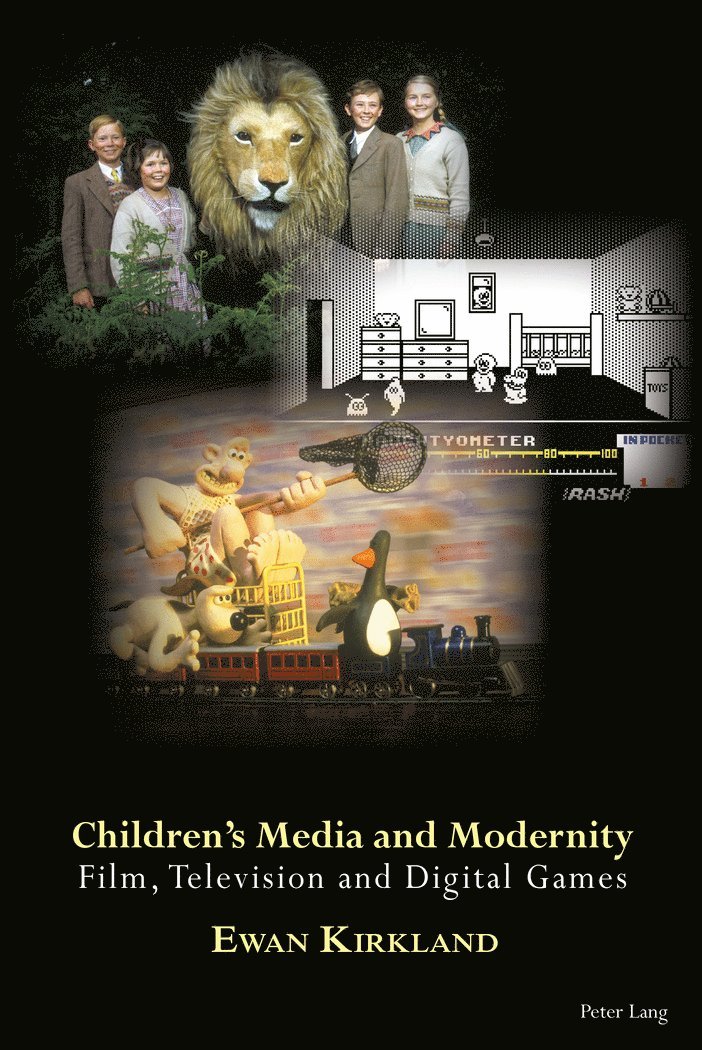
Throughout the modern era the figure of the child has consistently reflected adult concerns about industrialisation, urbanisation, technology, consumerism and capitalism. Children represent a symbolic retreat from modern life, culturally aligned with fairy tales, medievalism, animals and nature. Yet children also embody the future and are often identified with the most contemporary forms of popular culture.This book explores how products for children navigate such contradictions by investigating the history and textuality of three major forms of modern media: cinema, television and digital games. Case studies – including Wallace and Gromit, Teletubbies, Horrible Histories, Little Big Planet and Disney Infinity – are used to illustrate the complex intersections between children’s culture and modernity.Cinema – so closely associated with the emergence of modernity and mass popular culture – has had to negotiate its relationship with child audiences and depictions of childhood, often concealing its connection with modernity in the process. In contrast, television’s incorporation into family home-centred, post-war modernity resulted in children being clearly positioned as the audience for this domestic entertainment. The latter decades of the twentieth century saw the promotion of home computers as educational tools for training future generations, capitalising on positive alignments between children and technologies, while digital games’ narrative references, aesthetics and merchandise established the new medium as a form of children’s culture.