Fabio Camilletti - Böcker
Visar alla böcker från författaren Fabio Camilletti. Handla med fri frakt och snabb leverans.
8 produkter
8 produkter
622 kr
Skickas inom 10-15 vardagar
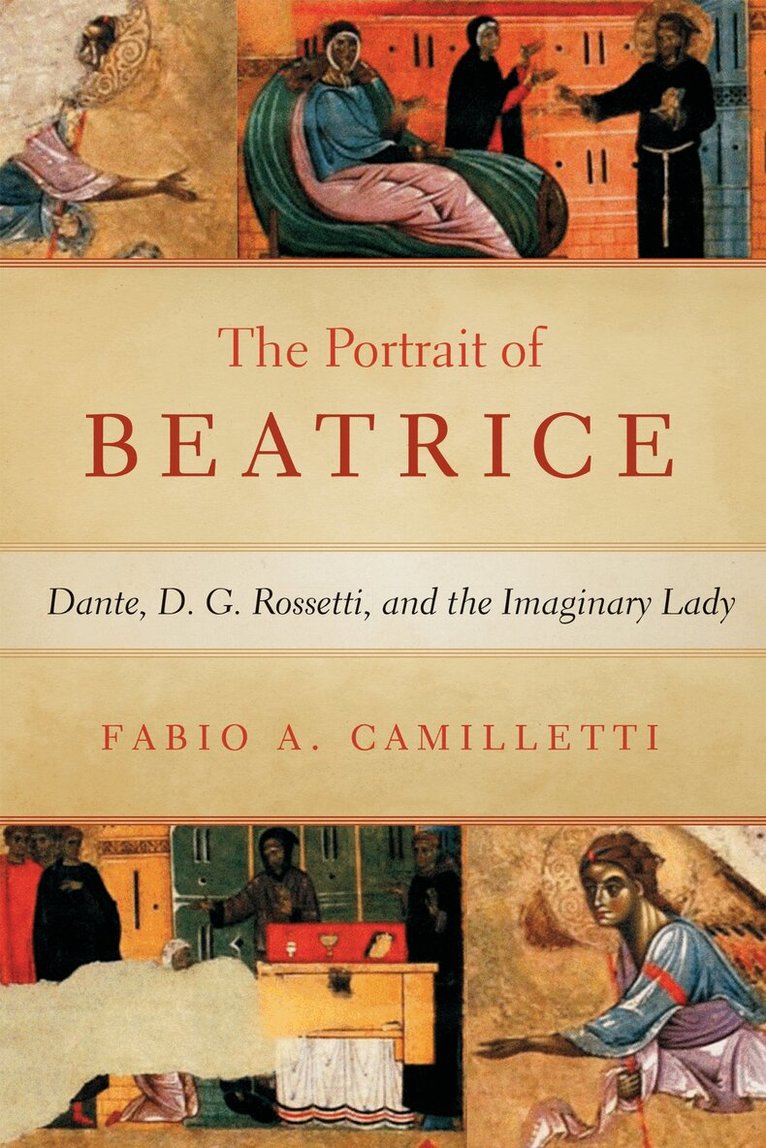
The Portrait of Beatrice examines both Dante's and D. G. Rossetti's intellectual experiences in the light of a common concern about visuality. Both render, in different times and contexts, something that resists clear representation, be it the divine beauty of the angel-women or the depiction of the painter's own interiority in a secularized age. By analyzing Dante's Vita Nova alongside Rossetti's Hand and Soul and St. Agnes of Intercession, which inaugurates the Victorian genre of 'imaginary portrait' tales, this book examines how Dante and Rossetti explore the tension between word and image by creating 'imaginary portraits.' The imaginary portrait—Dante's sketched angel appearing in the Vita Nova or the paintings evoked in Rossetti's narratives—is not (only) a non-existent artwork: it is an artwork whose existence lies elsewhere, in the words alluding to its inexpressible quality. At the same time, thinking of Beatrice as an 'imaginary Lady' enables us to move beyond the debate about her actual existence. Rather, it allows us to focus on her reality as a miracle made into flesh, which language seeks incessantly to grasp. Thus, the intergenerational dialogue between Dante and Rossetti—and between thirteenth and nineteenth centuries, literature and painting, Italy and England—takes place between different media, oscillating between representation and denial, mimesis and difference, concealment and performance. From medieval Florence to Victorian London, Beatrice's 'imaginary portrait' touches upon the intertwinement of desire, poetry, and art-making in Western culture.
2 401 kr
Skickas inom 10-15 vardagar
In reconstructing the birth and development of the notion of ‘unconscious’, historians of ideas have heavily relied on the Freudian concept of Unbewussten, retroactively projecting the psychoanalytic unconscious over a constellation of diverse cultural experiences taking place in the eighteenth and nineteenth centuries between France and Germany. Archaeology of the Unconscious aims to challenge this perspective by adopting an unusual and thought-provoking viewpoint as the one offered by the Italian case from the 1770s to the immediate aftermath of WWI, when Italo Svevo’s La coscienza di Zeno provides Italy with the first example of a ‘psychoanalytic novel’. Italy’s vibrant culture of the long nineteenth century, characterised by the sedimentation, circulation, intersection, and synergy of different cultural, philosophical, and literary traditions, proves itself to be a privileged object of inquiry for an archaeological study of the unconscious; a study whose object is not the alleged ‘origin’ of a pre-made theoretical construct, but rather the stratifications by which that specific construct was assembled. In line with Michel Foucault’s Archéologie du savoir (1969), this volume will analyze the formation and the circulation, across different authors and texts, of a network of ideas and discourses on interconnected themes, including dreams, memory, recollection, desire, imagination, fantasy, madness, creativity, inspiration, magnetism, and somnambulism. Alongside questioning pre-given narratives of the ‘history of the unconscious’, this book will employ the Italian ‘difference’ as a powerful perspective from whence to address the undeveloped potentialities of the pre-Freudian unconscious, beyond uniquely psychoanalytical viewpoints.
725 kr
Skickas inom 10-15 vardagar
In reconstructing the birth and development of the notion of ‘unconscious’, historians of ideas have heavily relied on the Freudian concept of Unbewussten, retroactively projecting the psychoanalytic unconscious over a constellation of diverse cultural experiences taking place in the eighteenth and nineteenth centuries between France and Germany. Archaeology of the Unconscious aims to challenge this perspective by adopting an unusual and thought-provoking viewpoint as the one offered by the Italian case from the 1770s to the immediate aftermath of WWI, when Italo Svevo’s La coscienza di Zeno provides Italy with the first example of a ‘psychoanalytic novel’. Italy’s vibrant culture of the long nineteenth century, characterised by the sedimentation, circulation, intersection, and synergy of different cultural, philosophical, and literary traditions, proves itself to be a privileged object of inquiry for an archaeological study of the unconscious; a study whose object is not the alleged ‘origin’ of a pre-made theoretical construct, but rather the stratifications by which that specific construct was assembled. In line with Michel Foucault’s Archéologie du savoir (1969), this volume will analyze the formation and the circulation, across different authors and texts, of a network of ideas and discourses on interconnected themes, including dreams, memory, recollection, desire, imagination, fantasy, madness, creativity, inspiration, magnetism, and somnambulism. Alongside questioning pre-given narratives of the ‘history of the unconscious’, this book will employ the Italian ‘difference’ as a powerful perspective from whence to address the undeveloped potentialities of the pre-Freudian unconscious, beyond uniquely psychoanalytical viewpoints.
2 401 kr
Skickas inom 10-15 vardagar
In reconstructing the history of Modern Spiritualism, scholars have largely focused on its Anglo-American, French, and German developments, often overlooking the Italian context. Modern Spiritualism in Italian Literature and Culture (1765–1969) challenges this perspective by examining the Italian case as a space of intersection between transnational currents of thought and deeply rooted cultural traditions. From the Enlightenment to the occult revival of the 1960s, Modern Spiritualism in Italy engaged with scientific discourse, philosophical speculation, literary imagination, and Catholic doctrine, producing a hybrid intellectual landscape that remains largely understudied. This volume traces the circulation and transformation of spiritualist ideas across different media and disciplines, analysing their impact on literature, psychology, and science. By situating Italy within the broader European and transatlantic networks of occult knowledge, Modern Spiritualism in Italian Literature and Culture provides a new vantage point from which to rethink the historical evolution of modernity, belief, and the supernatural.
1 442 kr
Skickas inom 5-8 vardagar
213 kr
Skickas inom 5-8 vardagar
747 kr
Skickas inom 5-8 vardagar
821 kr
Skickas inom 5-8 vardagar
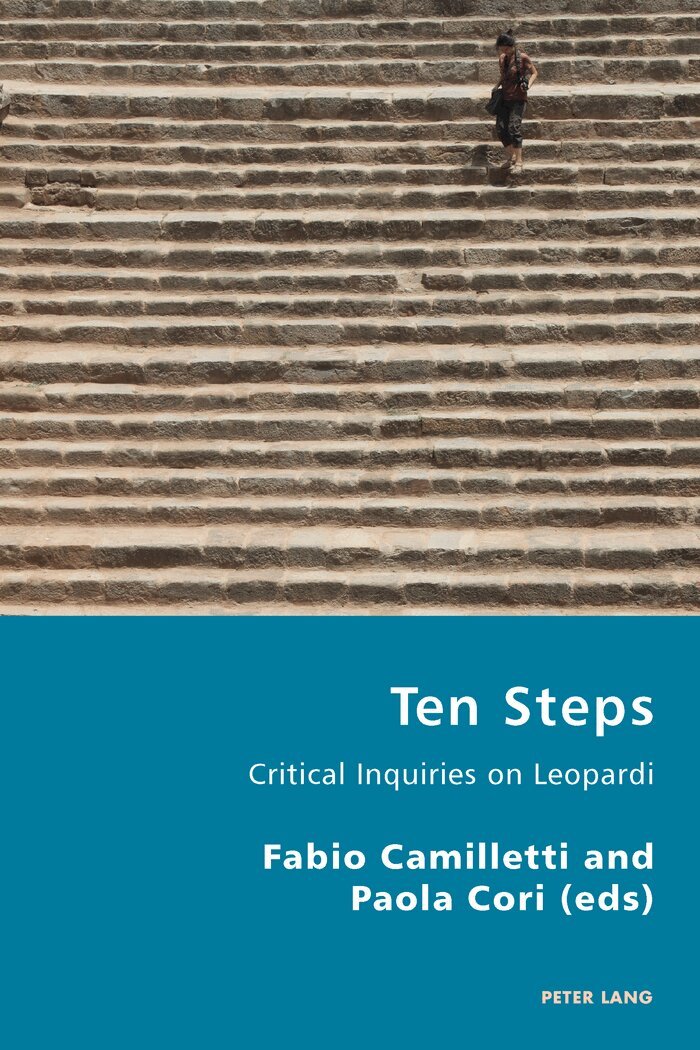
This book is a ten-step journey around the thought and poetry of the most sensitive Italian visionary of modernity, Giacomo Leopardi, whose contribution to Western thought has been acclaimed by admirers from Schopenhauer to Nietzsche to Benjamin. A variety of readings, moving between different disciplines and approaches – including film studies, psychoanalysis, and queer theory – shed new light on Leopardi’s fascinating and at the same time epistemologically radical compound of poetic imagination and philosophical complexity. An advocate of an ultra-philosophy, which aims to negotiate the fracture opened in Western imagination by the irrecoverable loss of ancient «illusions», Leopardi’s thought seems more relevant than ever in the post-human era, offering an (un)timely meditation on desire, suffering, and imagination as the foundational features of humanity.