Robert S. C. Gordon - Böcker
Visar alla böcker från författaren Robert S. C. Gordon. Handla med fri frakt och snabb leverans.
12 produkter
12 produkter
2 672 kr
Skickas inom 5-8 vardagar
Primo Levi was perhaps the most humane and eloquent writer of testimony to emerge from the Nazi Holocaust. But he also went beyond testimony in his work, tackling many of the founding ethical questions of what it is to be human, 'how to live'. Whether in accounts of the concentration camps, essays, science-fiction, autobiography, poetry, or fiction, he always approached his writing with a questioning, ethically open and alert eye. This book explores the extraordinary depth of Levi the ethical writer across his entire oeuvre for the first time, by way of thirteen so-called 'ordinary virtues', that is the ways and means Levi forges for practically and compassionately engaging with the world. It draws on a wide range of recent thinking about Holocaust literature and the general relationship between literature and ethics. From the book a new understanding of Levi's importance as both witness and writer emerges, enhancing his status as one of the key literary figures of the twentieth century.
399 kr
Skickas inom 7-10 vardagar
Primo Levi (1919-87) was the author of a rich body of work, including memoirs and reflections on Auschwitz, poetry, science fiction, historical fiction and essays. In particular, his lucid and direct accounts of his time at Auschwitz, begun immediately after liberation in 1945 and sustained until weeks before his suicide in 1987, has made him one of the most admired of all Holocaust writer-survivors and one of the best guides we have for the interrogation of that horrific event. But there is also more to Levi than the voice of the witness. He has increasingly come to be recognised as one of the major literary voices of the twentieth century. This Companion brings together leading specialists on Levi and scholars in the fields of Holocaust studies, Italian literature and language, and literature and science, to offer a stimulating introduction to all aspects of the work of this extraordinary writer.
1 189 kr
Skickas inom 7-10 vardagar
Primo Levi (1919-87) was the author of a rich body of work, including memoirs and reflections on Auschwitz, poetry, science fiction, historical fiction and essays. In particular, his lucid and direct accounts of his time at Auschwitz, begun immediately after liberation in 1945 and sustained until weeks before his suicide in 1987, has made him one of the most admired of all Holocaust writer-survivors and one of the best guides we have for the interrogation of that horrific event. But there is also more to Levi than the voice of the witness. He has increasingly come to be recognised as one of the major literary voices of the twentieth century. This Companion brings together leading specialists on Levi and scholars in the fields of Holocaust studies, Italian literature and language, and literature and science, to offer a stimulating introduction to all aspects of the work of this extraordinary writer.
747 kr
Skickas inom 5-8 vardagar
757 kr
Skickas inom 5-8 vardagar
609 kr
Tillfälligt slut
181 kr
Skickas
Bicycle Thieves (Ladri di biciclette, 1948) is unarguably one of the most important films in the history of cinema. It is also one of the most beguiling, moving and (apparently) simple pieces of narrative ever made. The film tells the story of one man and his son, as they search fruitlessly through the streets of Rome for his stolen bicycle; the bicycle which had offered the possibility of escape from the poverty and humiliation of long-term unemployment. One of a cluster of extraordinary films to come out of post-war, post-Fascist Italy - loosely labelled 'neorealist' – Bicycle Thieves won an Oscar in 1949, topped the first Sight and Sound poll of the best films of all time in 1952 and has been hugely influential throughout world cinema ever since. It remains a necessary point of reference for any cinematic engagement with the labyrinthine experience of the modern city, the travails of poverty in the contemporary world, the complex bond between fathers and sons, and the capacity of the camera to capture something like the essence of all of these. Robert S. C. Gordon's BFI Film Classics volume shows how Bicycle Thieves is ripe for re-viewing, for rescuing from its worthy status as a neorealist 'classic'. It looks at the film's drawn-out planning and production history, the vibrant and riven context in which it was made, and the dynamic geography, geometry and sociology of the film that resulted. ROBERT S. C. GORDON is Reader in Modern Italian Culture, Gonville and Caius College, University of Cambridge, UK.
Del 11 - Italian Modernities
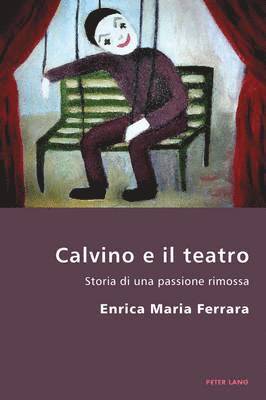
Calvino E Il Teatro
Storia Di Una Passione Rimossa
Häftad, Italienska, 2011
543 kr
Tillfälligt slut
604 kr
Tillfälligt slut
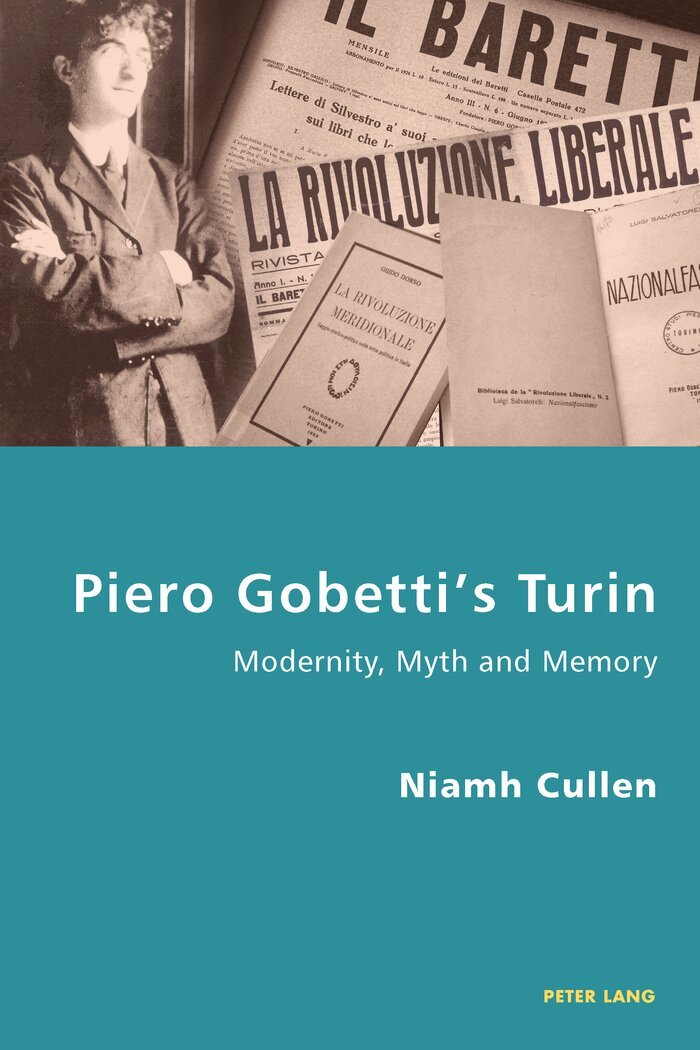
In his brief public career, Piero Gobetti was one of the most outspoken and original voices of early Italian antifascism. Before his sudden death in 1926, he founded and edited three periodicals, including the fiercely antifascist La Rivoluzione Liberale and the literary journal Il Baretti. While much has been written about his antifascism and his theories of ‘liberal revolution’, this book considers him primarily as an ‘organiser of culture’ and situates him both in the context of his lived experience in Turin after the First World War and in a wider European panorama. Although politically marginal by 1918, Turin was one of Italy’s most modern cities, with its futuristic Fiat factories, vocal working class and militant socialist intellectuals such as Antonio Gramsci. The book explores Gobetti’s encounters with Turin – both its history and the modern, urban landscape of Gobetti’s own day – as central to his thinking. Historically and geographically, Turin was also the Italian city closest to France and northern Europe. If Gobetti’s immediate surroundings inspired much of his thinking, his sensibilities were – in true Piedmontese style – more European than Italian, and his ultimate impact far from only local. Finally, Gobetti’s bitter disillusionment with liberal and fascist Italy, as well as his refusal to fit any of the conventional political labels, means that his memory has remained contentious right up to the present day. This groundbreaking new study explores the roots of Gobetti’s thinking, his impact on Italian culture and his controversial legacy.
Del 32 - Italian Modernities
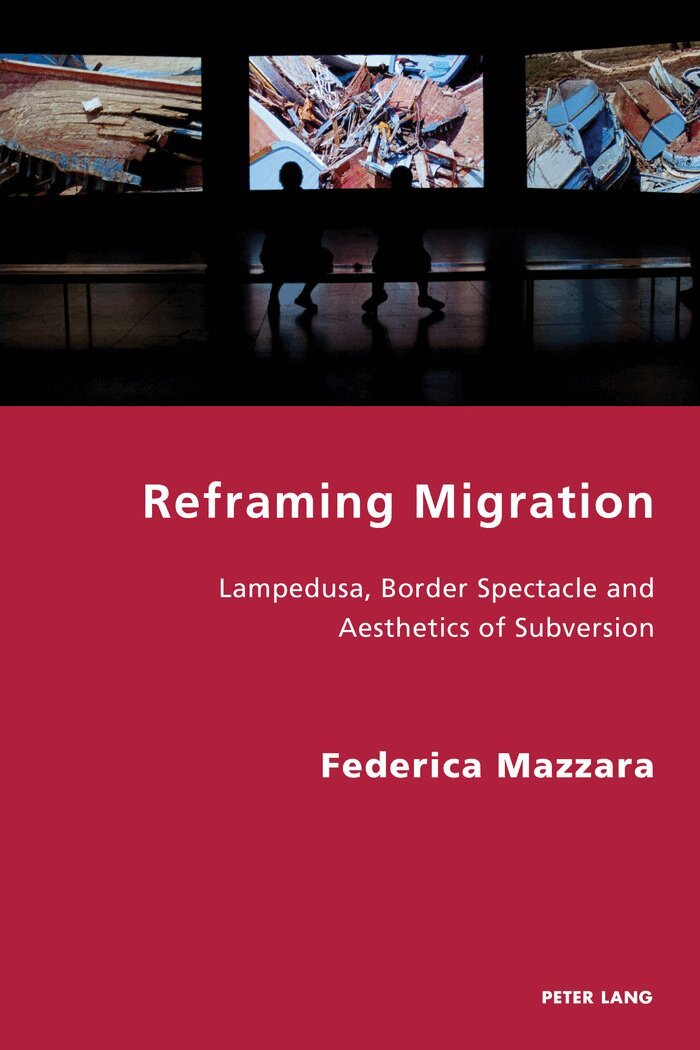
Reframing Migration
Lampedusa, Border Spectacle and the Aesthetics of Subversion
Häftad, Engelska, 2019
691 kr
Skickas inom 5-8 vardagar
Over the past two decades, national and supranational institutions and the mass media have played a central role in presenting the migrant struggle in a sensational way, spreading an unjustified moral panic and relegating migrants themselves to spaces of invisibility.Building on recent theoretical debates in migration studies around the so-called «autonomy of migration» - which sees people on the move as individuals with self-determination and agency - this book reframes migration in the Mediterranean, and specifically around the island of Lampedusa. In particular, the book explores how activist and art forms have become a platform for subverting the dominant narrative of migration and generating a vital form of political dissent, by revealing the contradictions and paradoxes of the securitarian regime that regulates immigration into Europe. The analysis focuses on works by, among others, Broomberg & Chanarin, Centre for Political Beauty, Forensic Architecture, Nikolaj Bendix Skyum Larsen, Isaac Julien, Tamara Kametani, Bouchra Khalili, Kalliopi Lemos, Zakaria Mohamed Ali, Maya Ramsay, Giacomo Sferlazzo, Aida Silvestri, Ai Weiwei, Lucy Woodand Dagmawi Yimer.
613 kr
Tillfälligt slut
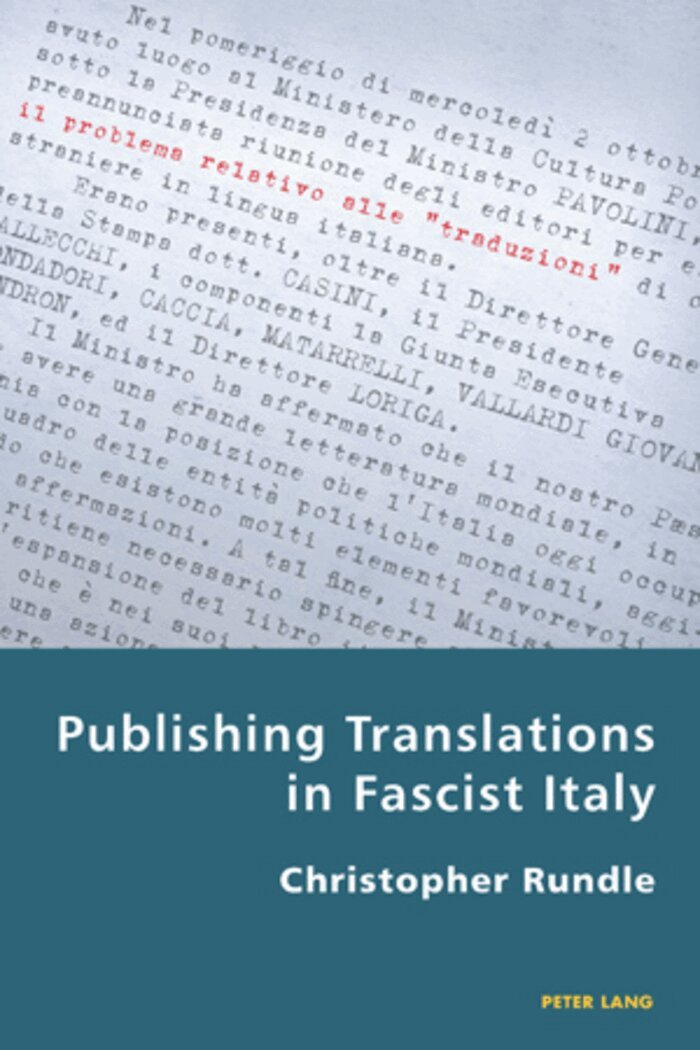
In the 1930s translation became a key issue in the cultural politics of the Fascist regime due to the fact that Italy was publishing more translations than any other country in the world. Making use of extensive archival research, the author of this new study examines this ‘invasion of translations’ through a detailed statistical analysis of the translation market. The book shows how translations appeared to challenge official claims about the birth of a Fascist culture and cast Italy in a receptive role that did not tally with Fascist notions of a dominant culture extending its influence abroad. The author shows further that the commercial impact of this invasion provoked a sustained reaction against translated popular literature on the part of those writers and intellectuals who felt threatened by its success. He examines the aggressive campaign that was conducted against the Italian Publishers Federation by the Authors and Writers Union (led by the Futurist poet F. T. Marinetti), accusing them of favouring their private profit over the national interest. Finally, the author traces the evolution of Fascist censorship, showing how the regime developed a gradually more repressive policy towards translations as notions of cultural purity began to influence the perception of imported literature.
Del 8 - Italian Modernities
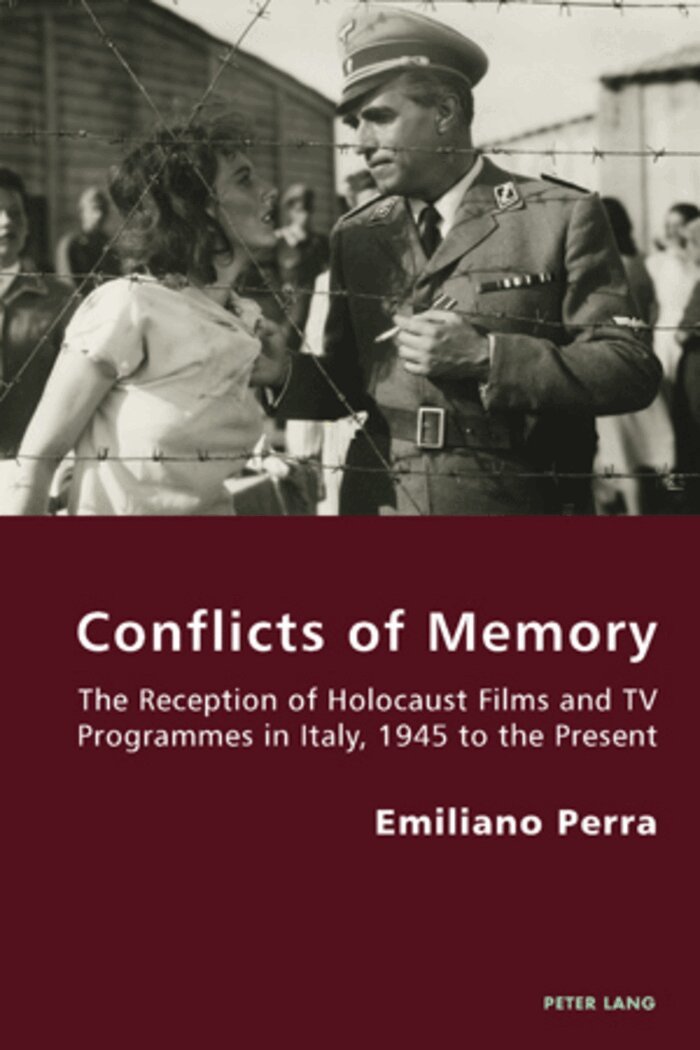
Conflicts of Memory
The Reception of Holocaust Films and TV Programmes in Italy, 1945 to the Present
Häftad, Engelska, 2010
630 kr
Skickas inom 5-8 vardagar
Situated at the confluence of history, media and cultural studies, this book reconstructs the often deeply discordant and highly selective memories of the Holocaust in Italy in the postwar era. The author’s core method is one of reception analysis, centred on the public responses to the many films and television programmes that have addressed the Holocaust from the 1940s to the present day. Tied to the heritage of Fascism, antifascism, and the Resistance, public memory of the Holocaust in Italy has changed greatly over the years. Self-acquitting myths of Italian innocence and victimhood, and universalising interpretations grounded in Catholicism and Communism, provided the initial frameworks for understanding the Holocaust. However, the last two decades have seen an increasing centrality of the Holocaust in memory culture but have also witnessed the establishment of a paradigm that relativises other fascist crimes and levels the differences between Fascism and antifascism. Working with the largest corpus yet established of Holocaust film and television in Italy, from the 1948 retelling of the Wandering Jew myth to Roberto Benigni’s controversial Life Is Beautiful, from the American miniseries Holocaust to Perlasca: The Courage of a Just Man, Conflicts of Memory probes Italy’s ongoing, if incomplete, process of coming to terms with this important aspect of its past.