Fabio MASSACCI – författare
Visar alla böcker från författaren Fabio MASSACCI. Handla med fri frakt och snabb leverans.
11 produkter
Quality Of Protection
Security Measurements and Metrics
Av Dieter Gollmann, Fabio MASSACCI m. fl.
Inbunden, 2006
2250 kr
Lägg i varukorg
Quality of Protection: Security Measurements and Metrics is an edited volume based on the Quality of Protection Workshop in Milano, Italy (September 2005). This volume discusses how security research can progress towards quality of protection in security comparable to quality of service in …
Quality Of Protection
Security Measurements and Metrics
Av Artsiom Yautsiukhin, Fabio MASSACCI m. fl.
E-bok, 2008
3013 kr
Lägg i varukorg
Quality of Protection: Security Measurements and Metrics is an edited volume based on the Quality of Protection Workshop in Milano, Italy (September 2005). This volume discusses how security research can progress towards quality of protection in security comparable to quality of service in …
Quality Of Protection
Security Measurements and Metrics
Av Dieter Gollmann, Fabio MASSACCI m. fl.
Häftad, 2010
2245 kr
Lägg i varukorg
Quality of Protection: Security Measurements and Metrics is an edited volume based on the Quality of Protection Workshop in Milano, Italy (September 2005). This volume discusses how security research can progress towards quality of protection in security comparable to quality of service in …
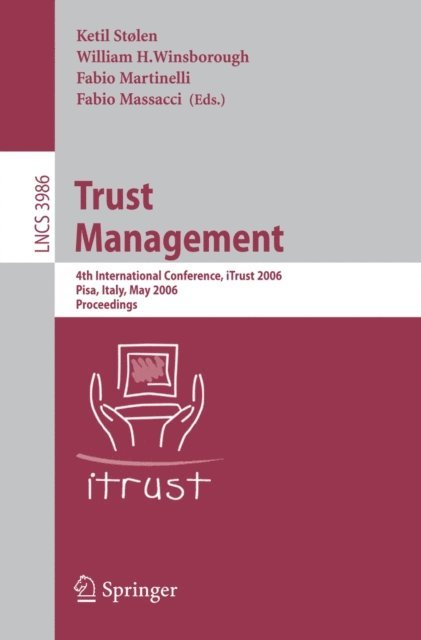
Trust Management
4th International Conference, iTrust 2006, Pisa, Italy, May 16-19, 2006, Proceedings
Av Ketil Stølen, William H. Winsborough m. fl.
Häftad, 2006
568 kr
Lägg i varukorg
This volume constitutes the proceedings of the 4th International Conference on Trust Management, held in Pisa, Italy during 16–19 May 2006. The conference followed successful International Conferences in Crete in 2003, Oxford in 2004 and Paris in 2005. The ?rst three conferences were organized by …
Trust Management
4th International Conference, iTrust 2006, Pisa, Italy, May 16-19, 2006, Proceedings
Av Fabio MASSACCI, Fabio Martinelli m. fl.
E-bok, 2006
739 kr
Lägg i varukorg
This volume constitutes the proceedings of the 4th International Conference on Trust Management, held in Pisa, Italy during 16–19 May 2006. The conference followed successful International Conferences in Crete in 2003, Oxford in 2004 and Paris in 2005. The ?rst three conferences were organized by …
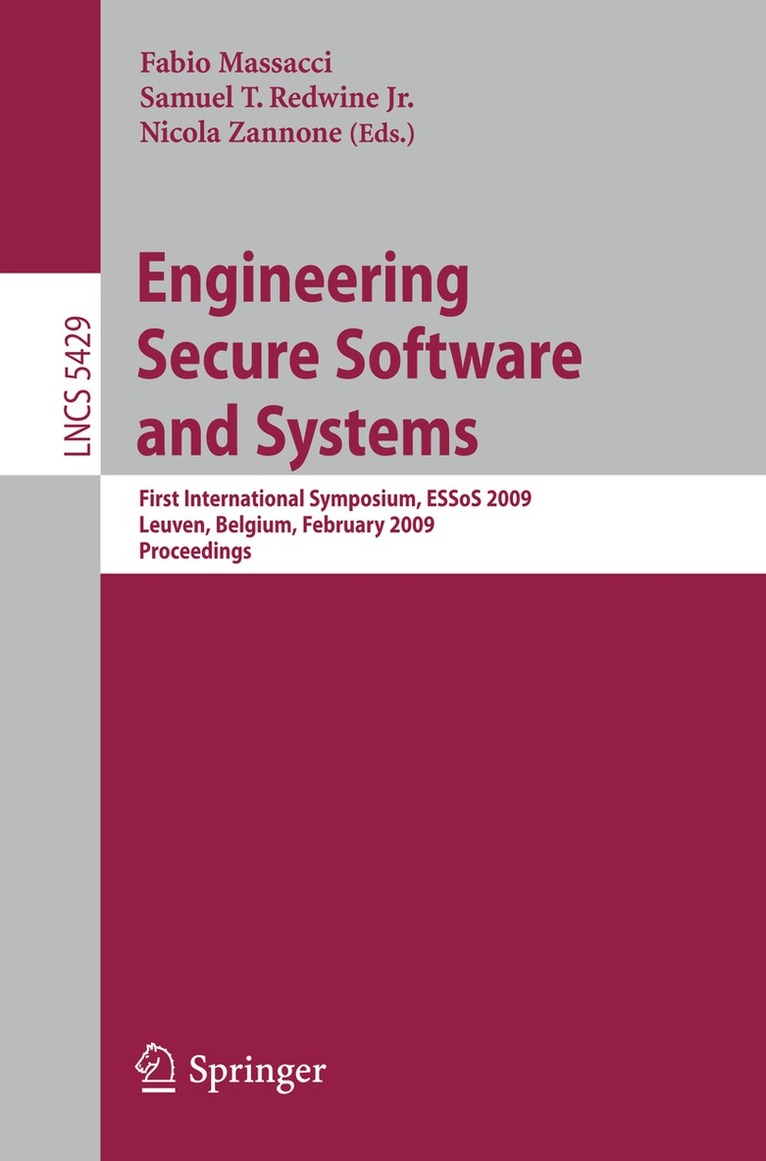
Engineering Secure Software and Systems
First International Symposium, ESSoS 2009 Leuven, Belgium, February 4-6, 2009, Proceedings
Av Fabio MASSACCI, Samuel Redwine m. fl.
Häftad, 2009
568 kr
Lägg i varukorg
It is our pleasure to welcome you to the ?rst edition of the International S- posium on Engineering Secure Software and Systems. This unique events aims at bringing together researchers from Software - gineeringandSecurity Engineering,helping to unite and further developthe two …
Engineering Secure Software and Systems
First International Symposium, ESSoS 2009 Leuven, Belgium, February 4-6, 2009, Proceedings
Av Nicola Zannone, Samuel Redwine m. fl.
E-bok, 2009
755 kr
Lägg i varukorg
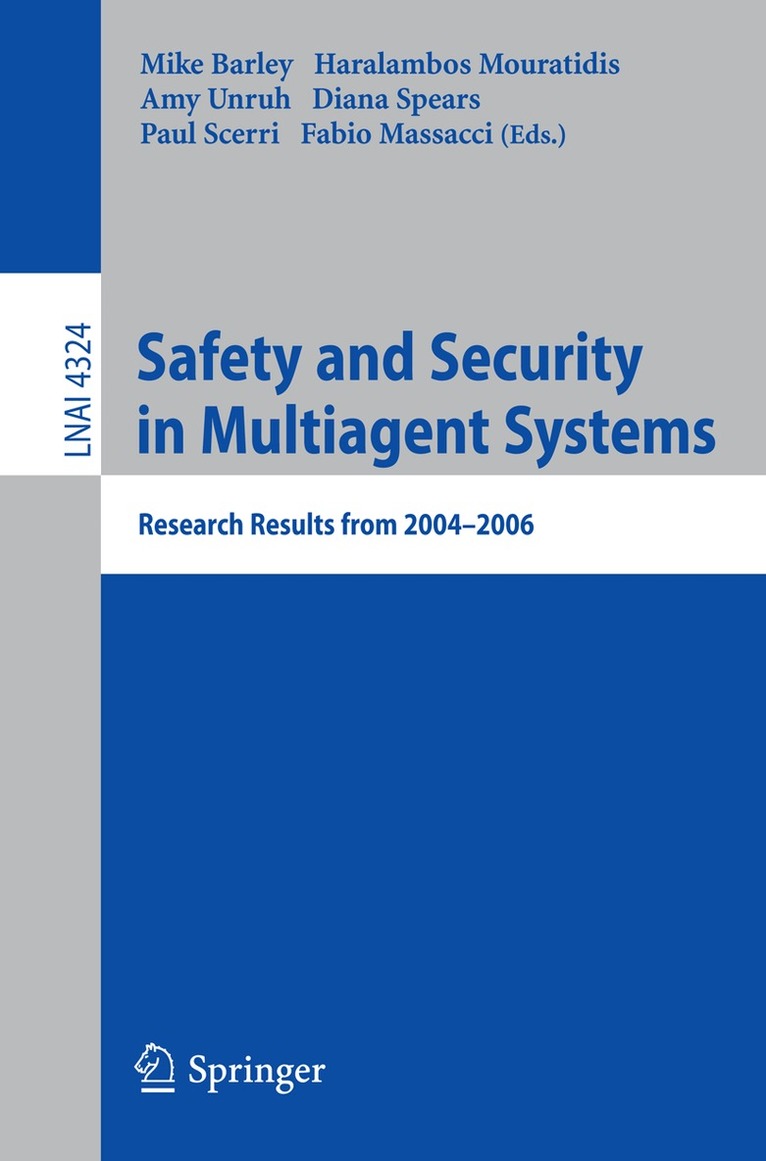
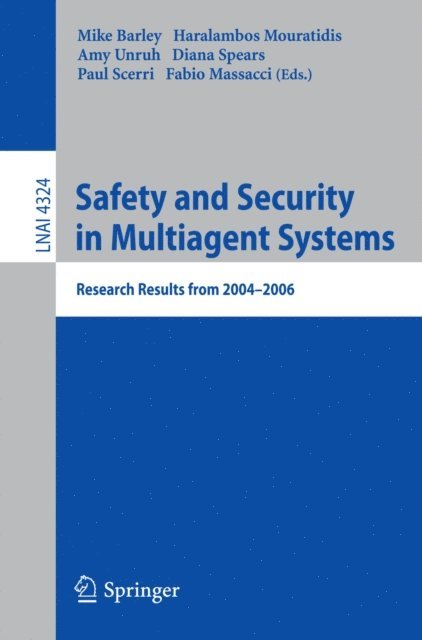
Safety and Security in Multiagent Systems
Research Results from 2004-2006
Av Mike Barley, Haris Mouratidis m. fl.
Häftad, 2009
568 kr
Lägg i varukorg
As intelligent autonomous agents and multiagent system applications become more pervasive, it becomes increasingly important to understand the risks associated with using these systems. Incorrect or inappropriate agent behavior can have harmful - fects, including financial cost, loss of data, and …
Safety and Security in Multiagent Systems
Research Results from 2004-2006
Av Fabio MASSACCI, Paul Scerri m. fl.
E-bok, 2009
755 kr
Lägg i varukorg
As intelligent autonomous agents and multiagent system applications become more pervasive, it becomes increasingly important to understand the risks associated with using these systems. Incorrect or inappropriate agent behavior can have harmful - fects, including financial cost, loss of data, and …
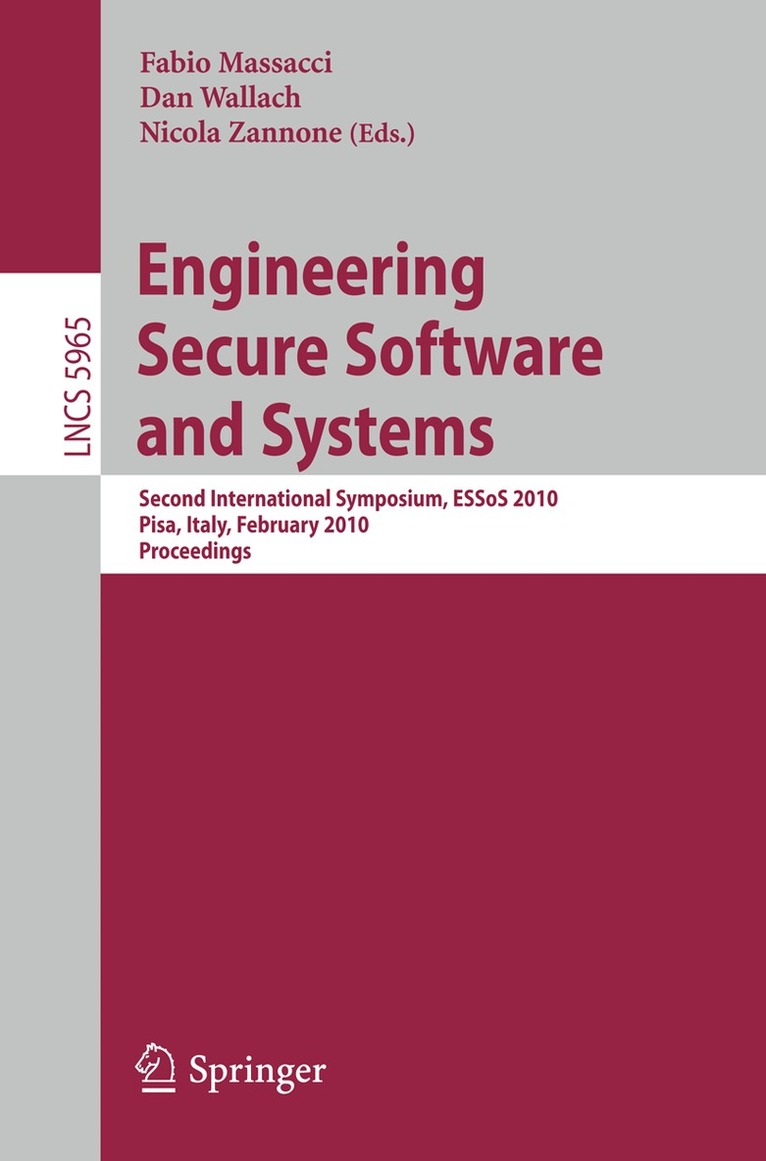
Engineering Secure Software and Systems
Second International Symposium, ESSoS 2010, Pisa, Italy, February 3-4, 2010, Proceedings
Av Fabio MASSACCI, Dan Wallach m. fl.
Häftad, 2010
568 kr
Lägg i varukorg
It is our pleasure to welcome you to the proceedings of the Second International Symposium on Engineering Secure Software and Systems. This unique event aimed at bringing together researchersfrom softwareen- neering and security engineering, which might help to unite and further develop the two …
Engineering Secure Software and Systems
Second International Symposium, ESSoS 2010, Pisa, Italy, February 3-4, 2010, Proceedings
Av Nicola Zannone, Dan Wallach m. fl.
E-bok, 2010
755 kr
Lägg i varukorg
It is our pleasure to welcome you to the proceedings of the Second International Symposium on Engineering Secure Software and Systems. This unique event aimed at bringing together researchersfrom softwareen- neering and security engineering, which might help to unite and further develop the two …