Fabio Parasecoli - Böcker
Visar alla böcker från författaren Fabio Parasecoli. Handla med fri frakt och snabb leverans.
17 produkter
17 produkter
1 187 kr
Skickas inom 7-10 vardagar
Big Night (1996), Ratatouille (2007), and Julie and Julia (2009) are more than films about food-they serve a political purpose. In the kitchen, around the table, and in the dining room, these films use cooking and eating to explore such themes as ideological pluralism, ethnic and racial acceptance, gender equality, and class flexibility-but not as progressively as you might think. Feasting Our Eyes takes a second look at these and other modern American food films to emphasize their conventional approaches to nation, gender, race, sexuality, and social status. Devoured visually and emotionally, these films are particularly effective defenders of the status quo. Feasting Our Eyes looks at Hollywood films and independent cinema, documentaries and docufictions, from the 1990s to today and frankly assesses their commitment to racial diversity, tolerance, and liberal political ideas. Laura Lindenfeld and Fabio Parasecoli find women and people of color continue to be treated as objects of consumption even in these modern works and, despite their progressive veneer, American food films often mask a conservative politics that makes commercial success more likely.A major force in mainstream entertainment, American food films shape our sense of who belongs, who has a voice, and who has opportunities in American society. They facilitate the virtual consumption of traditional notions of identity and citizenship, reworking and reinforcing ingrained ideas of power.
298 kr
Skickas inom 7-10 vardagar
Big Night (1996), Ratatouille (2007), and Julie and Julia (2009) are more than films about food-they serve a political purpose. In the kitchen, around the table, and in the dining room, these films use cooking and eating to explore such themes as ideological pluralism, ethnic and racial acceptance, gender equality, and class flexibility-but not as progressively as you might think. Feasting Our Eyes takes a second look at these and other modern American food films to emphasize their conventional approaches to nation, gender, race, sexuality, and social status. Devoured visually and emotionally, these films are particularly effective defenders of the status quo. Feasting Our Eyes looks at Hollywood films and independent cinema, documentaries and docufictions, from the 1990s to today and frankly assesses their commitment to racial diversity, tolerance, and liberal political ideas. Laura Lindenfeld and Fabio Parasecoli find women and people of color continue to be treated as objects of consumption even in these modern works and, despite their progressive veneer, American food films often mask a conservative politics that makes commercial success more likely.A major force in mainstream entertainment, American food films shape our sense of who belongs, who has a voice, and who has opportunities in American society. They facilitate the virtual consumption of traditional notions of identity and citizenship, reworking and reinforcing ingrained ideas of power.
872 kr
Skickas inom 7-10 vardagar
Winner, Gourmand World Cookbook Awards - Food - Food Heritage - USANominee, Book Award in Food Issues and Advocacy, James Beard FoundationThe Italian political right is outraged by halal tortellini and a pork-free lasagna served at the Vatican. In India, Hindu fundamentalists organize attacks on Muslims who sell beef. European anti-immigrant politicians denounce couscous and kebabs. In an era of nationalist and exclusionary movements, food has become a potent symbol of identity. Why has eating become so politically charged—and can the emotions surrounding food be redirected in a healthier direction?Fabio Parasecoli identifies and defines the phenomenon of “gastronativism,” the ideological use of food to advance ideas about who belongs to a community and who does not. As globalization and neoliberalism have transformed food systems, people have responded by seeking to return to their roots. Many have embraced local ingredients and notions of cultural heritage, but this impulse can play into the hands of nationalist and xenophobic political projects. Such movements draw on the strong emotions connected with eating to stoke resentment and contempt for other people and cultures.Parasecoli emphasizes that gastronativism is a worldwide phenomenon, even as it often purports to oppose local aspects and consequences of globalization. He also explores how to channel pride in culinary traditions toward resisting transnational corporations, uplifting marginalized and oppressed groups, and assisting people left behind by globalization. Featuring a wide array of examples from all over the world, Gastronativism is a timely, incisive, and lively analysis of how and why food has become a powerful political tool.
220 kr
Skickas inom 7-10 vardagar
Winner, Gourmand World Cookbook Awards - Food - Food Heritage - USANominee, Book Award in Food Issues and Advocacy, James Beard FoundationThe Italian political right is outraged by halal tortellini and a pork-free lasagna served at the Vatican. In India, Hindu fundamentalists organize attacks on Muslims who sell beef. European anti-immigrant politicians denounce couscous and kebabs. In an era of nationalist and exclusionary movements, food has become a potent symbol of identity. Why has eating become so politically charged—and can the emotions surrounding food be redirected in a healthier direction?Fabio Parasecoli identifies and defines the phenomenon of “gastronativism,” the ideological use of food to advance ideas about who belongs to a community and who does not. As globalization and neoliberalism have transformed food systems, people have responded by seeking to return to their roots. Many have embraced local ingredients and notions of cultural heritage, but this impulse can play into the hands of nationalist and xenophobic political projects. Such movements draw on the strong emotions connected with eating to stoke resentment and contempt for other people and cultures.Parasecoli emphasizes that gastronativism is a worldwide phenomenon, even as it often purports to oppose local aspects and consequences of globalization. He also explores how to channel pride in culinary traditions toward resisting transnational corporations, uplifting marginalized and oppressed groups, and assisting people left behind by globalization. Featuring a wide array of examples from all over the world, Gastronativism is a timely, incisive, and lively analysis of how and why food has become a powerful political tool.
150 kr
Tillfälligt slut
742 kr
Skickas inom 10-15 vardagar
There is keen interest in the exquisite yet simple Italian cuisine and Italian culture. This volume provides an intimate look at how Italians cook, eat, and think about food today. It describes the cornucopia of foodstuffs and classic ingredients. An overview of the typical daily routine of meals and snacks gives a good feel for the everyday life. The changing roles of women are explored with a discussion of the inroads that convenience foods are making. In addition, the current concerns about the food supply, the benefits of the Mediterranean diet, and the slow food movement are tied in to the debates on these issues in the United States.Food is one of the main reasons why many Americans travel to Italy. Yet, the fascination with Italian cuisine is not all about health or taste. There is much more to it. Italian food is perceived and portrayed in the media as representing a whole lifestyle: Italians live la dolce vita, leisurely eating and drinking with friends and families, families are still important, and communities are close knit. The reality of Italian society is more complex, and this volume offers a balanced view of Italian culture and identity through its foodways.
Del 86 - California Studies in Food and Culture
Pierogi Problem
Cosmopolitan Appetites and the Reinvention of Polish Food
Inbunden, Engelska, 2025
754 kr
Skickas inom 7-10 vardagar
The culinary landscape of Poland is significantly changing, reshaped by a new generation of food producers, chefs, and media personalities. The Pierogi Problem examines people's networks, places, material culture, and media to explain how Polish tastemakers embrace context-specific strategies to localize discourses, practices, and values amid an increasingly globalized food culture. The decades following the end of Poland's socialist regime were marked by a rising interest in foreign cuisines and Western forms of consumption. Today, however, ingredients, cooking techniques, and dishes that were once considered ordinary or part of the country's uncomfortable past are being refashioned to reflect transformations in cultural hierarchies. The Pierogi Problem chronicles how and why local, traditional, and artisanal foods are reemerging for changing cosmopolitan appetites.
Del 86 - California Studies in Food and Culture
Pierogi Problem
Cosmopolitan Appetites and the Reinvention of Polish Food
Häftad, Engelska, 2025
243 kr
Skickas inom 7-10 vardagar
The culinary landscape of Poland is significantly changing, reshaped by a new generation of food producers, chefs, and media personalities. The Pierogi Problem examines people's networks, places, material culture, and media to explain how Polish tastemakers embrace context-specific strategies to localize discourses, practices, and values amid an increasingly globalized food culture. The decades following the end of Poland's socialist regime were marked by a rising interest in foreign cuisines and Western forms of consumption. Today, however, ingredients, cooking techniques, and dishes that were once considered ordinary or part of the country's uncomfortable past are being refashioned to reflect transformations in cultural hierarchies. The Pierogi Problem chronicles how and why local, traditional, and artisanal foods are reemerging for changing cosmopolitan appetites.
617 kr
Kommande
This book presents a critical analysis of the concept of food heritage, through a dialogue between its academic definitions and the vaguer, more common-sense meaning of the term.By addressing the notion of heritage through the question of food and eating practices, this book allows us to question in a fresh way the very meaning of this concept, now so well established but still interpreted through a wide variety of perspectives. In mirror image, viewing the notion of heritage through the lens of food allows us to investigate an important dimension of our modern foodways. Beyond the conceptual discussion, the book analyses the concrete processes through which foods and food practices come to be defined, recognized, and mobilized as heritage, showing how these dynamics unfold in varied cultural and institutional contexts. Chapters draw on case studies from across the world — in Belgium, Catalonia, China, Korea, Estonia, France, Japan, Poland, Morocco, Serbia, Brazil, as well as across Africa and the Mediterranean region — and propose different temporalities while involving a range of actors. Among these actors, however, UNESCO occupies a particularly important place in this volume, due to the role it plays as a legitimizing body, supposed to officially consecrate certain elements as heritage. The practical cases reveal the complexity of the situations and provide detailed examples of specific issues and difficulties involved in thinking about the heritagization of food and assessing the practices related to it.This volume will be of great interest to students and scholars from across food studies, heritage studies, cultural studies, tourism studies, and anthropology.
2 040 kr
Kommande
This book presents a critical analysis of the concept of food heritage, through a dialogue between its academic definitions and the vaguer, more common-sense meaning of the term.By addressing the notion of heritage through the question of food and eating practices, this book allows us to question in a fresh way the very meaning of this concept, now so well established but still interpreted through a wide variety of perspectives. In mirror image, viewing the notion of heritage through the lens of food allows us to investigate an important dimension of our modern foodways. Beyond the conceptual discussion, the book analyses the concrete processes through which foods and food practices come to be defined, recognized, and mobilized as heritage, showing how these dynamics unfold in varied cultural and institutional contexts. Chapters draw on case studies from across the world — in Belgium, Catalonia, China, Korea, Estonia, France, Japan, Poland, Morocco, Serbia, Brazil, as well as across Africa and the Mediterranean region — and propose different temporalities while involving a range of actors. Among these actors, however, UNESCO occupies a particularly important place in this volume, due to the role it plays as a legitimizing body, supposed to officially consecrate certain elements as heritage. The practical cases reveal the complexity of the situations and provide detailed examples of specific issues and difficulties involved in thinking about the heritagization of food and assessing the practices related to it.This volume will be of great interest to students and scholars from across food studies, heritage studies, cultural studies, tourism studies, and anthropology.
505 kr
Skickas inom 10-15 vardagar
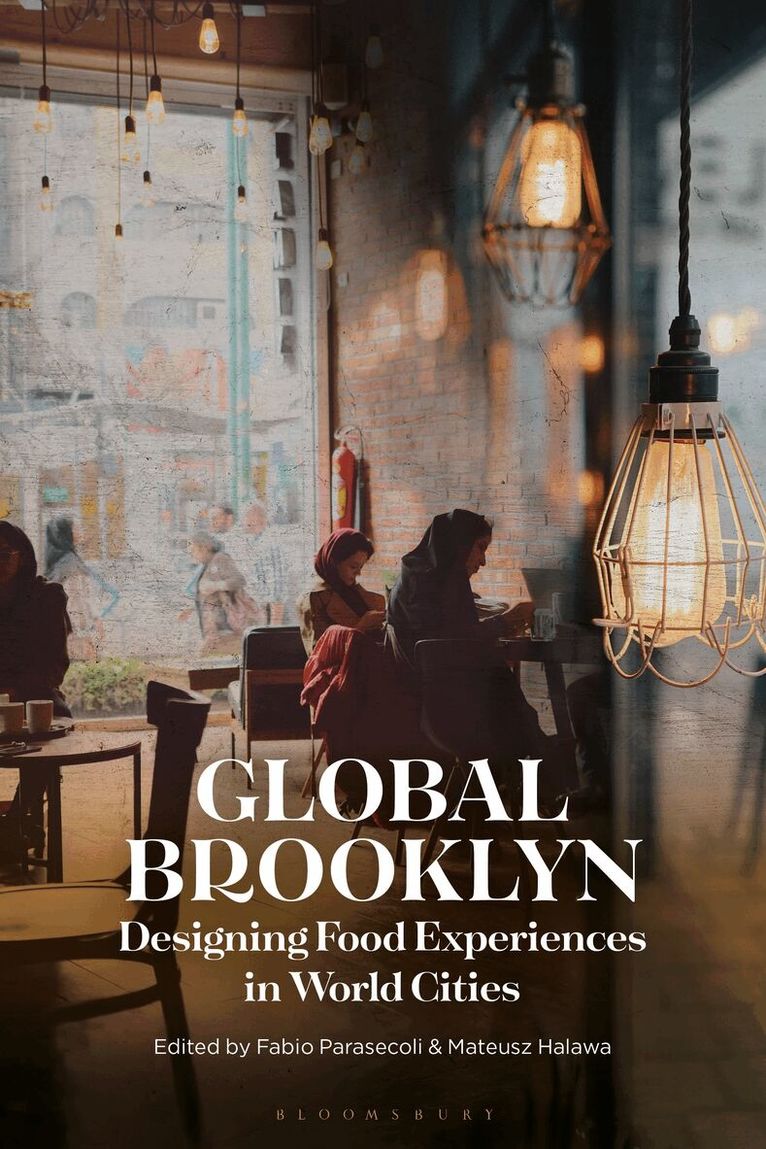
What do the fashionable food hot spots of Cape Town, Mumbai, Copenhagen, Rio de Janeiro, and Tel Aviv have in common? Despite all their differences, consumers in each major city are drawn to a similar atmosphere: rough wooden tables in postindustrial interiors lit by edison bulbs. There, they enjoy single-origin coffee, kombucha, and artisanal bread. This is ‘Global Brooklyn,’ a new transnational aesthetic regime of urban consumption. It may look shabby and improvised, but it is all carefully designed. It may romance the analog, but is made to be Instagrammed. It often references the New York borough, but is shaped by many networked locations where consumers participate in the global circulation of styles, flavors, practices, and values. This book follows this phenomenon across different world cities, arguing for a stronger appreciation of design and materialities in understanding food cultures. Attentive to local contexts, struggles, and identities, contributors explore the global mobility of aesthetic, ethical, and entrepreneurial projects, and how they materialize in everyday practices on the ground. They describe new connections among eating, drinking, design, and communication in order to give a clearer sense of the contemporary transformations of food cultures around the world.
1 044 kr
Skickas
What do the fashionable food hot spots of Cape Town, Mumbai, Copenhagen, Rio de Janeiro, and Tel Aviv have in common? Despite all their differences, consumers in each major city are drawn to a similar atmosphere: rough wooden tables in postindustrial interiors lit by edison bulbs. There, they enjoy single-origin coffee, kombucha, and artisanal bread. This is ‘Global Brooklyn,’ a new transnational aesthetic regime of urban consumption. It may look shabby and improvised, but it is all carefully designed. It may romance the analog, but is made to be Instagrammed. It often references the New York borough, but is shaped by many networked locations where consumers participate in the global circulation of styles, flavors, practices, and values. This book follows this phenomenon across different world cities, arguing for a stronger appreciation of design and materialities in understanding food cultures. Attentive to local contexts, struggles, and identities, contributors explore the global mobility of aesthetic, ethical, and entrepreneurial projects, and how they materialize in everyday practices on the ground. They describe new connections among eating, drinking, design, and communication in order to give a clearer sense of the contemporary transformations of food cultures around the world.
982 kr
Skickas inom 10-15 vardagar
An introduction to the burgeoning field of food studies Popular and intellectual interest in food is on the rise. The breadth of concerns surrounding food ranges from animal welfare and climate change's impact on food production to debates on the healthfulness of carbohydrates and fats, and fair compensation for restaurant and farm workers. Not only is there an expanding conversation about the ways in which we produce and consume our food, but there is growing attention being placed on the myriad ways in which food expresses and shapes shifting identities.Practicing Food Studies details the turn of the twenty-first century development and flourishing of food studies as a multidisciplinary field, focusing on its establishment at New York University. Food studies scholars have come from various fields such as history, sociology, economics, political science, nutrition, or public policy, but often felt limited by the conventions of their traditional discipline. Many gravitated to food studies to be able to describe and critically examine their specific areas of interest beyond the borders of academic disciplines. This volume explores the history of knowledge in which NYU Food Studies emerged, providing the opportunity to reflect on how academic fields are created and evolve as a response to institutional constraints and opportunities, the landscape of ideas, social movements, and public conversations.Practicing Food Studies is a compelling collection of essays compiling the research, ideas, and experiences of faculty members and graduates of the NYU Food Studies program—mapping the paths for intellectual and social engagement with food systems and its most urgent issues.
319 kr
Skickas inom 7-10 vardagar
An introduction to the burgeoning field of food studies Popular and intellectual interest in food is on the rise. The breadth of concerns surrounding food ranges from animal welfare and climate change's impact on food production to debates on the healthfulness of carbohydrates and fats, and fair compensation for restaurant and farm workers. Not only is there an expanding conversation about the ways in which we produce and consume our food, but there is growing attention being placed on the myriad ways in which food expresses and shapes shifting identities.Practicing Food Studies details the turn of the twenty-first century development and flourishing of food studies as a multidisciplinary field, focusing on its establishment at New York University. Food studies scholars have come from various fields such as history, sociology, economics, political science, nutrition, or public policy, but often felt limited by the conventions of their traditional discipline. Many gravitated to food studies to be able to describe and critically examine their specific areas of interest beyond the borders of academic disciplines. This volume explores the history of knowledge in which NYU Food Studies emerged, providing the opportunity to reflect on how academic fields are created and evolve as a response to institutional constraints and opportunities, the landscape of ideas, social movements, and public conversations.Practicing Food Studies is a compelling collection of essays compiling the research, ideas, and experiences of faculty members and graduates of the NYU Food Studies program—mapping the paths for intellectual and social engagement with food systems and its most urgent issues.
208 kr
Skickas
Italy is a mecca for food lovers. The home of pasta and pizza, it also boasts a dazzling array of wines, cheeses, breads, vegetables and meats. Globally, Michelin-starred Italian restaurants and TV chefs celebrate Italian cuisine for its freshness and health benefits. Now in paperback, Al Dente takes readers on a journey through Italy’s regions and food history, exploring how its cuisine evolved. Southern Italy faced food scarcity, wars and poor agricultural conditions, relying on grains, legumes and vegetables until the late 1950s economic boom allowed a more varied diet. The last 50 years brought new packaging, conservation, and distribution methods, revolutionizing Italian food culture. Including historical recipes, Al Dente is a captivating history of perhaps the world’s most beloved cuisine.
461 kr
Skickas inom 10-15 vardagar
Food is not only something we eat, it is something we use to define ourselves. Ingestion and incorporation are central to our connection with the world outside our bodies. Food's powerful social, economic, political and symbolic roles cannot be ignored - what we eat is a marker of power, cultural capital, class, ethnic and racial identity. Bite Me considers the ways in which popular culture reveals our relationship with food and our own bodies and how these have become an arena for political and ideological battles. Drawing on an extraordinary range of material - films, books, comics, songs, music videos, websites, slang, performances, advertising and mass-produced objects - Bite Me invites the reader to take a fresh look at today's products and practices to see how much food shapes our lives, perceptions and identities.
1 833 kr
Skickas inom 10-15 vardagar
Food is not only something we eat, it is something we use to define ourselves. Ingestion and incorporation are central to our connection with the world outside our bodies. Food's powerful social, economic, political and symbolic roles cannot be ignored - what we eat is a marker of power, cultural capital, class, ethnic and racial identity. Bite Me considers the ways in which popular culture reveals our relationship with food and our own bodies and how these have become an arena for political and ideological battles. Drawing on an extraordinary range of material - films, books, comics, songs, music videos, websites, slang, performances, advertising and mass-produced objects - Bite Me invites the reader to take a fresh look at today's products and practices to see how much food shapes our lives, perceptions and identities.