Faizah Zakaria - Böcker
Visar alla böcker från författaren Faizah Zakaria. Handla med fri frakt och snabb leverans.
4 produkter
4 produkter
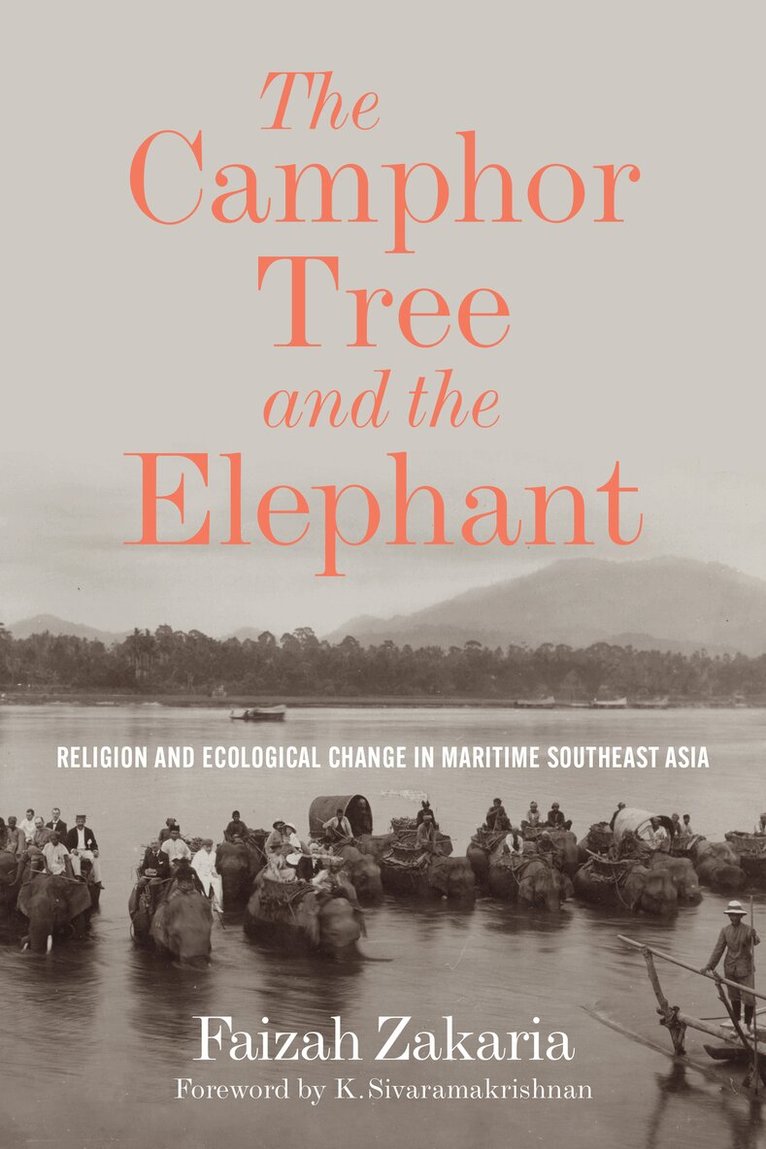
Camphor Tree and the Elephant
Religion and Ecological Change in Maritime Southeast Asia
Häftad, Engelska, 2023
518 kr
Skickas inom 7-10 vardagar
Uncovers a spiritual dimension in the transition to the AnthropoceneWhat is the role of religion in shaping interactions and relations between the human and nonhuman in nature? Why are Muslim and Christian organizations generally not a potent force in Southeast Asian environmental movements? The Camphor Tree and the Elephant brings these questions into the history of ecological change in the region, centering the roles of religion and colonialism in shaping the Anthropocene—“the human epoch.” Historian Faizah Zakaria traces the conversion of the Batak people in upland Sumatra and the Malay Peninsula to Islam and Christianity during the long nineteenth century. She finds that the process helped shape social structures that voided the natural world of enchantment, ushered in a cash economy, and placed the power to remake local landscapes into the hands of a distant elite. Using a wide array of sources such as family histories, prayer manuscripts, and folktales in tandem with colonial and ethnographic archives, Zakaria brings everyday religion and its far-flung implications into our understanding of the environmental history of the modern world.
Camphor Tree and the Elephant
Religion and Ecological Change in Maritime Southeast Asia
Inbunden, Engelska, 2023
1 739 kr
Skickas inom 3-6 vardagar
Uncovers a spiritual dimension in the transition to the AnthropoceneWhat is the role of religion in shaping interactions and relations between the human and nonhuman in nature? Why are Muslim and Christian organizations generally not a potent force in Southeast Asian environmental movements? The Camphor Tree and the Elephant brings these questions into the history of ecological change in the region, centering the roles of religion and colonialism in shaping the Anthropocene—“the human epoch.” Historian Faizah Zakaria traces the conversion of the Batak people in upland Sumatra and the Malay Peninsula to Islam and Christianity during the long nineteenth century. She finds that the process helped shape social structures that voided the natural world of enchantment, ushered in a cash economy, and placed the power to remake local landscapes into the hands of a distant elite. Using a wide array of sources such as family histories, prayer manuscripts, and folktales in tandem with colonial and ethnographic archives, Zakaria brings everyday religion and its far-flung implications into our understanding of the environmental history of the modern world.
793 kr
Skickas inom 11-20 vardagar
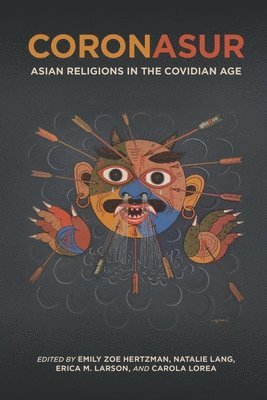
By the summer of 2020, when the coronavirus had fully entered our everyday vocabulary and our lives, religious communities and places of worship around the world were already undergoing profound changes. In Asian and Asian diaspora communities, diverse cultural tropes, beliefs, and artifacts were mobilized to make sense of Covid, including a repertoire of gods and demons like Coronasur, the virus depicted with the horns and fangs of a traditional Hindu demon. Various kinds of knowledge were invoked: theologies, indigenous medicines, and biomedical narratives, as well as ethical values and nationalist sentiments. CoronAsur: Asian Religions in the Covidian Age follows the documentation and analysis of the abrupt societal shifts triggered by the pandemic to understand current and future pandemic times, while revealing further avenues for research on religion that have opened up in the Covidian age. Developed in tandem with the research blog CoronAsur: Religion and COVID-19, this volume is a "phygital" publication, a work grounded in empirical roots as well as digitally born communication. It comprises thirty-eight essays that examine Asian religious communities—Muslim, Buddhist, Hindu, Daoist, and Christian as well as popular/folk and new religious movements, or NRMs—in terms of the changes brought on by and the ritual responses to the Covid pandemic.Studying religious narratives, practices, and changes in the Covidian age adds to our understanding of not only the specific groups in which they are situated, but also the coronavirus itself, its disputed etiologies and culturally contextualized exegeses. CoronAsur offers a comprehensive and timely discussion of Covidian transformations in religious communities’ engagements with media, spaces, and moral and political economies, documenting how religious practices and discourses have co-produced the meanings of the pandemic.
374 kr
Skickas inom 7-10 vardagar
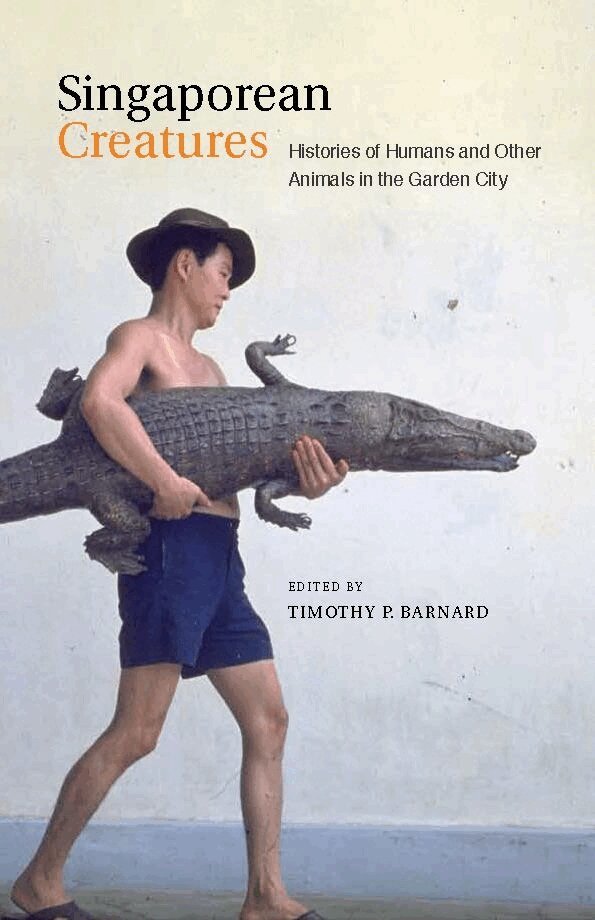
An analysis of the human-animal relationship in post-colonial Singapore.Modern Singapore is the Garden City, a biophilic urban space that includes a variety of animals, from mosquitoes to humans, even polar bears. Singaporean Creatures brings together historians to contemplate this human-animal relationship and how it has shaped society—socially, economically, politically, and environmentally. It is a work of historical and ecological analysis, in which various institutions, perspectives, and events involving animals provide insight into how the larger society has been formed and developed over the last half-century. The interaction of all Singaporean creatures thus provides a lens through which we can understand the creation of a modern and urban nation-state, shaped by the forces of the Anthropocene.