Farah Godrej - Böcker
Visar alla böcker från författaren Farah Godrej. Handla med fri frakt och snabb leverans.
8 produkter
8 produkter
1 390 kr
Skickas
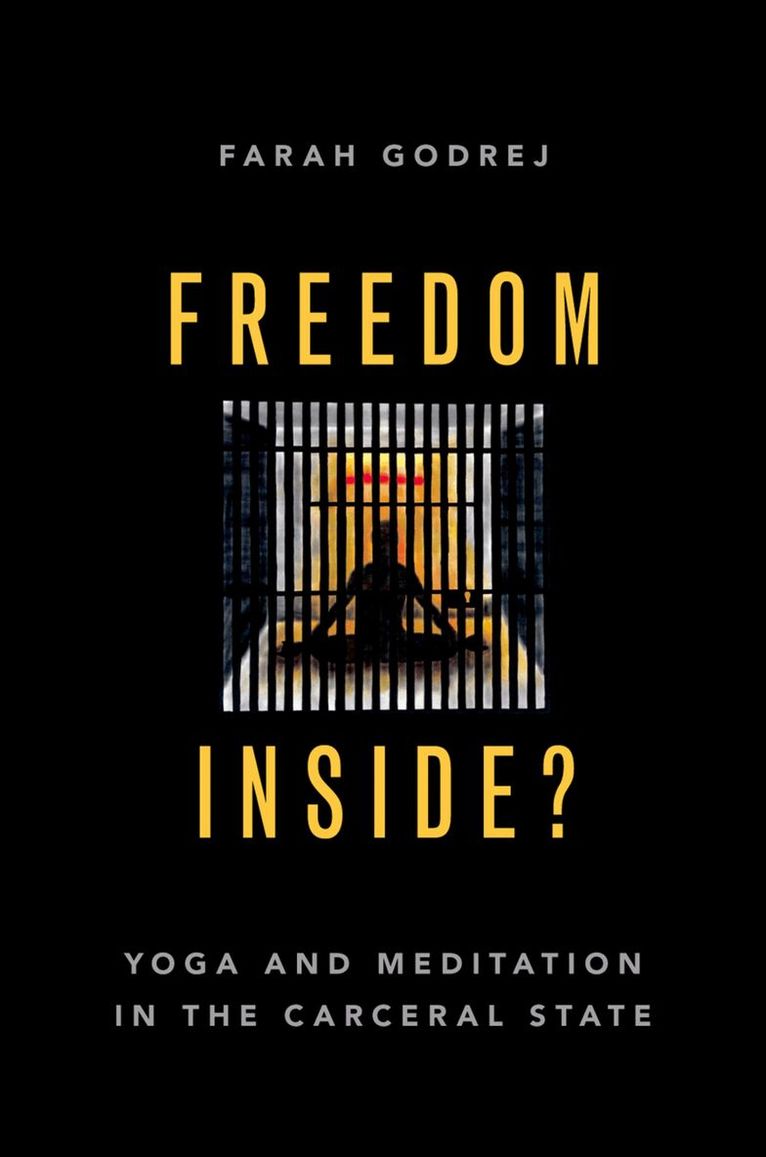
An estimated forty million people in the United States regularly practice yoga, and as an industry it generates over nine billion dollars annually. A major reason for its popularity is its promise of mental and physical well-being: yoga and meditation are thought to be spiritual paths to self-improvement. Yoga is also widely practiced in prisons, another large business in the United States. Prisons in all fifty states offer yoga and meditation as a form of rehabilitation. But critics argue that such practices can also have disempowering effects, due to their emphasis on acceptance, non-judgment, and non-reaction. If the root of suffering is in the mind, as the philosophy behind yoga and meditation suggests, then injustice (including mass incarceration) may be reduced to a mental state requiring coping techniques rather than a more critical mindset. Others insist that yoga can heighten people's attention to structural violence, hierarchy, racism, and inequity. In fact, some of history's most radical activists, including M.K. Gandhi and Thich Nhat Hanh, traced their ethical and political commitments to their grounding in yogic or meditative traditions. Yoga and meditation programs no doubt offer crucial respite for those who are incarcerated, but what sort of political effects do they have? Do they reinforce the neoliberal logic of mass incarceration which emphasizes individual choices, or can they assist marginalized people in navigating systemic injustice? Drawing on collaborations with incarcerated practitioners, interviews with volunteers and formerly incarcerated practitioners, and her own fieldwork with organizations offering yoga/meditation classes inside prisons, Farah Godrej examines both the promises and pitfalls of yoga and meditation. Freedom Inside? reveals the ways in which incarcerated persons have used yogic practices to resist the dehumanizing effects of prisons, and to heighten their awareness of institutional racism and mass incarceration among poor people and people of color. Godrej argues that while these practices could unwittingly exacerbate systemic forms of inequity and injustice, they also serve as resources for challenging such injustice, whether internally (via the realm of belief) or externally (through action). A combination of ethnography and political theory, Freedom Inside? reimagines the concept of "resistance" in a way that considers people's interior lives as a crucial arena for liberation.
255 kr
Skickas inom 5-8 vardagar
An estimated forty million people in the United States regularly practice yoga, and as an industry it generates over nine billion dollars annually. A major reason for its popularity is its promise of mental and physical well-being: yoga and meditation are thought to be spiritual paths to self-improvement. Yoga is also widely practiced in prisons, another large business in the United States. Prisons in all fifty states offer yoga and meditation as a form of rehabilitation. But critics argue that such practices can also have disempowering effects, due to their emphasis on acceptance, non-judgment, and non-reaction. If the root of suffering is in the mind, as the philosophy behind yoga and meditation suggests, then injustice (including mass incarceration) may be reduced to a mental state requiring coping techniques rather than a more critical mindset. Others insist that yoga can heighten people's attention to structural violence, hierarchy, racism, and inequity. In fact, some of history's most radical activists, including M.K. Gandhi and Thich Nhat Hanh, traced their ethical and political commitments to their grounding in yogic or meditative traditions. Yoga and meditation programs no doubt offer crucial respite for those who are incarcerated, but what sort of political effects do they have? Do they reinforce the neoliberal logic of mass incarceration which emphasizes individual choices, or can they assist marginalized people in navigating systemic injustice? Drawing on collaborations with incarcerated practitioners, interviews with volunteers and formerly incarcerated practitioners, and her own fieldwork with organizations offering yoga/meditation classes inside prisons, Farah Godrej examines both the promises and pitfalls of yoga and meditation. Freedom Inside? reveals the ways in which incarcerated persons have used yogic practices to resist the dehumanizing effects of prisons, and to heighten their awareness of institutional racism and mass incarceration among poor people and people of color. Godrej argues that while these practices could unwittingly exacerbate systemic forms of inequity and injustice, they also serve as resources for challenging such injustice, whether internally (via the realm of belief) or externally (through action). A combination of ethnography and political theory, Freedom Inside? reimagines the concept of "resistance" in a way that considers people's interior lives as a crucial arena for liberation.
1 349 kr
Skickas inom 7-10 vardagar
Cosmopolitan Political Thought is a normative argument for applying the idea of cosmopolitanism to the discipline of political theory itself. It is inspired by two recent turns in political thought: the emergence of a normative interest in the idea of cosmopolitanism and a new paradigmatic framework called "comparative political theory. " The first phenomenon is driven by a recovery of ancient Stoic and Greek claims about the kosmou polites or "world citizen. " The second, related, turn comes from a recognition of the relationship between traditional political theory and non-Western political ideas. Godrej argues that both of these movements suffer from important epistomological gaps. In order to be genuinely cosmopolitian, she states, political theory must not only be more conscious of the thinkers, texts, and concepts that it studies, but it must also approach these texts and concepts through the eyes of those who live and experience them. The result will be a serious challenge to our accepted solutions to political life, and a re-envisioning of our self-understanding and task as political theorists.
433 kr
Skickas inom 5-8 vardagar
Cosmopolitan Political Thought is a normative argument for applying the idea of cosmopolitanism to the discipline of political theory itself. It is inspired by two recent turns in political thought: the emergence of a normative interest in the idea of cosmopolitanism and a new paradigmatic framework called "comparative political theory. " The first phenomenon is driven by a recovery of ancient Stoic and Greek claims about the kosmou polites or "world citizen. " The second, related, turn comes from a recognition of the relationship between traditional political theory and non-Western political ideas. Godrej argues that both of these movements suffer from important epistomological gaps. In order to be genuinely cosmopolitian, she states, political theory must not only be more conscious of the thinkers, texts, and concepts that it studies, but it must also approach these texts and concepts through the eyes of those who live and experience them. The result will be a serious challenge to our accepted solutions to political life, and a re-envisioning of our self-understanding and task as political theorists.
616 kr
Skickas inom 10-15 vardagar
Fred Dallmayr’s work is innovative in its rethinking of some of the central concepts of modern political philosophy, challenging the hegemony of a modern “subjectivity” at the heart of Western liberalism, individualism and rationalism, and articulating alternative voices, claims and ideas. His writings productively confound the logocentrism of Western modernity, while providing alternative conceptions of political community that are post-individualist, post-anthropocentric and relational.The editor has focused on work in three key areas:Critical phenomenology and the study of politicsThe first selections focus on the philosophical roots of Dallmayr’s work in two of the most innovative intellectual trends of the twentieth century: phenomenology and critical theory. These chapters outline some of the main arguments advanced by practitioners of phenomenology, particularly “existential phenomenology,” as well the guiding ideas of critical theory and critical Marxism, while tracing Dallmayr’s debt to thinkers such as Heidegger, Gadamer, Habermas, Adorno and Merleau-Ponty.Cross-cultural theoryThese readings illustrate Dallmayr’s explorations beyond the confines of Western culture, as this phase of his thinking turns toward what is now called cross-cultural or “comparative” political theory. In an approach that maintains its linkage with critical phenomenology, Dallmayr asserts that Western (or European-American) political theory can no longer claim undisputed hegemony; rather it must allow itself to be contested, amplified and corrected through a comparison with non-Western theoretical traditions and initiatives.CosmopolitanismThese selections explore the final phase of Dallmayr’s work, in which he applies his insights on cross-cultural studies to the context of global politics, rebutting Samuel Huntington’s “clash of civilizations” thesis, and instead arguing for a cosmopolitanism that takes a middle path between both global universalism and restrictive particularism, advocating sustained dialogue and respectful mutual learning between countries and civilizations.
588 kr
Kommande
Mindfulness is now a zeitgeist. The mainstreaming of mindfulness – what Time Magazine calls the “mindful revolution” – is being powered by research documenting the physical and mental health benefits of meditation. Like most revolutions, the mindful revolution is composed of multiple, competing forces. While corporate “McMindfulness” has received considerable and appropriate critical attention, less work has been done on the generative political potential of contemplative practices, particularly on how they might support the liberation goals of progressive social movements.This book is the first collection to systematically map the political implications of contemplative practices of all kinds – Buddhist meditation, yoga, and Indigenous ritual to name a few – with an explicit focus on the political, with an interdisciplinary approach, and from practitioners with first-hand experience. In addition to making a novel argument about the author’s own area of expertise, each chapter includes a literature review that maps the existing research and commentary at the intersection of contemplative praxis and applicable terrain of political struggle being covered in the chapter. Readers will come away with both a broad and deep understanding of emerging themes, new areas of research, and future directions.
2 113 kr
Kommande
Mindfulness is now a zeitgeist. The mainstreaming of mindfulness – what Time Magazine calls the “mindful revolution” – is being powered by research documenting the physical and mental health benefits of meditation. Like most revolutions, the mindful revolution is composed of multiple, competing forces. While corporate “McMindfulness” has received considerable and appropriate critical attention, less work has been done on the generative political potential of contemplative practices, particularly on how they might support the liberation goals of progressive social movements.This book is the first collection to systematically map the political implications of contemplative practices of all kinds – Buddhist meditation, yoga, and Indigenous ritual to name a few – with an explicit focus on the political, with an interdisciplinary approach, and from practitioners with first-hand experience. In addition to making a novel argument about the author’s own area of expertise, each chapter includes a literature review that maps the existing research and commentary at the intersection of contemplative praxis and applicable terrain of political struggle being covered in the chapter. Readers will come away with both a broad and deep understanding of emerging themes, new areas of research, and future directions.
2 171 kr
Skickas inom 10-15 vardagar
Fred Dallmayr’s work is innovative in its rethinking of some of the central concepts of modern political philosophy, challenging the hegemony of a modern “subjectivity” at the heart of Western liberalism, individualism and rationalism, and articulating alternative voices, claims and ideas. His writings productively confound the logocentrism of Western modernity, while providing alternative conceptions of political community that are post-individualist, post-anthropocentric and relational.The editor has focused on work in three key areas:Critical phenomenology and the study of politicsThe first selections focus on the philosophical roots of Dallmayr’s work in two of the most innovative intellectual trends of the twentieth century: phenomenology and critical theory. These chapters outline some of the main arguments advanced by practitioners of phenomenology, particularly “existential phenomenology,” as well the guiding ideas of critical theory and critical Marxism, while tracing Dallmayr’s debt to thinkers such as Heidegger, Gadamer, Habermas, Adorno and Merleau-Ponty.Cross-cultural theoryThese readings illustrate Dallmayr’s explorations beyond the confines of Western culture, as this phase of his thinking turns toward what is now called cross-cultural or “comparative” political theory. In an approach that maintains its linkage with critical phenomenology, Dallmayr asserts that Western (or European-American) political theory can no longer claim undisputed hegemony; rather it must allow itself to be contested, amplified and corrected through a comparison with non-Western theoretical traditions and initiatives.CosmopolitanismThese selections explore the final phase of Dallmayr’s work, in which he applies his insights on cross-cultural studies to the context of global politics, rebutting Samuel Huntington’s “clash of civilizations” thesis, and instead arguing for a cosmopolitanism that takes a middle path between both global universalism and restrictive particularism, advocating sustained dialogue and respectful mutual learning between countries and civilizations.