Febe Armanios – författare
Visar alla böcker från författaren Febe Armanios. Handla med fri frakt och snabb leverans.
6 produkter
6 produkter
569 kr
Skickas inom 3-6 vardagar
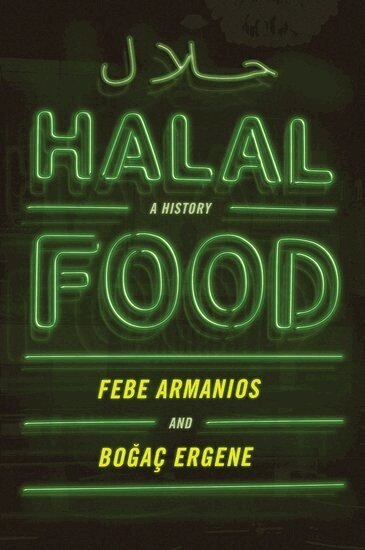
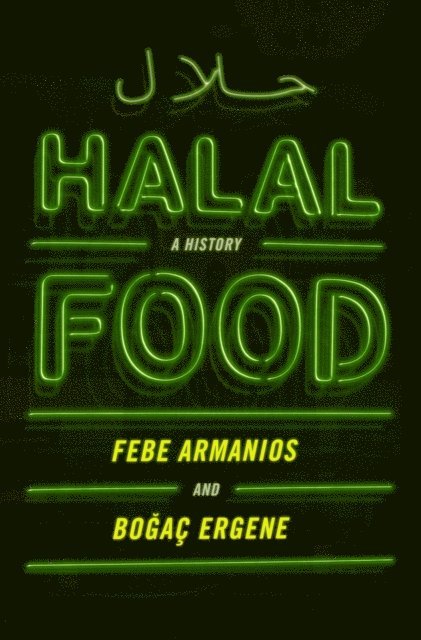
Food trucks announcing "halal" proliferate in many urban areas but how many non-Muslims know what this means, other than cheap lunch? Here Middle Eastern historians Febe Armanios and Bogac Ergene provide an accessible introduction to halal (permissible) food in the Islamic tradition, exploring what halal food means to Muslims and how its legal and cultural interpretations have changed in different geographies up to the present day.Historically, Muslims used food to define their identities in relation to co-believers and non-Muslims. Food taboos are rooted in the Quran and prophetic customs, as well as writings from various periods and geographical settings. As in Judaism and among certain Christian sects, Islamic food traditions make distinctions between clean and impure, and dietary choices and food preparation reflect how believers think about broader issues. Traditionally, most halal interpretations focused on animal slaughter and the consumption of intoxicants. Muslims today, however, must also contend with an array of manufactured food products--yogurts, chocolates, cheeses, candies, and sodas--filled with unknown additives and fillers. To help consumers navigate the new halal marketplace, certifying agencies, government and non-government bodies, and global businesses vie to meet increased demands for food piety. At the same time, blogs, cookbooks, restaurants, and social media apps have proliferated, while animal rights and eco-conscious activists seek to recover halal's more wholesome and ethical inclinations. Covering practices from the Middle East and North Africa to South Asia, Europe, and North America, this timely book is for anyone curious about the history of halal food and its place in the modern world.
433 kr
Skickas inom 5-8 vardagar
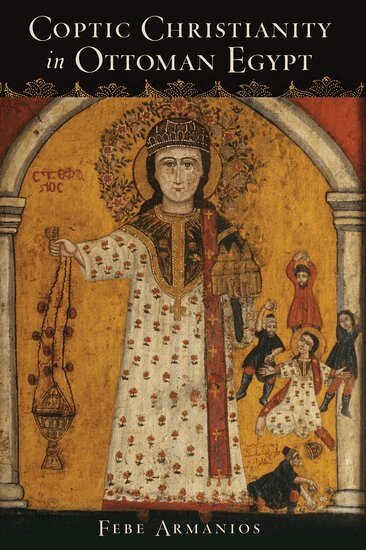
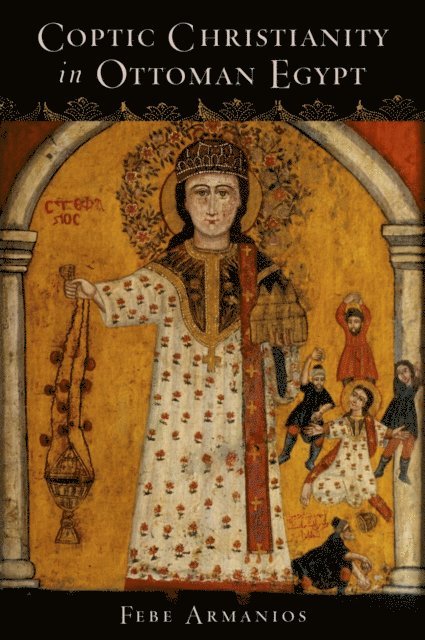
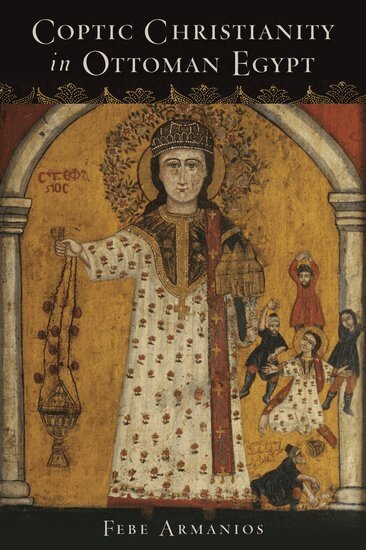
In this book, Febe Armanios explores Coptic religious life in Ottoman Egypt (1517-1798), focusing closely on manuscripts housed in Coptic archives. Ottoman Copts frequently turned to religious discourses, practices, and rituals as they dealt with various transformations in the first centuries of Ottoman rule. These included the establishment of a new political regime, changes within communal leadership structures (favoring lay leaders over clergy), the economic ascent of the archons (lay elites), and developments in the Copts' relationship with other religious communities, particularly with Catholics.Coptic Christianity in Ottoman Egypt highlights how Copts, as a minority living in a dominant Islamic culture, identified and distinguished themselves from other groups by turning to an impressive array of religious traditions, such as the visitation of saints' shrines, the relocation of major festivals to remote destinations, the development of new pilgrimage practices, as well as the writing of sermons that articulated a Coptic religious ethos in reaction to Catholic missionary discourses. Within this discussion of religious life, the Copts' relationship to local political rulers, military elites, the Muslim religious establishment, and to other non-Muslim communities are also elucidated. In all, the book aims to document the Coptic experience within the Ottoman Egyptian context while focusing on new documentary sources and on an historical era that has been long neglected.
355 kr
Skickas inom 5-8 vardagar
Food trucks announcing "halal" proliferate in many urban areas but how many non-Muslims know what this means, other than cheap lunch? Here Middle Eastern historians Febe Armanios and Boğaç Ergene provide an accessible introduction to halal (permissible) food in the Islamic tradition, exploring what halal food means to Muslims and how its legal and cultural interpretations have changed in different geographies up to the present day.Historically, Muslims used food to define their identities in relation to co-believers and non-Muslims. Food taboos are rooted in the Quran and prophetic customs, as well as writings from various periods and geographical settings. As in Judaism and among certain Christian sects, Islamic food traditions make distinctions between clean and impure, and dietary choices and food preparation reflect how believers think about broader issues. Traditionally, most halal interpretations focused on animal slaughter and the consumption of intoxicants. Muslims today, however, must also contend with an array of manufactured food products -- yogurts, chocolates, cheeses, candies, and sodas -- filled with unknown additives and fillers. To help consumers navigate the new halal marketplace, certifying agencies, government and non-government bodies, and global businesses vie to meet increased demands fofor food piety. At the same time, blogs, cookbooks, restaurants, and social media apps have proliferated, while animal rights and eco-conscious activists seek to recover halal's more wholesome and ethical inclinations.Covering practices from the Middle East and North Africa to South Asia, Europe, and North America, this timely book is for anyone curious about the history of halal food and its place in the modern world.
1 275 kr
Skickas inom 7-10 vardagar
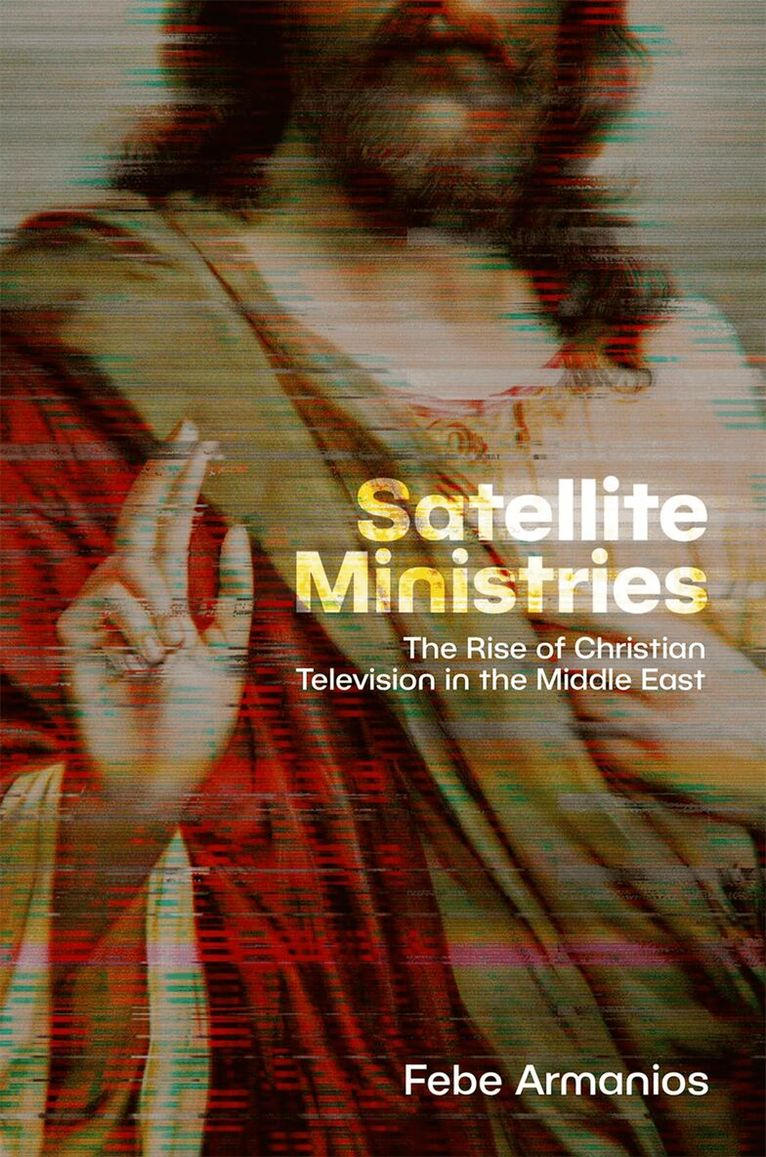
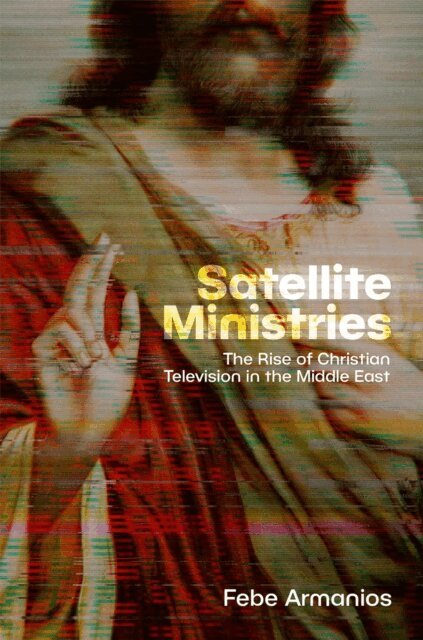
In 1981, a satellite television station called Star of Hope began broadcasting from Israeli-occupied South Lebanon. Backed by American missionaries, Israeli politicians, and Lebanese Catholic leaders, the channel aired Western entertainment and Christian content using a repurposed ABC Monday Night Football truck situated on the Israel-Lebanon border. Later renamed Middle East Television (METV), its programming included American soap operas, sports, and evangelical content alongside innovative Arabic Christian televangelism. It was a station of enormous consequence. METV spurred the growth of competing Christian broadcasters and reshaped the Middle East's media and religious landscape over the next four decades. Yet it was, of course, controversial--its foreign, imperialist, and proselytizing approach to media was a source of curiosity and consternation in the region and, occasionally, around the world. Through extensive fieldwork and archival research, Febe Armanios explores how Western evangelicals and indigenous Christians harnessed terrestrial and satellite technologies to promote Christian television in the Middle East. The sixteen channels analyzed in this study fall into three main categories: Western-backed conservative outlets with a charismatic and apocalyptic outlook; middle-ground channels that sought to balance their international sponsors' expectations with local interests; and grassroots initiatives rooted in ancient church traditions. The histories and programming strategies of primarily Arabic, but also Turkish and Persian, Christian channels reveal how media producers forged unexpected political alliances, pursued sectarian objectives, and navigated various transnational influences. Satellite Ministries explores how modern expressions of faith, technology, and political power intersected and clashed across the Global South and beyond. In this groundbreaking work, Armanios presents a crucial examination of this unique and little-known media landscape.
319 kr
Kommande
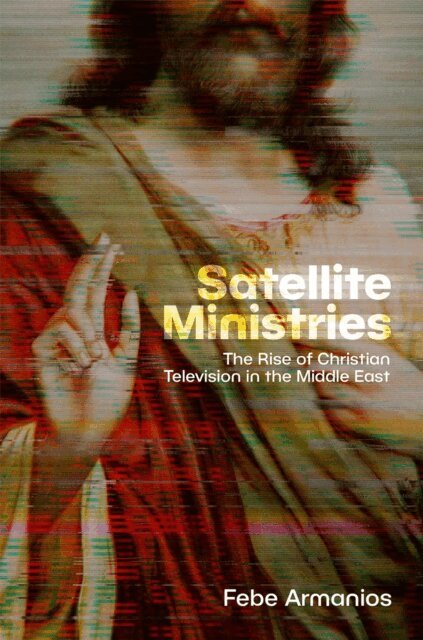
In 1981, a satellite television station called Star of Hope began broadcasting from Israeli-occupied South Lebanon. Backed by American missionaries, Israeli politicians, and Lebanese Catholic leaders, the channel aired Western entertainment and Christian content using a repurposed ABC Monday Night Football truck situated on the Israel-Lebanon border. Later renamed Middle East Television (METV), its programming included American soap operas, sports, and evangelical content alongside innovative Arabic Christian televangelism. It was a station of enormous consequence. METV spurred the growth of competing Christian broadcasters and reshaped the Middle East's media and religious landscape over the next four decades. Yet it was, of course, controversial--its foreign, imperialist, and proselytizing approach to media was a source of curiosity and consternation in the region and, occasionally, around the world. Through extensive fieldwork and archival research, Febe Armanios explores how Western evangelicals and indigenous Christians harnessed terrestrial and satellite technologies to promote Christian television in the Middle East. The sixteen channels analyzed in this study fall into three main categories: Western-backed conservative outlets with a charismatic and apocalyptic outlook; middle-ground channels that sought to balance their international sponsors' expectations with local interests; and grassroots initiatives rooted in ancient church traditions. The histories and programming strategies of primarily Arabic, but also Turkish and Persian, Christian channels reveal how media producers forged unexpected political alliances, pursued sectarian objectives, and navigated various transnational influences. Satellite Ministries explores how modern expressions of faith, technology, and political power intersected and clashed across the Global South and beyond. In this groundbreaking work, Armanios presents a crucial examination of this unique and little-known media landscape.
1 252 kr
Skickas inom 5-8 vardagar
Egypt's Coptic Christians are the largest non-Muslim minority in the Middle East. Yet Copts, one of the world's oldest Christian communities, remain understudied relative to other ethnic and religious minorities in the region. They have been marginalized in existing scholarship, their experience subsumed by that of the majority Muslim population within Egypt. This is particularly true in studies of the Ottoman era (1517-1798), a pivotal period in the shaping of modern Egypt. This book is the first monograph to examine the religious beliefs and traditions of Christians in Ottoman Egypt and to understand Coptic religious expression in the context of its surrounding culture. More broadly, this study reveals Ottoman society's diversity by examining the intimate interaction between Muslim and Christian practice, and between the Muslim majority and ethno-religious minorities generally. This book will not only enrich our understanding of the Ottoman period but also elucidate the complex relations between majority and minority populations in the Middle East today.