Fernando Cervantes – författare
Visar alla böcker från författaren Fernando Cervantes. Handla med fri frakt och snabb leverans.
8 produkter
8 produkter
179 kr
Skickas
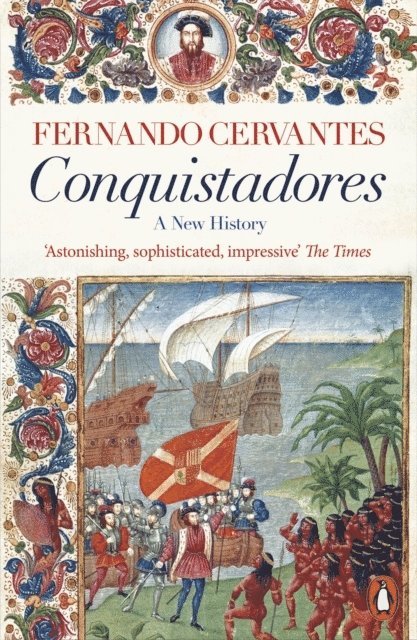
NAMED A BOOK OF THE YEAR 2020 BY THE SUNDAY TIMES, TIMES LITERARY SUPPLEMENT, THE TABLET AND THE LADY'This book is a terrific read ... I could not put it down' Matthew Restall, Literary ReviewThe 'conquistadores', the early explorers and settlers of Spanish America, have become the stuff of legends and nightmares. In their own time, they were glorified as heroic adventurers, spreading Christian culture and helping to build an empire unlike any the world had ever seen. Today, they stand condemned for their cruelty and exploitation, as men who decimated the ancient civilizations of the Aztecs and the Incas, and carried out horrific atrocities in their pursuit of gold and glory.In Conquistadores, Mexican historian Fernando Cervantes cuts through the layers of myth and fiction to immerse the reader in the world of the late-medieval imperialist. It is a world as unfamiliar to us as the Indigenous peoples of the New World were to the conquistadores themselves. Drawing upon a wide range of sources including diaries, letters, chronicles and treatises, Cervantes reframes the story of the Spanish conquest of the New World, set against the political and intellectual landscape from which its main actors emerged. At the heart of the story are the conquistadores, whose epic ambitions and moral contradictions defined an era.From Columbus to Cortés, Pizarro and beyond, the explorers we think we know come alive in this thought-provoking and illuminating account of a period that irrevocably altered the course of world history.'Enlightening ... Conquistadores makes for fascinating reading' Jude Webber, Financial Times
379 kr
Skickas inom 5-8 vardagar
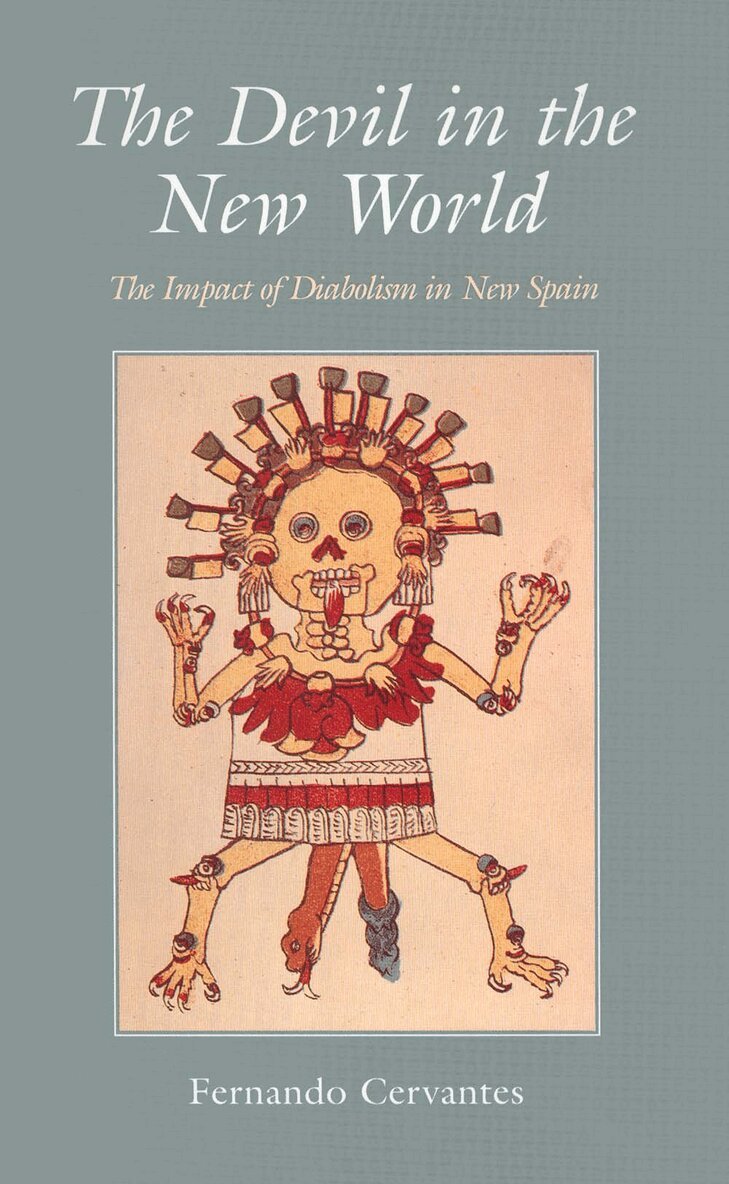
Until the end of the eighteenth century, missionaries to the New World agreed that diabolism lay at the heart of the Native American belief system and at the root of their own failure to establish a church purged of Satan and pagan superstition. The Devil mattered, and he occupied a central place in discussions of all non-Christian religious systems and in the bitter disputes over how to combat them.In this elegant and sensitive analysis, Fernando Cervantes gives the Devil his due, illuminating a neglected aspect of the European encounter with America and setting the full history of the "spiritual conquest" in a rich and original context. He reveals how Native Americans reinterpreted the view of Christianity presented to them, how they refused to see the world as the missionaries saw it. Drawing on archival sources, he brings into clear focus the complex, often bewildering, and sometimes tragic clash between a theology that posited the existence of competing forces and one that insisted that all deities were multiform beings within which good and evil coexisted. He deals in compelling and persuasive detail with the social history of the interaction between the two cultures, explaining not only the impact of European ideas upon the New World but the influence of diabolism on the ideology of the Old. And he provides a subtle account of the role of diabolism in the emerging baroque culture of the seventeenth and eighteenth centuries that strikingly challenges conventional explanations of the growth of skepticism in the period.
1 303 kr
Skickas inom 7-10 vardagar
When European notions about angels and demons were exported to the New World, they underwent remarkable adaptations. Angels and demons came to form an integral part of the Spanish American cosmology, leading to the emergence of colonial urban and rural landscapes set within a strikingly theological framework. Belief in celestial and demonic spirits soon regulated and affected the daily lives of Spanish, Indigenous and Mestizo peoples, while missionary networks circulated these practices to create a widespread and generally accepted system of belief that flourished in seventeenth-century Baroque culture and spirituality. This study of angels and demons opens a particularly illuminating window onto intellectual and cultural developments in the centuries that followed the European encounter with America. The volume will be of interest to scholars and students of religious studies, anthropology of religion, history of ideas, Latin American colonial history and church history.
Spiritual Encounters
Interactions Between Christianity and Native Religions in Colonial America
Häftad, Engelska, 1999
318 kr
Skickas inom 10-15 vardagar
Spiritual Encounters is a comparative and theoretically informed look at the religious interactions between Native and colonial European cultures throughout the Americas. Religion was one of the most contentious, dramatic, and complex arenas of confrontation between Natives and Europeans during the colonial era. This volume fully explores the significance of colonial religious encounters. Case studies, organized by theme, showcase previously unexamined sources and offer interpretations that shed new light on Native-European religious encounters in the New World. One group of studies examines the extent to which Native peoples internalized Christianity and the cultural mechanisms that enabled them to do so. Other chapters assess in detail the often uneasy relationship between Christianity and coexisting indigenous religious practices involving sorcery and healing. A third set of essays looks at the broader political and economic forces underlying Native-colonial religious encounters. An introduction and epilogue by the editors provide valuable summaries of the broad patterns characterizing the religious interactions between the West and the Other in the colonial Americas.
The Idea of the Devil and the Problem of the Indian : Case of Mexico in the Sixteenth Century
Engelska, 1991
75 kr
Tillfälligt slut
381 kr
Skickas inom 3-6 vardagar
The Hispanic World in the Historical Imagination 2005 : The John Coffin Memorial Lecture in the History of Ideas
Engelska, 2006
104 kr
Tillfälligt slut
750 kr
Skickas inom 10-15 vardagar
Encounters between religions and the resulting questions pertaining to belief and faith are among the most intriguing subjects with which scholars grapple. How do people adjust, accommodate, resist, reinterpret and harmonize different systems of belief? Do religious conversions often mask more worldly concerns such as political power, economic well being, and the ability to control one's destiny? Specifically adopting a cross-hemispheric approach, this volume draws on experiences of religious change principally in hispanophone America, but also in anglophone and francophone America, in order to transcend cultural frontiers, illuminate the circumstances and conditions which determined the form that spiritual encounters took across the hemisphere, and encourage a comparative approach.