Fiona Somerset - Böcker
Visar alla böcker från författaren Fiona Somerset. Handla med fri frakt och snabb leverans.
9 produkter
9 produkter
Del 333 - Early English Text Society Original Series
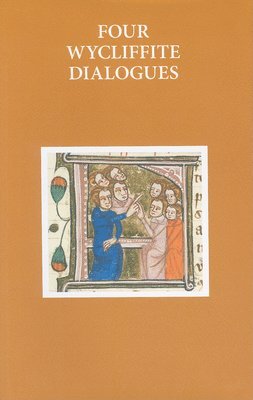
Four Wycliffite Dialogues
Inbunden, Engelska, 2009
1 219 kr
Skickas inom 5-8 vardagar
An edition of four previously unpublished heretical dialogues in Middle English, translated or adapted from Wycliffite sources composed circa 1380-1420. These previously unpublished prose treatises, cast as fictional dialogues, all survive in the form of single manuscripts, probably by different authors, but they cohere in their ideological outlook, subject matter, and debate form. The Dialogue between Jon and Richard concerns the four orders of friars; the Dialogue between a Friar and a Secular claims to be the written record of an oral debate that took place before a Lord Duke of Gloucester, and invites the lord to judge the two disputants: the friar offers a series of tendentious propositions on salvation, sin, and mendicancy, rebutted by the secular priest. The Dialogue between Reson and Gabbyng is a free translation and adaptation of the first twelve chapters of Wyclif's Dialogus (Speculum ecclesie militantis). The Dialogue between a Clerk and a Knight stages a conflict between papal and imperial, or regal, power, insisting on the rights of the king and his lords to remove the goods of corrupt clergy from England. These dialogues provide a comprehensive introduction to Wycliffite belief, and arguments on a range of controversial topics. The edition includes an introduction, detailed explanatory notes, and a glossary.
968 kr
Skickas inom 7-10 vardagar
Deeply embedded in the history of Latin Europe, the vernacular ("the language of slaves") still draws us towards urgent issues of affiliation, identity, and cultural struggle. Vernacular politics in medieval Latin Europe were richly complex and the structures of thought and feeling they left behind permanently affected Western culture. The Vulgar Tongue explores the history of European vernacularity through more than a dozen studies of language situations from twelfth-century England and France to twentieth-century India and North America, and from the building of nations, empires, or ethnic communities to the politics of gender, class, or religion. The essays in The Vulgar Tongue offer new vistas on the idea of the vernacular in contexts as diverse as Ramon Llull’s thirteenth-century prefiguration of universal grammar, the orthography of Early Middle English, the humanist struggle for linguistic purity in Early Modern Dutch, and the construction of standard Serbian and Romanian in the waning decades of the Austro-Hungarian empire. Here Latin, the "common tongue" of European intellectuals, is sometimes just another vernacular, Sanskrit and Hindi stake their claims as the languages of Shakespeare, African-American poetry is discovered in conversation with Middle English, and fourteenth-century Florence becomes the city, not of Dante and Boccaccio, but of the artisan poet Pucci. Delicate political messages are carried by nuances of French dialect, while the status of French and German as feminine "mother tongues" is fiercely refuted and as fiercely embraced. Clerics treat dialect, idiom, and gesture—not language itself—as the hallmarks of "vulgar" preaching, or else argue the case for Bible translation mainly in pursuit of their own academic freedom. Endlessly fluid in meaning and reference, the term "vernacular" emerges from this book as a builder of bridges between the myriad phenomena it can describe, as a focus of reflection both on the history of Western culture and on the responsibilities of those who would analyze it.
517 kr
Skickas inom 5-8 vardagar
Deeply embedded in the history of Latin Europe, the vernacular ("the language of slaves") still draws us towards urgent issues of affiliation, identity, and cultural struggle. Vernacular politics in medieval Latin Europe were richly complex and the structures of thought and feeling they left behind permanently affected Western culture. The Vulgar Tongue explores the history of European vernacularity through more than a dozen studies of language situations from twelfth-century England and France to twentieth-century India and North America, and from the building of nations, empires, or ethnic communities to the politics of gender, class, or religion. The essays in The Vulgar Tongue offer new vistas on the idea of the vernacular in contexts as diverse as Ramon Llull’s thirteenth-century prefiguration of universal grammar, the orthography of Early Middle English, the humanist struggle for linguistic purity in Early Modern Dutch, and the construction of standard Serbian and Romanian in the waning decades of the Austro-Hungarian empire. Here Latin, the "common tongue" of European intellectuals, is sometimes just another vernacular, Sanskrit and Hindi stake their claims as the languages of Shakespeare, African-American poetry is discovered in conversation with Middle English, and fourteenth-century Florence becomes the city, not of Dante and Boccaccio, but of the artisan poet Pucci. Delicate political messages are carried by nuances of French dialect, while the status of French and German as feminine "mother tongues" is fiercely refuted and as fiercely embraced. Clerics treat dialect, idiom, and gesture—not language itself—as the hallmarks of "vulgar" preaching, or else argue the case for Bible translation mainly in pursuit of their own academic freedom. Endlessly fluid in meaning and reference, the term "vernacular" emerges from this book as a builder of bridges between the myriad phenomena it can describe, as a focus of reflection both on the history of Western culture and on the responsibilities of those who would analyze it.
Del 37 - Cambridge Studies in Medieval Literature
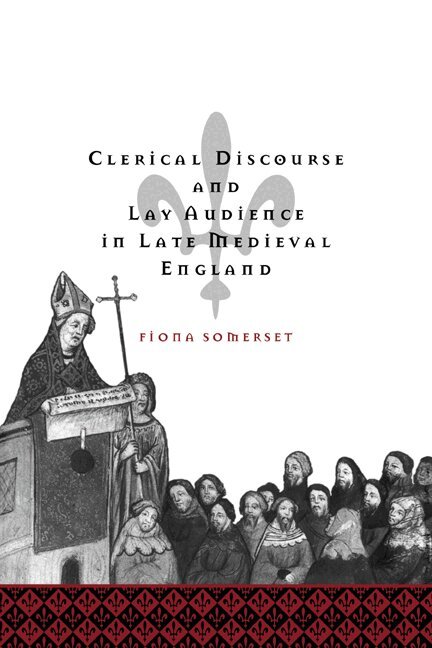
Clerical Discourse and Lay Audience in Late Medieval England
Häftad, Engelska, 2005
477 kr
Skickas inom 7-10 vardagar
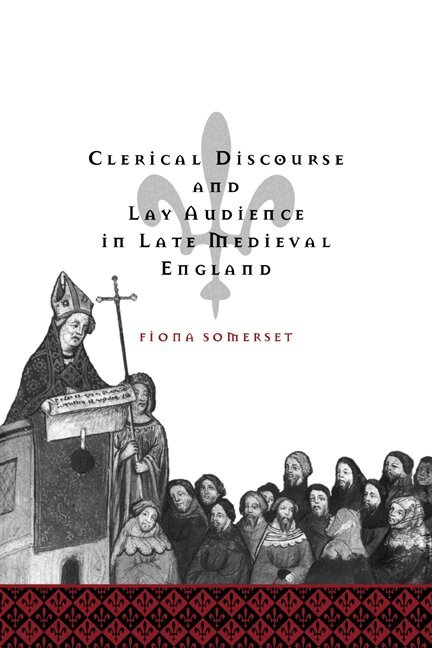
The translation of learned Latin materials into English between around 1370 and 1410 was a highly controversial activity. It was thought likely to make available to lay audiences the authoritative and intellectual information and methods of argument previously only accessible to an educated elite - and with that knowledge the power of information. Fiona Somerset's 1998 study examines what kinds of academic material were imported into English, what sorts of audience were projected for this kind of clerical discourse and how writers positioned themselves with respect to potential audience and opponents. The well-known concerns with clerical corruption and lay education of authors such as Langland, Trevisa, and Wyclif are linked to those of more obscure writers in both Latin and English, some only recently edited, or only extant in manuscript.
Del 37 - Cambridge Studies in Medieval Literature
Clerical Discourse and Lay Audience in Late Medieval England
Inbunden, Engelska, 1998
1 431 kr
Skickas inom 7-10 vardagar
The translation of learned Latin materials into English between around 1370 and 1410 was a highly controversial activity. It was thought likely to make available to lay audiences the authoritative and intellectual information and methods of argument previously only accessible to an educated elite - and with that knowledge the power of information. Fiona Somerset's 1998 study examines what kinds of academic material were imported into English, what sorts of audience were projected for this kind of clerical discourse and how writers positioned themselves with respect to potential audience and opponents. The well-known concerns with clerical corruption and lay education of authors such as Langland, Trevisa, and Wyclif are linked to those of more obscure writers in both Latin and English, some only recently edited, or only extant in manuscript.
959 kr
Skickas inom 10-15 vardagar
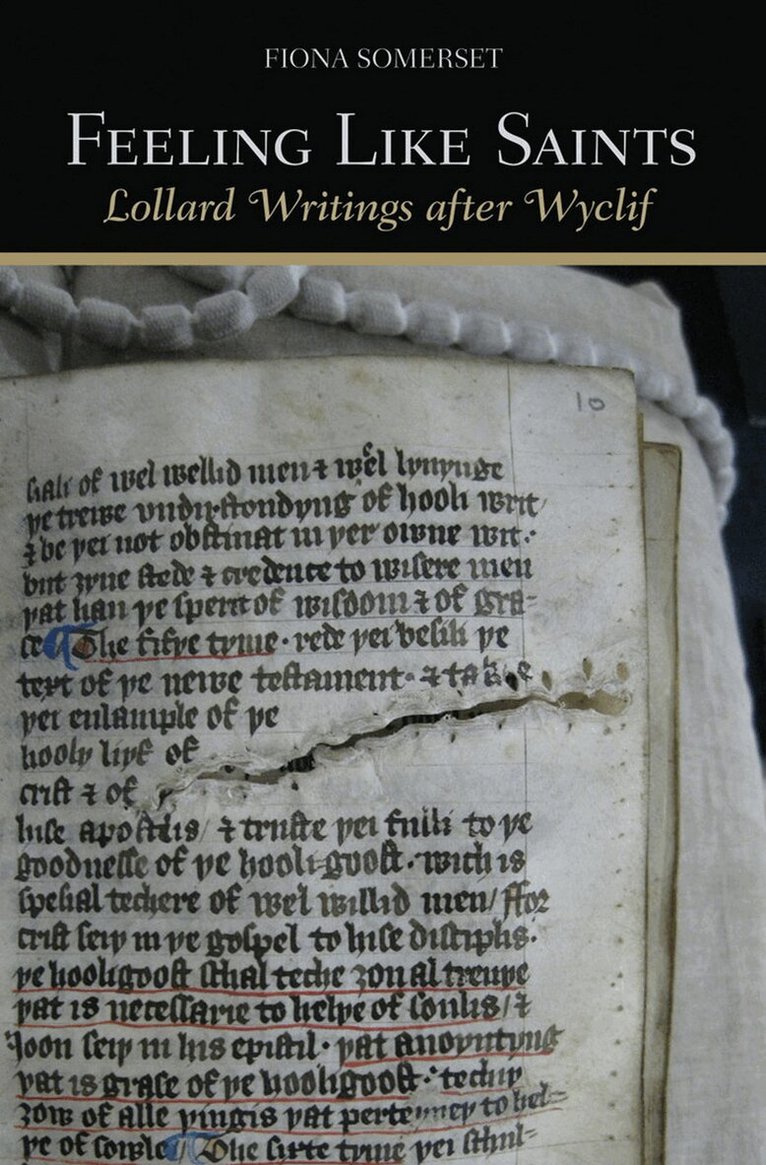
"Lollard" is the name given to followers of John Wyclif, the English dissident theologian who was dismissed from Oxford University in 1381 for his arguments regarding the eucharist. A forceful and influential critic of the ecclesiastical status quo in the late fourteenth century, Wyclif's thought was condemned at the Council of Constance in 1415. While lollardy has attracted much attention in recent years, much of what we think we know about this English religious movement is based on records of heresy trials and anti-lollard chroniclers. In Feeling Like Saints, Fiona Somerset demonstrates that this approach has limitations. A better basis is the five hundred or so manuscript books from the period (1375–1530) containing materials translated, composed, or adapted by lollard writers themselves. These writings provide rich evidence for how lollard writers collaborated with one another and with their readers to produce a distinctive religious identity based around structures of feeling. Lollards wanted to feel like saints. From Wyclif they drew an extraordinarily rigorous ethic of mutual responsibility that disregarded both social status and personal risk. They recalled their commitment to this ethic by reading narratives of physical suffering and vindication, metaphorically martyring themselves by inviting scorn for their zeal, and enclosing themselves in the virtues rather than the religious cloister. Yet in many ways they were not that different from their contemporaries, especially those with similar impulses to exceptional holiness.
617 kr
Skickas inom 5-8 vardagar
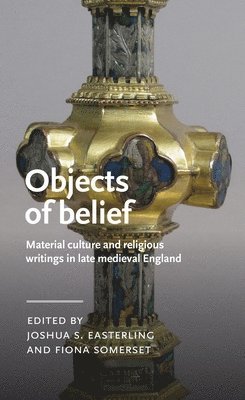
Objects of Belief
Material Culture and Religious Writings in Late Medieval England
Inbunden, Engelska, 2025
1 498 kr
Skickas inom 5-8 vardagar
Objects in late medieval Europe were a means for lay people and clergy to negotiate their access to powers beyond the everyday, in folk practice as well as religious observance. As has been noted by scholars, this period is marked by a profusion of objects granted special importance, imaginary as well as material. These objects prompt reconsideration of cultural and intellectual frameworks, for example of superstition, reform, and heresy, that never quite successfully contain them. Essays in this volume center attention on these things themselves, from puppets to rosaries, as indeed do the written accounts through which they are often mediated. With a focus on England, contributors re-evaluate our understanding of works and authors including Geoffrey Chaucer, Walter Hilton, Nicholas Love, Julian of Norwich, miracles of the Virgin, Edward Hall’s Chronicle, the Wycliffite Glossed Gospels, and the Croxton Play of the Sacrament.
366 kr
Skickas inom 7-10 vardagar
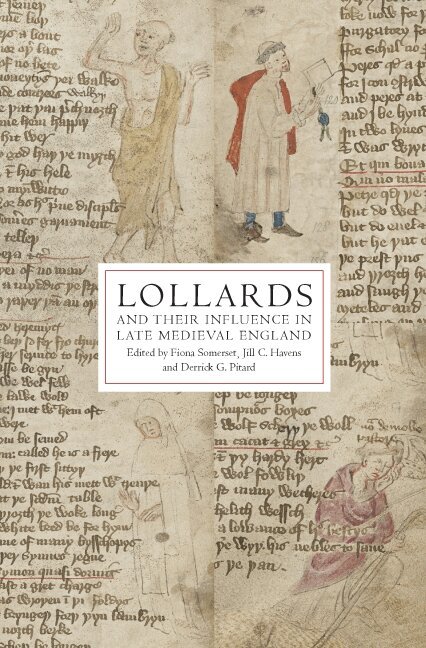
Required reading for everyone wishing to learn about or research in the field of Wycliffite and Lollard studies. RICHARD REX, QUEENS' COLLEGE, CAMBRIDGEWho were the Lollards? What did Lollards believe? What can the manuscript record of Lollard works teach us about the textual dissemination of Lollard beliefs and the audience for Lollard writings? What did Lollards have in commonwith other reformist or dissident thinkers in late medieval England, and how were their views distinctive? These questions have been fundamental to the modern study of Lollardy (also known as Wycliffism). The essays in this book reveal their broader implications for the study of English literature and history through a series of closely focused studies that demonstrate the wide-ranging influence of Lollard writings and ideas on later medieval English culture. Introductions to previous scholarship, and an extensive Bibliography of printed resources for the study of Wyclif and Wycliffites, provide an entry to scholarship for those new to the field.Contributors: DAVID AERS, MARGARET ASTON, HELEN BARR, MISHTOONI BOSE, LAWRENCE M. CLOPPER, ANDREW COLE, RALPH HANNA III, ANNE HUDSON, MAUREEN JURKOWSKI, ANDREW LARSEN, GEOFFREY H. MARTIN, DERRICK G. PITARD, WENDY SCASE, FIONA SOMERSET, EMILY STEINER.