Nicholas Watson - Böcker
Visar alla böcker från författaren Nicholas Watson. Handla med fri frakt och snabb leverans.
11 produkter
11 produkter
968 kr
Skickas inom 7-10 vardagar
Deeply embedded in the history of Latin Europe, the vernacular ("the language of slaves") still draws us towards urgent issues of affiliation, identity, and cultural struggle. Vernacular politics in medieval Latin Europe were richly complex and the structures of thought and feeling they left behind permanently affected Western culture. The Vulgar Tongue explores the history of European vernacularity through more than a dozen studies of language situations from twelfth-century England and France to twentieth-century India and North America, and from the building of nations, empires, or ethnic communities to the politics of gender, class, or religion. The essays in The Vulgar Tongue offer new vistas on the idea of the vernacular in contexts as diverse as Ramon Llull’s thirteenth-century prefiguration of universal grammar, the orthography of Early Middle English, the humanist struggle for linguistic purity in Early Modern Dutch, and the construction of standard Serbian and Romanian in the waning decades of the Austro-Hungarian empire. Here Latin, the "common tongue" of European intellectuals, is sometimes just another vernacular, Sanskrit and Hindi stake their claims as the languages of Shakespeare, African-American poetry is discovered in conversation with Middle English, and fourteenth-century Florence becomes the city, not of Dante and Boccaccio, but of the artisan poet Pucci. Delicate political messages are carried by nuances of French dialect, while the status of French and German as feminine "mother tongues" is fiercely refuted and as fiercely embraced. Clerics treat dialect, idiom, and gesture—not language itself—as the hallmarks of "vulgar" preaching, or else argue the case for Bible translation mainly in pursuit of their own academic freedom. Endlessly fluid in meaning and reference, the term "vernacular" emerges from this book as a builder of bridges between the myriad phenomena it can describe, as a focus of reflection both on the history of Western culture and on the responsibilities of those who would analyze it.
517 kr
Skickas inom 5-8 vardagar
Deeply embedded in the history of Latin Europe, the vernacular ("the language of slaves") still draws us towards urgent issues of affiliation, identity, and cultural struggle. Vernacular politics in medieval Latin Europe were richly complex and the structures of thought and feeling they left behind permanently affected Western culture. The Vulgar Tongue explores the history of European vernacularity through more than a dozen studies of language situations from twelfth-century England and France to twentieth-century India and North America, and from the building of nations, empires, or ethnic communities to the politics of gender, class, or religion. The essays in The Vulgar Tongue offer new vistas on the idea of the vernacular in contexts as diverse as Ramon Llull’s thirteenth-century prefiguration of universal grammar, the orthography of Early Middle English, the humanist struggle for linguistic purity in Early Modern Dutch, and the construction of standard Serbian and Romanian in the waning decades of the Austro-Hungarian empire. Here Latin, the "common tongue" of European intellectuals, is sometimes just another vernacular, Sanskrit and Hindi stake their claims as the languages of Shakespeare, African-American poetry is discovered in conversation with Middle English, and fourteenth-century Florence becomes the city, not of Dante and Boccaccio, but of the artisan poet Pucci. Delicate political messages are carried by nuances of French dialect, while the status of French and German as feminine "mother tongues" is fiercely refuted and as fiercely embraced. Clerics treat dialect, idiom, and gesture—not language itself—as the hallmarks of "vulgar" preaching, or else argue the case for Bible translation mainly in pursuit of their own academic freedom. Endlessly fluid in meaning and reference, the term "vernacular" emerges from this book as a builder of bridges between the myriad phenomena it can describe, as a focus of reflection both on the history of Western culture and on the responsibilities of those who would analyze it.
Del 13 - Cambridge Studies in Medieval Literature
Richard Rolle and the Invention of Authority
Häftad, Engelska, 2007
690 kr
Skickas inom 7-10 vardagar
This 1991 book is a literary study of the career of Richard Rolle (d.1349), a Yorkshire hermit and mystic who was one of the most widely read English writers of the late Middle Ages. Nicholas Watson proposes a chronology of Rolle's writings, and offers a literary analyses of a number of his works. He shows how Rolle's career, as a writer of passionate religious works in Latin and later in English, has as its principal focus the establishment of his own spiritual authority. The book also addresses wider issues, suggesting an alternative way of looking at mystical writing in general and challenging the prevailing view of the relationship between medieval and renaissance attitudes to authors and authority.
Del 13 - Cambridge Studies in Medieval Literature
Richard Rolle and the Invention of Authority
Inbunden, Engelska, 1991
1 916 kr
Skickas inom 7-10 vardagar
This 1991 book is a literary study of the career of Richard Rolle (d.1349), a Yorkshire hermit and mystic who was one of the most widely read English writers of the late Middle Ages. Nicholas Watson proposes a chronology of Rolle's writings, and offers a literary analyses of a number of his works. He shows how Rolle's career, as a writer of passionate religious works in Latin and later in English, has as its principal focus the establishment of his own spiritual authority. The book also addresses wider issues, suggesting an alternative way of looking at mystical writing in general and challenging the prevailing view of the relationship between medieval and renaissance attitudes to authors and authority.
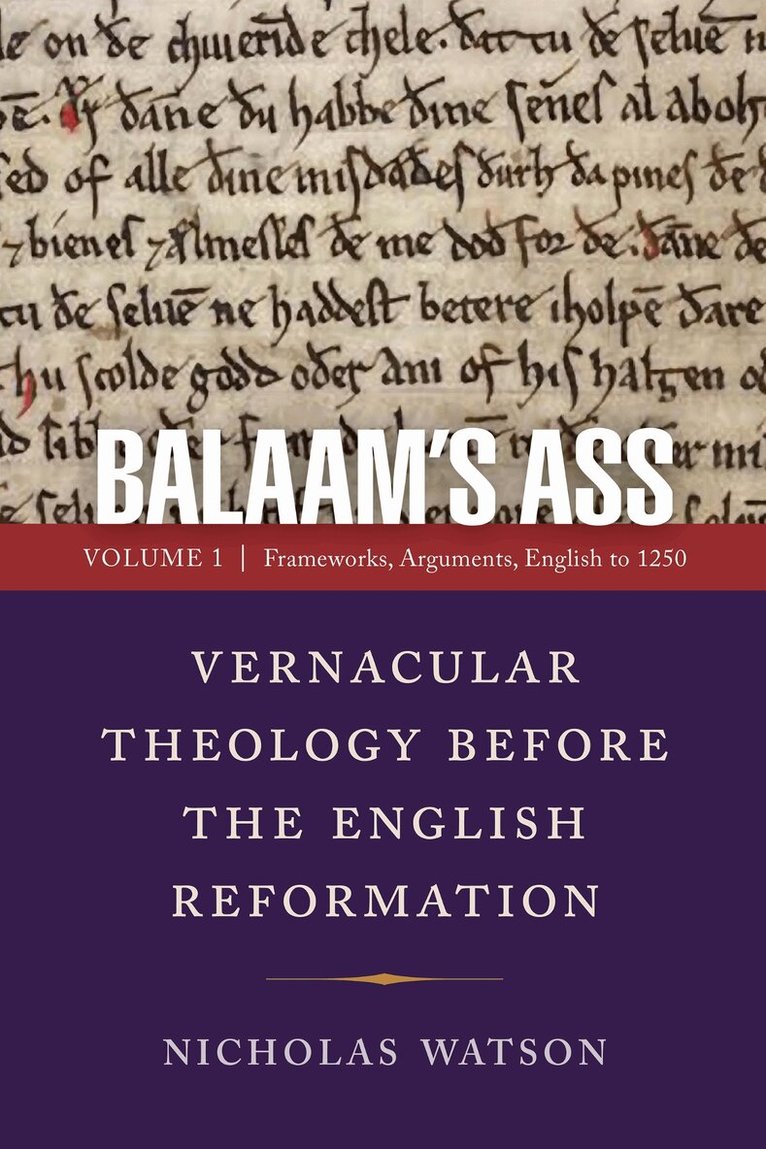
Balaam's Ass: Vernacular Theology Before the English Reformation
Volume 1: Frameworks, Arguments, English to 1250
Inbunden, Engelska, 2022
1 112 kr
Skickas inom 10-15 vardagar
For over seven hundred years, bodies of writing in vernacular languages served an indispensable role in the religious and intellectual culture of medieval Christian England, yet the character and extent of their importance have been insufficiently recognized. A longstanding identification of medieval western European Christianity with the Latin language and a lack of awareness about the sheer variety and quantity of vernacular religious writing from the English Middle Ages have hampered our understanding of the period, exercising a tenacious hold on much scholarship.Bringing together work across a range of disciplines, including literary study, Christian theology, social history, and the history of institutions, Balaam's Ass attempts the first comprehensive overview of religious writing in early England's three most important vernacular languages, Old English, Insular French, and Middle English, between the ninth and sixteenth centuries. Nicholas Watson argues not only that these texts comprise the oldest continuous tradition of European vernacular writing, but that they are essential to our understanding of how Christianity shaped and informed the lives of individuals, communities, and polities in the Middle Ages.This first of three volumes lays out the long post-Reformation history of the false claim that the medieval Catholic Church was hostile to the vernacular. It analyzes the complicated idea of the vernacular, a medieval innovation instantiated in a huge body of surviving vernacular religious texts. Finally, it focuses on the first, long generation of these writings, in Old English and early Middle English.
1 097 kr
Skickas inom 7-10 vardagar
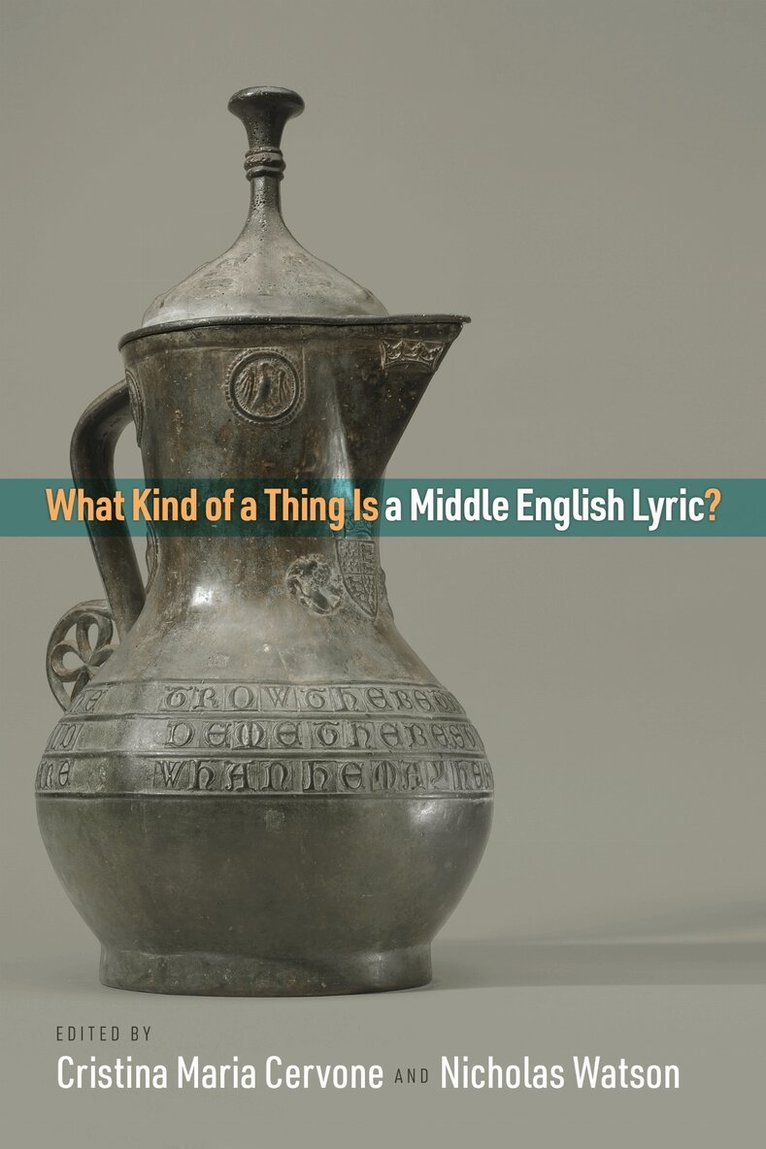
What Kind of a Thing Is a Middle English Lyric? considers issues pertaining to a corpus of several hundred short poems written in Middle English between the twelfth and early fifteenth centuries. The chapters draw on perspectives from varied disciplines, including literary criticism, musicology, art history, and cognitive science. Since the early 1900s, the poems have been categorized as "lyrics," the term now used for most kinds of short poetry, yet neither the difficulties nor the promise of this treatment have received enough attention. In one way, the book argues, considering these poems to be lyrics obscures much of what is interesting about them. Since the nineteenth century, lyrics have been thought of as subjective and best read without reference to cultural context, yet nonetheless they are taken to form a distinct literary tradition. Since Middle English short poems are often communal and usually spoken, sung, and/or danced, this lyric template is not a good fit. In another way, however, the very differences between these poems and the later ones on which current debates about the lyric still focus suggest they have much to offer those debates, and vice versa.As its title suggests, this book thus goes back to the basics, asking fundamental questions about what these poems are, how they function formally and culturally, how they are (and are not) related to other bodies of short poetry, and how they might illuminate and be illuminated by contemporary lyric scholarship. Eleven chapters by medievalists and two responses by modernists, all in careful conversation with one another, reflect on these questions and suggest very different answers. The editors' introduction synthesizes these answers by suggesting that these poems can most usefully be read as a kind of "play," in several senses of that word. The book ends with eight "new Middle English lyrics" by seven contemporary poets.
617 kr
Skickas inom 5-8 vardagar
Del 18 - Festschriften, Occasional Papers, and Lectures
Morton W. Bloomfield Lectures, 1989-2005
Inbunden, Engelska, 2010
217 kr
Skickas inom 5-8 vardagar
Shortly after Morton Bloomfield's death in 1987, a number of his friends and colleagues sought a way to honor and preserve his memory. The result was a lecture of more than ordinary interest and more than ordinary prominence, signified by the fact that each would be published for individual circulation and then would be collected, as they are here, to appear in print for a wider audience. The lectures contained here reflect Morton Bloomfield's own wide and varied interests: literature, the history of philosophy, language studies, and Judaic studies. Morton W. Bloomfield's broad learning and personal popularity were unrivaled among his fellow medievalists, and this volume demonstrates the outpouring of those close to him and whom he influenced. The lectures contained within deal with a wide variety of topics, all a fitting tribute to a scholar who touched so many lives.
1 613 kr
Skickas inom 7-10 vardagar
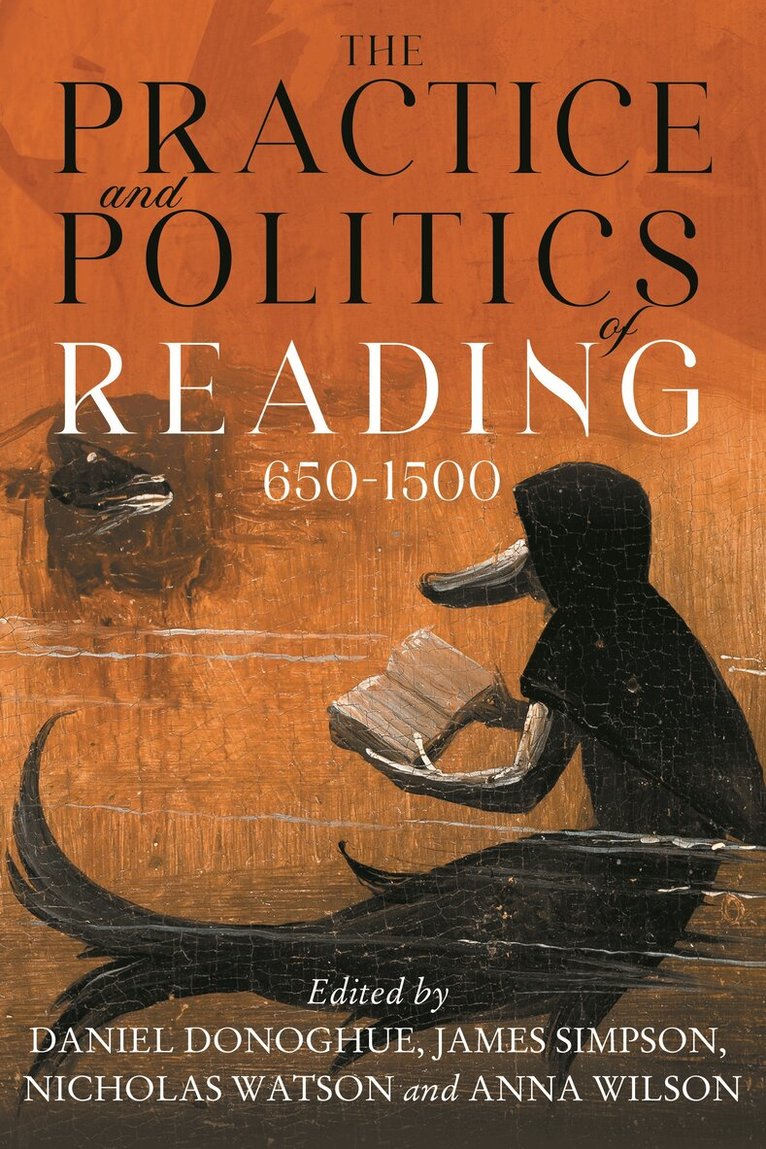
A new look at how reading was practised and represented in England from the seventh century to the beginnings of the print era, finding many kinships between reading cultures across the medieval longue durée. Even as it transforms human cultures, routines, attention spans, and the wiring of our brains, the media revolution of the last few decades also urges a reconsideration of the long history of reading. The essays in this volume take a new look at how reading was practised and represented in England from the seventh century to the beginnings of the print era, using texts from Aldhelm to Malory and Wynkyn de Worde, arguing that whether unpicking intricate Latin, contemplating image-texts, or participating in semiotically-rich public rituals, reading cultivated and energized the subject's values, perceptions, and attitudes to the world. Part I, "Practices of Reading", asks how writers, scribes and artists engaged readerly attention through textual layout, poetic form, hermeneutic difficulty, or images, while Part II, "Politics of Reading", explores how different textual communities manipulated the anxieties and opportunities for education, moral improvement or entertainment associated with reading; particular topics addressed include Bible translation and exegesis, page layout, literary form and readerly practice, fiction, hermeneutics, and performance. Although it understands reading as culturally and technologically localized, the book finds many kinships between reading cultures across the medieval longue durée and the literatures and literacies that proliferate today.Contributors: Amy Appleford, Michelle De Groot, Daniel Donoghue, Andrew James Johnston, Andrew Kraebel, Katherine O'Brien O'Keeffe, Catherine Sanok, Samantha Katz Seal, James Simpson, Emily V. Thornbury, Kathleen Tonry, Kathryn Mogk Wagner, Nicholas Watson, Erica Weaver, Anna Wilson.
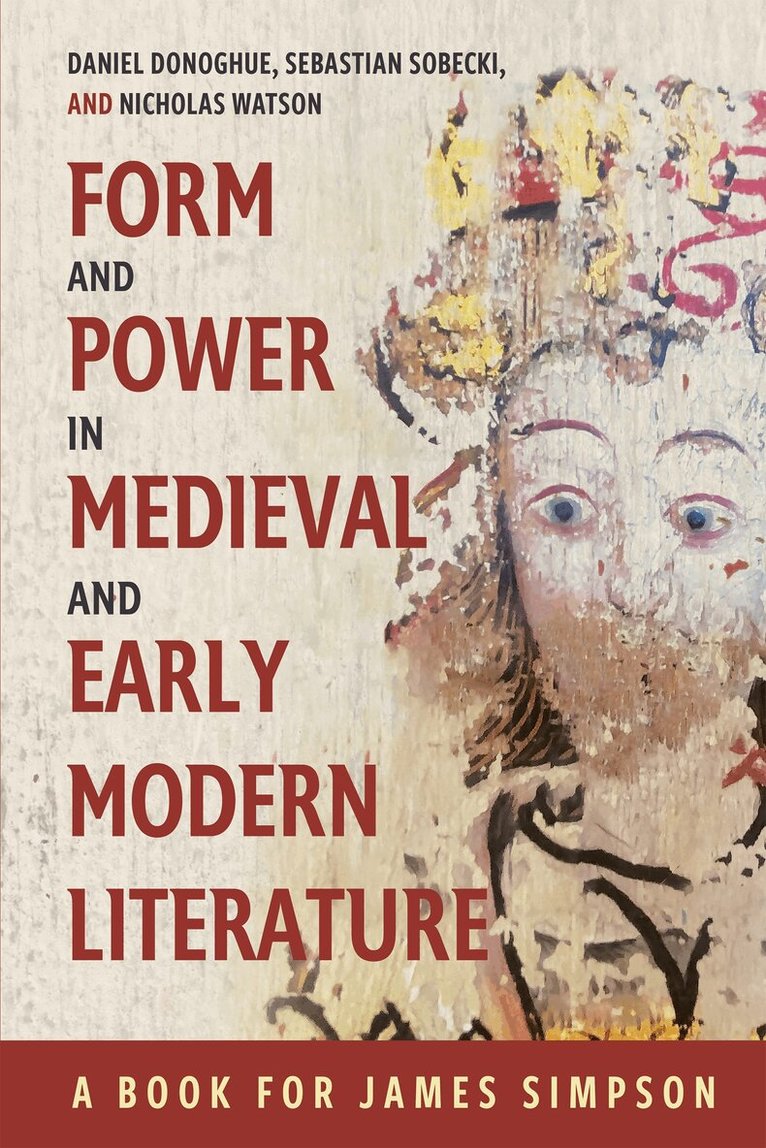
Form and Power in Medieval and Early Modern Literature
A Book for James Simpson
Inbunden, Engelska, 2024
1 613 kr
Skickas inom 7-10 vardagar
New and exciting scholarship on medieval and early modern English culture in all its diversity. This book honours James Simpson, an enormously influential figure in English literary studies. Known for championing once-neglected writers such as Gower, Hoccleve, and Lydgate, Simpson has also pioneered the field of Trans-Reformation studies, dismantling the barrier between the medieval and early modern periods. He has written powerfully about the history of freedoms, the relationship between literary and intellectual history, and about the category of the literary itself in all its urgency. Inspired by Simpson's interventions, the essays collected here deal with texts and topics from the eighth to the seventeenth centuries. Langland's Piers Plowman and Chaucer's Physician's Tale and Troilus and Criseyde rub shoulders with Old English riddles, Saint Erkenwald, The Digby Lyrics, Lydgate's Dietary, and Lodge's Robert the Devil. Revisionist studies of two much-debated genres - allegory and romance - join forces with chapters on neglected physical features of early books, line-fillers and catchwords, as well as studies of iconoclasm and the histories of enemy love. The volume begins with a piece by the honorand himself, on recognition in literary texts.
825 kr
Skickas inom 5-8 vardagar