
Flora Süssekind - Böcker
Visar alla böcker från författaren Flora Süssekind. Handla med fri frakt och snabb leverans.
4 produkter
4 produkter
1 460 kr
Skickas inom 7-10 vardagar
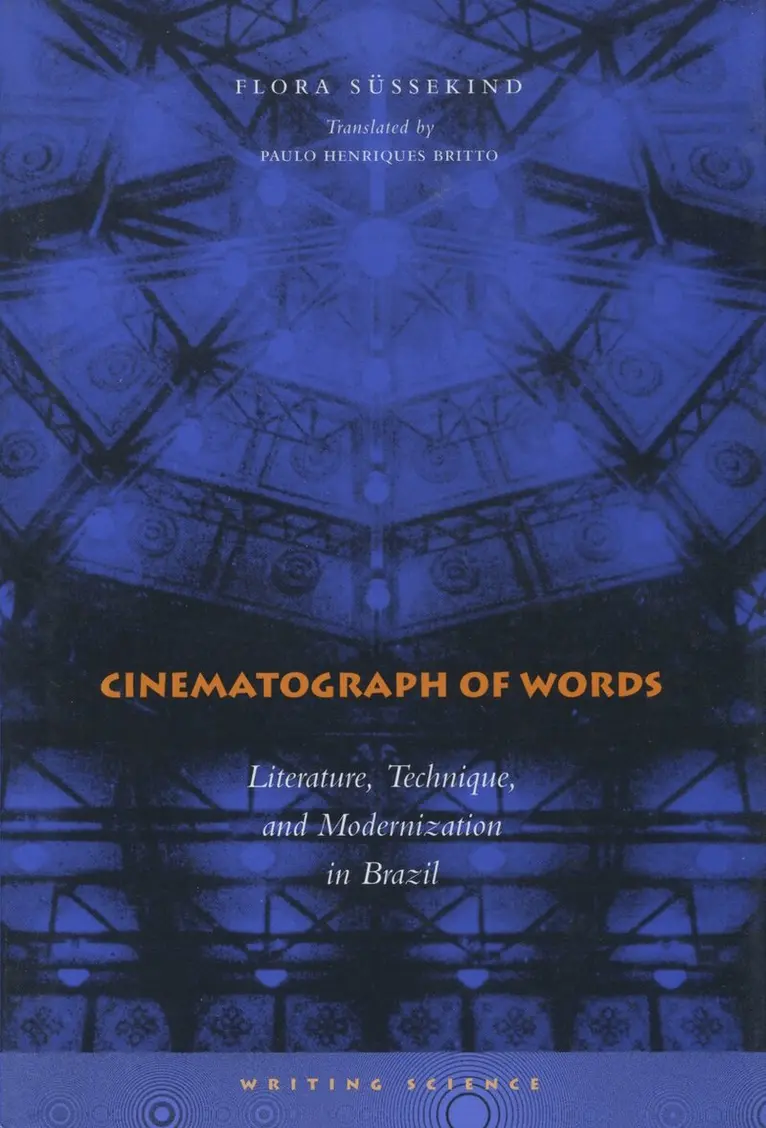
This is an extraordinarily imaginative attempt to analyze the relations between literature and technique in Brazil from the 1880's to the 1920's. The author suggests that in these relations we can see more clearly the shape of a period that is otherwise usually defined from a literary perspective as "pre-" or "post-" something or other, rather than in terms of its own characteristics. One such characteristic is the intense interaction with the new technologies then arising in Brazil, the beginning of the professionalization of writers, and a revision of the concept of literature, redefined as technique.The author's chief concern is to determine what is distinctive about the literary production of the period. Rather than focusing on literature's relations with visual art, with a rising social class, or with the sociopolitical divisions within the educated classes of Brazilian society, the author examines the crônica (a kind of journalistic essay), poetry, and fiction of these decades in terms of their encounter with a burgeoning technological and industrial landscape.This encounter is examined from two perspectives. The first is explicit representation: the portrayal in Brazilian literature of modern artifacts, new means of transformation and communication, and the newborn industries of advertising and commercial publication. The second perspective examines how these close contacts with the technological world came to shape cultural production—that is, not how literature represents technique, but how literary technique changed as it incorporated procedures characteristic of photography, film, and poster art. This transformation was consistent and concurrent with significant changes taking place in the perceptions and sensibilities of the population of major Brazilian cities, a population increasingly attuned to images, the instant, and technology as all-powerful mediators of the urban landscape, time, and a subjectivity constantly under the threat of extinction.
356 kr
Skickas inom 7-10 vardagar
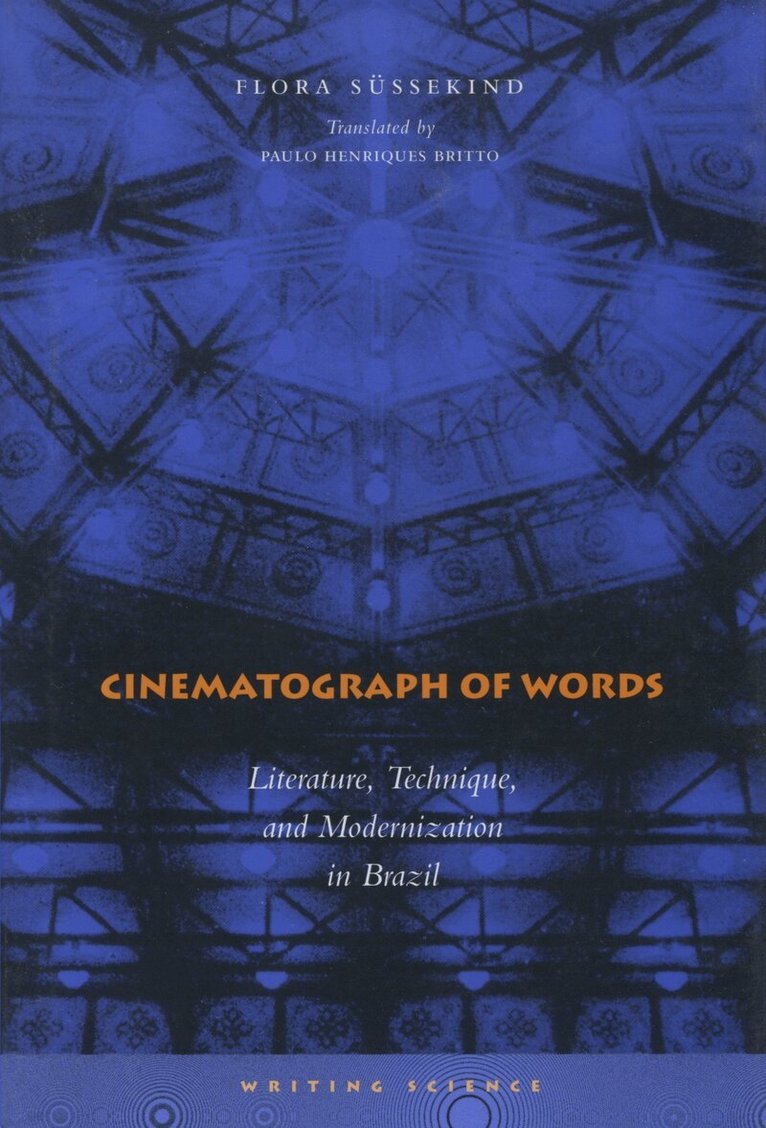
This is an extraordinarily imaginative attempt to analyze the relations between literature and technique in Brazil from the 1880's to the 1920's. The author suggests that in these relations we can see more clearly the shape of a period that is otherwise usually defined from a literary perspective as "pre-" or "post-" something or other, rather than in terms of its own characteristics. One such characteristic is the intense interaction with the new technologies then arising in Brazil, the beginning of the professionalization of writers, and a revision of the concept of literature, redefined as technique.The author's chief concern is to determine what is distinctive about the literary production of the period. Rather than focusing on literature's relations with visual art, with a rising social class, or with the sociopolitical divisions within the educated classes of Brazilian society, the author examines the crônica (a kind of journalistic essay), poetry, and fiction of these decades in terms of their encounter with a burgeoning technological and industrial landscape.This encounter is examined from two perspectives. The first is explicit representation: the portrayal in Brazilian literature of modern artifacts, new means of transformation and communication, and the newborn industries of advertising and commercial publication. The second perspective examines how these close contacts with the technological world came to shape cultural production—that is, not how literature represents technique, but how literary technique changed as it incorporated procedures characteristic of photography, film, and poster art. This transformation was consistent and concurrent with significant changes taking place in the perceptions and sensibilities of the population of major Brazilian cities, a population increasingly attuned to images, the instant, and technology as all-powerful mediators of the urban landscape, time, and a subjectivity constantly under the threat of extinction.
710 kr
Kommande
In this book, the leading Brazilian cultural theorist Flora Süssekind analyses the turbulent recent history of Brazil. She examines the protests which erupted in Brazil in 2013 and the ways that these were appropriated by the extreme right, and she shows how these developments expressed a break from and threat to the democratic orientation and social pact represented by the 1988 constitution, a collective achievement after decades of dictatorship. She also shows how these events contributed and pointed to the rise of a culture of intolerance, bringing this to bear upon literary and artistic production.Süssekind's original concept of the chorus, understood not simply as a musical or theatrical category but as a structural force in culture, enables her to highlight the critical potential of cultural production and its power to redirect the course of events. She argues that it was during Brazil's recent history that the choral inflection emerged as a structuring force in culture. By documenting the dramatic shift in literary and artistic production from 2013 to the present day, Süssekind presents a sophisticated cartography for understanding literary and artistic production within a culture of dissent.This innovative book will be of value to anyone interested in Latin American studies, literary and cultural studies and the history and politics of Brazil.
242 kr
Kommande
In this book, the leading Brazilian cultural theorist Flora Süssekind analyses the turbulent recent history of Brazil. She examines the protests which erupted in Brazil in 2013 and the ways that these were appropriated by the extreme right, and she shows how these developments expressed a break from and threat to the democratic orientation and social pact represented by the 1988 constitution, a collective achievement after decades of dictatorship. She also shows how these events contributed and pointed to the rise of a culture of intolerance, bringing this to bear upon literary and artistic production.Süssekind's original concept of the chorus, understood not simply as a musical or theatrical category but as a structural force in culture, enables her to highlight the critical potential of cultural production and its power to redirect the course of events. She argues that it was during Brazil's recent history that the choral inflection emerged as a structuring force in culture. By documenting the dramatic shift in literary and artistic production from 2013 to the present day, Süssekind presents a sophisticated cartography for understanding literary and artistic production within a culture of dissent.This innovative book will be of value to anyone interested in Latin American studies, literary and cultural studies and the history and politics of Brazil.