Forrest G. Robinson - Böcker
Visar alla böcker från författaren Forrest G. Robinson. Handla med fri frakt och snabb leverans.
6 produkter
6 produkter
442 kr
Skickas inom 7-10 vardagar
The Cambridge Companion to Mark Twain offers new and thought provoking essays on an author of enduring pre-eminence in the American canon. The book is a collaborative project, assembled by scholars who have played crucial roles in the recent explosion of Twain criticism. Accessible enough to interest both experienced specialists and students new to Twain criticism, the essays examine Twain from a wide variety of critical perspectives, and include timely reflections by major critics on the hotly debated dynamics of race and slavery perceptible throughout his writing. The volume includes a chronology of Twain's life and a list of suggestions for further reading, to provide the students or general reader with sources for background as well as additional information.
416 kr
Skickas inom 10-15 vardagar
Something is not right in the world of Tom Sawyer and Huckleberry Finn. The unease is less evident to Tom, the manipulator, than to the socially marginal Huck. The trouble is most dramatically revealed when Huck, whose “sivilized” Christian conscience is developing, faces the choice between betraying his black friend Jim—which he believes is his moral duty—and letting him escape, as his heart tells him to do.“Bad faith” is Forrest Robinson's name for the dissonance between what we profess to believe, how we act, and how we interpret our own behavior. There is bad faith in the small hypocrisies of daily living, but Robinson has a much graver issue in mind—namely slavery, which persisted for nearly a century in a Christian republic founded on ideals of freedom, equality, and justice. Huck, living on the fringes of small-town society, recognizes Jim's humanity and understands the desperateness of his plight. Yet Huck is white, a member of the dominant class; he is at once influenced and bewildered by the contradictions of bad faith in the minds of his fully acculturated contemporaries.Robinson stresses that “bad faith” is more than a theme with Mark Twain; his bleak view of man's social nature (however humorously expressed), his nostalgia, his ambivalence about the South, his complex relationship to his audience, can all be traced back to an awareness of the deceits at the core of his culture—and he is not himself immune. This deeply perceptive book will be of interest to students of American literature and history and to anyone concerned with moral issues.
613 kr
Skickas inom 10-15 vardagar
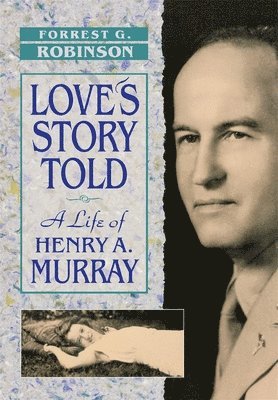
Searching out the private man as well as the public figure, this elegantly written biography follows Henry Murray through his discoveries and triumphs as a pioneer in the field of clinical psychology, as a co-founder of Harvard’s Psychological Clinic, the co-inventor of the Thematic Apperception Test, and a biographer of Herman Melville. Murray’s fascination with Melville’s troubled genius, his wartime experiences in the O.S.S., and his close friendships with Lewis Mumford and Conrad Aiken all come to the fore in this masterly reconstruction of a life. And always, at the heart of this story, Robinson finds Murray’s highly erotic and mystical relationship with Christiana Morgan. Love’s Story Told penetrates to the heart of a brilliant figure in American intellectual life at mid-century, as he dives deeply into the unconscious, testing in work and love the limits of self-exploration.
278 kr
Skickas inom 7-10 vardagar
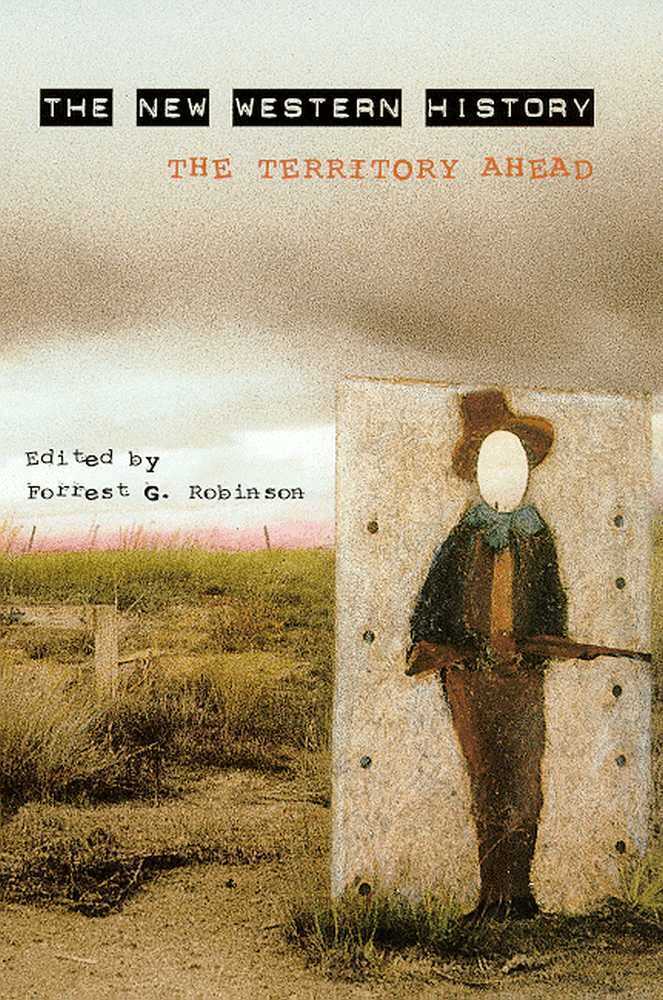
Established barely a decade ago, the New Western History has retold the story of the American West from the point of view of the oppressed, colonized, and conquered. Scholars led by William Cronon, Patricia Nelson Limerick, Richard White, and Donald Worster have challenged the Turnerian myth of the frontier and have forced scholars to reexamine their understanding of the region. Now seven scholars in American Studies, English, women's studies, philosophy, and environmental studies take a closer look at the work of the New Western Historians. While recognizing that these revisionists have broken important new ground, they observe that many of their claims to uniqueness may be overstated and identify areas of investigation that may have been overlooked. These articles discuss the need to expand the horizons of the New Western History to include fiction, women's literature, racial categories, and works of writers such as Wallace Stegner who presaged the movement. They also argue for more serious consideration of popular culture as represented in western fiction and films and include an analysis of the New Western History's treatment of nature by two natural resource managers.The New Western History was first published as a special issue of the Arizona Quarterly: A Journal of American Literature, Culture, and Theory and is now being made available to a wider audience for the first time. It was named Best Special Issue in the 1997 Council of Editors of Learned Journals International Awards Competition and was cited for its interest to general readers. This collection of essays clearly shows that the response to the New Western History is both vigorous and mixed. It advances the lively and important discussion that the New Western Historians have set in motion and makes that debate accessible to anyone with an interest in the history of the West. CONTENTS-Introduction / Jerome Frisk and Forrest G. Robinson: The Theoretical (Re)Positions of the New Western History / Jerome Frisk-Clio Bereft of Calliope: Literature and the New Western History / Forrest G.Robinson-Literature, Gender Studies, and the New Western History / Krista Comer-Haunting Presences and the New Western History: Reading Repetition, Negotiating Trauma / Carl Gutierrez Jones: The Problem of the "Popular" in the New Western History / Stephen Tatum: The New Western History: An Essay from the Woods (and Rangelands) / Sally K. Fairfax and Lynn Huntsinger
416 kr
Skickas inom 7-10 vardagar
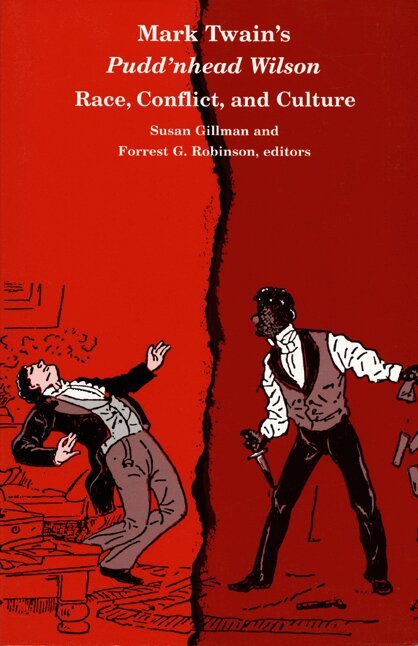
This collection seeks to place Pudd’nhead Wilson-a neglected, textually fragmented work of Mark Twain’s-in the context of contemporary critical approaches to literary studies. The editors’ introduction argues the virtues of using Pudd’nhead Wilson as a teaching text, a case study in many of the issues presently occupying literary criticism: issues of history and the uses of history, of canon formation, of textual problematics, and finally of race, class, and gender.In a variety of ways the essays build arguments out of, not in spite of, the anomalies, inconsistencies, and dead ends in the text itself. Such wrinkles and gaps, the authors find, are the symptoms of an inconclusive, even evasive, but culturally illuminating struggle to confront and resolve difficult questions bearing on race and sex. Such fresh, intellectually enriching perspectives on the novel arise directly from the broad-based interdisciplinary foundations provided by the participating scholars. Drawing on a wide variety of critical methodologies, the essays place the novel in ways that illuminate the world in which it was produced and that further promise to stimulate further study.Contributors. Michael Cowan, James M. Cox, Susan Gillman, Myra Jehlen, Wilson Carey McWilliams, George E. Marcus, Carolyn Porter, Forrest Robinson, Michael Rogin, John Carlos Rowe, John Schaar, Eric Sundquist
687 kr
Skickas inom 10-15 vardagar
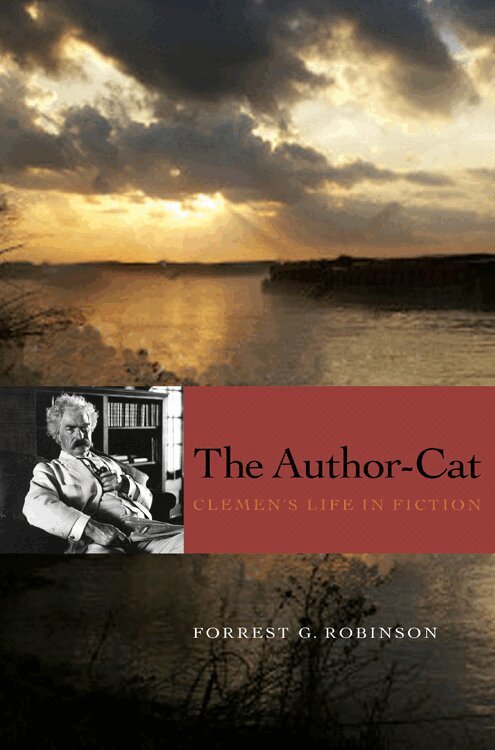
A comprehensive reading of Mark Twain's major workAt the end of his long life, Samuel Clemens felt driven to write a truthful account of what he regarded as the flaws in his character and the errors of his ways. His attempt to tell the unvarnished truth about himself is preserved in nearly 250 autobiographical dictations. In order to encourage complete veracity, he decided from the outset that these would be published only posthumously.Nevertheless, Clemens's autobiography is singularly unrevealing. Forrest G. Robinson argues that, by contrast, it is in his fiction that Clemens most fully—if often inadvertently—reveals himself. He was, he confessed, like a cat who labors in vain to bury the waste that he has left behind. Robinson argues that he wrote out of an enduring need to come to terms with his remembered experiences—not to memorialize the past, but to transform it.By all accounts—including his own—Clemens's special curse was guilt. He was unable to forgive himself for the deaths of those closest to him—from his siblings' death in childhood to the deaths of his own children. Nor could he reconcile himself to his role in the Civil War, his part in the duel that prompted his departure from Virginia City in 1864, and—worst of all—his sense of moral complicity in the crimes of slavery.Tracing the theme of bad faith in all of Clemens's major writing, but with special attention to the late work, Robinson sheds new light on a tormented moral life. His book challenges conventional assumptions about the humorist's personality and creativity, directing attention to what William Dean Howells describes as "the depths of a nature whose tragical seriousness broke in the laughter which the unwise took for the whole of him."