Susan Gillman - Böcker
Visar alla böcker från författaren Susan Gillman. Handla med fri frakt och snabb leverans.
12 produkter
12 produkter
715 kr
Skickas inom 3-6 vardagar
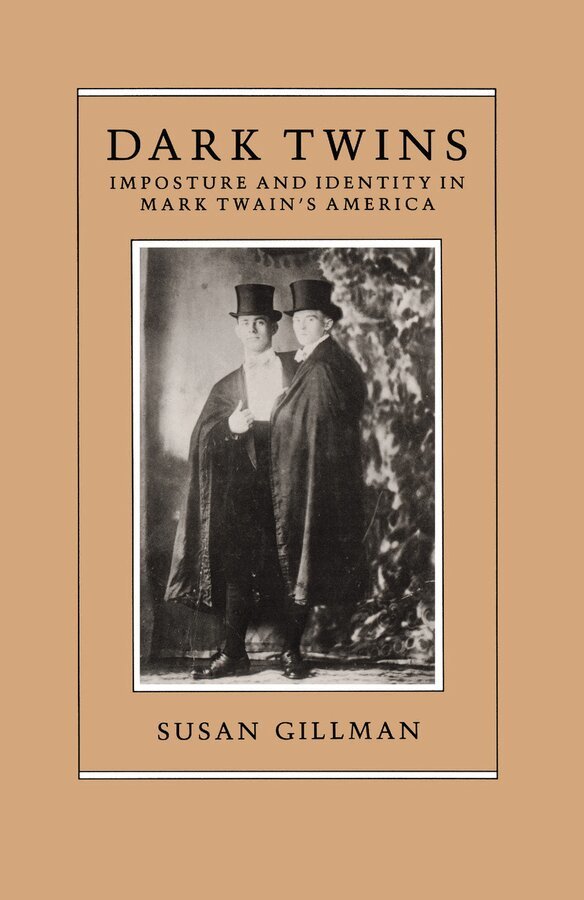
"Many persons have such a horror of being taken in," wrote P. T. Barnum, "that they believe themselves to be a sham and are continually humbugging themselves." Mark Twain enjoyed trading on that horror, as the many confidence men, assumed identities, and disguised characters in his fiction attest. In Dark Twins, Susan Gillman challenges the widely held assumption that Twain's concern with identity is purely biographical and argues that what has been regarded as a problem of individual psychology must be located instead within American society around the turn of the century. Drawing on Twain's whole writing career, but focusing on the controversial late period of social "pessimism" and literary "incoherence," Gillman situates Twain and his work in historical context, demonstrating the complex interplay between his most intimate personal and authorial identity and the public attitudes toward race, gender, and science. Gillman shows that laws regulating race classification, paternity, and rape cases underwrite Twain's critical exploration of racial and sexual difference in the writings of the 1890s and after, most strikingly in the little-known manuscripts that Gillman calls the "tales of transvestism." The "pseudoscience" of spiritualism and the "science" of psychology provide the cultural vocabularies essential to Twain's fantasy and science fiction writings of his last two decades. Twain stands forth finally as a representative man, not only a child of his culture, but also as one implicated in a continuing American anxiety about freedom, race, and identity.
904 kr
Skickas inom 7-10 vardagar
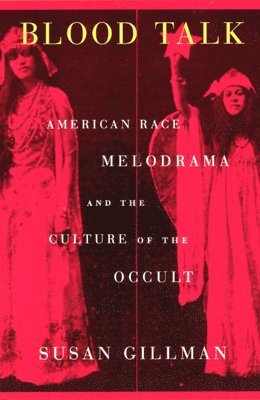
The United States has seldom known a period of greater social and cultural volatility, especially in terms of race relations, than the years from the end of Reconstruction to the First World War. In this study, Susan Gillman explores the rise during this period of a remarkable genre - the race melodrama - and the way in which it converged with literary trends, popular history, fringe movements, and mainstream interest in supernatural phenomena. "Blood Talk" shows how race melodrama emerged from abolitionist works such as "Uncle Tom's Cabin" and surprisingly manifested itself in a set of more aesthetically and politically varied works, such as historical romances, sentimental novels, the travel literature of Mark Twain, the regional fiction of Kate Chopin and George Washington Cable, and the work of W.E.B. Du Bois. Gillman then uses the race melodrama to show how racial discourses in the United States became entangled with occultist phenomena, from the rituals of the Klu Klux Klan and the concept of messianic second-sight to the production of conspiracy theories and studies of dreams and trances.A work of ambitious scope and compelling cross-connections, "Blood Talk" sets new agendas for students of American literature and culture.
343 kr
Skickas inom 7-10 vardagar
The United States has seldom known a period of greater social and cultural volatility, especially in terms of race relations, than the years from the end of Reconstruction to the First World War. In this study, Susan Gillman explores the rise during this period of a remarkable genre - the race melodrama - and the way in which it converged with literary trends, popular history, fringe movements, and mainstream interest in supernatural phenomena. "Blood Talk" shows how race melodrama emerged from abolitionist works such as "Uncle Tom's Cabin" and surprisingly manifested itself in a set of more aesthetically and politically varied works, such as historical romances, sentimental novels, the travel literature of Mark Twain, the regional fiction of Kate Chopin and George Washington Cable, and the work of W.E.B. Du Bois. Gillman then uses the race melodrama to show how racial discourses in the United States became entangled with occultist phenomena, from the rituals of the Klu Klux Klan and the concept of messianic second-sight to the production of conspiracy theories and studies of dreams and trances.A work of ambitious scope and compelling cross-connections, "Blood Talk" sets new agendas for students of American literature and culture.
364 kr
Skickas
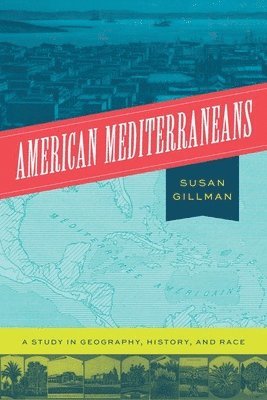
The story of the “American Mediterranean,” both an idea and a shorthand popularized by geographers, historians, novelists, and travel writers from the early nineteenth century to the 1970s. The naturalist Alexander von Humboldt, visiting the Gulf-Caribbean in the early nineteenth century, called it America’s Mediterranean. Almost a century later, Southern California was hailed as “Our Mediterranean, Our Italy!” Although “American Mediterranean” is not a household phrase in the United States today, it once circulated widely in French, Spanish, and English as a term of art and folk idiom. In this book, Susan Gillman asks what cultural work is done by this kind of unsystematic, open-ended comparative thinking.American Mediterraneans tracks two centuries of this geohistorical concept, from Humboldt in the early 1800s, to writers of the 1890s reflecting on the Pacific world of the California coast, to writers of the 1930s and 40s speculating on the political past and future of the Caribbean. Following the term through its travels across disciplines and borders, American Mediterraneans reveals a little-known racialized history, one that paradoxically appealed to a range of race-neutral ideas and ideals.
193 kr
Skickas
The story of the “American Mediterranean,” both an idea and a shorthand popularized by geographers, historians, novelists, and travel writers from the early nineteenth century to the 1970s. The naturalist Alexander von Humboldt, visiting the Gulf-Caribbean in the early nineteenth century, called it America’s Mediterranean. Almost a century later, Southern California was hailed as “Our Mediterranean, Our Italy!” Although “American Mediterranean” is not a household phrase in the United States today, it once circulated widely in French, Spanish, and English as a term of art and folk idiom. In this book, Susan Gillman asks what cultural work is done by this kind of unsystematic, open-ended comparative thinking.American Mediterraneans tracks two centuries of this geohistorical concept, from Humboldt in the early 1800s, to writers of the 1890s reflecting on the Pacific world of the California coast, to writers of the 1930s and 40s speculating on the political past and future of the Caribbean. Following the term through its travels across disciplines and borders, American Mediterraneans reveals a little-known racialized history, one that paradoxically appealed to a range of race-neutral ideas and ideals.
362 kr
Skickas inom 10-15 vardagar
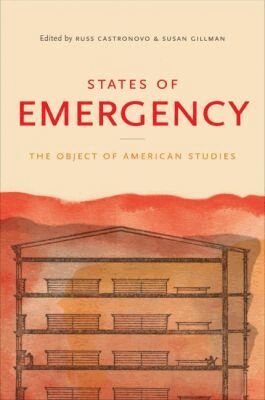
This book explores the purpose and politics of the field. The contributors to this volume argue that for too long, inclusiveness has substituted for methodology in American studies scholarship. The ten original essays collected here call for a robust comparativism that is attuned theoretically to questions of both space and time. ""States of Emergency"" asks readers to engage in a thought experiment: imagine that you have an object you want to study - Which methodologies will contextualize and explain your selection? What political goals are embedded in your inquiry? This thought experiment is taken up by contributors who consider an array of objects - the weather, cigarettes, archival material, AIDS, the enemy, extinct species, and torture. The essayists recalibrate the metrics of time and space usually used to measure these questions. In the process, each contributes to a project that redefines the object of American studies, reading its history as well as its future across, against, even outside the established grain of interdisciplinary practice.
477 kr
Skickas inom 7-10 vardagar
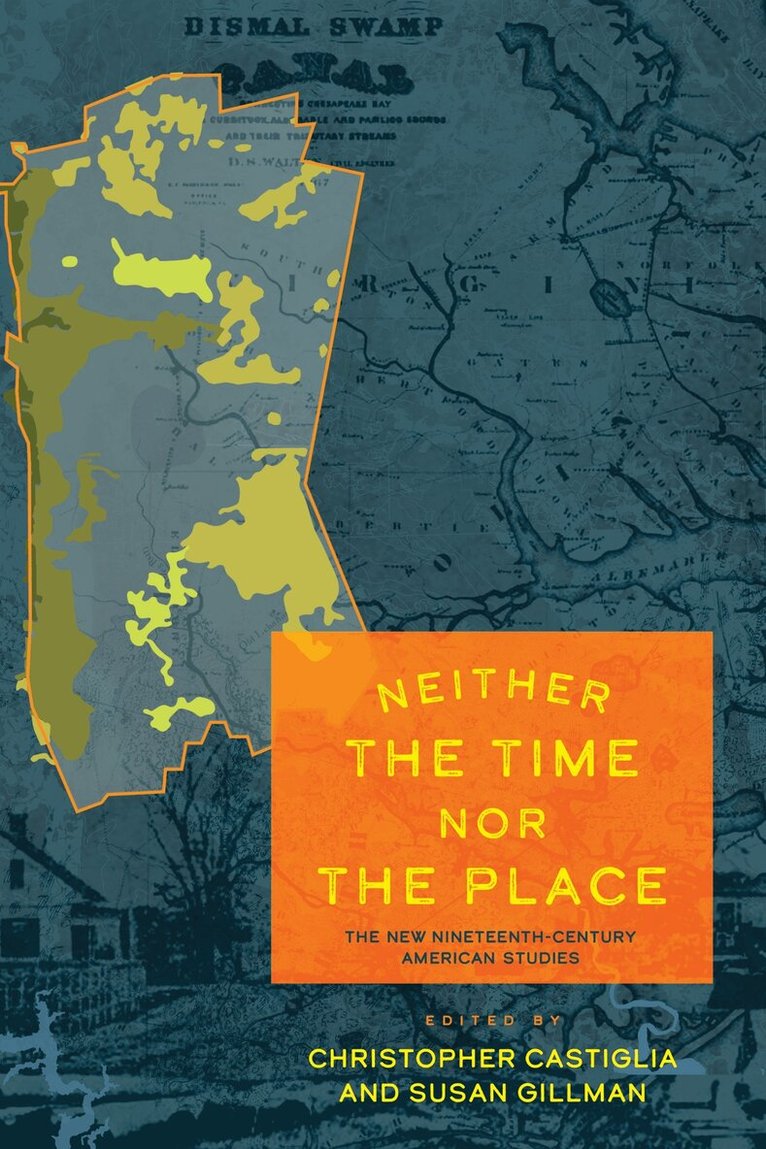
The usefulness of time and place as defining categories would seem to be baked into the very notion of nineteenth-century American literary studies, yet they have challenged scholars practically since the field's inception. In Neither the Time nor the Place seventeen critics consider how the space-time dyad has both troubled and invigorated Americanist scholarship in recent decades and make explicit how time and place are best considered in tandem, interrogating each other.Taken together, the essays challenge depictions of place and time as bounded and linear, fixed and teleological, or mere ideological constructions. They address both familiar and unexpected objects, practices, and texts, including a born-digital Melville, documents from the construction of the Panama Canal, the hollow earth, the desiring body, textual editing, marble statuary, the sound of frogs, spirit photography, and twentieth-century Civil War fiction. The essays draw on an equally wide variety of critical methodologies, integrating affect studies, queer theory, book history, information studies, sound studies, environmental humanities, new media studies, and genre theory to explore the unexpected dimensions that emerge when time and place are taken as a unit. The pieces are organized around considerations of citizenship, environment, historiography, media, and bodies-five political, cultural, and/or methodological foci for some of the most provocative new work being done in American literary studies.Neither the Time nor the Place is a book not only for scholars and students already well grounded in the study of nineteenth-century American literature and culture, but for anyone, scholar or student, looking for a roadmap to some of the most vibrant work in the field.Contributors: Wai Chee Dimock, Stephanie Foote, Matthew Pratt Guterl, Coleman Hutchison, Rodrigo Lazo, Caroline Levander, Robert S. Levine, Christopher Looby, Dana Luciano, Timothy Marr, Dana D. Nelson, Ifeoma C. Kiddoe Nwankwo, Mark Storey, Matthew E. Suazo, and Edward Sugden.
928 kr
Skickas inom 10-15 vardagar
The usefulness of time and place as defining categories would seem to be baked into the very notion of nineteenth-century American literary studies, yet they have challenged scholars practically since the field's inception. In Neither the Time nor the Place seventeen critics consider how the space-time dyad has both troubled and invigorated Americanist scholarship in recent decades and make explicit how time and place are best considered in tandem, interrogating each other.Taken together, the essays challenge depictions of place and time as bounded and linear, fixed and teleological, or mere ideological constructions. They address both familiar and unexpected objects, practices, and texts, including a born-digital Melville, documents from the construction of the Panama Canal, the hollow earth, the desiring body, textual editing, marble statuary, the sound of frogs, spirit photography, and twentieth-century Civil War fiction. The essays draw on an equally wide variety of critical methodologies, integrating affect studies, queer theory, book history, information studies, sound studies, environmental humanities, new media studies, and genre theory to explore the unexpected dimensions that emerge when time and place are taken as a unit. The pieces are organized around considerations of citizenship, environment, historiography, media, and bodies-five political, cultural, and/or methodological foci for some of the most provocative new work being done in American literary studies.Neither the Time nor the Place is a book not only for scholars and students already well grounded in the study of nineteenth-century American literature and culture, but for anyone, scholar or student, looking for a roadmap to some of the most vibrant work in the field.Contributors: Wai Chee Dimock, Stephanie Foote, Matthew Pratt Guterl, Coleman Hutchison, Rodrigo Lazo, Caroline Levander, Robert S. Levine, Christopher Looby, Dana Luciano, Timothy Marr, Dana D. Nelson, Ifeoma C. Kiddoe Nwankwo, Mark Storey, Matthew E. Suazo, and Edward Sugden.
274 kr
Skickas inom 10-15 vardagar
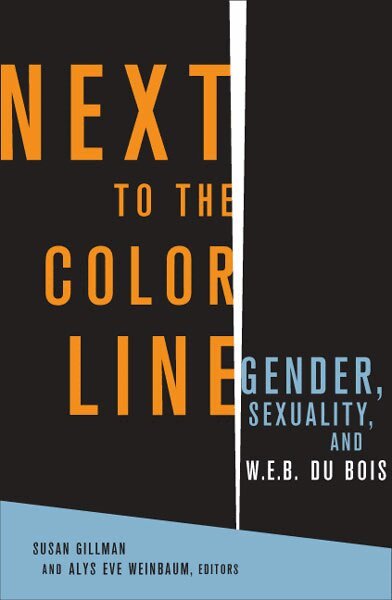
Although W. E. B. Du Bois did not often pursue the connections between the "Negro question" that defined so much of his intellectual life and the "woman question" that engaged writers and feminist activists around him, Next to the Color Line argues that within Du Bois's work is a politics of juxtaposition that connects race, gender, sexuality, and justice.This provocative collection investigates a set of political formulations and rhetorical strategies by which Du Bois approached, used, and repressed issues of gender and sexuality. The essays in Next to the Color Line propose a return to Du Bois, not only to reassess his politics but also to demonstrate his relevance for today's scholarly and political concerns.Contributors: Hazel V. Carby, Yale U; Vilashini Cooppan, U of California, Santa Cruz; Brent Hayes Edwards, Rutgers U; Michele Elam, Stanford U; Roderick A. Ferguson, U of Minnesota; Joy James, Williams College; Fred Moten, U of Southern California; Shawn Michelle Smith, St. Louis U; Mason Stokes, Skidmore College; Claudia Tate, Princeton U; Paul C. Taylor, Temple U.Susan Gillman is professor of literature at the University of California, Santa Cruz. Alys Eve Weinbaum is associate professor of English at the University of Washington, Seattle.
416 kr
Skickas inom 7-10 vardagar
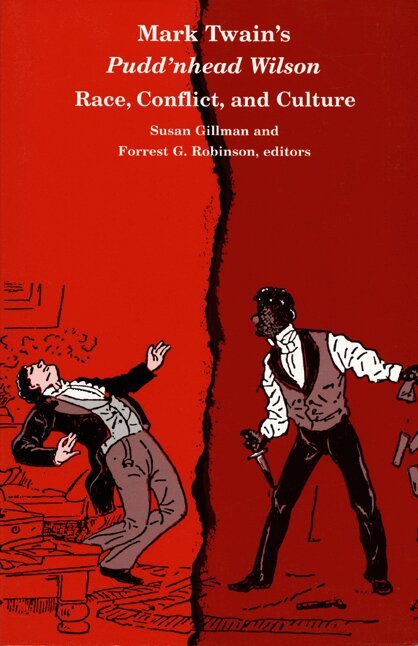
This collection seeks to place Pudd’nhead Wilson-a neglected, textually fragmented work of Mark Twain’s-in the context of contemporary critical approaches to literary studies. The editors’ introduction argues the virtues of using Pudd’nhead Wilson as a teaching text, a case study in many of the issues presently occupying literary criticism: issues of history and the uses of history, of canon formation, of textual problematics, and finally of race, class, and gender.In a variety of ways the essays build arguments out of, not in spite of, the anomalies, inconsistencies, and dead ends in the text itself. Such wrinkles and gaps, the authors find, are the symptoms of an inconclusive, even evasive, but culturally illuminating struggle to confront and resolve difficult questions bearing on race and sex. Such fresh, intellectually enriching perspectives on the novel arise directly from the broad-based interdisciplinary foundations provided by the participating scholars. Drawing on a wide variety of critical methodologies, the essays place the novel in ways that illuminate the world in which it was produced and that further promise to stimulate further study.Contributors. Michael Cowan, James M. Cox, Susan Gillman, Myra Jehlen, Wilson Carey McWilliams, George E. Marcus, Carolyn Porter, Forrest Robinson, Michael Rogin, John Carlos Rowe, John Schaar, Eric Sundquist
370 kr
Kommande
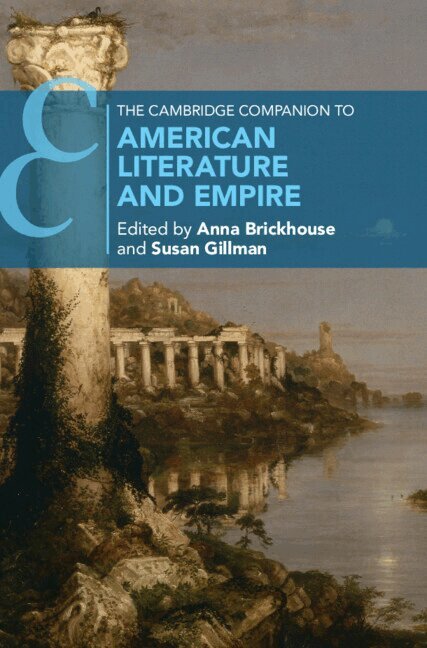
The story of American literature and empire goes beyond the broad historical periodization of empire to reimagine that history. The central terms American and literature have always been tied up in US empire as well as other empires in the Americas. The word 'America,' itself the product of inter-imperial intellectual rivalry, claims the name of an entire hemisphere for one country therein. To understand the full history of American literature and empire is to recognize its deep, strategically obscure, and often disavowed imperial contexts that in turn require differentially transatlantic, hemispheric, and global frameworks of analysis. This collection thus takes a sceptical stance toward its own geographical referent. Literature has a long and continuing imperial history as empire's proxy. These essays cover canonical authors such as Cooper, Melville, Whitman, and Baldwin as well as lesser-known writers, including emergent artists focused on world-making with a reparative, speculative attention to the future.
1 261 kr
Kommande
The story of American literature and empire goes beyond the broad historical periodization of empire to reimagine that history. The central terms American and literature have always been tied up in US empire as well as other empires in the Americas. The word 'America,' itself the product of inter-imperial intellectual rivalry, claims the name of an entire hemisphere for one country therein. To understand the full history of American literature and empire is to recognize its deep, strategically obscure, and often disavowed imperial contexts that in turn require differentially transatlantic, hemispheric, and global frameworks of analysis. This collection thus takes a sceptical stance toward its own geographical referent. Literature has a long and continuing imperial history as empire's proxy. These essays cover canonical authors such as Cooper, Melville, Whitman, and Baldwin as well as lesser-known writers, including emergent artists focused on world-making with a reparative, speculative attention to the future.