Russ Castronovo - Böcker
Visar alla böcker från författaren Russ Castronovo. Handla med fri frakt och snabb leverans.
14 produkter
14 produkter
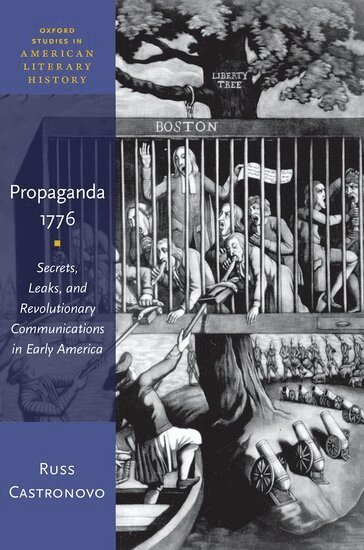
Propaganda 1776
Secrets, Leaks, and Revolutionary Communications in Early America
Häftad, Engelska, 2019
398 kr
Skickas inom 5-8 vardagar
1776 symbolizes a moment, both historical and mythic, of democracy in action. That year witnessed the release of a document, which Edward Bernays, the so-called father of public relations and spin, would later label as a masterstroke of propaganda. Although the Declaration of Independence relies heavily on the empiricism of self-evident truths, Bernays, who had authored the influential manifesto Propaganda in 1928, suggested that what made this iconic document so effective was not its sober rationalism but its inspiring message that ensured its dissemination throughout the American colonies. Propaganda 1776 reframes the culture of the U.S. Revolution and early Republic, revealing it to be rooted in a vast network of propaganda. Drawing on a wide-range of resources, Russ Castronovo considers how the dispersal and circulation--indeed, the propagation--of information and opinion across the various media of the eighteenth century helped speed the flow of revolution. This book challenges conventional wisdom about propaganda as manipulation or lies by examining how popular consent and public opinion in early America relied on the spirited dissemination of rumor, forgery, and invective. While declarations about self-evident truths were important to liberty, the path toward American independence required above all else the spread of unreliable intelligence that travelled at such a pace that it could be neither confirmed nor refuted. By tracking the movements of stolen documents and leaked confidential letters, this book argues that media dissemination created a vital but seldom acknowledged connection between propaganda and democracy. The spread of revolutionary material in the form of newspapers, pamphlets, broadsides, letters, songs, and poems across British North America created multiple networks that spawned new and often radical ideas about political communication. Communication itself became revolutionary in ways that revealed circulation to be propaganda's most vital content. By examining the kinetic aspects of print culture, Propaganda 1776 shows how the mobility of letters, pamphlets, and other texts amounts to political activity par excellence. With original examinations of Ben Franklin, Mercy Otis Warren, Tom Paine, and Philip Freneau, among a crowd of other notorious propagandists, this book examines how colonial men and women popularized and spread the patriot cause across America.
2 635 kr
Skickas inom 7-10 vardagar
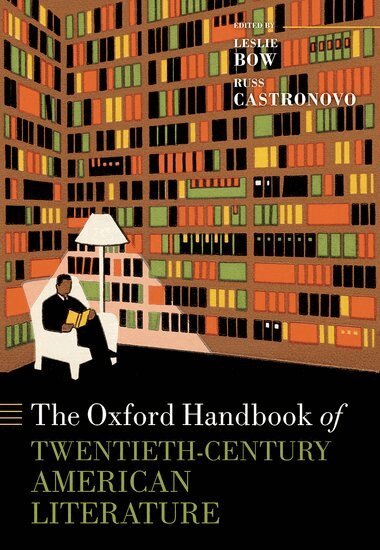
An essential and field-defining resource, this volume brings fresh approaches to major US novels, poetry, and performance literature of the twentieth century. With sections on 'structures', 'movements', 'attachments', and 'imaginaries', this handbook brings a new set of tools and perspectives to the rich and diverse traditions of American literary production. The editors have turned to leading as well as up-and-coming scholars in the field to foreground methodological concerns that assess the challenges of transnational perspectives, critical race and indigenous studies, disability and care studies, environmental criticism, affect studies, gender analysis, media and sound studies, and other cutting-edge approaches. The 20 original chapters include the discussion of working-class literature, border narratives, children's literature, novels of late-capitalism, nuclear poetry, fantasies of whiteness, and Native American, African American, Asian American, and Latinx creative texts.
Propaganda 1776
Secrets, Leaks, and Revolutionary Communications in Early America
Inbunden, Engelska, 2014
648 kr
Skickas inom 5-8 vardagar
Propaganda 1776 reframes the culture of the U.S. Revolution and early Republic, revealing it to be rooted in a vast network of propaganda. Truth, clarity, and honesty were declared virtues of the period-but rumors, falsehoods, forgeries, and unauthorized publication were no less the life's blood of liberty. Looking at famous patriots like George Washington, Benjamin Franklin, Thomas Paine; the playwright Mary Otis Warren; and the poet Philip Freneau, Castronovo provides various anecdotes that demonstrate the ways propaganda was - contrary to our instinctual understanding - fundamental to democracy rather than antithetical to it. By focusing on the persons and methods involved in Revolutionary communications, Propaganda 1776 both reconsiders the role that print culture plays in historical transformation and reexamines the widely relevant issue of how information circulates in a democracy.
778 kr
Skickas inom 5-8 vardagar
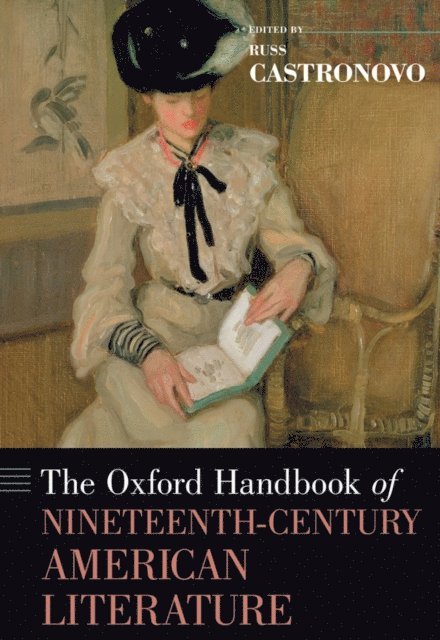
How do we approach the rich field of nineteenth-century American literature? How might we recalibrate the coordinates of critical vision and open up new areas of investigation? To answer such questions, this volume brings together 23 original essays written by leading scholars in American literary studies. By examining specific novels, poems, essays, diaries and other literary examples, the authors confront head-on the implications, scope, and scale of their analysis. The chapters foreground methodological concerns to assess the challenges of transnational perspectives, disability studies, environmental criticism, affect studies, gender analysis, and other cutting-edge approaches. The Oxford Handbook of Nineteenth-Century American Literature is thus both critically incisive and sharply practical, inviting attention to how readers read, how critics critique, and how interpreters interpret. It offers forceful strategies for rethinking protest novels, women's writing, urban literature, slave narratives, and popular fiction, just to name a few of the wide array of topics and genres covered. This volume, rather than surveying established ideas in studies of nineteenth-century American literature, registers what is happening now and anticipates what will shape the field's future.
2 923 kr
Skickas inom 5-8 vardagar
The Oxford Handbook of Nineteenth Century American Literature offers a cutting-edge assessment of the period's literature, providing readers with practical insights and proactive strategies for exploring novels, poems, and other literary creations.
2 522 kr
Skickas inom 5-8 vardagar
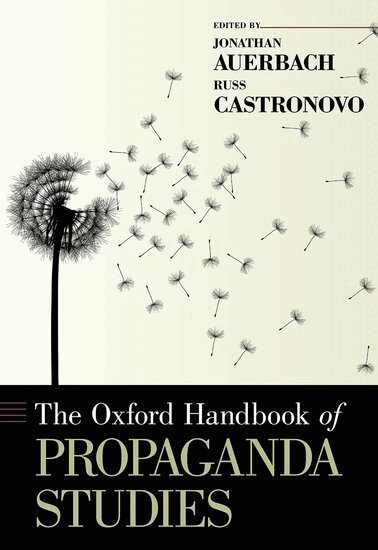
Derived from the word "to propagate," the idea and practice of propaganda concerns nothing less than the ways in which human beings communicate, particularly with respect to the creation and widespread dissemination of attitudes, images, and beliefs. Much larger than its pejorative connotations suggest, propaganda can more neutrally be understood as a central means of organizing and shaping thought and perception, a practice that has been a pervasive feature of the twentieth century and that touches on many fields. It has been seen as both a positive and negative force, although abuses under the Third Reich and during the Cold War have caused the term to stand in, most recently, as a synonym for untruth and brazen manipulation. Propaganda analysis of the 1950s to 1989 too often took the form of empirical studies about the efficacy of specific methods, with larger questions about the purposes and patterns of mass persuasion remaining unanswered. In the present moment where globalization and transnationality are arguably as important as older nation forms, when media enjoy near ubiquity throughout the globe, when various fundamentalisms are ascendant, and when debates rage about neoliberalism, it is urgent that we have an up-to-date resource that considers propaganda as a force of culture writ large. The handbook will include twenty-two essays by leading scholars from a variety of disciplines, divided into three sections. In addition to dealing with the thorny question of definition, the handbook will take up an expansive set of assumptions and a full range of approaches that move propaganda beyond political campaigns and warfare to examine a wide array of cultural contexts and practices.
903 kr
Skickas inom 7-10 vardagar
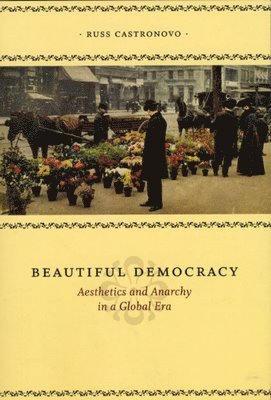
The photographer and reformer Jacob Riis once wrote, "I have seen an armful of daisies keep the peace of a block better than a policeman and his club." Riis was not alone in his belief that beauty could tame urban chaos, but are aesthetic experiences always a social good? Could aesthetics also inspire violent crime, working-class unrest, and racial murder? To answer these questions, Russ Castronovo turns to those who debated claims that art could democratize culture - civic reformers, anarchists, novelists, civil rights activists, and college professors - to reveal that beauty provides unexpected occasions for radical, even revolutionary, political thinking. "Beautiful Democracy" explores the intersection of beauty and violence by examining university lectures and course materials on aesthetics from a century ago along with riots, acts of domestic terrorism, magic lantern exhibitions, and other public spectacles. Philosophical aesthetics, realist novels, urban photography, and black periodicals, Castronovo argues, inspired and instigated all sorts of collective social endeavors, from the progressive nature of tenement reform to the horrors of lynching. Discussing Jane Addams, W. E.B. Du Bois, Charlie Chaplin, William Dean Howells, and Riis as aesthetic theorists in the company of Kant and Schiller, "Beautiful Democracy" ultimately suggests that the distance separating academic thinking and popular wisdom about social transformation is narrower than we generally suppose.
369 kr
Skickas inom 7-10 vardagar
Russ Castronovo underscores the inherent contradictions between America's founding principles of freedom and the reality of slavery in a book that probes mid-nineteenth-century representations of the founding fathers. He finds that rather than being coherent and consensual, narratives of nationhood are inconsistent, ambivalent, and ironic. He examines competing expressions of national memory in a wide range of mid-nineteenth-century artifacts: slave autobiography, classic American fiction, monumental architecture, myths of the Revolution, proslavery writing, and landscape painting. Castronovo theorizes a new American cultural studies which takes into consideration what Toni Morrison calls the "Africanist presence" that permeates American literature. He presents a genealogy that recovers those members of the national family whose status challenges the body politic and its history. The forgotten orphans in Melville's Moby-Dick and Israel Potter, the rebellious slaves in the work of Frederick Douglass and William Wells Brown, the citizens afflicted with amnesia in Lincoln's speeches, and the dispossessed sons in slave narratives all provide dissenting voices that provoke insurrectionary plots and counter-memories. Viewed here as a miscegenation of stories, the narrative of "America" resists being told of an intelligible story of uncontested descent. National identity rests not on rituals of consensus but on repressed legacies of parricide and rebellion. This title is part of UC Press's Voices Revived program, which commemorates University of California Press's mission to seek out and cultivate the brightest minds and give them voice, reach, and impact. Drawing on a backlist dating to 1893, Voices Revived makes high-quality, peer-reviewed scholarship accessible once again using print-on-demand technology. This title was originally published in 1995.
1 690 kr
Skickas inom 3-6 vardagar
Russ Castronovo underscores the inherent contradictions between America's founding principles of freedom and the reality of slavery in a book that probes mid-nineteenth-century representations of the founding fathers. He finds that rather than being coherent and consensual, narratives of nationhood are inconsistent, ambivalent, and ironic. He examines competing expressions of national memory in a wide range of mid-nineteenth-century artifacts: slave autobiography, classic American fiction, monumental architecture, myths of the Revolution, proslavery writing, and landscape painting. Castronovo theorizes a new American cultural studies which takes into consideration what Toni Morrison calls the "Africanist presence" that permeates American literature. He presents a genealogy that recovers those members of the national family whose status challenges the body politic and its history. The forgotten orphans in Melville's Moby-Dick and Israel Potter, the rebellious slaves in the work of Frederick Douglass and William Wells Brown, the citizens afflicted with amnesia in Lincoln's speeches, and the dispossessed sons in slave narratives all provide dissenting voices that provoke insurrectionary plots and counter-memories. Viewed here as a miscegenation of stories, the narrative of "America" resists being told of an intelligible story of uncontested descent. National identity rests not on rituals of consensus but on repressed legacies of parricide and rebellion. This title is part of UC Press's Voices Revived program, which commemorates University of California Press's mission to seek out and cultivate the brightest minds and give them voice, reach, and impact. Drawing on a backlist dating to 1893, Voices Revived makes high-quality, peer-reviewed scholarship accessible once again using print-on-demand technology. This title was originally published in 1995.
866 kr
Skickas inom 7-10 vardagar
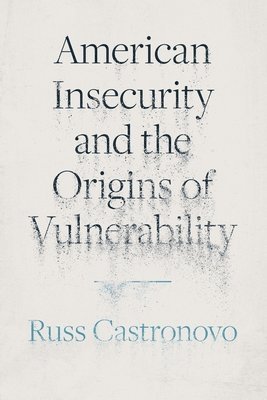
An incisive critique that examines the origins of contemporary American ideas about surveillance, terrorism, and white supremacyFor more than three centuries, Americans have pursued strategies of security that routinely make them feel vulnerable, unsafe, and insecure. American Insecurity and the Origins of Vulnerability probes this paradox by examining American attachments to the terror of the sublime, the fear of uncertainty, and the anxieties produced by unending racial threat.Challenging conventional approaches that leave questions of security to policy experts, Russ Castronovo turns to literature, philosophy, and political theory to show how security provides an organizing principle for collective life in ways that both enhance freedom and limit it. His incisive critique ranges from frontier violence and white racial anxiety to insurgent Black print culture and other forms of early American terror, uncovering the hidden logic of insecurity that structures modern approaches to national defense, counterterrorism, cybersecurity, surveillance, and privacy. Drawing on examples from fiction, journalism, tracts, and pamphlets, Castronovo uncovers the deep affective attachments that Americans have had since the founding to the sources of fear and insecurity that make them feel unsafe.Timely and urgent, American Insecurity and the Origins of Vulnerability sheds critical light on how and why the fundamental political desire for security promotes unease alongside assurance and fixates on risk and danger while clamoring for safety.
324 kr
Skickas inom 7-10 vardagar
An incisive critique that examines the origins of contemporary American ideas about surveillance, terrorism, and white supremacyFor more than three centuries, Americans have pursued strategies of security that routinely make them feel vulnerable, unsafe, and insecure. American Insecurity and the Origins of Vulnerability probes this paradox by examining American attachments to the terror of the sublime, the fear of uncertainty, and the anxieties produced by unending racial threat.Challenging conventional approaches that leave questions of security to policy experts, Russ Castronovo turns to literature, philosophy, and political theory to show how security provides an organizing principle for collective life in ways that both enhance freedom and limit it. His incisive critique ranges from frontier violence and white racial anxiety to insurgent Black print culture and other forms of early American terror, uncovering the hidden logic of insecurity that structures modern approaches to national defense, counterterrorism, cybersecurity, surveillance, and privacy. Drawing on examples from fiction, journalism, tracts, and pamphlets, Castronovo uncovers the deep affective attachments that Americans have had since the founding to the sources of fear and insecurity that make them feel unsafe.Timely and urgent, American Insecurity and the Origins of Vulnerability sheds critical light on how and why the fundamental political desire for security promotes unease alongside assurance and fixates on risk and danger while clamoring for safety.
Necro Citizenship
Death, Eroticism, and the Public Sphere in the Nineteenth-Century United States
Häftad, Engelska, 2001
318 kr
Skickas inom 7-10 vardagar
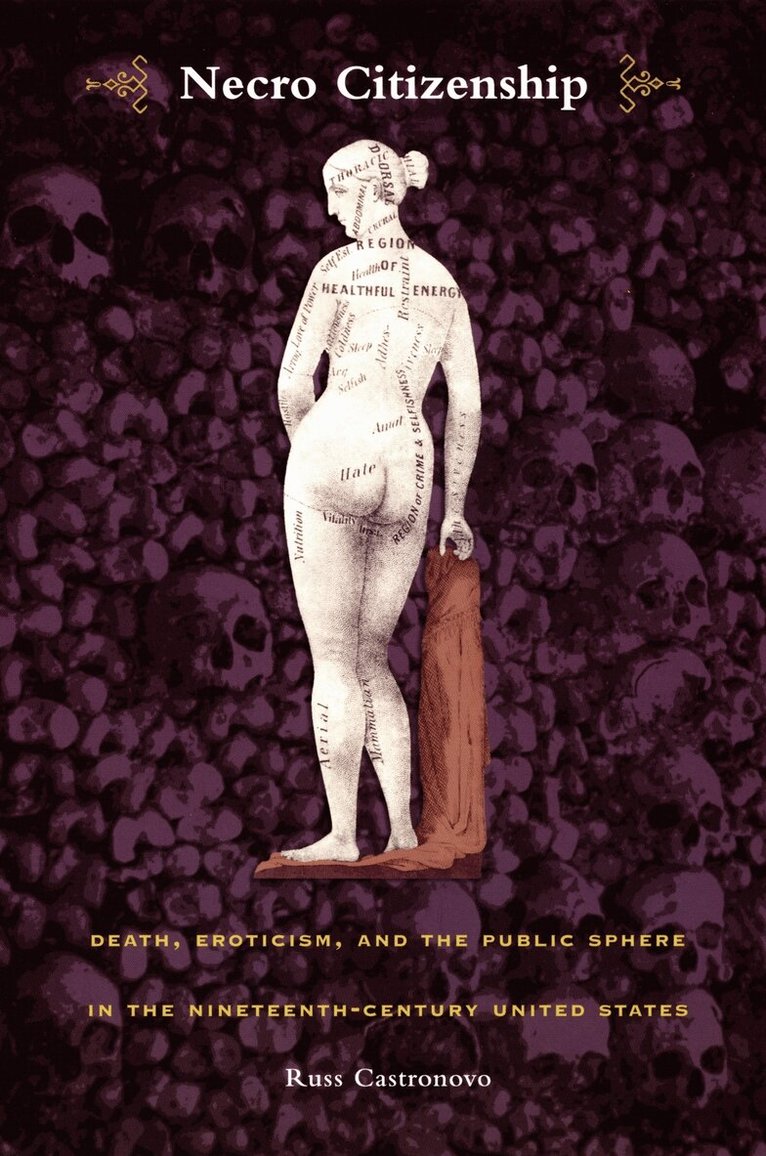
In Necro Citizenship Russ Castronovo argues that the meaning of citizenship in the United States during the nineteenth century was bound to-and even dependent on-death. Deploying an impressive range of literary and cultural texts, Castronovo interrogates an American public sphere that fetishized death as a crucial point of political identification. This morbid politics idealized disembodiment over embodiment, spiritual conditions over material ones, amnesia over history, and passivity over engagement.Moving from medical engravings, sÉances, and clairvoyant communication to Supreme Court decisions, popular literature, and physiological tracts, Necro Citizenship explores how rituals of inclusion and belonging have generated alienation and dispossession. Castronovo contends that citizenship does violence to bodies, especially those of blacks, women, and workers. “Necro ideology,” he argues, supplied citizens with the means to think about slavery, economic powerlessness, or social injustice as eternal questions, beyond the scope of politics or critique. By obsessing on sleepwalkers, drowned women, and other corpses, necro ideology fostered a collective demand for an abstract even antidemocratic sense of freedom. Examining issues involving the occult, white sexuality, ghosts, and suicide in conjunction with readings of Harriet Jacobs, Ralph Waldo Emerson, Frederick Douglass, Nathaniel Hawthorne, and Frances Harper, Necro Citizenship successfully demonstrates why Patrick Henry's “give me liberty or give me death” has resonated so strongly in the American imagination.
414 kr
Skickas inom 7-10 vardagar
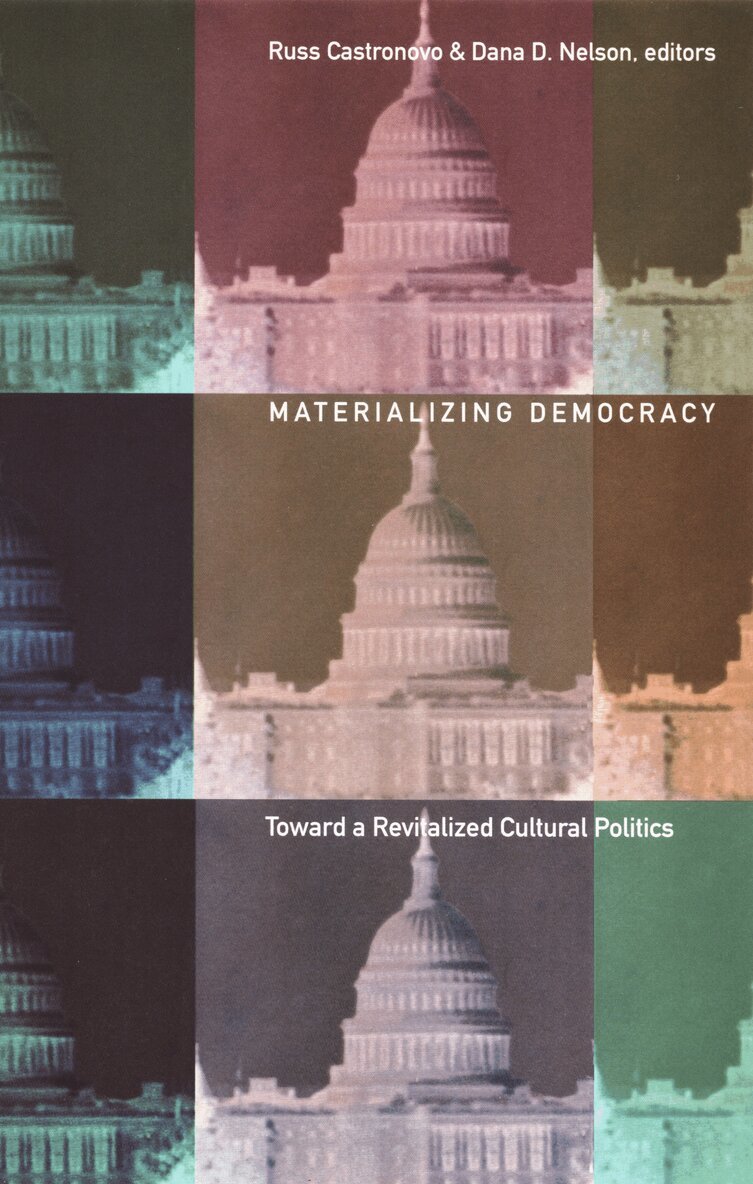
For the most part, democracy is simply presumed to exist in the United States. It is viewed as a completed project rather than as a goal to be achieved. Fifteen leading scholars challenge that stasis in Materializing Democracy. They aim to reinvigorate the idea of democracy by placing it in the midst of a contentious political and cultural fray, which, the volume’s editors argue, is exactly where it belongs. Drawing on literary criticism, cultural studies, history, legal studies, and political theory, the essays collected here highlight competing definitions and practices of democracy-in politics, society, and, indeed, academia.Covering topics ranging from rights discourse to Native American performance, from identity politics to gay marriage, and from rituals of public mourning to the Clinton-Lewinsky affair, the contributors seek to understand the practices, ideas, and material conditions that enable or foreclose democracy’s possibilities. Through readings of subjects as diverse as Will Rogers, Alexis de Tocqueville, slave narratives, interactions along the Texas-Mexico border, and liberal arts education, the contributors also explore ways of making democracy available for analysis. Materializing Democracy suggests that attention to disparate narratives is integral to the development of more complex, vibrant versions of democracy. Contributors. Lauren Berlant, Wendy Brown, Chris Castiglia, Russ Castronovo, Joan Dayan, Wai Chee Dimock, Lisa Duggan, Richard R. Flores, Kevin Gaines, Jeffrey C. Goldfarb, Michael Moon, Dana D. Nelson, Christopher Newfield, Donald E. Pease
1 371 kr
Skickas inom 7-10 vardagar
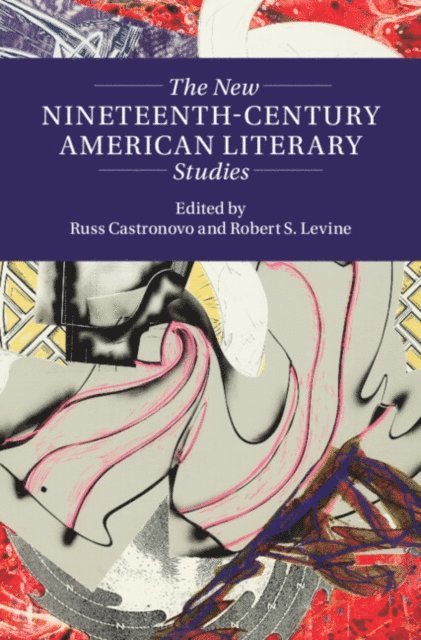
The New Nineteenth-Century American Literary Studies takes stock of critical developments over the past twenty years, offering a fresh examination of key interpretative issues in this field. In eclectic fashion, it presents a wide range of new approaches in such areas as print and material culture, Black studies, Latinx studies, disability studies, gender and sexuality studies, postsecular studies, and Indigenous studies. This volume also maps out new directions for the future of the field. The evidence and examples discussed by the contributors are compelling, grounded in case studies of key literary texts, both familiar and understudied, that help to bring critical debate into focus and model fresh interpretive perspectives. Essays provide new readings and framings of such figures as Herman Melville, Harriet Wilson, Charles Chesnutt, Edgar Allan Poe, Washington Irving, and Zitkála-Šá.