Frances Moran - Böcker
Visar alla böcker från författaren Frances Moran. Handla med fri frakt och snabb leverans.
4 produkter
4 produkter
1 899 kr
Skickas inom 10-15 vardagar
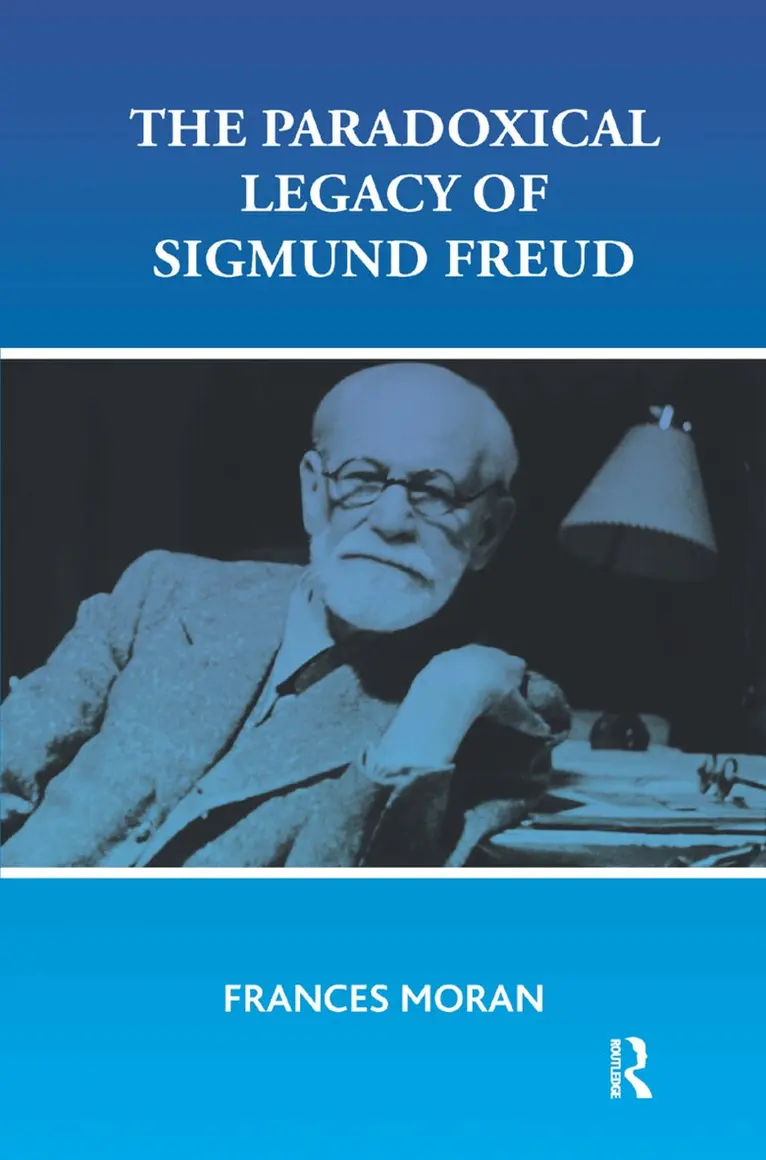
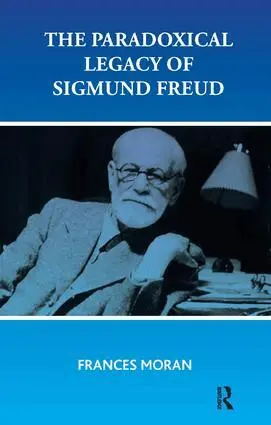
By way of a new reading of The Complete Works of Sigmund Freud, this book introduces the notion of a theory of practice to the psychoanalytic endeavour. Spelled out in terms of interdependent components, namely; aim, technique and theoretical premises, the author takes the reader through Freud's oeuvre so that he emerges as a relentless, theoret
1 189 kr
Skickas inom 10-15 vardagar
Psychoanalysis works with words, words spoken by a subject who asks that the analyst listen. This is the belief that underlies Francis Moran's rewarding exploration of a central problem in psychoanalytic theorynamely, the separation of the concepts of subject and agency. Subject and Agency in Psychoanalysis contends that Freud simultaneously employs two frameworks for explaining agency-- one clinical and one theoretical. As a result, Freud's exploration of agency proceeds from two logically incompatible assumptions. The division between these assumptions is a part of Freud's psychoanalytic legacy.Moran reads the Freudian inheritance in light of this division, showing how Klein and Hartmann's theoretical concepts of subject are adrift from the subject who speaks in analysis. Moran also shows that while Lacan's subject provides more focus on this issue, Lacan reverts to the Freudian division in his use of logically contradictory assumptions concerning the location of agency.Drawing on contemporary theory development, from Lacanian innovations to the social theories of Anthony Giddens, Moran proposes a new and fertile approach to a fundamental problem, significantly narrowing the gap between psychoanalytic theory and practice.
941 kr
Skickas inom 10-15 vardagar
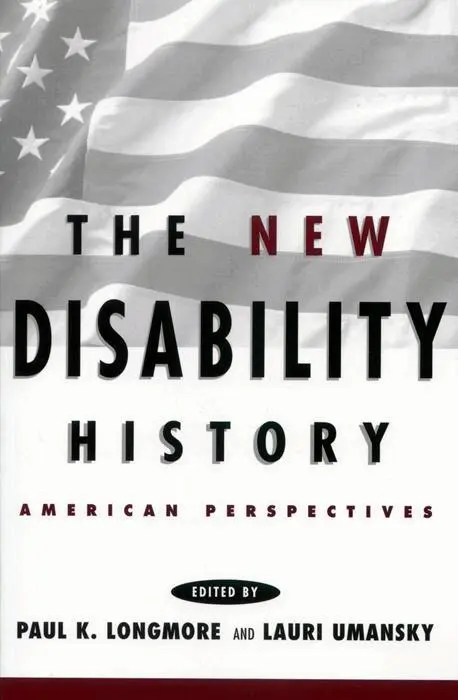
A collected volume highlighting disability's hidden history in American societyDisability has always been a preoccupation of American society and culture. From antebellum debates about qualification for citizenship to current controversies over access and reasonable accommodations, disability has been present, in penumbra if not in print, on virtually every page of American history. Yet historians have only recently begun the deep excavation necessary to retrieve lives shrouded in religious, then medical, and always deep-seated cultural, misunderstanding.This volume opens up disability's hidden history. In these pages, a North Carolina Youth finds his identity as a deaf Southerner challenged in Civil War-era New York. Deaf community leaders ardently defend sign language in early 20th century America. The mythic Helen Keller and the long-forgotten American Blind People's higher Education and General Improvement Association each struggle to shape public and private roles for blind Americans. White and black disabled World War I and II veterans contest public policies and cultural values to claim their citizenship rights.Neurasthenic Alice James and injured turn-of-the-century railroadmen grapple with the interplay of disability and gender. Progressive-era rehabilitationists fashion programs to make crippled children economically productive and socially valid, and two Depression-era fathers murder their sons as public opinion blames the boys' mothers for having cherished the lads' lives. These and many other figures lead readers through hospital-schools, courtrooms, advocacy journals, and beyond to discover disability's past.Coupling empirical evidence with the interdisciplinary tools and insights of disability studies, the book explores the complex meanings of disability as identity and cultural signifier in American history.
507 kr
Skickas inom 10-15 vardagar
By way of a new reading of The Complete Works of Sigmund Freud, this book introduces the notion of a theory of practice to the psychoanalytic endeavour. Spelled out in terms of interdependent components, namely; aim, technique and theoretical premises, the author takes the reader through Freud's oeuvre so that he emerges as a relentless, theoretically grounded, practitioner.Frances Moran argues that the nub of the Freudian inheritance is the concept of human subjectivity. In the light of this finding and her reading of Freud, she presents the work of Paul Verhaeghe (On Being Normal and Other Disorders), anew and calls on Marie Cardinal, (The Words to Say It), to provide telling evidence of what it means to be a freudian subject. Given the objectifying processes at work in the contemporary culture, the relevance of Freud for our times becomes compelling.Here practitioners will find a clearly presented framework within which to operate and a way of organizing the material that informs their clinical pursuits. The exploration of an underpinning structure to the Complete Works will be of the utmost assistance to those who wish to embark upon a search for knowledge of the human condition through the highways and byways of the legacy of Sigmund Freud.