Francesca Bray - Böcker
Visar alla böcker från författaren Francesca Bray. Handla med fri frakt och snabb leverans.
9 produkter
9 produkter
531 kr
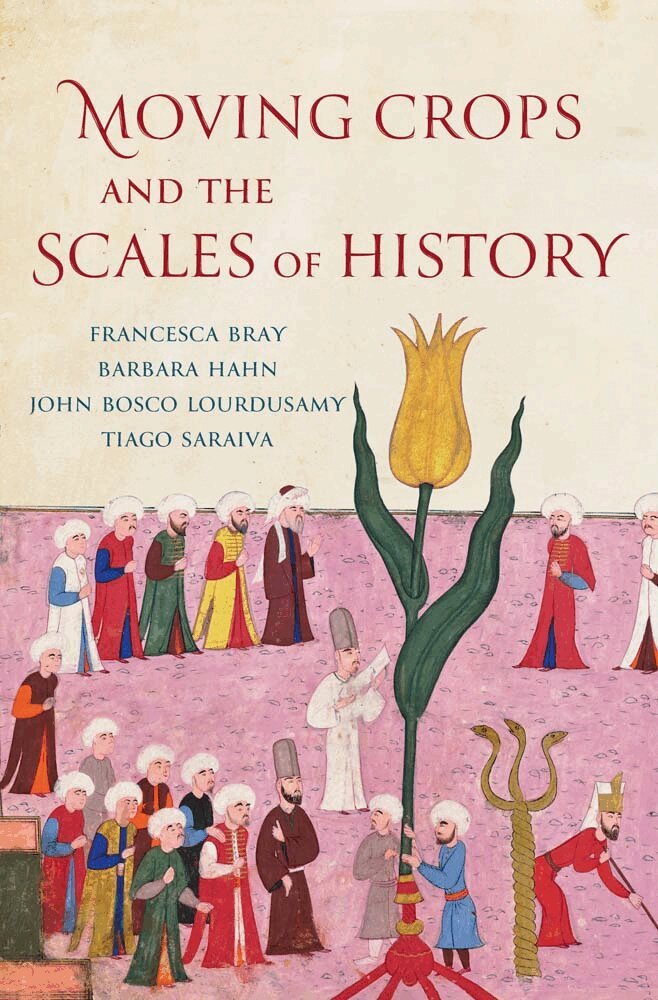
A bold redefinition of historical inquiry based on the “cropscape”—the people, creatures, technologies, ideas, and places that surround a crop“Refreshingly perceptive. . . . A pathbreaking book that I can’t recommend enough.”—Harro Maat, Technology and CultureHuman efforts to move crops from one place to another have been a key driving force in history. Crops have been on the move for millennia, from wildlands into fields, from wetlands to dry zones, from one imperial colony to another. This book is a bold but approachable attempt to redefine historical inquiry based on the “cropscape”: the assemblage of people, places, creatures, technologies, and other elements that form around a crop.The cropscape is a method of reconnecting the global with the local, the longue durée with microhistory, and people, plants, and places with abstract concepts such as tastes, ideas, skills, politics, and economic forces. Through investigating a range of contrasting cropscapes spanning millennia and the globe, the authors break open traditional historical structures of period, geography, and direction to glean insight into previously invisible actors and forces.
Technology, Gender and History in Imperial China
Great Transformations Reconsidered
Inbunden, Engelska, 2013
2 166 kr
Skickas inom 10-15 vardagar
What can the history of technology contribute to our understanding of late imperial China? Most stories about technology in pre-modern China follow a well-worn plot: in about 1400 after an early ferment of creativity that made it the most technologically sophisticated civilisation in the world, China entered an era of technical lethargy and decline. But how are we to reconcile this tale, which portrays China in the Ming and Qing dynasties as a dying giant that had outgrown its own strength, with the wealth of counterevidence affirming that the country remained rich, vigorous and powerful at least until the end of the eighteenth century? Does this seeming contradiction mean that the stagnation story is simply wrong, or perhaps that technology was irrelevant to how imperial society worked? Or does it imply that historians of technology should ask better questions about what technology was, what it did and what it meant in pre-modern societies like late imperial China?In this book, Francesca Bray explores subjects such as technology and ethics, technology and gendered subjectivities (both female and male), and technology and statecraft to illuminate how material settings and practices shaped topographies of everyday experience and ideologies of government, techniques of the self and technologies of the subject. Examining technologies ranging from ploughing and weaving to drawing pictures, building a house, prescribing medicine or composing a text, this book offers a rich insight into the interplay between the micro- and macro-politics of everyday life and the workings of governmentality in late imperial China, showing that gender principles were woven into the very fabric of empire, from cosmology and ideologies of rule to the material foundations of the state and the everyday practices of the domestic sphere.This authoritative text will be welcomed by students and scholars of Chinese history, as well as those working on global history and the histories of gender, technology and agriculture. Furthermore, it will be of great use to those interested in social and cultural anthropology and material culture.
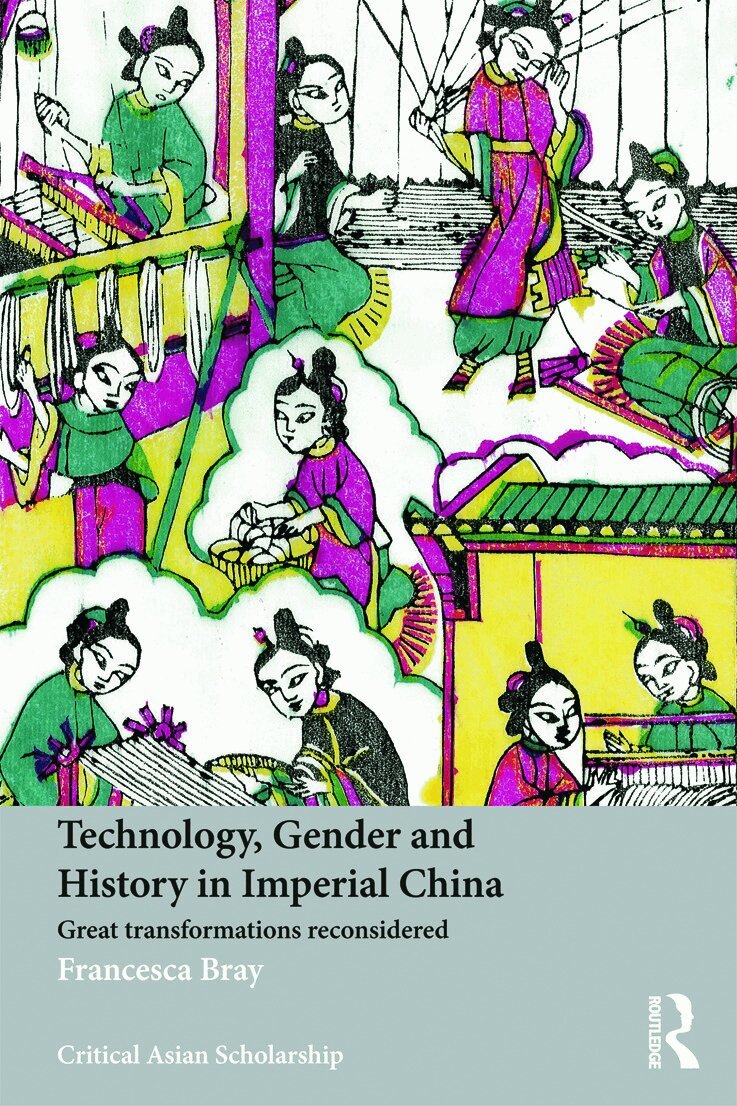
Technology, Gender and History in Imperial China
Great Transformations Reconsidered
Häftad, Engelska, 2013
752 kr
Skickas inom 10-15 vardagar
What can the history of technology contribute to our understanding of late imperial China? Most stories about technology in pre-modern China follow a well-worn plot: in about 1400 after an early ferment of creativity that made it the most technologically sophisticated civilisation in the world, China entered an era of technical lethargy and decline. But how are we to reconcile this tale, which portrays China in the Ming and Qing dynasties as a dying giant that had outgrown its own strength, with the wealth of counterevidence affirming that the country remained rich, vigorous and powerful at least until the end of the eighteenth century? Does this seeming contradiction mean that the stagnation story is simply wrong, or perhaps that technology was irrelevant to how imperial society worked? Or does it imply that historians of technology should ask better questions about what technology was, what it did and what it meant in pre-modern societies like late imperial China?In this book, Francesca Bray explores subjects such as technology and ethics, technology and gendered subjectivities (both female and male), and technology and statecraft to illuminate how material settings and practices shaped topographies of everyday experience and ideologies of government, techniques of the self and technologies of the subject. Examining technologies ranging from ploughing and weaving to drawing pictures, building a house, prescribing medicine or composing a text, this book offers a rich insight into the interplay between the micro- and macro-politics of everyday life and the workings of governmentality in late imperial China, showing that gender principles were woven into the very fabric of empire, from cosmology and ideologies of rule to the material foundations of the state and the everyday practices of the domestic sphere.This authoritative text will be welcomed by students and scholars of Chinese history, as well as those working on global history and the histories of gender, technology and agriculture. Furthermore, it will be of great use to those interested in social and cultural anthropology and material culture.
549 kr
Skickas inom 3-6 vardagar
The contrast in the rate of growth between Western and Eastern societies since 1800 has caused Asian societies to be characterized as backward and resistant to change, though until 1600 or so certain Asian states were technologically far in advance of Europe. The Rice Economies, drawing on original source materials, examines patterns of technological and social evolution specific to East-Asian wet-rice economies in order to clarfiy some general historical trends in economic development.
639 kr
Skickas inom 3-6 vardagar
In this feminist history of eight centuries of private life in China, Francesca Bray inserts women into the history of technology and adds technology to the history of women. Bray takes issue with the Orientalist image that traditional Chinese women were imprisoned in the inner quarters, deprived of freedom and dignity, and so physically and morally deformed by footbinding and the tyrannies of patriarchy that they were incapable of productive work. She proposes a concept of gynotechnics, a set of everyday technologies that define women's roles, as a creative new way to explore how societies translate moral and social principles into a web of material forms and bodily practices. Bray examines three different aspects of domestic life in China, tracing their developments from 1000 to 1800 A.D. She begins with the shell of domesticity, the house, focusing on how domestic space embodied hierarchies of gender. She follows the shift in the textile industry from domestic production to commercial production. Despite increasing emphasis on women's reproductive roles, she argues, this cannot be reduced to childbearing.Female hierarchies within the family reinforced the power of wives, whose responsibilities included ritual activities and financial management as well as the education of children.
3 856 kr
Skickas inom 7-10 vardagar
This second part of the sixth volume of Joseph Needham's great enterprise is the first to be written by a collaborator. Francesca Bray, working closely with Dr Needham, has produced the most comprehensive study of Chinese agriculture to be published in the West. From a huge mass of source material, often confusing and obscure, and from first-hand study in China, she brings order and illumination to a crucial area of Chinese technological development. The main body of the book is an account of the technological history of agriculture, with major sections devoted to field systems, implements and techniques (sowing, harvesting, storing) and crop systems (what has grown and where and how crops rotated). The concluding section contrasts Europe's Agricultural Revolution with agrarian change in North China in the Han and with the 'Green Revolution' in South China in the Sung. In the theoretical analysis which concludes this section we find a vital contribution to the elucidation of the main question posed by Dr Needham's work: why did the Scientific Revolution which transformed the world take place in Europe and not in China?
1 485 kr
Skickas inom 7-10 vardagar
Rice today is food to half the world's population. Its history is inextricably entangled with the emergence of colonialism, the global networks of industrial capitalism, and the modern world economy. The history of rice is currently a vital and innovative field of research attracting serious attention, but no attempt has yet been made to write a history of rice and its place in the rise of capitalism from a global and comparative perspective. Rice is a first step toward such a history. The fifteen chapters, written by specialists on Africa, the Americas, and Asia, are premised on the utility of a truly international approach to history. Each brings a new approach that unsettles prevailing narratives and suggests new connections. Together they cast new light on the significant roles of rice as crop, food, and commodity, and shape historical trajectories and interregional linkages in Africa, the Americas, Europe, and Asia.
523 kr
Skickas inom 7-10 vardagar
Rice today is food to half the world's population. Its history is inextricably entangled with the emergence of colonialism, the global networks of industrial capitalism, and the modern world economy. The history of rice is currently a vital and innovative field of research attracting serious attention, but no attempt has yet been made to write a history of rice and its place in the rise of capitalism from a global and comparative perspective. Rice is a first step toward such a history. The fifteen chapters, written by specialists on Africa, the Americas, and Asia, are premised on the utility of a truly international approach to history. Each brings a new approach that unsettles prevailing narratives and suggests new connections. Together they cast new light on the significant roles of rice as crop, food, and commodity, and shape historical trajectories and interregional linkages in Africa, the Americas, Europe, and Asia.
Del 79 - Sinica Leidensia
Graphics and Text in the Production of Technical Knowledge in China
The Warp and the Weft
Inbunden, Engelska, 2007
3 767 kr
Skickas inom 5-8 vardagar
This collection offers a challenging new interpretation of technical knowledge in Chinese thought and practice. Conveying technical knowledge in China through charts, plans or drawings (tu) dates back to antiquity. Earlier studies focused on specialised forms of tu like maps or drawings of machines. Here, however, tu is identified in Chinese terms, viz. as a philosophical category of knowledge production: visual templates for action, spanning a range from mandala to modernist mapping projects, inseparable from writing but with distinctive powers of communication. A distinction is made between two principal types of tu: ritual/symbolic and representational, highlighting essential issues such as historical shifts in their significance, the relations between tu and political power, media for inscribing tu and the impact of printing, and encounters with the West.