• Fri frakt över 249 kr
  • •
  • Snabba leveranser
  • •
  • Billiga böcker
Kundservice

Du är på sajten för privatpersoner.

Företag, bibliotek eller offentlig verksamhet?

Du handlar på classic.bokus.com, där alla dina funktioner finns intakta.
Till classic.bokus.com
Bokus logotyp. Gå till startsidan.
  • Erbjudanden
  • Nyheter
  • Student
  • Topplistor
  • Barn & ungdom
  • Bokus Play
  • E-böcker
  • Pocketböcker
  • Spel & pussel

10% rabatt på allt med kod NYSTART10 →

Sidfot

Mina sidor

    Hjälp

    • Kundservice
    • Vanliga frågor och svar
    • Frakt och leverans
    • Retur vid ångerrätt
    • Reklamera vara
    • Betalning
    • Köpvillkor
    • Allmänna villkor
    • Information om webbplatsens tillgänglighet

    Om Bokus

    • Om oss
    • Pressrum
    • För studenter
    • För företag
    • För bibliotek och offentlig verksamhet
    • För leverantörer
    • Hållbarhet

    Populärt

    • Aktuella erbjudanden
    • Presentkort
    • Studentlitteratur
    • Nya böcker
    • Topplistor
    • Signerade böcker
    • Engelska böcker

    Inspiration

    • Boktips
    • BookTok
    • Populära bokserier
    • Barnbokskaraktärer
    • Populära författare
    Logotyp för Bokus
    Följ oss på Facebook (extern länk)Följ oss på Instagram (extern länk)Följ oss på YouTube (extern länk)Följ oss på TikTok (extern länk)
    bokus @ CookiesAnpassa cookiesIntegritetspolicyKöpvillkor
    Till Citymail hemsida (extern länk)Till Budbee hemsida (extern länk)Till Postnord hemsida (extern länk)Till Schenker hemsida (extern länk)Till Early Bird hemsida (extern länk)Till Walleys hemsida (extern länk)
    1. Historia och arkeologi
    2. Historia
    3. Asiens historia

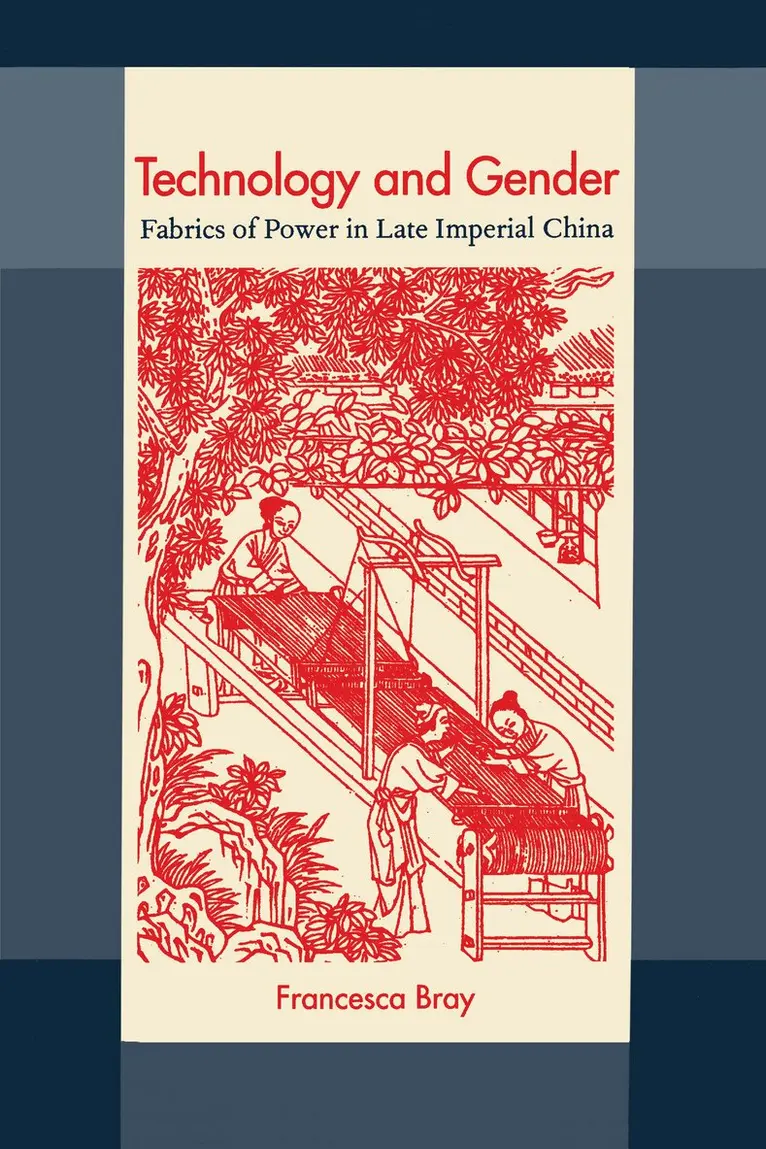
    Technology and Gender

    Fabrics of Power in Late Imperial China

    AvFrancesca Bray

    Häftad, Engelska, 1997

    Del i serien University of California Press

    456 kr

    Beställningsvara. Skickas inom 5-8 vardagar. Fri frakt över 249 kr.

    Beskrivning

    In this feminist history of eight centuries of private life in China, Francesca Bray inserts women into the history of technology and adds technology to the history of women. Bray takes issue with the Orientalist image that traditional Chinese women were imprisoned in the inner quarters, deprived of freedom and dignity, and so physically and morally deformed by footbinding and the tyrannies of patriarchy that they were incapable of productive work. She proposes a concept of gynotechnics, a set of everyday technologies that define women's roles, as a creative new way to explore how societies translate moral and social principles into a web of material forms and bodily practices. Bray examines three different aspects of domestic life in China, tracing their developments from 1000 to 1800 A.D. She begins with the shell of domesticity, the house, focusing on how domestic space embodied hierarchies of gender. She follows the shift in the textile industry from domestic production to commercial production. Despite increasing emphasis on women's reproductive roles, she argues, this cannot be reduced to childbearing.Female hierarchies within the family reinforced the power of wives, whose responsibilities included ritual activities and financial management as well as the education of children.

    Produktinformation

    • Utgivningsdatum:1997-07-03
    • Mått:152 x 229 x 25 mm
    • Vikt:544 g
    • Format:Häftad
    • Språk:Engelska
    • Serie:University of California Press
    • Antal sidor:444
    • Förlag:University of California Press
    • ISBN:9780520208612

    Utforska kategorier

    • Asiens historia inom Historia och arkeologi
    • Genusvetenskap inom Samhälle och politik
    • Antropologi inom Samhälle och politik

    Mer om författaren

    Francesca Bray is Professor of Anthropology at the University of California, Santa Barbara, and author of The Rice Economies: Technology and Development in Asian Societies (California, 1994).

    Innehållsförteckning

    • List of Illustrations and TableList of Chinese DynastiesAcknowledgmentsIntroduction: The Framework of Everyday Life:Technology, Women and Cultural HistoryPART ONE / BUILDING A TRADITION:THE CONSTRUCTION OF CHINESE SOCIAL SPACE1 House Form and MeaningSpaces and SourcesThe House in Late Imperial China: Material DesignSome Aesthetics of House DesignRusin DomoThe Convergence of Architecture2 Encoding PatriarchyA Walled DomainA Moral Building BlockThe Heart of the House: Altar and StoveContinuing the Family Line: The Coffin and the BedInner Divisions: Marking the Moral Order3 The Text of the Chinese HouseWriting the TextTextual ExpertsPART TWO / WOMEN'S WORK:WEAVING NEW PATTERNS IN THE SOCIAL FABRIC4 Fabrics of Power: The Canonical Meanings of Women's WorkThe Concept of "Womanly Work": Women as SubjectsCloth and SocietyMedieval Divisions of Labor and the Value of Female Work5 Economic Expansion and Changing Divisions of LaborWealth, Fashion and a New Elite: Changes in the Song Silk IndustryThe Cotton BoomSilk Production in the Ming and Qing6 Women's Work and Women's PlaceSkills, Knowledge and StatusWomanly Virtue and the Preservation of the Social OrderWomen's Work and Family StatusConnection and Seclusion: Cloth and the Separation of SpheresWomen's Work and PatriarchyPART THREE / MEANINGS OF MOTHERHOOD:REPRODUCTIVE TECHNOLOGIES AND THEIR USES7 Medical History and Gender HistoryThrough a Glass Darkly: The Question of EfficacyWhat is a Body?Physicians, Orthodoxy and PowerCase Histories: Whose Voices?8 Reproductive Medicine and the Dual Nature of FertilityGeneration in Medical TheoryOrthodox Uses of AbortionMenstrual Regulation, Fertility and Health: A Dual Imageof Womanhood9 Reproductive HierarchiesChildren: A Qualified BlessingNature, Nurture and the Bond between Mother and ChildMaternal Doubles: Wives, Concubines and MaidsThe Wifely RoleConclusion: Gynotechnics and CivilizationGlossary of Technical TermsReferences CitedIndexList of Illustrations