Francesca Trivellato - Böcker
Visar alla böcker från författaren Francesca Trivellato. Handla med fri frakt och snabb leverans.
8 produkter
8 produkter
1 801 kr
Skickas inom 5-8 vardagar
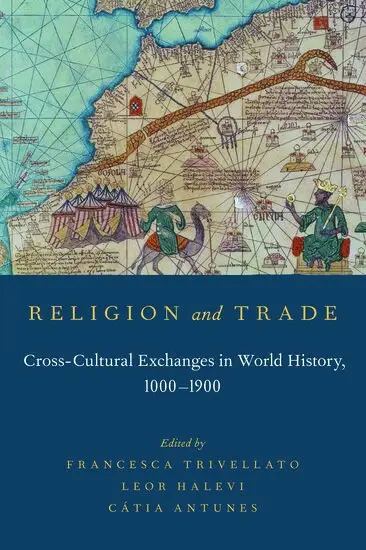
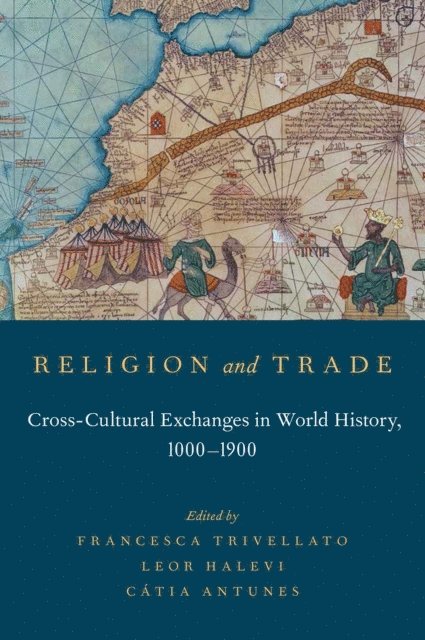
Although trade connects distant people and regions, bringing cultures closer together through the exchange of material goods and ideas, it has not always led to unity and harmony. From the era of the Crusades to the dawn of colonialism, exploitation and violence characterized many trading ventures, which required vessels and convoys to overcome tremendous technological obstacles and merchants to grapple with strange customs and manners in a foreign environment. Yet despite all odds, experienced traders and licensed brokers, as well as ordinary people, travelers, pilgrims, missionaries, and interlopers across the globe, concocted ways of bartering, securing credit, and establishing relationships with people who did not speak their language, wore different garb, and worshipped other gods. Religion and Trade: Cross-Cultural Exchanges in World History, 1000-1900 focuses on trade across religious boundaries around the Mediterranean Sea and the Atlantic and Indian Oceans during the second millennium. Written by an international team of scholars, the essays in this volume examine a wide range of commercial exchanges, from first encounters between strangers from different continents to everyday transactions between merchants who lived in the same city yet belonged to diverse groups. In order to broach the intriguing yet surprisingly neglected subject of how the relationship between trade and religion developed historically, the authors consider a number of interrelated questions: When and where was religion invoked explicitly as part of commercial policies? How did religious norms affect the everyday conduct of trade? Why did economic imperatives, political goals, and legal institutions help sustain commercial exchanges across religious barriers in different times and places? When did trade between religious groups give way to more tolerant views of "the other " and when, by contrast, did it coexist with hostile images of those decried as "infidels "?Exploring captivating examples from across the world and spanning the course of the second millennium, this groundbreaking volume sheds light on the political, economic, and juridical underpinnings of cross-cultural trade as it emerged or developed at various times and places, and reflects on the cultural and religious significance of the passage of strange persons and exotic objects across the many frontiers that separated humankind in medieval and early modern times.
337 kr
Skickas inom 5-8 vardagar
Although trade connects distant people and regions, bringing cultures closer together through the exchange of material goods and ideas, it has not always led to unity and harmony. From the era of the Crusades to the dawn of colonialism, exploitation and violence characterized many trading ventures, which required vessels and convoys to overcome tremendous technological obstacles and merchants to grapple with strange customs and manners in a foreign environment. Yet despite all odds, experienced traders and licensed brokers, as well as ordinary people, travelers, pilgrims, missionaries, and interlopers across the globe, concocted ways of bartering, securing credit, and establishing relationships with people who did not speak their language, wore different garb, and worshipped other gods. Religion and Trade: Cross-Cultural Exchanges in World History, 1000-1900 focuses on trade across religious boundaries around the Mediterranean Sea and the Atlantic and Indian Oceans during the second millennium. Written by an international team of scholars, the essays in this volume examine a wide range of commercial exchanges, from first encounters between strangers from different continents to everyday transactions between merchants who lived in the same city yet belonged to diverse groups. In order to broach the intriguing yet surprisingly neglected subject of how the relationship between trade and religion developed historically, the authors consider a number of interrelated questions: When and where was religion invoked explicitly as part of commercial policies? How did religious norms affect the everyday conduct of trade? Why did economic imperatives, political goals, and legal institutions help sustain commercial exchanges across religious barriers in different times and places? When did trade between religious groups give way to more tolerant views of "the other " and when, by contrast, did it coexist with hostile images of those decried as "infidels "?Exploring captivating examples from across the world and spanning the course of the second millennium, this groundbreaking volume sheds light on the political, economic, and juridical underpinnings of cross-cultural trade as it emerged or developed at various times and places, and reflects on the cultural and religious significance of the passage of strange persons and exotic objects across the many frontiers that separated humankind in medieval and early modern times.
The Familiarity of Strangers: The Sephardic Diaspora, Livorno, and Cross-Cultural Trade in the Early Modern Period
Häftad, Engelska
527 kr
Tillfälligt slut
Promise and Peril of Credit
What a Forgotten Legend about Jews and Finance Tells Us about the Making of European Commercial Society
Inbunden, Engelska, 2019
436 kr
Skickas inom 7-10 vardagar
How an antisemitic legend gave voice to widespread fears surrounding the expansion of private credit in Western capitalismThe Promise and Peril of Credit takes an incisive look at pivotal episodes in the West’s centuries-long struggle to define the place of private finance in the social and political order. It does so through the lens of a persistent legend about Jews and money that reflected the anxieties surrounding the rise of impersonal credit markets.By the close of the Middle Ages, new and sophisticated credit instruments made it easier for European merchants to move funds across the globe. Bills of exchange were by far the most arcane of these financial innovations. Intangible and written in a cryptic language, they fueled world trade but also lured naive investors into risky businesses. Francesca Trivellato recounts how the invention of these abstruse credit contracts was falsely attributed to Jews, and how this story gave voice to deep-seated fears about the unseen perils of the new paper economy. She locates the legend’s earliest version in a seventeenth-century handbook on maritime law and traces its legacy all the way to the work of the founders of modern social theory—from Marx to Weber and Sombart.Deftly weaving together economic, legal, social, cultural, and intellectual history, Trivellato vividly describes how Christian writers drew on the story to define and redefine what constituted the proper boundaries of credit in a modern world increasingly dominated by finance.
Promise and Peril of Credit
What a Forgotten Legend about Jews and Finance Tells Us about the Making of European Commercial Society
Häftad, Engelska, 2021
323 kr
Skickas inom 7-10 vardagar
How an antisemitic legend gave voice to widespread fears surrounding the expansion of private credit in Western capitalismThe Promise and Peril of Credit takes an incisive look at pivotal episodes in the West’s centuries-long struggle to define the place of private finance in the social and political order. It does so through the lens of a persistent legend about Jews and money that reflected the anxieties surrounding the rise of impersonal credit markets.By the close of the Middle Ages, new and sophisticated credit instruments made it easier for European merchants to move funds across the globe. Bills of exchange were by far the most arcane of these financial innovations. Intangible and written in a cryptic language, they fueled world trade but also lured naive investors into risky businesses. Francesca Trivellato recounts how the invention of these abstruse credit contracts was falsely attributed to Jews, and how this story gave voice to deep-seated fears about the unseen perils of the new paper economy. She locates the legend’s earliest version in a seventeenth-century handbook on maritime law and traces its legacy all the way to the work of the founders of modern social theory—from Marx to Weber and Sombart.Deftly weaving together economic, legal, social, cultural, and intellectual history, Trivellato vividly describes how Christian writers drew on the story to define and redefine what constituted the proper boundaries of credit in a modern world increasingly dominated by finance.
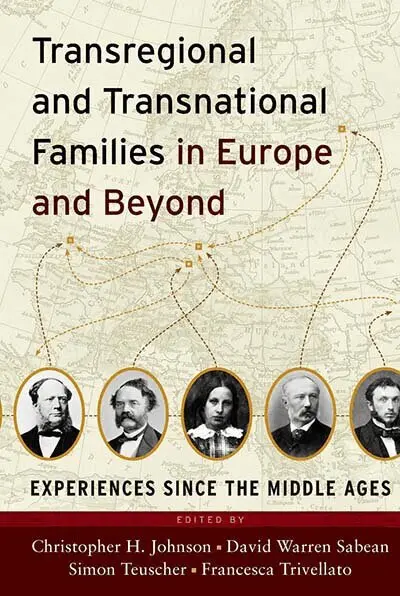
Transregional and Transnational Families in Europe and Beyond
Experiences Since the Middle Ages
Inbunden, Engelska, 2011
2 229 kr
Skickas inom 3-6 vardagar
While the current discussion of ethnic, trade, and commercial diasporas, global networks, and transnational communities constantly makes reference to the importance of families and kinship groups for understanding the dynamics of dispersion, few studies examine the nature of these families in any detail. This book, centered largely on the European experience of families scattered geographically, challenges the dominant narratives of modernization by offering a long-term perspective from the Middle Ages to the twenty-first century. Paradoxically, “transnational families” are to be found long before the nation-state was in place.
2 358 kr
Skickas inom 10-15 vardagar
Designed for both students and seasoned scholars, this volume provides an innovative guide to the study of the Jewish past from the late Middle Ages to the Enlightenment. It makes available seventeen contributions, published between 1904 and 1984, which are veritable landmarks in the scholarship on Jewish history in early modern Europe but have so far remained little accessible. Many are here translated into English for the first time, while all but one are not currently available in English online. The editors’ introduction situates these classic essays in relation to the growing perception that the early modern period in Jewish history possesses its own distinctive features and identity. Accompanied by a rich bibliography, the volume highlights the many changes that the academic study of this vital phase of the Jewish past has undergone during the last hundred and twenty years.
560 kr
Skickas inom 10-15 vardagar
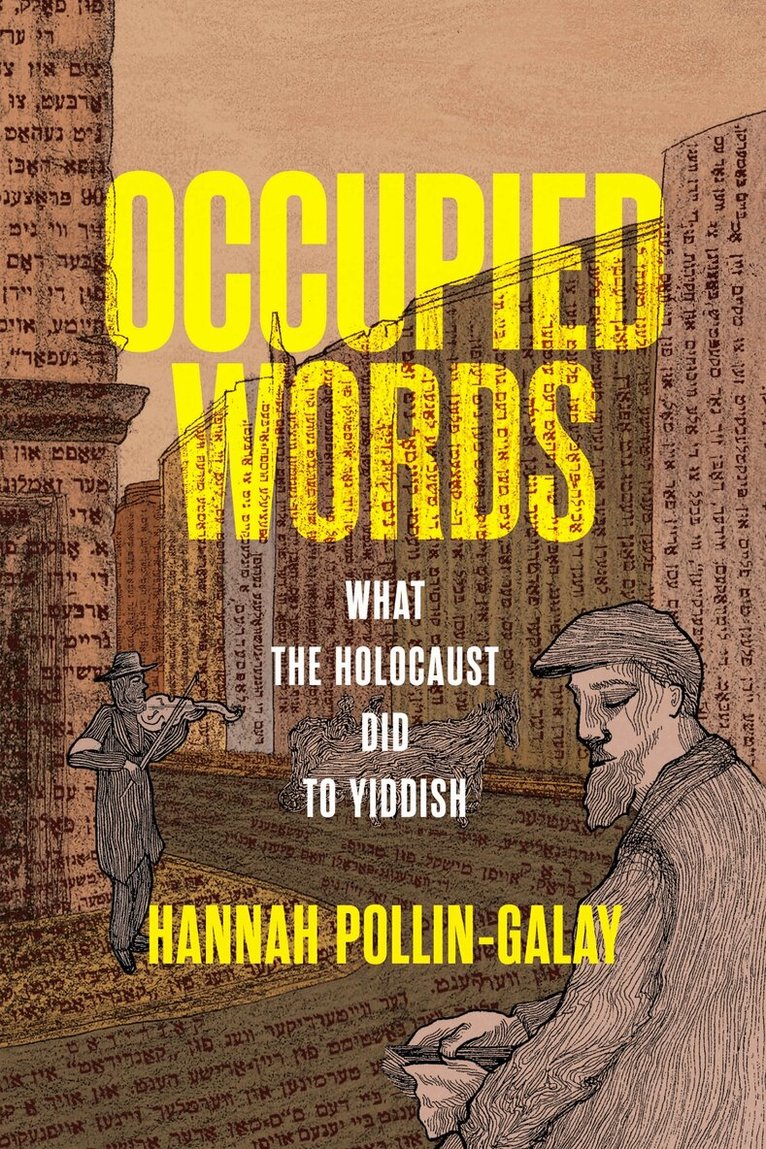
How Yiddish changed to express and memorialize the trauma of the HolocaustThe Holocaust radically altered the way many East European Jews spoke Yiddish. Finding prewar language incapable of describing the imprisonment, death, and dehumanization of the Shoah, prisoners added or reinvented thousands of Yiddish words and phrases to describe their new reality. These crass, witty, and sometimes beautiful Yiddish words – Khurbn Yiddish, or "Yiddish of the Holocaust" – puzzled and intrigued the East European Jews who were experiencing the metamorphosis of their own tongue in real time. Sensing that Khurbn Yiddish words harbored profound truths about what Jews endured during the Holocaust, some Yiddish speakers threw themselves into compiling dictionaries and glossaries to document and analyze these new words. Others incorporated Khurbn Yiddish into their poetry and prose. In Occupied Words, Hannah Pollin-Galay explores Khurbn Yiddish as a form of Holocaust memory and as a testament to the sensation of speech under genocidal conditions.Occupied Words investigates Khurbn Yiddish through the lenses of cultural history, philology, and literary interpretation. Analyzing fragments of language consciousness left behind from the camps and ghettos alongside the postwar journeys of three intellectuals—Nachman Blumental, Israel Kaplan and Elye Spivak—Pollin-Galay seeks to understand why people chose Yiddish lexicography as a means of witnessing the Holocaust. She then turns to the Khurbn Yiddish words themselves, focusing on terms related to theft, the German-Yiddish encounter and the erotic female body. Here, the author unearths new perspectives on how Jews experienced daily life under Nazi occupation, while raising questions about language and victimhood. Lastly, the book explores how writers turned ghetto and camp slang into art—highlighting the poetry and fiction of K. Tzetnik (Yehiel Di-Nur) and Chava Rosenfarb. Ultimately, Occupied Words speaks to broader debates about cultural genocide, asking how we might rethink the concept of genocide through the framework of language.