Francesco Spampinato - Böcker
Visar alla böcker från författaren Francesco Spampinato. Handla med fri frakt och snabb leverans.
6 produkter
6 produkter
299 kr
Skickas inom 3-6 vardagar
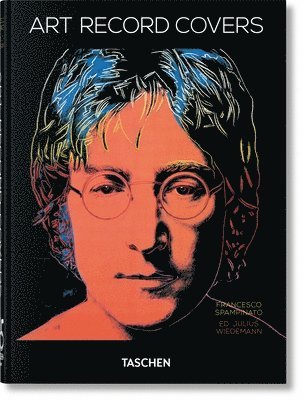
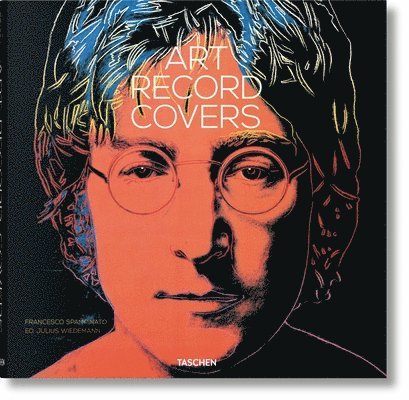
Since the dawn of modernism, visual and music production have had a particularly intimate relationship. From Luigi Russolo’s 1913 Futurist manifesto L’Arte dei Rumori (The Art of Noise) to Marcel Duchamp’s 1925 double-sided discs Rotoreliefs, the 20th century saw ever more fertile exchange between sounds and shapes, marks and melodies, and different fields of composition and performance. In Francesco Spampinato’s unique anthology of artists’ record covers, we discover the rhythm of this particular cultural history. The book presents 450 covers and records by visual artists from the 1950s through to today, exploring how modernism, Pop Art, Conceptual Art, postmodernism, and various forms of contemporary art practice have all informed this collateral field of visual production and supported the mass distribution of music with defining imagery that swiftly and suggestively evokes an aural encounter. Along the way, we find Jean-Michel Basquiat’s urban hieroglyphs for his own Tartown record label, Banksy’s stenciled graffiti for Blur, and a skewered Salvador Dalí butterfly on Jackie Gleason’s Lonesome Echo. There are insightful analyses and fact sheets alongside the covers listing the artist, performer, album name, label, year of release, and information on the original artwork. Interviews with Tauba Auerbach, Shepard Fairey, Kim Gordon, Christian Marclay, Albert Oehlen, and Raymond Pettibon add personal accounts on the collaborative relationship between artists and musicians.
408 kr
Skickas inom 10-15 vardagar
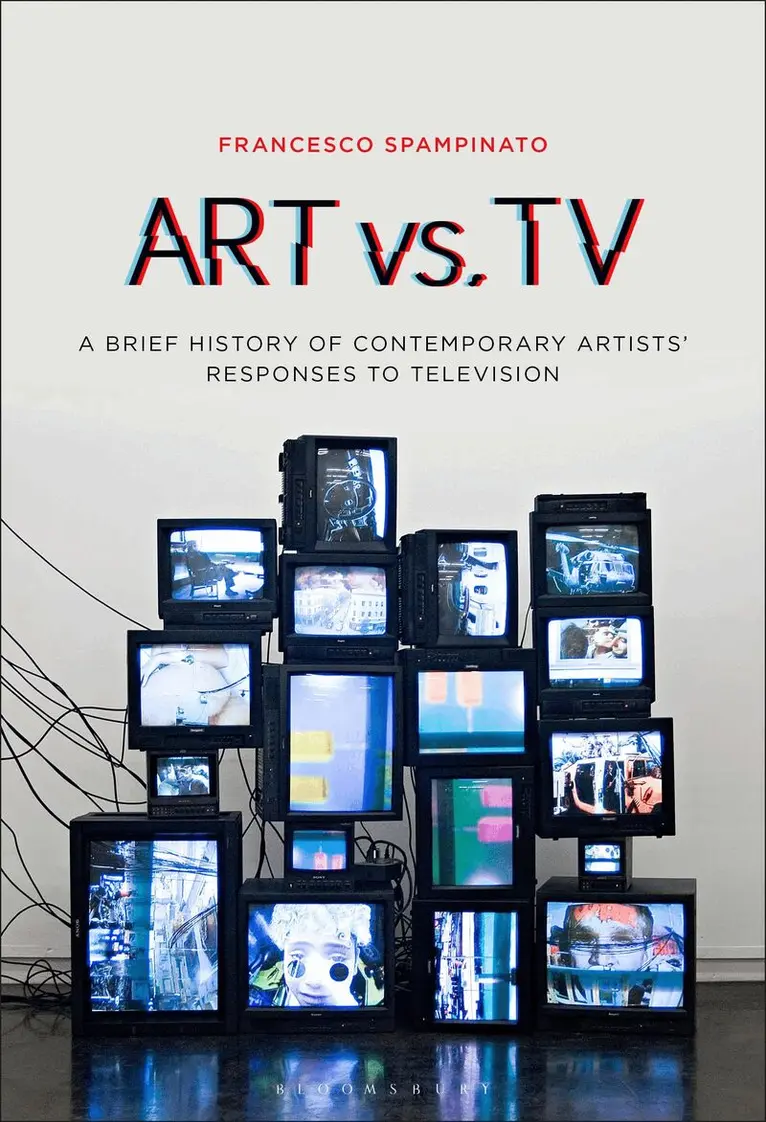
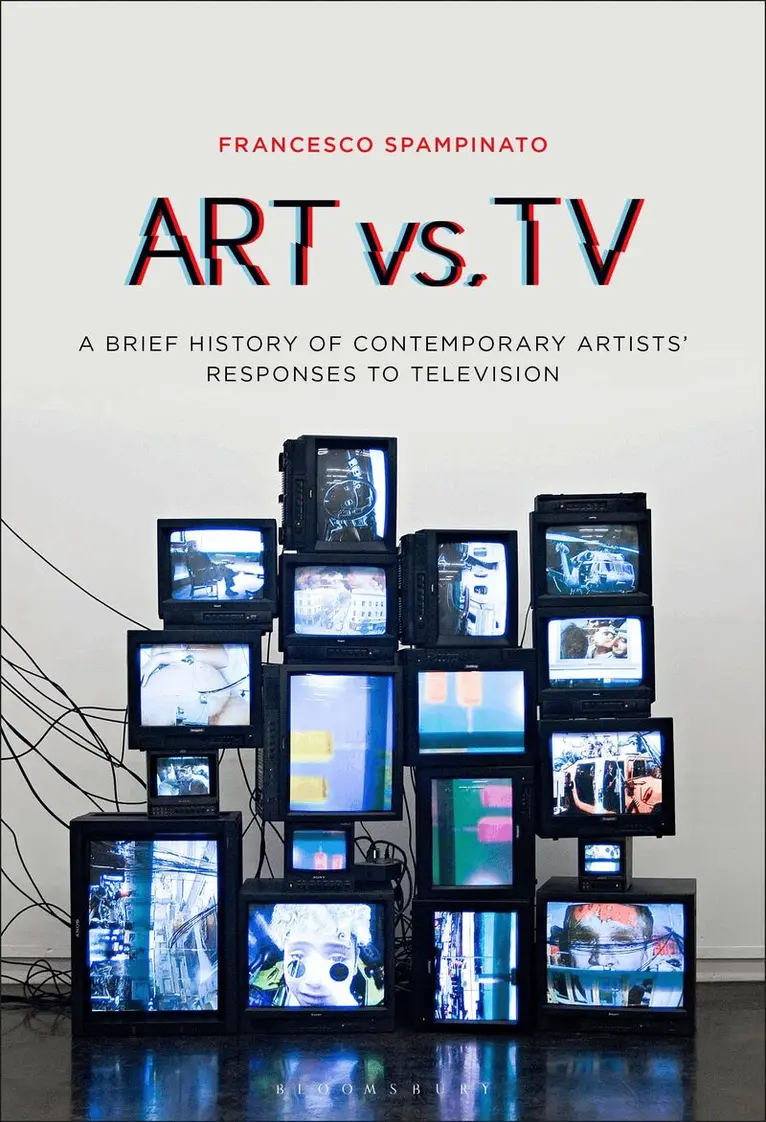
While highlighting the prevailing role of television in Western societies, Art vs. TV maps and condenses a comprehensive history of the relationships of art and television. With a particular focus on the link between reality and representation, Francesco Spampinato analyzes video art works, installations, performances, interventions and television programs made by contemporary artists as forms of resistance to and appropriation and parody of mainstream television. The artists discussed belong to different generations: those that emerged in the 1960s in association with art movements such as Pop Art, Fluxus and Happening; and those appearing on the scene in the 1980s, whose work aimed at deconstructing media representation in line with postmodernist theories; to those arriving in the 2000s, an era in which, through reality shows and the Internet, anybody could potentially become a media personality; and finally those active in the 2010s, whose work reflects on how old media like television has definitively vaporized through the electronic highways of cyberspace.These works and phenomena elicit a tension between art and television, exposing an incongruence; an impossibility not only to converge but at the very least to open up a dialogical exchange.
1 476 kr
Skickas inom 10-15 vardagar
While highlighting the prevailing role of television in Western societies, Art vs. TV maps and condenses a comprehensive history of the relationships of art and television. With a particular focus on the link between reality and representation, Francesco Spampinato analyzes video art works, installations, performances, interventions and television programs made by contemporary artists as forms of resistance to and appropriation and parody of mainstream television. The artists discussed belong to different generations: those that emerged in the 1960s in association with art movements such as Pop Art, Fluxus and Happening; and those appearing on the scene in the 1980s, whose work aimed at deconstructing media representation in line with postmodernist theories; to those arriving in the 2000s, an era in which, through reality shows and the Internet, anybody could potentially become a media personality; and finally those active in the 2010s, whose work reflects on how old media like television has definitively vaporized through the electronic highways of cyberspace.These works and phenomena elicit a tension between art and television, exposing an incongruence; an impossibility not only to converge but at the very least to open up a dialogical exchange.
670 kr
Skickas inom 3-6 vardagar
Since the dawn of modernism, visual and music production have had a particularly intimate relationship. From Luigi Russolo’s 1913 Futurist manifesto L’Arte dei Rumori (The Art of Noise) to Marcel Duchamp’s 1925 double-sided discs Rotoreliefs, the 20th century saw ever more fertile exchange between sounds and shapes, marks and melodies, and different fields of composition and performance.In Francesco Spampinato’s unique anthology of artists’ record covers, we discover the rhythm of this particular cultural history. The book presents 500 covers and records by visual artists from the 1950s through to today, exploring how modernism, Pop Art, Conceptual Art, postmodernism, and various forms of contemporary art practice have all informed this collateral field of visual production and supported the mass distribution of music with defining imagery that swiftly and suggestively evokes an aural encounter.Along the way, we find Jean-Michel Basquiat’s urban hieroglyphs for his own Tartown record label, Banksy’s stenciled graffiti for Blur, Damien Hirst’s symbolic skull for the Hours, and a skewered Salvador Dalí butterfly on Jackie Gleason’s Lonesome Echo. There are insightful analyses and fact sheets alongside the covers listing the artist, performer, album name, label, year of release, and information on the original artwork. Interviews with Tauba Auerbach, Shepard Fairey, Kim Gordon, Christian Marclay, Albert Oehlen, and Raymond Pettibon add personal accounts on the collaborative relationship between artists and musicians.
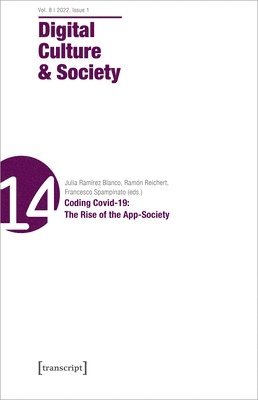
Digital Culture & Society (DCS)
Vol 8, Issue 1/2022 - Coding Covid-19: The Rise of the App-Society
Häftad, Engelska, 2023
435 kr
Skickas
Code is intended both as a computer-based language to program software and as a functional and visual language for organizing administrative processes, visualizing information, performing behaviour control, and reinforcing shared imaginaries based on surveillance and dread. This special issue of Digital Culture & Society deals with the concept of code in relation to the Covid-19 crisis. The contributions depart from the idea that both forms of coding have become dramatically intertwined during the pandemic and are structuring a new way of being in and seeing reality. They explore the new forms of data-driven surveillance and representation of the pandemic evolution at the level of real-time epidemiology, sensor technologies, science policies, push media, and the heterogeneous counter-discourses that try to subvert them.
331 kr
Skickas
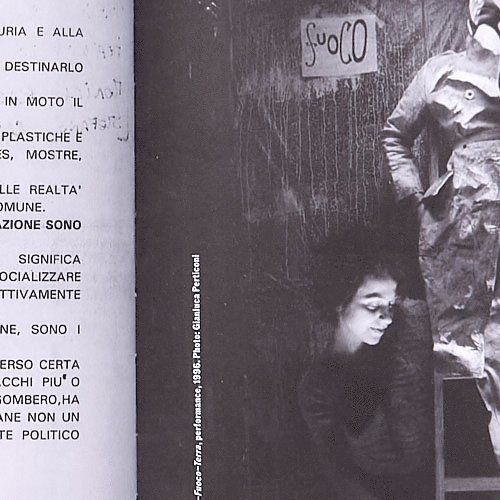
Skank Bloc Bologna: Alternative Art Spaces since 1977 is a book edited by Roberto Pinto and Francesco Spampinato that reconstructs the history of nonprofit exhibition spaces in Bologna from 1977 up to the present. Whether individual initiatives, cooperative enterprises, or social centers, the spaces featured in this volume devised the real “Bologna model”: one-of-a-kind, compared both to the situation in other Italian cities and to the international scene.The book’s title references a 1978 song by the English post-punk band Scritti Politti, emblematic of the international perception of Bologna as the epicenter of political agitation and cultural innovation. Historic spaces covered include Traumfabrik, Cassero, neon, Link Project, and Il Campo delle Fragole.The project was the winner of the eleventh edition of the Italian Council (2022) call for proposals issued by the General Directorate for Creativity of the Italian Ministry of Culture.