Francine D. Blau - Böcker
Visar alla böcker från författaren Francine D. Blau. Handla med fri frakt och snabb leverans.
3 produkter
3 produkter
690 kr
Skickas
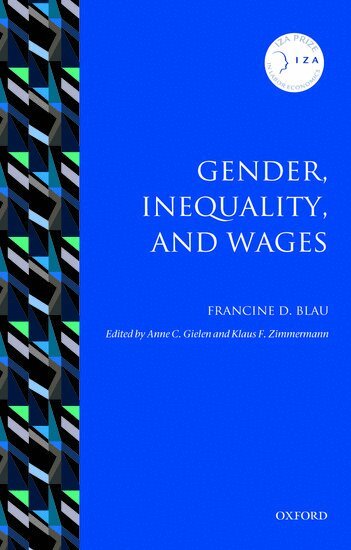
In all Western societies women earn lower wages on average than men. The gender wage gap has existed for many years, although there have been some important changes over time. This volume of collected papers contains extensive research on progress made by women in the labor market, and the characteristics and causes of remaining gender inequalities. It also covers other dimensions of inequality and their interplay with gender, such as family formation, wellbeing, race, and immigrant status. The author was awarded the 2010 IZA Prize in Labor Economics for this research. Part I comprises an Introduction by the Editors. Part II probes and quantifies the explanations for the gender wage gap, including differential choices made in the labor market by men and women as well as labor market discrimination and employment segregation. It also delineates how the gender wage gap has decreased over time in the United States and suggests explanations for this narrowing of the gap and the more recent slowdown in wage convergence. Part III considers international differences in the gender wage gap and wage inequality and the relationship between the two. Part IV considers a variety of indicators of gender inequality and how they have changed over time in the United States, painting a picture of significant gains in women's relative status across a number of dimensions. It also considers the trends in female labor supply and what they indicate about changing gender roles in the United States and considers a successful intervention designed to increase the relative success of academic women. Part V focuses on inequality by race and immigrant status. It considers not only race difference in wages and the differential progress made by African-American women and men in reducing the race wage gap, but also race differences in wealth which are considerably larger than differences in wages. It also examines immigrant-native differences in the use of transfer payments, and the impact of gender roles in immigrant source countries on immigrant women's labor market assimilation in the U.S. labor market.
1 461 kr
Skickas inom 5-8 vardagar
In all Western societies women earn lower wages on average than men. The gender wage gap has existed for many years, although there have been some important changes over time. This volume of collected papers contains extensive research on progress made by women in the labor market, and the characteristics and causes of remaining gender inequalities. It also covers other dimensions of inequality and their interplay with gender, such as family formation, wellbeing, race, and immigrant status. The author was awarded the 2010 IZA Prize in Labor Economics for this research. Part I comprises an Introduction by the Editors. Part II probes and quantifies the explanations for the gender wage gap, including differential choices made in the labor market by men and women as well as labor market discrimination and employment segregation. It also delineates how the gender wage gap has decreased over time in the United States and suggests explanations for this narrowing of the gap and the more recent slowdown in wage convergence. Part III considers international differences in the gender wage gap and wage inequality and the relationship between the two. Part IV considers a variety of indicators of gender inequality and how they have changed over time in the United States, painting a picture of significant gains in women's relative status across a number of dimensions. It also considers the trends in female labor supply and what they indicate about changing gender roles in the United States and considers a successful intervention designed to increase the relative success of academic women. Part V focuses on inequality by race and immigrant status. It considers not only race difference in wages and the differential progress made by African-American women and men in reducing the race wage gap, but also race differences in wealth which are considerably larger than differences in wages. It also examines immigrant-native differences in the use of transfer payments, and the impact of gender roles in immigrant source countries on immigrant women's labor market assimilation in the U.S. labor market.
1 506 kr
Tillfälligt slut
The Economic and Fiscal Consequences of Immigration finds that the long-term impact of immigration on the wages and employment of native-born workers overall is very small, and that any negative impacts are most likely to be found for prior immigrants or native-born high school dropouts. First-generation immigrants are more costly to governments than are the native-born, but the second generation are among the strongest fiscal and economic contributors in the U.S. This report concludes that immigration has an overall positive impact on long-run economic growth in the U.S. More than 40 million people living in the United States were born in other countries, and almost an equal number have at least one foreign-born parent. Together, the first generation (foreign-born) and second generation (children of the foreign-born) comprise almost one in four Americans. It comes as little surprise, then, that many U.S. residents view immigration as a major policy issue facing the nation.Not only does immigration affect the environment in which everyone lives, learns, and works, but it also interacts with nearly every policy area of concern, from jobs and the economy, education, and health care, to federal, state, and local government budgets. The changing patterns of immigration and the evolving consequences for American society, institutions, and the economy continue to fuel public policy debate that plays out at the national, state, and local levels. The Economic and Fiscal Consequences of Immigration assesses the impact of dynamic immigration processes on economic and fiscal outcomes for the United States, a major destination of world population movements. This report will be a fundamental resource for policy makers and law makers at the federal, state, and local levels but extends to the general public, nongovernmental organizations, the business community, educational institutions, and the research community.