Francis M Morris - Böcker
Visar alla böcker från författaren Francis M Morris. Handla med fri frakt och snabb leverans.
3 produkter
3 produkter
North Sea and Channel Connectivity during the Late Iron Age and Roman Period (175/150 BC-AD 409)
Häftad, Engelska, 2010
1 020 kr
Skickas inom 5-8 vardagar
Del 1 - Winchester Studies
Venta Belgarum
Prehistoric, Roman, and Post-Roman Winchester
Inbunden, Engelska, 2023
3 596 kr
Skickas
This is a detailed study of the archaeology of Roman Winchester—Venta Belgarum, a major town in the south of the province of Britannia— and its development from the regional (civitas) capital of the Iron Age people, the Belgae, who inhabited much of what is now central and southern Hampshire. The archaeology of the Winchester area in prehistory is considered, and so too is the later evidence from the town, between the end of organized Roman life shortly after 400 and the foundation, c.650, of the church later known as Old Minster. At the heart of this account is the publication of the relevant phases of the sites excavated in 1961–71 by the Winchester Excavations Committee, and of the finds recovered from these excavations.Volume 1 (Excavations) outlines previous work of relevance, and describes the WEC excavations and the post-excavation analysis of the discoveries, including full reports on the prehistoric, Roman, and post-Roman (to c.650) phases of the 14 sites excavated in 1961–71, with gazetteers for Roman Winchester, listing and describing all significant observations of the defences, and the streets and buildings within the walls.Volume 2 (Finds) presents about 4000 of the finds from the excavations of 1961–71, with additional significant objects from earlier excavations in Winchester or other Winchester collections. Finds are described and discussed by era and type, with coins and selected pottery followed by objects grouped by industry or purpose. Concordances list these finds by site and phase or by material.
905 kr
Skickas
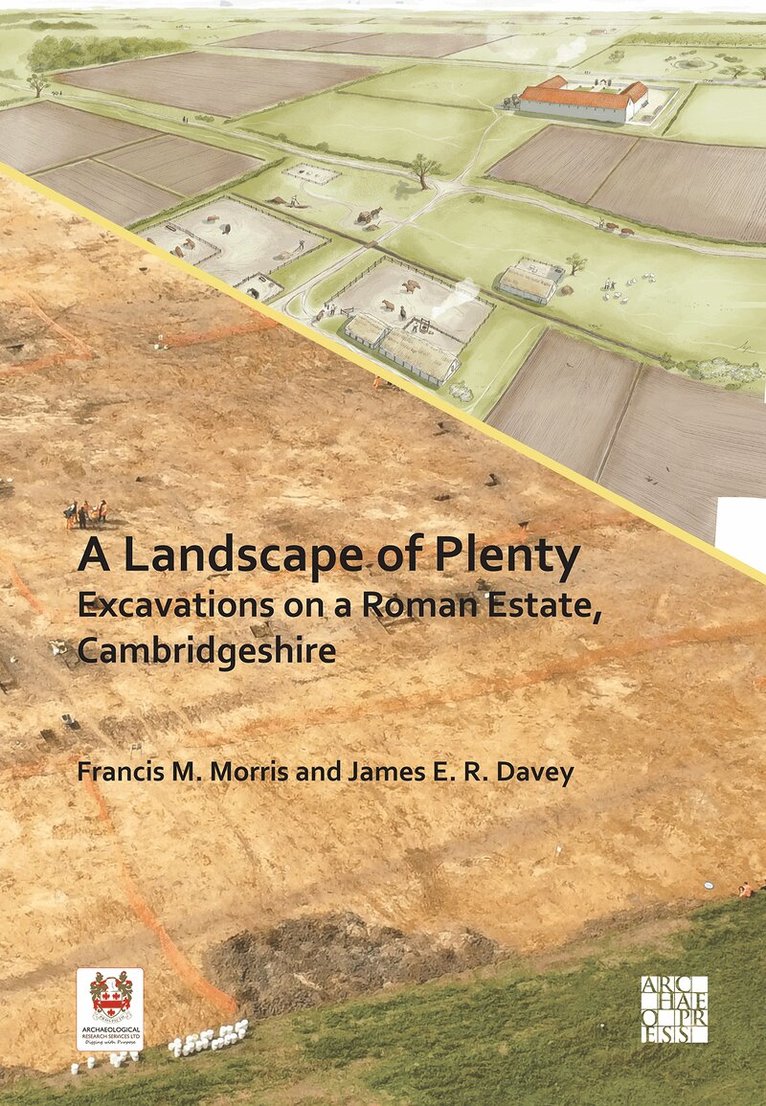
A large archaeological excavation was undertaken in 2023 prior to the construction of the new Cambridgeshire Southern Police Station directly west of the village of Milton, 4km north-east of the historic core of Cambridge.The main features revealed were ditches that formed part of an extensive and complex series of intercutting late Roman period enclosures with associated boundary ditches, trackways, small timber structures, pits , waterholes or wells, a pond and an oven. Activity on the site probably began in the mid-3rd century AD, apparently peaked in the mid- to late 4th century AD and possibly extended into the 5th century AD.The remains indicate an intensive agricultural working area where activities related to the surplus production of grain and the penning/keeping and breeding of considerable numbers of domestic animals, principally cattle for traction activities such as ploughing and transport. This working area may well have formed part of a villa estate and evidence from the site and its vicinity indicates that a villa probably lay nearby—most likely in the unexcavated area immediately to the south.A wide array of Roman finds was recovered, including a large pottery assemblage, 68 coins, ironwork, copper-alloy objects, glass vessels. These suggested basic, utilitarian occupation and activity, although some objects suggest ‘higher-status’ occupation in the vicinity. Evidence for small-scale bone and antler working appeared to reflect the manufacture of pins and handles respectively. A poignant discovery was a burial of three infants of the same age, very likely triplets, in a pit cut into the inner side of an enclosure ditch, probably in the late 4th century AD.This agricultural working area/probable villa estate appears to have gone out of use around the end of the Roman period, c.AD 400 or shortly after, with enclosure and boundary ditches filled up at about this date. No features or finds of Anglo-Saxon date were recorded.The results raise important questions as to how land tenure and land use changed after Britain left the Roman Empire in AD 409. Was the estate confiscated or was it abandoned and left to fall out of use? By whom and why was the system of land allotment filled in and levelled? Did woodland regenerate or were larger fields created and still tilled or given over to grazing? Infilling of the ditches suggests that land divisions, and potentially ownership or tenure, were deliberately changed as new systems of control, governance, coercion and military-political dominance took hold.