Martin Biddle - Böcker
Visar alla böcker från författaren Martin Biddle. Handla med fri frakt och snabb leverans.
10 produkter
10 produkter
2 528 kr
Skickas inom 5-8 vardagar
468 kr
Skickas inom 7-10 vardagar
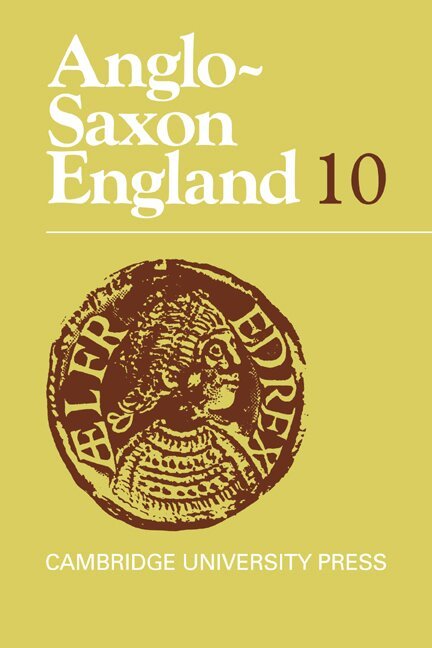
Among topics covered in this volume, two important authorship questions are settled; the discovery of a major Northumbrian settlement is reported; the conceptions of Old English literature which have prevailed during the last three hundred years are paraded for critical inspection and substantial contributions are made to our knowledge of subjects as diverse as a monastic library of the first rank, eighth-century Latin poetic activity, metrical technique and literary convention in our greatest surviving vernacular poem; the family basis of political power in the tenth century; late Anglo-Saxon legal concepts; and scientific exposition in the early eleventh century. The usual comprehensive bibliography of the previous year's publications in all branches of Anglo-Saxon studies rounds off the book (with a separate section onomastic section). There is also an index to volumes 6 - 10, complementing the index found in volume 5.
468 kr
Skickas inom 7-10 vardagar
Place-names, charters, coins and manuscripts are among the forms of evidence studied in this second volume. The topics range from the course of English settlement in the south-east to the power and influence of a leading aristocratic family in the tenth century and the possible presence of Jews in England in the eleventh. An important liturgical manuscript, the Bosworth Psalter, is more securely localized; the exemplars of the Vercelli Book and its probable area of origin are clarified. Several motifs in Old English literature are elucidated, and the influence of Christian doctrine on the poetry is considered in a survey of scholarly opinion and in a lively discussion on Beowulf. Bede's achievements as a scholar and teacher are examined 1300 years after his birth. The bibliography, noting all contributions to Anglo-Saxon studies in 1972, continues the annual series begun in volume 1.
141 kr
Tillfälligt slut
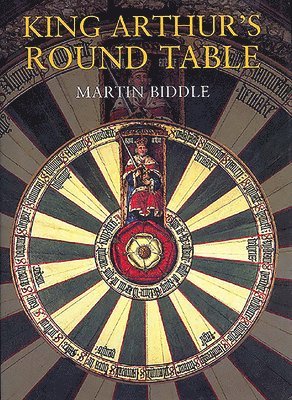
Archival and scientific research reveal the origins and purpose of the Winchester Round Table.
119 kr
Skickas inom 5-8 vardagar
232 kr
Skickas
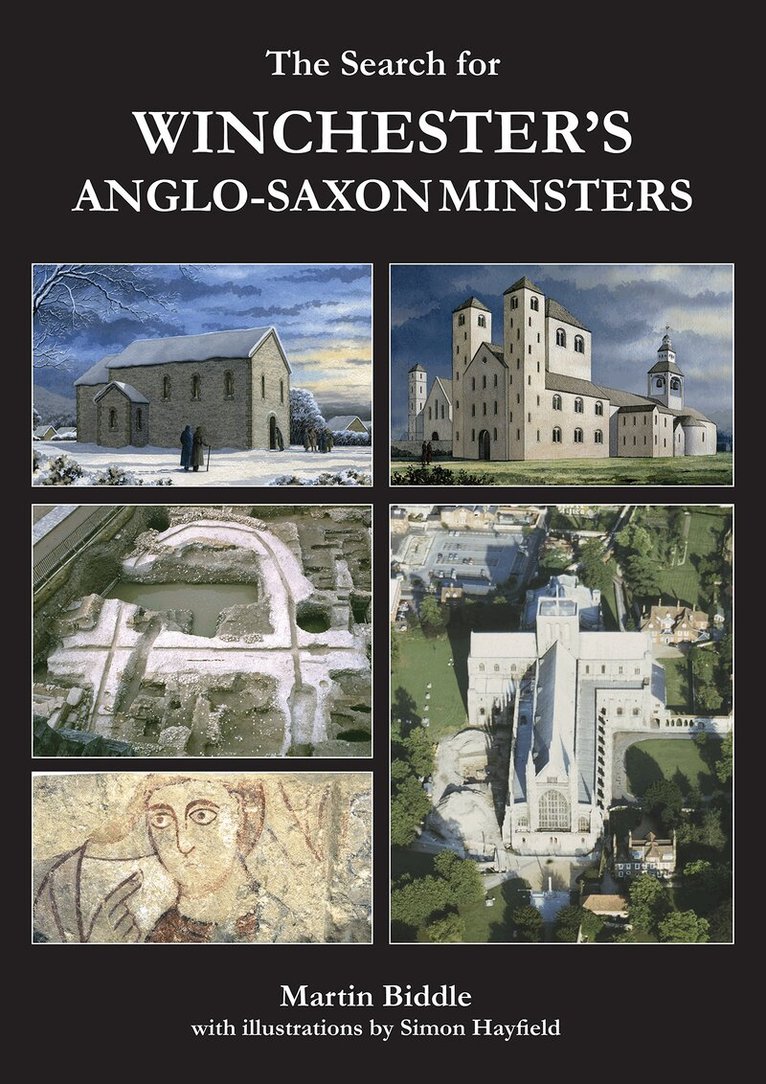
The ancient cathedral of Old Minster and the abbey church of New Minster once stood at the heart of Anglo-Saxon Winchester. Buildings of the first importance, honoured by Anglo-Saxon and Norman kings, these great churches were later demolished and their locations lost. Through an extensive programme of archaeological excavation begun in 1961, and as a result of years of research, the story of these lost minsters can now be revealed. Written by Martin Biddle, Director of the Winchester Excavations Committee and Research Unit, and marvellously illustrated by Simon Hayfield, The Search for Winchester’s Anglo-Saxon Minsters traces the history of these excavations from 1961 to 1970 and shows how they led to the discovery of the Old and New Minsters, bringing back to life the history, archaeology and architecture of Winchester’s greatest Anglo-Saxon buildings.
956 kr
Skickas
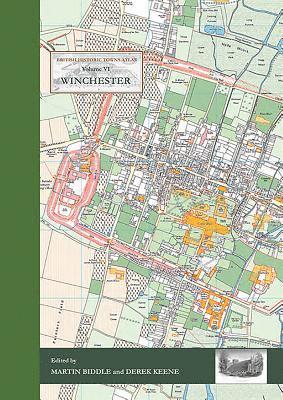
The volume is co-published by the Winchester Excavations Committee and forms Volume 11 of the Winchester Studies series. Following the success of volumes IV (Windsor and Eton) and V (York) in the series of Historic Towns Atlases, the new volume maps and explains the history of Winchester – a city which has played such an important part in English history from Roman times onwards. Combining many full-colour maps with an authoritative but very readable text, the atlas shows how the Roman city of Venta Belgarum became the second-most important city in England for several centuries: a walled town, the seat of kings and an ecclesiastical centre almost unparalleled in the country, before gently declining into a judicial centre and county town. The Atlas is centred on a detailed map of the city at the scale of 1:2500, showing Winchester's historic buildings and structures on a map of the city as it was in 1800. A series of maps show how Winchester was at key points in its history, charting its development and changing shape. The Atlas includes an early OS map, modern maps and historic aerial photographs, as well as colour illustrations, many of which have never been published before. The introduction offers a full history of how and why Winchester developed from prehistoric times onwards, in a series of chapters written by historians but aimed at the general reader. It also includes a comprehensive reference gazetteer listing every place shown on the maps, with a map location, a brief history, and further reading for those interested in finding out more. Like its companion volumes, the maps, text, gazetteer and illustrations are presented in an A3 stiff card binder, and the format allows for maps of different date to be compared side-by-side.
Del 1 - Winchester Studies
Winchester in the Early Middle Ages
An Edition and Discussion of The Winton Domesday
Inbunden, Engelska, 2025
1 443 kr
Skickas
London and Winchester were not described in the Domesday Book, but the royal properties in Winchester were surveyed for Henry I about 1110 and the whole city was surveyed for Bishop Henry of Blois in 1148. These two surveys survive in a single manuscript, known as the Winton Domesday, and constitute the earliest and by far the most detailed description of an English or European town of the early Middle Ages. In the period covered Winchester probably achieved the peak of its medieval prosperity. From the reign of Alfred to that of Henry II it was a town of the first rank, initially centre of Wessex, then the principal royal city of the Old English state, and finally `capital’ in some sense, but not the largest city, of the Norman Kingdom. This volume provides a full edition, translation, and analyses of the surveys and of the city they depict, drawing on the evidence derived from archaeological excavation and historical research in the city since 1961, on personal- and place-name evidence, and on the recent advances in Anglo-Saxon numismatics.
1 129 kr
Skickas
This wide-ranging study uses historical and archaeological evidence to consider humanity's interactions with the environment, fashioning agricultural, gardening and horticultural regimes over a millennium and a half. The discussions of archaeological finds of seeds from discarded rubbish including animal fodder and bedding show the wide range of wild species present, as well as cultivated and gathered plants in the diet of inhabitants and livestock. Pollen analyses, and studies of wood, mosses, and beetles, alongside a look at the local natural environment, and comparison with medieval written records give us a tantalizing picture of early Winchester. The earliest record is by Ælfric of Eynsham in his 11th-century Nomina Herbarum. From medieval records come hints of gardens within the city walls, and considerable detail about agriculture and horticulture, and produce brought into the city. Wild fruit and nuts were also being gathered from the countryside for the town’s markets and mills. At St Giles’ Fair exotic imported spices and fruits were also sold. All these sources of evidence are brought together to reveal more fully the roles of agriculture and the environment in the development of Winchester.
Del 1 - Winchester Studies
Venta Belgarum
Prehistoric, Roman, and Post-Roman Winchester
Inbunden, Engelska, 2023
3 596 kr
Skickas
This is a detailed study of the archaeology of Roman Winchester—Venta Belgarum, a major town in the south of the province of Britannia— and its development from the regional (civitas) capital of the Iron Age people, the Belgae, who inhabited much of what is now central and southern Hampshire. The archaeology of the Winchester area in prehistory is considered, and so too is the later evidence from the town, between the end of organized Roman life shortly after 400 and the foundation, c.650, of the church later known as Old Minster. At the heart of this account is the publication of the relevant phases of the sites excavated in 1961–71 by the Winchester Excavations Committee, and of the finds recovered from these excavations.Volume 1 (Excavations) outlines previous work of relevance, and describes the WEC excavations and the post-excavation analysis of the discoveries, including full reports on the prehistoric, Roman, and post-Roman (to c.650) phases of the 14 sites excavated in 1961–71, with gazetteers for Roman Winchester, listing and describing all significant observations of the defences, and the streets and buildings within the walls.Volume 2 (Finds) presents about 4000 of the finds from the excavations of 1961–71, with additional significant objects from earlier excavations in Winchester or other Winchester collections. Finds are described and discussed by era and type, with coins and selected pottery followed by objects grouped by industry or purpose. Concordances list these finds by site and phase or by material.