Francisco Ferrándiz - Böcker
Visar alla böcker från författaren Francisco Ferrándiz. Handla med fri frakt och snabb leverans.
3 produkter
3 produkter
2 088 kr
Skickas inom 10-15 vardagar
Contemporary Ethnographies is a call to use ethnography in imaginative ways, adjusting to rapidly evolving social circumstances. It is based on a reflexive and theoretically grounded exploration of the author’s two main research projects – the study of the spiritist possession cult of María Lionza in Venezuela, and the analysis of the contemporary exhumation of Civil War (1936–1939) mass graves in contemporary Spain. Ferrándiz critically reviews the labyrinthine and continuous transforming nature of ethnographic engagement. He defends both the need for methodological rigour and the astounding flexibility of ethnography to adjust in creative ways to shifting realities in a dynamic world – a world in which research scenarios multiply, social actors are on the move (physically or digitally), acts of violence proliferate, new technologies are transforming the experience and perception of human life, and the demand, production, circulation and consumption of knowledge is greatly diversified, overshadowing former well established and more hierarchical patterns of diffusion.The book is conceived of as a historically grounded open debate, providing as many certainties as moments of unpredictability and unresolved dilemmas. It is valuable reading for students and scholars interested in ethnographic methods and anthropological theory.
576 kr
Skickas inom 10-15 vardagar
Contemporary Ethnographies is a call to use ethnography in imaginative ways, adjusting to rapidly evolving social circumstances. It is based on a reflexive and theoretically grounded exploration of the author’s two main research projects – the study of the spiritist possession cult of María Lionza in Venezuela, and the analysis of the contemporary exhumation of Civil War (1936–1939) mass graves in contemporary Spain. Ferrándiz critically reviews the labyrinthine and continuous transforming nature of ethnographic engagement. He defends both the need for methodological rigour and the astounding flexibility of ethnography to adjust in creative ways to shifting realities in a dynamic world – a world in which research scenarios multiply, social actors are on the move (physically or digitally), acts of violence proliferate, new technologies are transforming the experience and perception of human life, and the demand, production, circulation and consumption of knowledge is greatly diversified, overshadowing former well established and more hierarchical patterns of diffusion.The book is conceived of as a historically grounded open debate, providing as many certainties as moments of unpredictability and unresolved dilemmas. It is valuable reading for students and scholars interested in ethnographic methods and anthropological theory.
367 kr
Skickas inom 10-15 vardagar
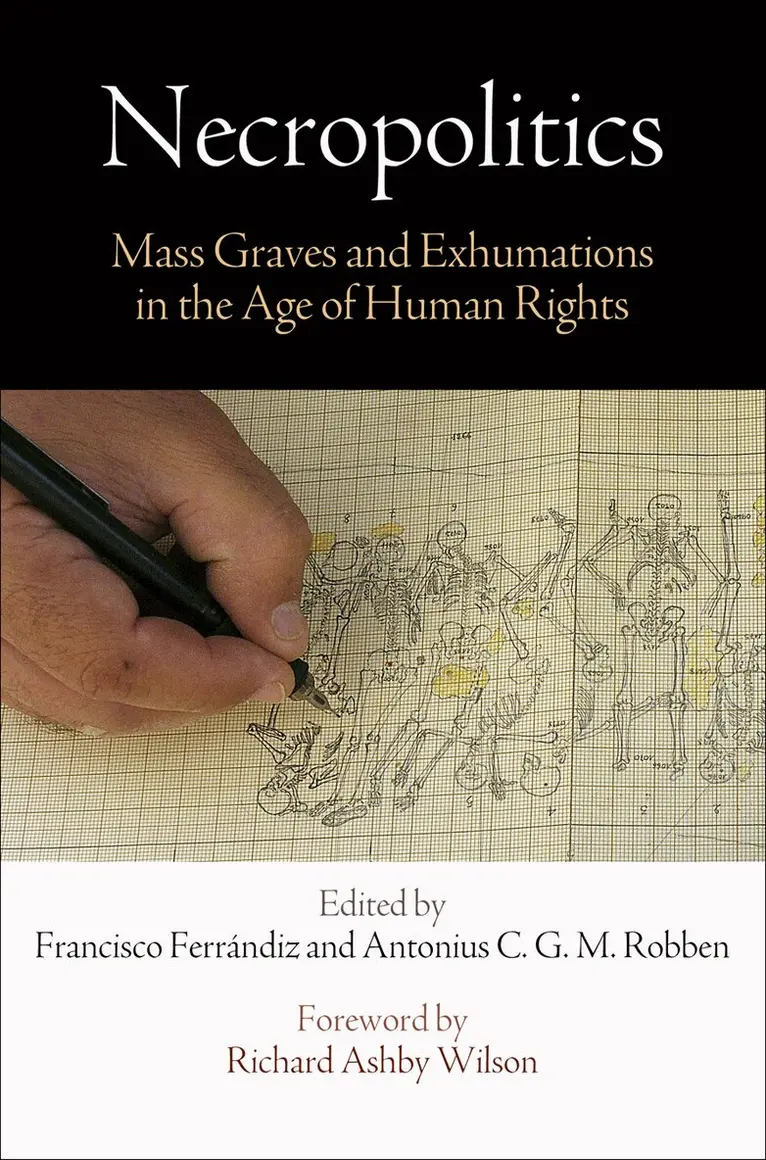
The unmarked mass graves left by war and acts of terror are lasting traces of violence in communities traumatized by fear, conflict, and unfinished mourning. Like silent testimonies to the wounds of history, these graves continue to inflict harm on communities and families that wish to bury or memorialize their lost kin. Changing political circumstances can reveal the location of mass graves or facilitate their exhumation, but the challenge of identifying and recovering the dead is only the beginning of a complex process that brings the rights and wishes of a bereaved society onto a transnational stage.Necropolitics: Mass Graves and Exhumations in the Age of Human Rights examines the political and social implications of this sensitive undertaking in specific local and national contexts. International forensic methods, local-level claims, national political developments, and transnational human rights discourse converge in detailed case studies from the United States, Argentina, Chile, Peru, Spain, Bosnia-Herzegovina, Greece, Rwanda, Cambodia, and Korea. Contributors analyze the role of exhumations in transitional justice from the steps of interviewing eyewitnesses and survivors to the painstaking forensic recovery and comparison of DNA profiles. This innovative volume demonstrates that contemporary exhumations are as much a source of personal, historical, and criminal evidence as instruments of redress for victims through legal accountability and memory politics.Contributors: ZoË Crossland, Francisco FerrÁndiz, Luis Fondebrider, Iosif Kovras, Heonik Kwon, Isaias Rojas-Perez, Antonius C. G. M. Robben, Elena Lesley, Katerina Stefatos, Francesc Torres, Sarah Wagner, Richard Ashby Wilson.