Antonius C. G. M. Robben - Böcker
Visar alla böcker från författaren Antonius C. G. M. Robben. Handla med fri frakt och snabb leverans.
12 produkter
12 produkter
2 103 kr
Skickas inom 10-15 vardagar
In Cultures, Citizenship and Human Rights the combined analytical efforts of the fields of human rights law, conflict studies, anthropology, history, media studies, gender studies, and critical race and postcolonial studies raise a comprehensive understanding of the discursive and visual mediation of migration and manifestations of belonging and citizenship. More insight into the convergence – but also the tensions – between the cultural and the legal foundations of citizenship, has proven to be vital to the understanding of societies past and present, especially to assess processes of inclusion and exclusion. Citizenship is more than a collection of rights and privileges held by the individual members of a state but involves cultural and historical interpretations, legal contestation and regulation, as well as an active engagement with national, regional, and local state and other institutions about the boundaries of those (implicitly gendered and raced) rights and privileges. Highlighting and assessing the transformations of what citizenship entails today is crucially important to the future of Europe, which both as an idea and as a practical project faces challenges that range from the crisis of legitimacy to the problems posed by mass migration. Many of the issues addressed in this book, however, also play out in other parts of the world, as several of the chapters reflect. This book is available for free in PDF format as Open Access from the individual product page at www.routledge.com. They have been made available under a Creative Commons Attribution-Non Commercial-No Derivatives 4.0 license.
Del 23 - Wiley Blackwell Anthologies in Social and Cultural Anthropology
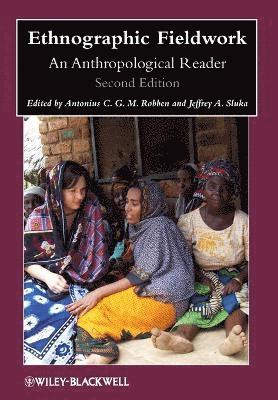
Ethnographic Fieldwork
An Anthropological Reader
Häftad, Engelska, 2011
630 kr
Skickas inom 7-10 vardagar
Newly revised, Ethnographic Fieldwork: An Anthropological Reader Second Edition provides readers with a picture of the breadth, variation, and complexity of fieldwork. The updated selections offer insight into the ethnographer’s experience of gathering and analyzing data, and a richer understanding of the conflicts, hazards and ethical challenges of pursuing fieldwork around the globe. Offers an international collection of classic and contemporary readings to provide students with a broad understanding of historical, methodological, ethical, reflexive and stylistic issues in fieldworkFeatures 16 new articles and revised part introductions, with additional insights into the experience of conducting ethnographic fieldworkExplores the importance of fieldwork practice in achieving the core theoretical and methodological goals of anthropologyHighlights the personal and professional challenges of field researchers, from issues of professional identity, fieldwork relations, activism, and the conflicts, hazards and ethical concerns of community work.
274 kr
Skickas inom 7-10 vardagar
Fieldwork Under Fire is a path-breaking collection of essays written by anthropologists who have experienced the unpredictability and trauma of political violence firsthand. These essays combine theoretical, ethnographic, and methodological points of view to illuminate the processes and solutions that characterize life in dangerous places. They describe the first, often harrowing, experience of violence, the personal and professional problems that arise as troubles escalate, and the often surprising creative strategies people use to survive. In "writing violence," the authors give voice to all those affected by the conditions of violence: perpetrators as well as victims, civilians and specialists, black marketeers and heroes, jackals and researchers. Focusing on everyday experiences, these essays bring to light the puzzling contradictions of lives disturbed by violence: the simultaneous existence of laughter and suffering, of fear and hope. By doing so, they challenge the narrow conceptualization that associates violence with death and war, arguing that instead it must be considered a dimension of living.
Del 11 - Publications of the Society for Psychological Anthropology
Cultures under Siege
Collective Violence and Trauma
Inbunden, Engelska, 2000
929 kr
Skickas inom 7-10 vardagar
Collective violence changes the perpetrators, the victims, and the societies in which it occurs. It targets the body, the psyche, and the socio-cultural order. How do people come to terms with these tragic events, and how are cultures affected by massive outbreaks of violence? This book is a groundbreaking collection of essays by anthropologists, psychologists and psychoanalysts, drawing on field research in many different parts of the world. Profiting from an interdisciplinary dialogue, the authors provide provocative, at times deeply troubling, insights into the darker side of humanity, and they also propose new ways of understanding the terrible things that people are capable of doing to each other.
Del 11 - Publications of the Society for Psychological Anthropology
Cultures under Siege
Collective Violence and Trauma
Häftad, Engelska, 2000
334 kr
Skickas inom 7-10 vardagar
Collective violence changes the perpetrators, the victims, and the societies in which it occurs. It targets the body, the psyche, and the socio-cultural order. How do people come to terms with these tragic events, and how are cultures affected by massive outbreaks of violence? This book is a groundbreaking collection of essays by anthropologists, psychologists and psychoanalysts, drawing on field research in many different parts of the world. Profiting from an interdisciplinary dialogue, the authors provide provocative, at times deeply troubling, insights into the darker side of humanity, and they also propose new ways of understanding the terrible things that people are capable of doing to each other.
421 kr
Skickas inom 10-15 vardagar
For decades, Argentina's population was subject to human rights violations ranging from the merely disruptive to the abominable. Violence pervaded Argentine social and cultural life in the repression of protest crowds, a ruthless counterinsurgency campaign, massive numbers of abductions, instances of torture, and innumerable assassinations. Despite continued repression, thousands of parents searched for their disappeared children, staging street protests that eventually marshaled international support. Challenging the notion that violence simply breeds more violence, Antonius C. G. M. Robben's provocative study argues that in Argentina violence led to trauma, and that trauma bred more violence.In this work of superior scholarship, Robben analyzes the historical dynamic through which Argentina became entangled in a web of violence spun out of repeated traumatization of political adversaries. This violence-trauma-violence cycle culminated in a cultural war that "disappeared" more than ten thousand people and caused millions to live in fear. Political Violence and Trauma in Argentina demonstrates through a groundbreaking multilevel analysis the process by which different historical strands of violence coalesced during the 1970s into an all-out military assault on Argentine society and culture.Combining history and anthropology, this compelling book rests on thorough archival research; participant observation of mass demonstrations, exhumations, and reburials; gripping interviews with military officers, guerrilla commanders, human rights leaders, and former disappeared captives. Robben's penetrating analysis of the trauma of Argentine society is of great importance for our understanding of other societies undergoing similar crimes against humanity.
319 kr
Skickas inom 7-10 vardagar
The Iraq War has cost innumerable lives, caused vast material destruction, and inflicted suffering on millions of people. Iraq at a Distance: What Anthropology Can Teach Us About the War focuses on the plight of the Iraqi people, caught since 2003 in the carnage between U.S. and British troops on one side and, on the other, Iraqi insurgents, militias, and foreign al Qaeda operatives.The volume is a bold attempt by six distinguished anthropologists to study a war zone too dangerous for fieldwork. They break new ground by using their ethnographic imagination as a research tool to analyze the Iraq War through insightful comparisons with previous and current armed conflicts in Cambodia, Israel, Palestine, Northern Ireland, Afghanistan, and Argentina. This innovative approach extends the book's relevance beyond a critical understanding of the devastating war in Iraq. More and more parts of the world of long-standing ethnographic interest are becoming off-limits to researchers because of the war on terror. This book serves as a model for the study of other inaccessible regions, and it shows that the impossibility of conducting ethnographic fieldwork does not condemn anthropologists to silence.Essays analyze the good-versus-evil framework of the war on terror, the deterioration of women's rights in Iraq under fundamentalist coercion, the ethnic-religious partitioning of Baghdad through the building of security walls, the excessive use of force against Iraqi civilians by U.S. counterinsurgency units, and the loss of popular support for U.S. and British forces in Iraq and Afghanistan after the brutal regimes of the Taliban and Saddam Hussein had been toppled.
367 kr
Skickas inom 10-15 vardagar
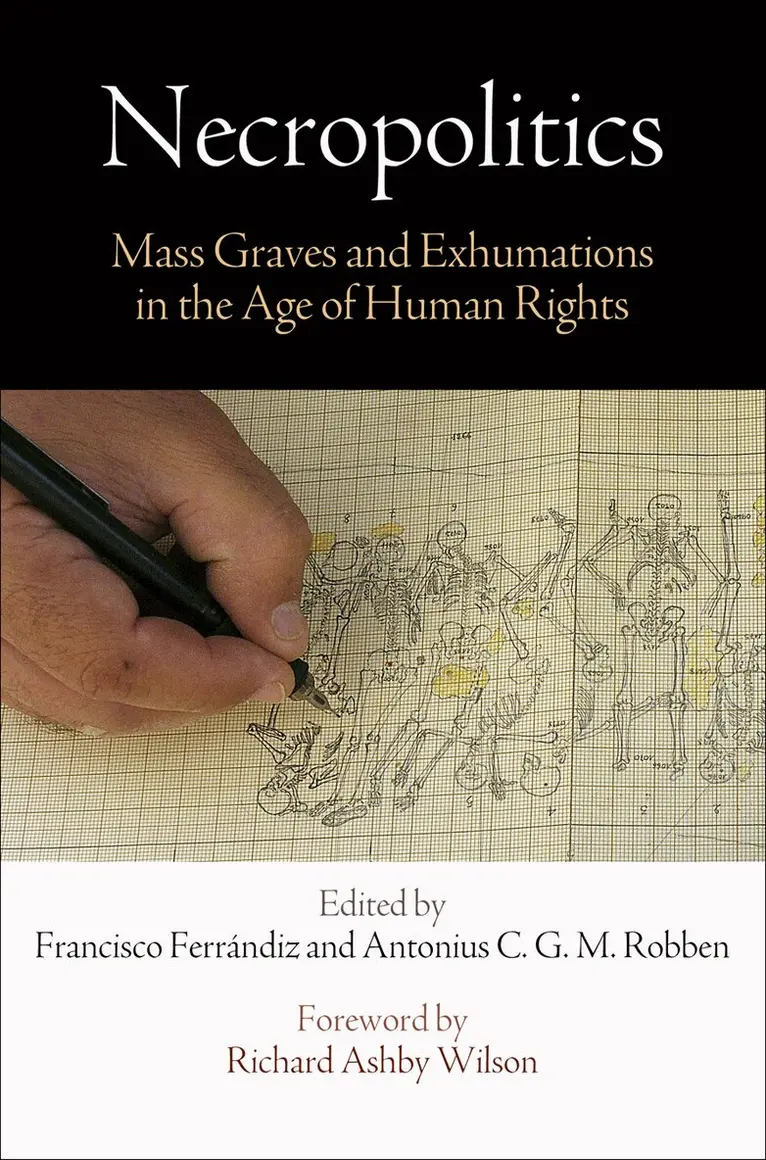
The unmarked mass graves left by war and acts of terror are lasting traces of violence in communities traumatized by fear, conflict, and unfinished mourning. Like silent testimonies to the wounds of history, these graves continue to inflict harm on communities and families that wish to bury or memorialize their lost kin. Changing political circumstances can reveal the location of mass graves or facilitate their exhumation, but the challenge of identifying and recovering the dead is only the beginning of a complex process that brings the rights and wishes of a bereaved society onto a transnational stage.Necropolitics: Mass Graves and Exhumations in the Age of Human Rights examines the political and social implications of this sensitive undertaking in specific local and national contexts. International forensic methods, local-level claims, national political developments, and transnational human rights discourse converge in detailed case studies from the United States, Argentina, Chile, Peru, Spain, Bosnia-Herzegovina, Greece, Rwanda, Cambodia, and Korea. Contributors analyze the role of exhumations in transitional justice from the steps of interviewing eyewitnesses and survivors to the painstaking forensic recovery and comparison of DNA profiles. This innovative volume demonstrates that contemporary exhumations are as much a source of personal, historical, and criminal evidence as instruments of redress for victims through legal accountability and memory politics.Contributors: ZoË Crossland, Francisco FerrÁndiz, Luis Fondebrider, Iosif Kovras, Heonik Kwon, Isaias Rojas-Perez, Antonius C. G. M. Robben, Elena Lesley, Katerina Stefatos, Francesc Torres, Sarah Wagner, Richard Ashby Wilson.
609 kr
Skickas
The ruthless military dictatorship that ruled Argentina between 1976 and 1983 betrayed the country's people, presiding over massive disappearances of its citizenry and, in the process, destroying the state's trustworthiness as the guardian of safety and well-being. Desperate relatives risked their lives to find the disappeared, and one group of mothers defied the repressive regime with weekly protests at the Plaza de Mayo in Buenos Aires. How do societies cope with human losses and sociocultural traumas in the aftermath of such instances of political violence and state terror?In Argentina Betrayed, Antonius C. G. M. Robben demonstrates that the dynamics of trust and betrayal that convulsed Argentina during the dictatorship did not end when democracy returned but rather persisted in confrontations over issues such as the truth about the disappearances, the commemoration of the past, and the guilt and accountability of perpetrators. Successive governments failed to resolve these debates because of erratic policies made under pressure from both military and human rights groups. Mutual mistrust between the state, retired officers, former insurgents, and bereaved relatives has been fueled by recurrent revelations and controversies that prevent Argentine society from conclusively coming to terms with its traumatic past.With thirty years of scholarly engagement with Argentina-and drawing on his extensive, fair-minded interviews with principals at all points along the political spectrum-Robben explores how these ongoing dynamics have influenced the complicated mourning over violent deaths and disappearances. His analysis deploys key concepts from the contemporary literature of human rights, transitional justice, peace and reconciliation, and memory studies, including notions of trauma, denial, accountability, and mourning. The resulting volume is an indispensable contribution to a better understanding of the terrible crimes committed by the Argentine dictatorship in the 1970s and their aftermath.
620 kr
Skickas inom 10-15 vardagar
In Cultures, Citizenship and Human Rights the combined analytical efforts of the fields of human rights law, conflict studies, anthropology, history, media studies, gender studies, and critical race and postcolonial studies raise a comprehensive understanding of the discursive and visual mediation of migration and manifestations of belonging and citizenship. More insight into the convergence – but also the tensions – between the cultural and the legal foundations of citizenship, has proven to be vital to the understanding of societies past and present, especially to assess processes of inclusion and exclusion. Citizenship is more than a collection of rights and privileges held by the individual members of a state but involves cultural and historical interpretations, legal contestation and regulation, as well as an active engagement with national, regional, and local state and other institutions about the boundaries of those (implicitly gendered and raced) rights and privileges. Highlighting and assessing the transformations of what citizenship entails today is crucially important to the future of Europe, which both as an idea and as a practical project faces challenges that range from the crisis of legitimacy to the problems posed by mass migration. Many of the issues addressed in this book, however, also play out in other parts of the world, as several of the chapters reflect. This book is available for free in PDF format as Open Access from the individual product page at www.routledge.com. They have been made available under a Creative Commons Attribution-Non Commercial-No Derivatives 4.0 license.
672 kr
Skickas inom 7-10 vardagar
The definitive reference on the anthropology of death and dying, expanded with new contributions covering everything from animal mourning to mortuary cannibalismFew subjects stir the imagination more than the study of how people across cultures deal with death and dying. This expanded second edition of the internationally bestselling Death, Mourning, and Burial offers cross-cultural readings that span the period from dying to afterlife, considering approaches to this transition as a social process and exploring the great variations of cultural responses to death. Exploring new content including organ transplantation, institutionalized care for the dying, HIV-AIDs, animal mourning, and biotechnology, this text retains classic readings from the first edition, and is enhanced by sixteen new articles and two new sections which provide increased breadth and depth for readers.Death, Mourning, and Burial, Second Edition is divided into eight parts reflecting the social trajectory of death: conceptualizations of death; death, dying, and care; grief and mourning; mortuary rituals; and remembrance and regeneration. Sections are introduced through foundational texts which provide the ideal introduction to this diverse field. It is essential reading for anyone concerned with issues of death and dying, as well as violence, terrorism, war, state terror, organ theft, and mortuary rituals. A thoroughly revised edition of this classic anthology featuring twenty-three new articles, two new sections, and three reformulated sectionsUpdated to include current topics, including organ transplantation, institutionalized care for the dying, HIV-AIDs, animal mourning, and biotechnologyMust reading for anyone concerned with issues of death and dying, as well as violence, terrorism, war, state terror, organ theft, and mortuary ritualsServes as a text for anthropology classes and provides a genuinely cross-cultural perspective to all those studying death and dying
2 255 kr
Skickas inom 7-10 vardagar
A thought-provoking examination of death, dying, and the afterlifeProminent scholars present their most recent work about mortuary rituals, grief and mourning, genocide, cyclical processes of life and death, biomedical developments, and the materiality of human corpses in this unique and illuminating book. Interrogating our most common practices surrounding death, the authors ask such questions as: How does the state wrest away control over the dead from bereaved relatives? Why do many mourners refuse to cut their emotional ties to the dead and nurture lasting bonds? Is death a final condition or can human remains acquire agency? The book is a refreshing reassessment of these issues and practices, a source of theoretical inspiration in the study of death.With contributions written by an international team of experts in their fields, A Companion to the Anthropology of Death is presented in six parts and covers such subjects as: Governing the Dead in Guatemala; After Death Communications (ADCs) in North America; Cryonic Suspension in the Secular Age; Blood and Organ Donation in China; The Fragility of Biomedicine; and more. A Companion to the Anthropology of Death is a comprehensive and accessible volume and an ideal resource for senior undergraduate and graduate students in courses such as Anthropology of Death, Medical Anthropology, Anthropology of Violence, Anthropology of the Body, and Political Anthropology. Written by leading international scholars in their fieldsA comprehensive survey of the most recent empirical research in the anthropology of deathA fundamental critique of the early 20th century founding fathers of the anthropology of deathCross-cultural texts from tribal and industrial societiesThe collection is of interest to anyone concerned with the consequences of the state and massive violence on life and death